
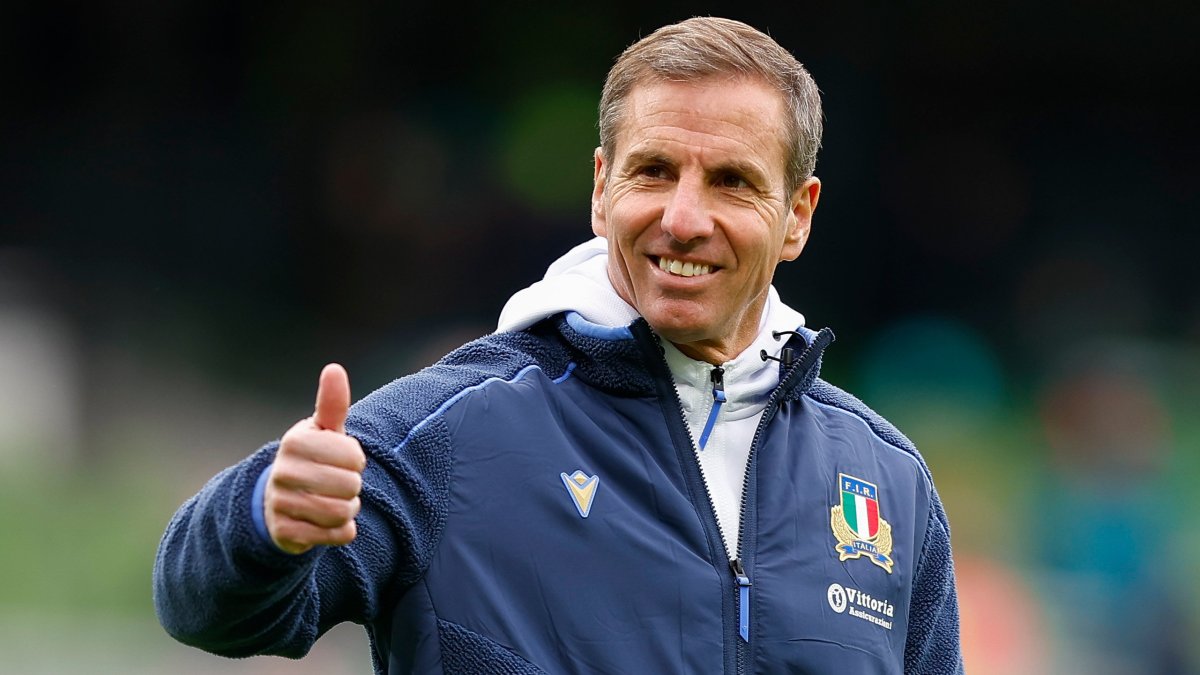
Gonzalo Quesada likes the teams he coaches to play with pace. When he took charge of Italy two years ago, he stated his desire that they should express their “Latin flair”, to engage and excite their fans.
For Italy, he has harnessed the counterattacking skills of Ange Capuozzo, Louis Lynagh and Monty Ioane, encouraging Paolo Garbisi, the fly half, to move the ball quickly whenever possible. The same will be true against England at the Stadio Olimpico on Saturday, even though Capuozzo is out injured.
All of which comes laced with irony, considering Quesada’s reputation in his playing days. As a fly half who won 38 caps for Argentina from 1996 to 2003, he was a prolific goalkicker, whose boot propelled the Pumas to the World Cup quarter-finals for the first time in 1999. They did not score many tries along the way, relying instead on Quesada’s ability from the tee, as he kicked a remarkable 31 penalties in five matches, including eight in a victory over Samoa, adding a drop-goal for good measure.
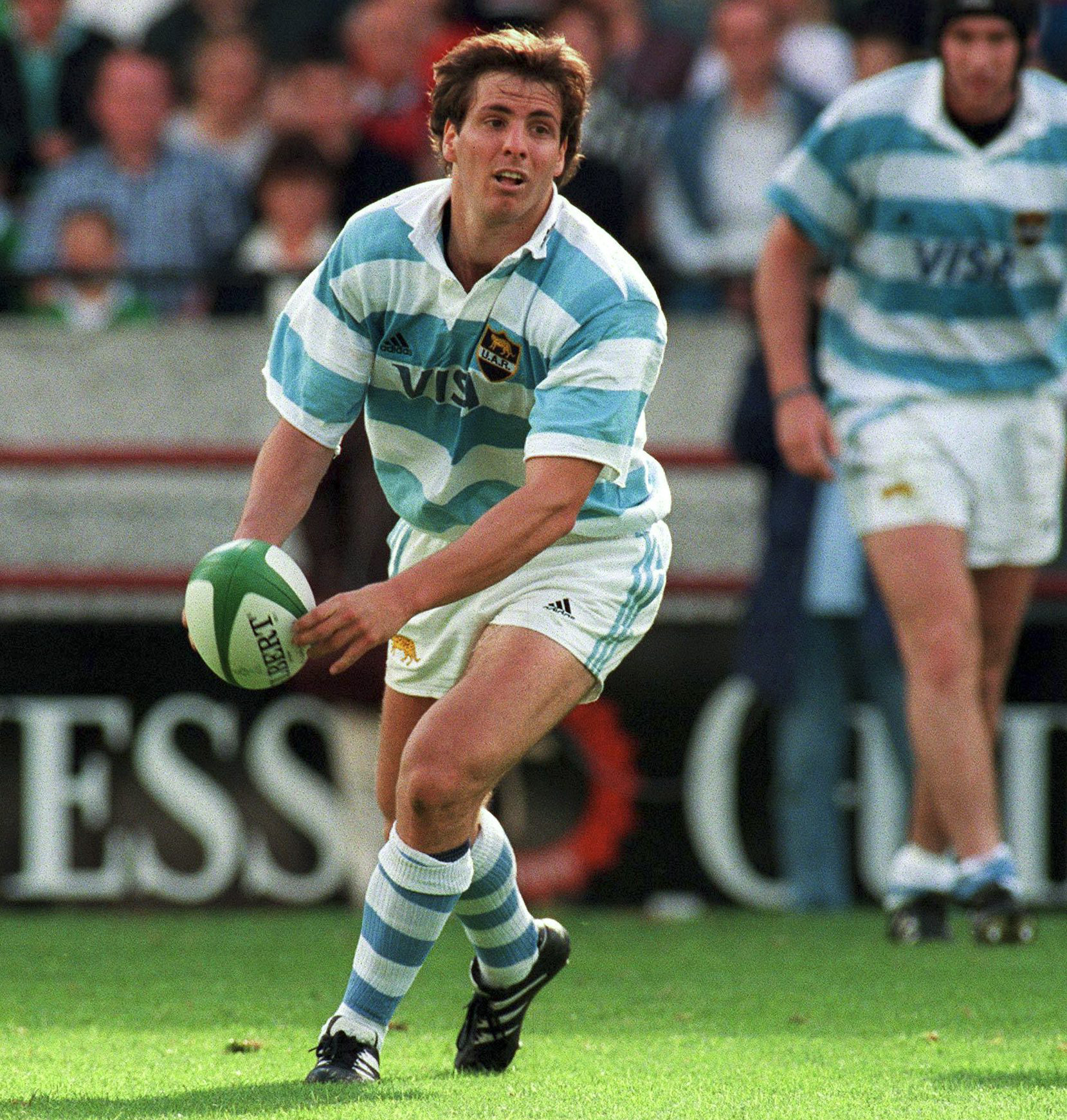
Quesada was central to Argentina’s historic 1999 World Cup campaign, during which he kicked 31 successful penalties
BRENDAN MORAN/GETTY IMAGES
He finished as the tournament’s leading points scorer, but the overriding memory was of a kicking routine that tested the patience of opponents and television viewers alike. Put the kettle on when Quesada was placing the ball, and you could return to your seat with a drink before he was halfway through his routine. His performance was so prolonged, so mannered and deliberate, that it made Jonny Wilkinson look positively relaxed by comparison. The nickname he acquired during that 1999 tournament was “Speedy Gonzalo”.
Please enable cookies and other technologies to view this content. You can update your cookies preferences any time using privacy manager.
Enable cookiesAllow cookies once
As a coach, Quesada is clear that he has learnt his lesson from his playing days. While he remains meticulous in his preparation, he feels that the obsessiveness that he employed in his kicking regime can often be counterproductive. He still believes in the power of diligent preparation, but that it must be balanced with allowing his players to express themselves.
“The experience of my career has helped me,” the 51-year-old told Agustín Creevy, the former Pumas hooker, recently. “I can tell when I’m pushing myself too hard, either with myself or those around me, and where the balance lies, because perfection doesn’t exist. You know, striving for perfection always leaves you a little dissatisfied.”
Quesada related to the way in which Wilkinson, too, felt his striving eventually become more of a hindrance than a help. “I don’t compare myself even close [in quality] to Wilkinson,” he said. “But I’ve heard many things, of getting to a point where you feel that, to improve, it is just more and more work, more of everything.
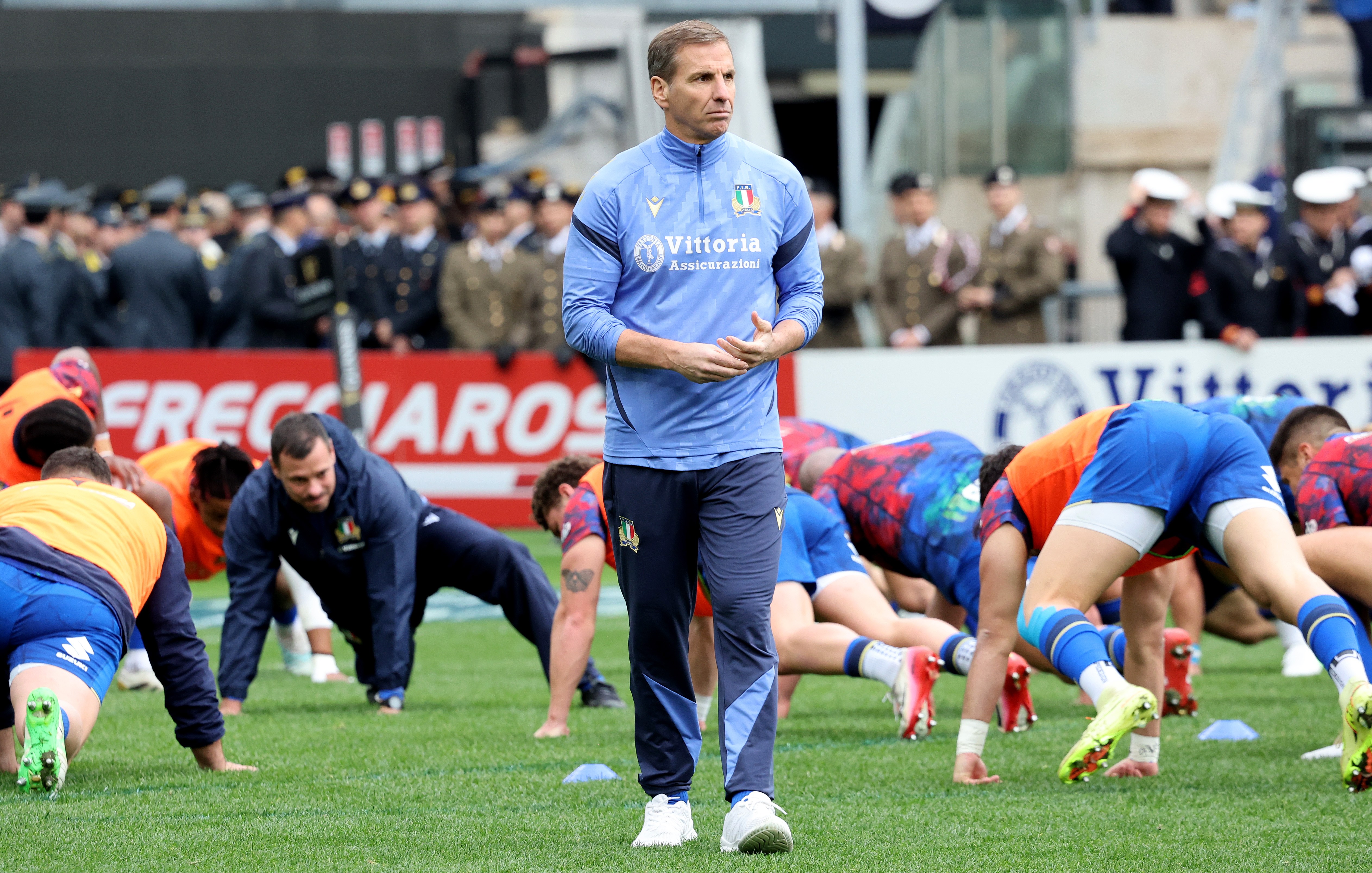
In Quesada’s first Six Nations in charge of Italy, they enjoyed their best results in the competition
GIAMPIERO SPOSITO/GETTY IMAGES
“But sometimes, it is just doing things better. I think now in terms of having that good balance. Building confidence, improving standards, helping the team grow in what we do.”
After his playing career, Wilkinson went on to work as a kicking coach, and is still a regular visitor to England’s training base at Pennyhill Park. Quesada, after hanging up his boots, immediately found work in the international game as the kicking coach for France, where he had spent the latter half of his playing career with clubs including Béziers and Stade Français.
Having helped France reach the 2011 World Cup final, he moved into club coaching, first as a backs coach with Racing 92, then as their head coach for a season, before moving across Paris to return to Stade Français, where he built his reputation as a leader of substance as well as style.
At Stade, he joined a club that had finished tenth in the Top 14 in 2013, and he had lifted them up to seventh by the end of his first year in charge. In his second season, Stade finished fourth, but grew gradually in confidence throughout the play-offs and, against the odds, went on to win their first league title for eight seasons, upsetting Clermont Auvergne in the final. Although they could count on a couple of high-profile players in Sergio Parisse and Morné Steyn, Stade were not bedecked with the galacticos of a club such as Toulon, who they thumped 33-16 in the semi-finals.
“We didn’t have many stars in the team, but Gonza is a coach who really knows how to get the best out of players,” Jono Ross, the former Stade flanker, said. “He had a way he wanted us to play, which was exciting rugby. I wouldn’t say he was overly obsessed with detail, he knew what we wanted and he implemented that. But he also gave players freedom to express themselves. We did a lot of stuff off the field as a team and it all came together.”
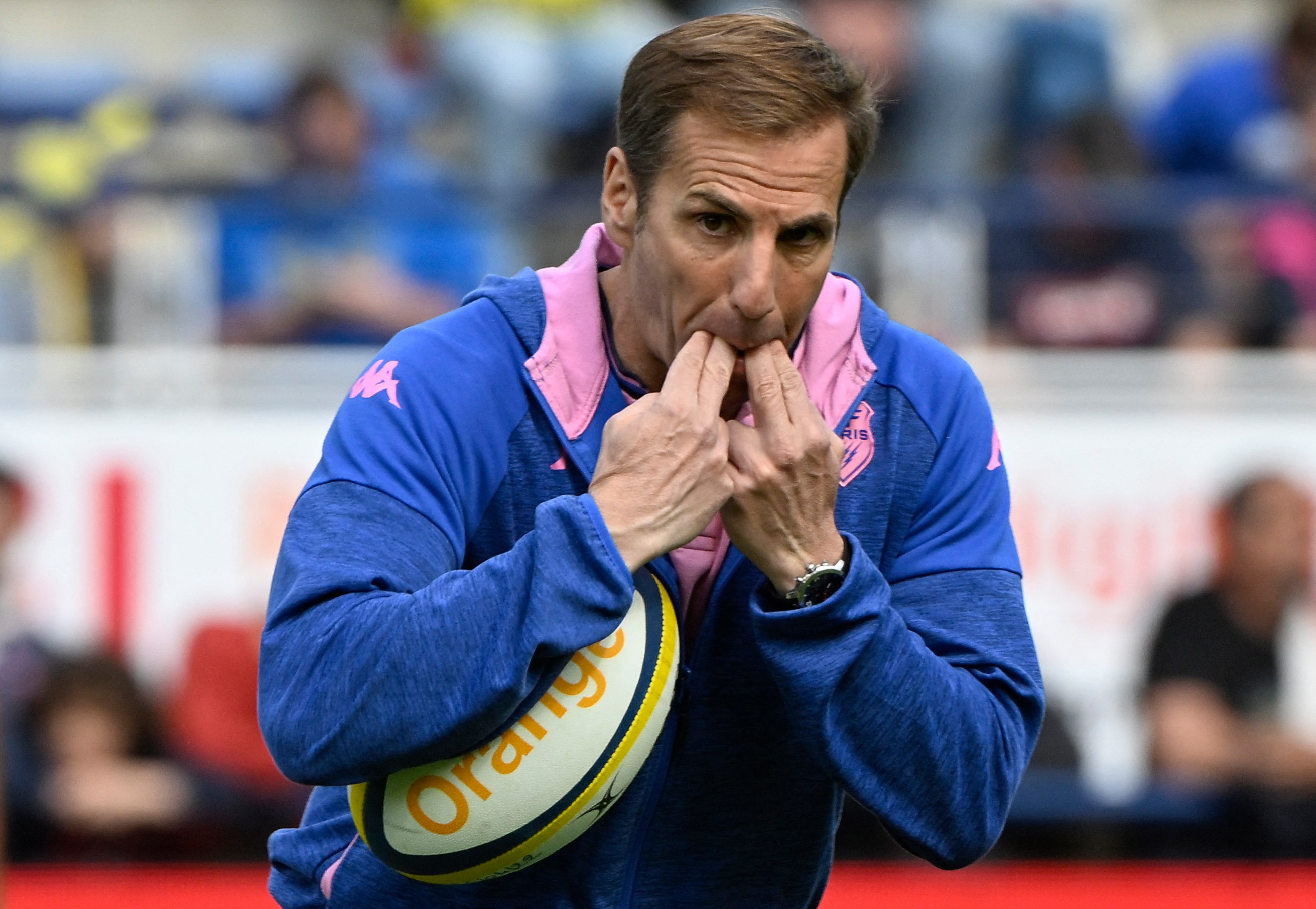
Quesada established his reputation as a top-class coach at Stade Français
THIERRY ZOCCOLAN/AFP/GETTY
Apart from the quality of the rugby his teams have played, Quesada’s man-management is spoken of with real warmth. “He’s huge on the human side with the players,” Ross said. “He can shout and scream in the changing room as well, but the relationships are really important to him.
“I remember when I arrived, he came to my hotel, we had coffee and a long chat, and got to know each other straight away. He’s brilliant at that. However busy he must be, it always feels like he has all the time in the world for you. He’s the best coach I ever played under, especially on that human side of things.”
After leaving Stade, Quesada took charge of the Jaguares in 2018, the Argentina-based team that had recently been admitted to Super Rugby. Back in his homeland, he took over a side that had finished 13th and tenth in their first two seasons but, within two years, he led them to the Super Rugby final, in which they were beaten by the all-conquering Crusaders.
Another spell at Stade Français followed before the call came to succeed Kieran Crowley at Italy after the 2023 World Cup. Parisse, the former Italy great, clearly had an influence on the appointment after playing under Quesada. “I’m convinced he’s the right person for this group,” Parisse said on his appointment. “When we spoke, I told him he’s taking over a team with a lot of potential, with players who’ll arrive at the next World Cup aged 26 to 29, as a team that’s capable of winning several matches.”
Quesada quickly set about learning to speak Italian and moved to Milan, where he was a one-hour drive from Parma and two hours from Treviso, the prime rugby centres. While Crowley had adopted an ultra-expansive style that came unstuck at the World Cup, Quesada sought to blend the best of that attacking game with a little more structure and discipline.
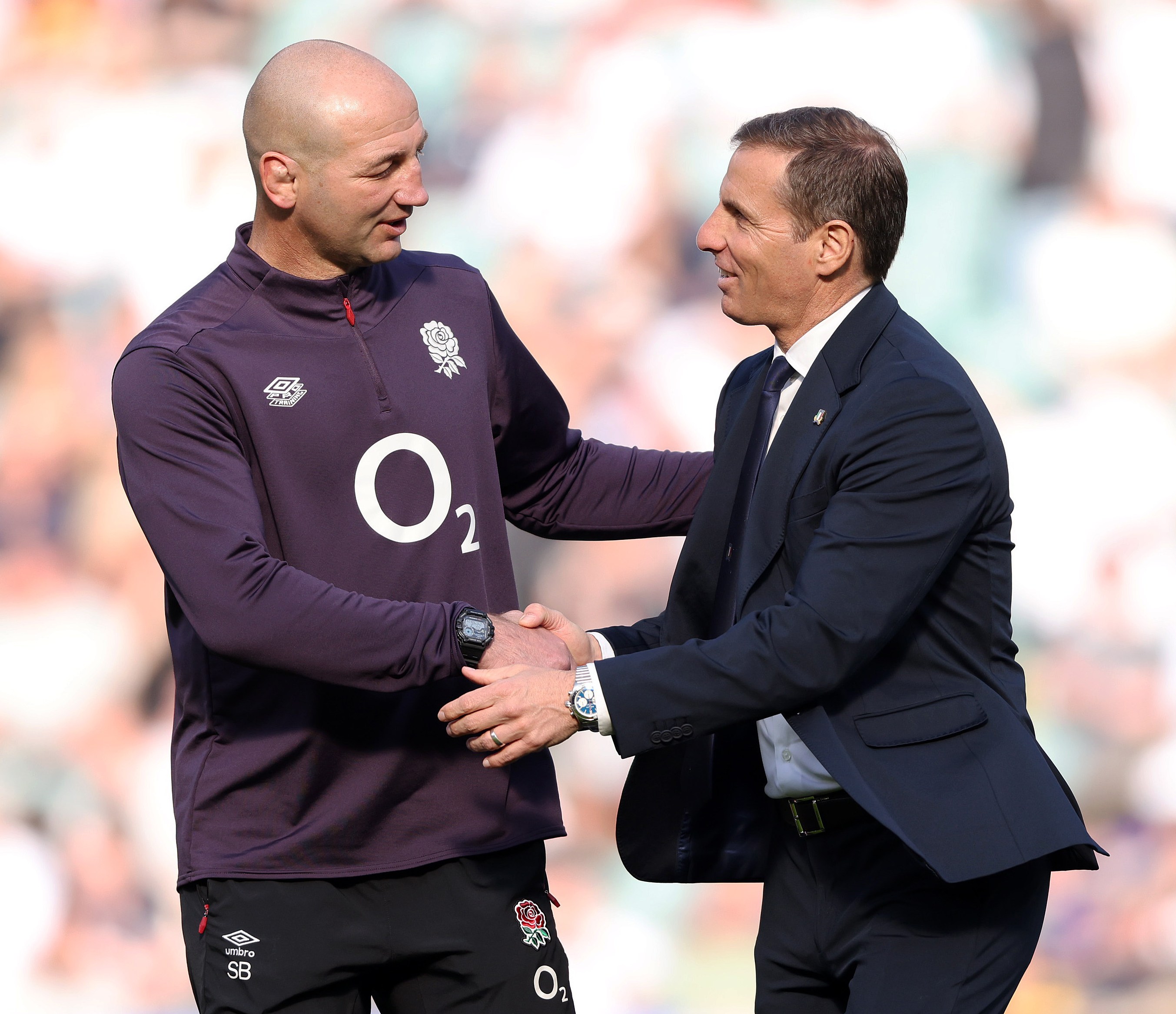
Quesada, pictured with Steve Borthwick, is bidding to lead Italy to their first victory over England on Saturday
PAUL HARDING/GETTY IMAGES
“I wanted the attacking DNA they already had, but to change the system and shapes,” he said. “I want them to keep their Latin flair, their passion, but tallied with hard work in defence and possession.”
In his first tournament, Italy enjoyed their best Six Nations, beating Scotland and Wales, drawing with France and having a close shave against England. Last year they were not quite so successful, with a solitary victory over Wales, but a win against Scotland in the opening round this year underlined their progress. Now, a first victory over England is the target.
Italy v England
Guinness Six Nations
Saturday, 4.40pm
TV ITV