

Jonathan Gilmour’s articles from Travers Smith LLP are most popular:
Travers Smith LLP are most popular:
within Environment topic(s)
The EMIR clearing thresholds and calculation methodology are
being changed.
On 25 February 2026, ESMA published the long-awaited final draft
regulatory technical standards on the revised clearing
thresholds.
Below we outline all you need to know about the proposed changes
–why they are important; what the new calculation
methodologies are;the revised thresholds and how they differ from
those proposed in ESMA’s earlier consultation; timelines for
compliance; and whether firms will likely consider the changes
beneficial.
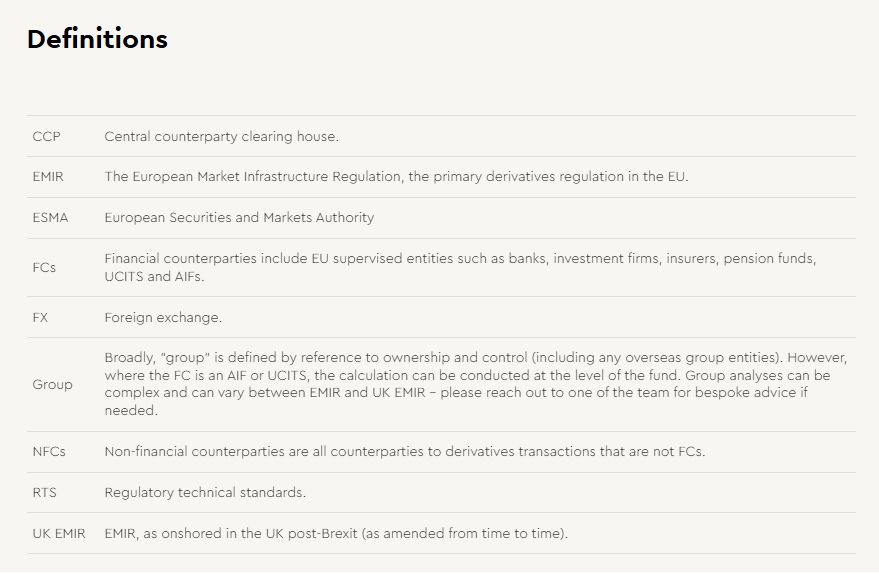
For a breakdown of the jargon, please see the definitions box at
the bottom of the page.
Timeline
Why is this important?
What are the key changes for NFCs?
What are the key changes for FCs?
The proposed clearing thresholds (measured in gross notional
value)
Do counterparties need to conduct calculations on day 1 of the
revised thresholds coming into force?
Are the changes helpful to market participants?
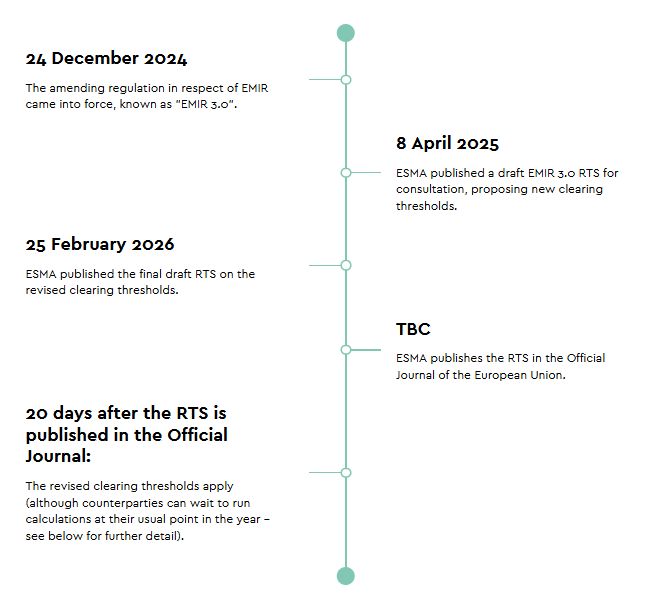
1. Timeline
2. Why is this important?
Optimised treatment under EMIR for market participants relies on
counterparties remaining below the clearing thresholds.
FCs and NFCs that exceed the clearing thresholds become subject
to the EMIR clearing obligation. NFCs which exceed the clearing
thresholds become subject to other EMIR obligations – most
importantly, the obligation to exchange daily variation margin.
Please note that these changes apply only to counterparties
within scope of EMIR. The equivalent clearing thresholds under UK
EMIR have not changed.
3. What are the key changes for NFCs?
Currently:
When conducting clearing threshold calculations, NFCs include
non-risk-reducing (“speculative”) over-the-counter
(“OTC”) derivatives transactions only.
Hedging transactions entered into to reduce risks relating to
commercial or treasury financing activity of the NFC’s group
are excluded from these calculations.
Calculations include the nominal values of speculative
derivatives transactions to which an NFC is the counterparty,
as well as those carried out by any other NFCs
which are in the same “group” as the NFC.
Changes going forward:
The parameters of the hedging carve-out were helpfully, and
intentionally, unchanged – although ESMA had a mandate to
reconsider the conditions for this hedging carve-out, it elected
not to change the existing criteria.
Calculations will include only the nominal values of the
NFC’s speculative derivatives transactions which are not
cleared through an authorised CCP. Speculative transactions of
other group NFCs and any cleared speculative transactions
will no longer be included.
4. What are the key changes for FCs?
Currently:
When conducting clearing threshold calculations, FCs include
the gross notional value of all OTC derivatives transactions
(regardless of whether they are speculative or risk-reducing)
entered into by the FC and other entities within the same
“group” as the FC.
Changes going forward:
FCs will be required to look at two measures when conducting
clearing threshold calculations:
The first is the uncleared positions of the FC and all entities
in its group.
The second measure is the aggregate of its cleared and
uncleared OTC derivatives entered by the FC or entities in its
group.
Exceeding either of these thresholds will trigger the clearing
obligation.
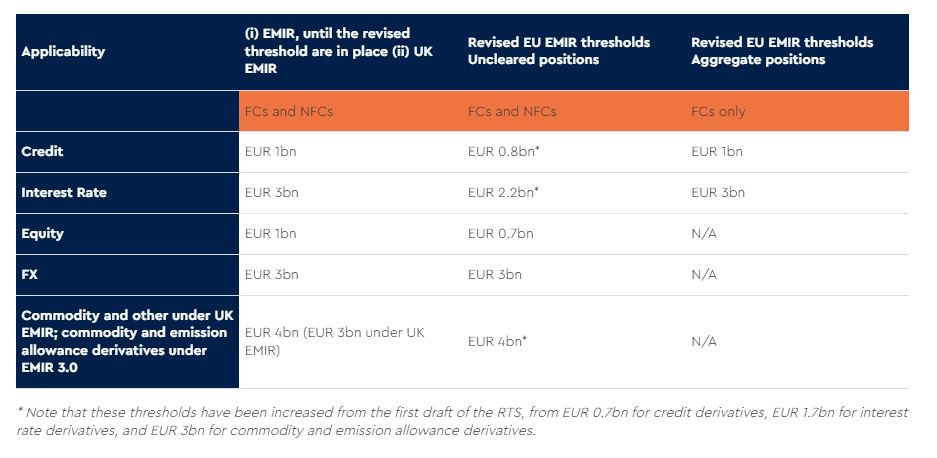
5. The proposed clearing thresholds (measured in gross notional
value)
6. Do counterparties need to conduct calculations on day 1 of
the revised thresholds coming into force?
No.
ESMA has confirmed that counterparties do not need to run the
revised clearing threshold calculations on the day of entry into
force of the RTS – counterparties can recalculate their
positions, based on the new methodology, at the time of the year
they usually do so. For many market participants, this will be in
June.
For counterparties that wish to conduct revised calculations
earlier, this remains an option. Counterparties are able to re-do
their calculation earlier than the standard twelve months (and then
again every twelve months).
7. Are the changes helpful to market participants?
This will be fact dependent.
For market participants trading predominantly FX out of EU NFCs,
these changes are very likely to be favourable and simplify annual
EMIR clearing threshold calculations.
However, for market participants which:
Trade out of FCs; or
Trade out of UK entities (noting that UK EMIR clearing
threshold calculations have not changed); or
Trade with UK banks (which typically require a representation
as to the counterparty’s UK EMIR classification),
these changes may add another complication.
As always with regulatory changes, there are potential routes to
further optimisation. To understand how these changes may impact
your structures, please reach out to one of our team members.
The content of this article is intended to provide a general
guide to the subject matter. Specialist advice should be sought
about your specific circumstances.