
Jenny Swire remembers a shop in the Johannesburg suburb in which she grew up, run by an interior designer and filled with David Hicks’s designs. As a young teenager in the 1970s she would swoon every time she passed. “Oh, it was so beautiful,” she says dreamily. She begged her father to let her decorate her bedroom accordingly and, eventually, he relented. Swire’s bedroom soon became a Hicksian confection of apricot, cream and peach. “My God, I loved that room,” she says with a sigh. “It was perfection.”
You could argue that Swire has been chasing that first sweet high ever since. She is now an interior designer herself — her third career, after enjoying success as a model and then as a fashion stylist and editor for titles including Tatler and Harper’s Bazaar. Now living in a hamlet in the Chilterns, she is in the business of perfection, with her projects ranging from London flats to ski lodges in Wyoming. She, like all interior designers, is trained in the art of problem-solving. Floor not working for you? Take it up. Bathroom in the wrong place? Move it. One can only wonder why, then, she has ended up living in a house with a rental lease that stated she is limited to surface-level changes.

The interior designer Jenny Swire and her dog, Adelaide, sit on a George Smith sofa covered in Pierre Frey velvet
SIMON BEVAN
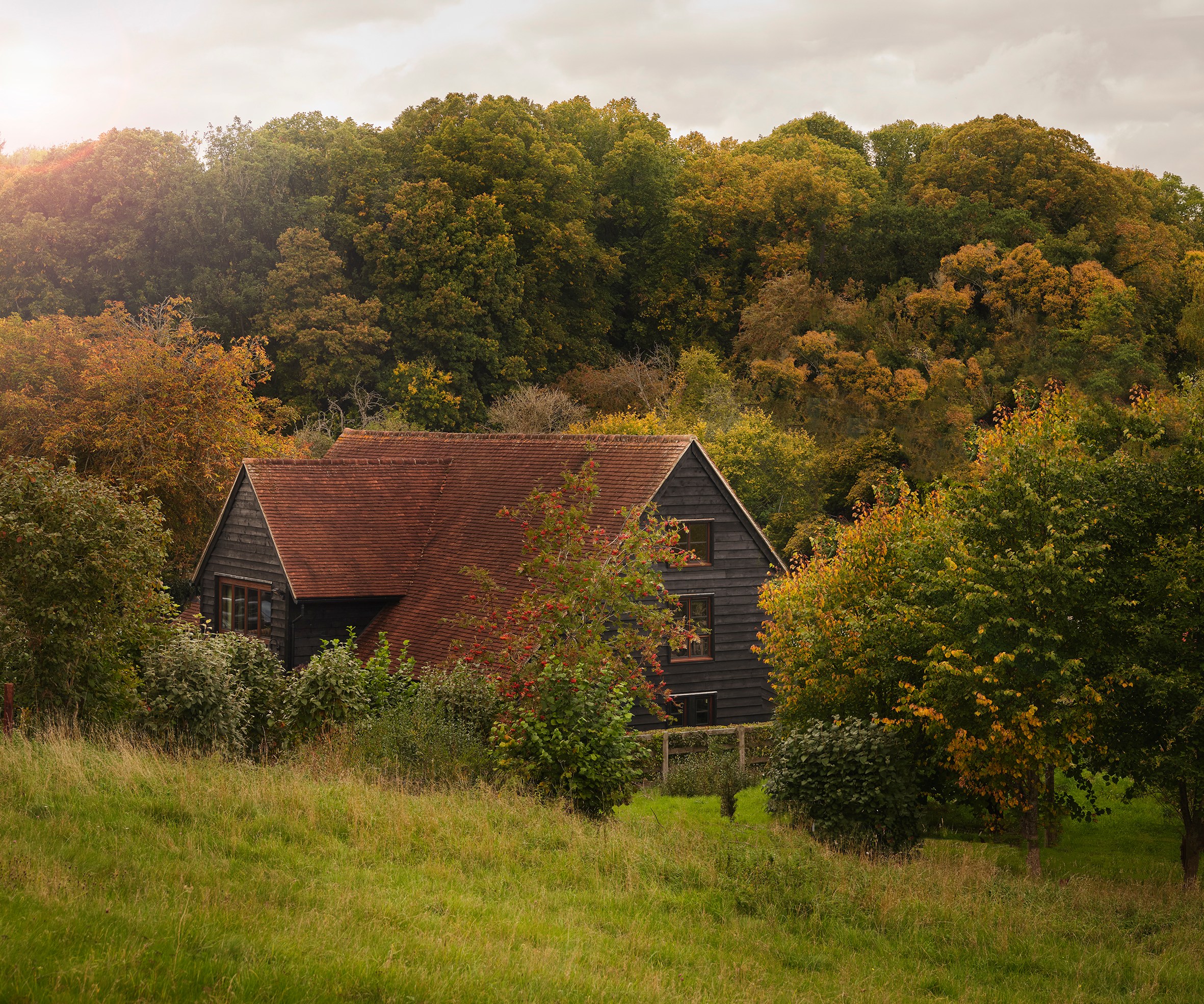
Swire’s home sits in a lush valley in the Chilterns
SIMON BEVAN
“It was a twist of fate, really,” says Swire, who originally moved to Henley-on-Thames a few years ago to be close to her mother, whose dementia was creeping in. When lockdown lifted the landlord wanted the flat back and, with nowhere lined up and a dog to consider too, she began googling. A city girl at heart, the idea of the countryside was anathema, but her search soon threw up a converted barn. She viewed it and took it on the spot, despite the bright orange quarry tiles underfoot and enthusiastically stained timber.
With a discrete apartment on the ground floor for her mother and enough space for her two grown-up daughters to stay when they needed, the barn met all Swire’s requirements. The large, open-plan kitchen, living room and mezzanine had windows on all four sides, flooding the room with light, and a skeleton of wormwood-pocked beams that reminded her of the timber-framed houses designed by Herbert Baker and Edwin Lutyens, two great heroes of hers. “It was a case of prayers being answered,” Swire says.
There was just the decor to consider. But Swire trusted her gut. Having emptied a storage container filled with art, furniture and objects, she had the luxury of being her own client. The pressure was off, in a way — “because I could just plonk something anywhere and work it out properly later. There was no deadline.”
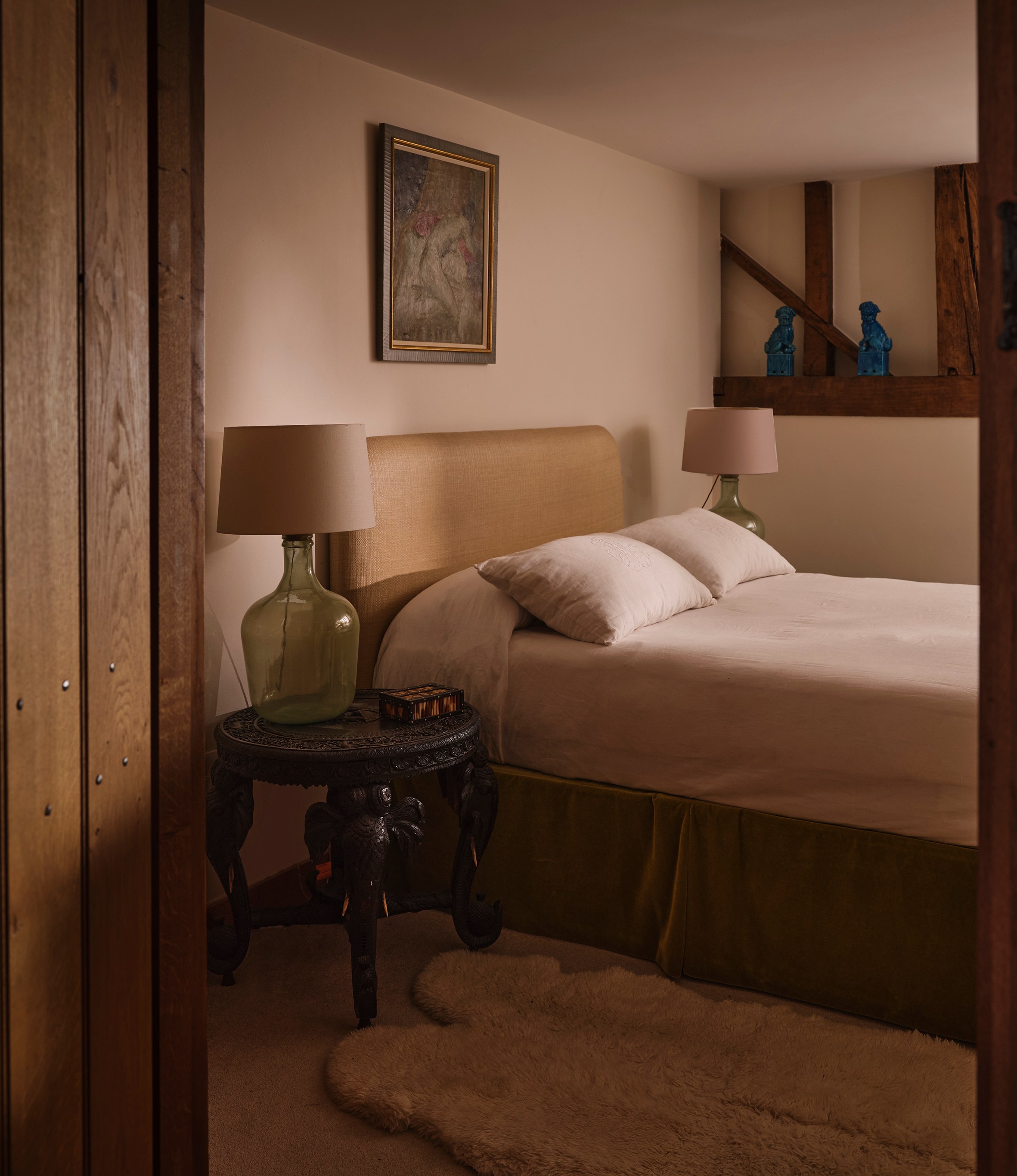
Swire’s bedroom is a peaceful retreat, with a 19th-century Anglo-Indian table and lamps made with vintage French carboys
SIMON BEVAN
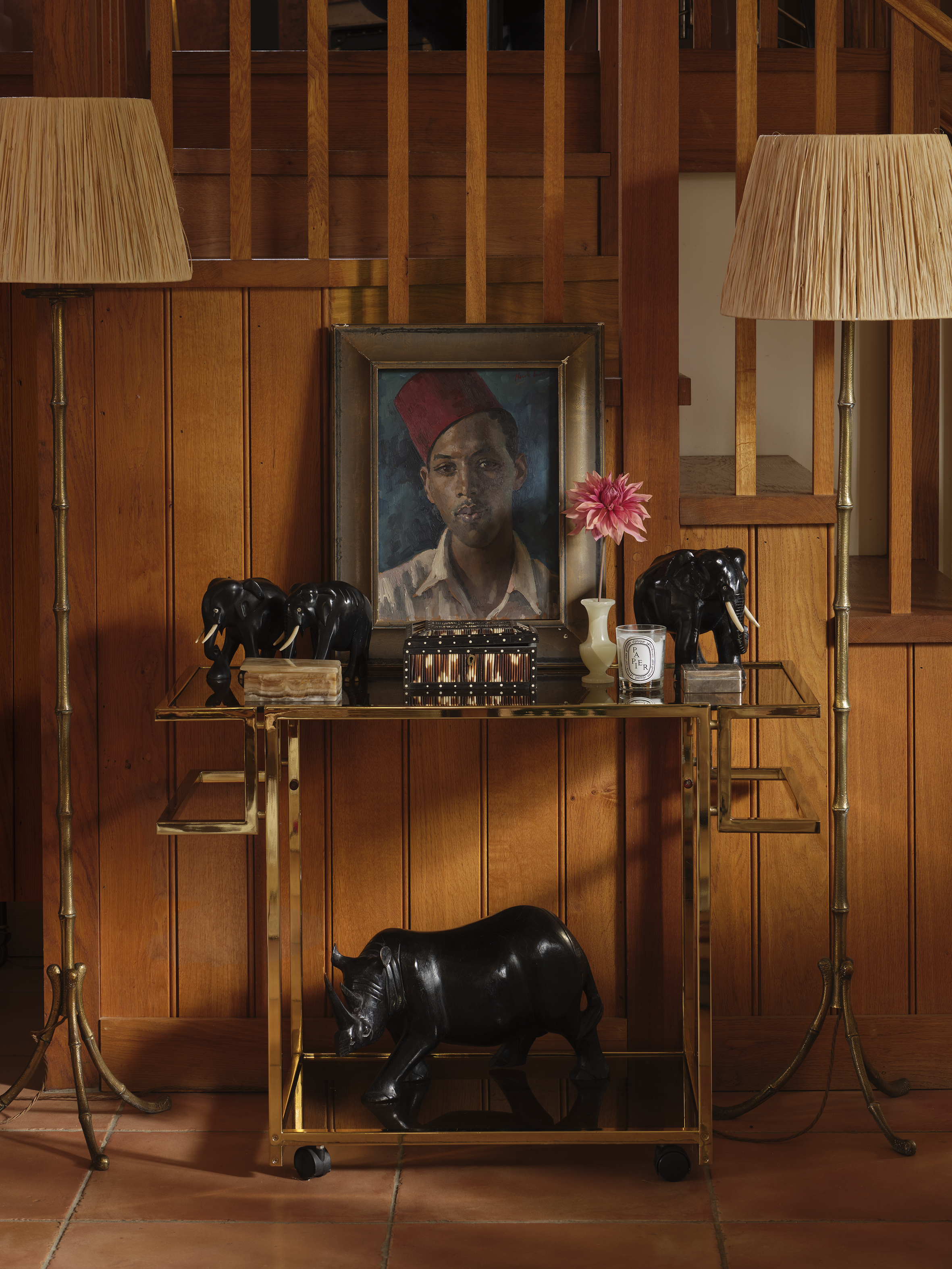
A 1970s Italian drinks trolley repurposed as a console
SIMON BEVAN
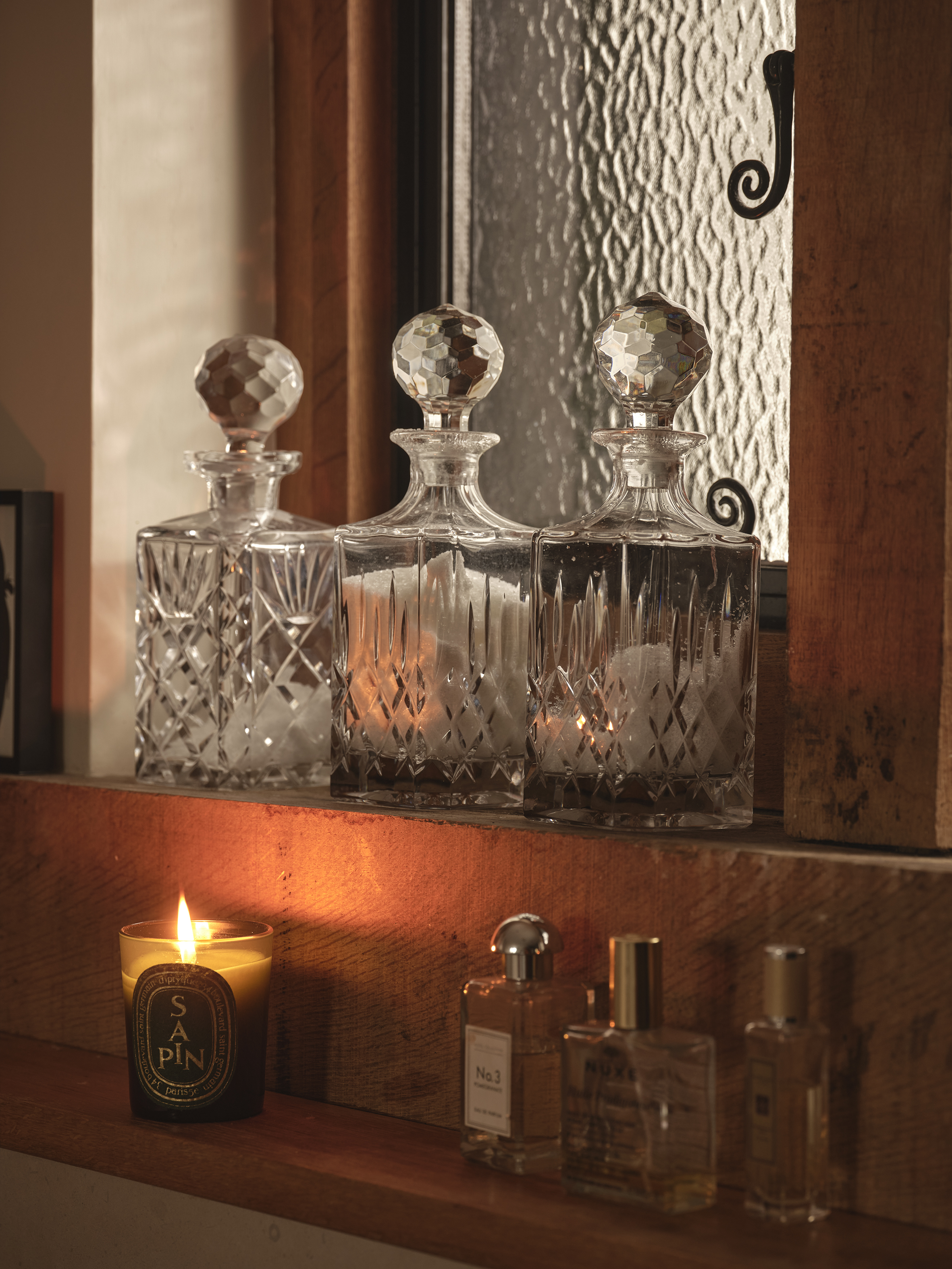
Swire found the 1920s decanters, now storing bath salts, in Oxfam
SIMON BEVAN
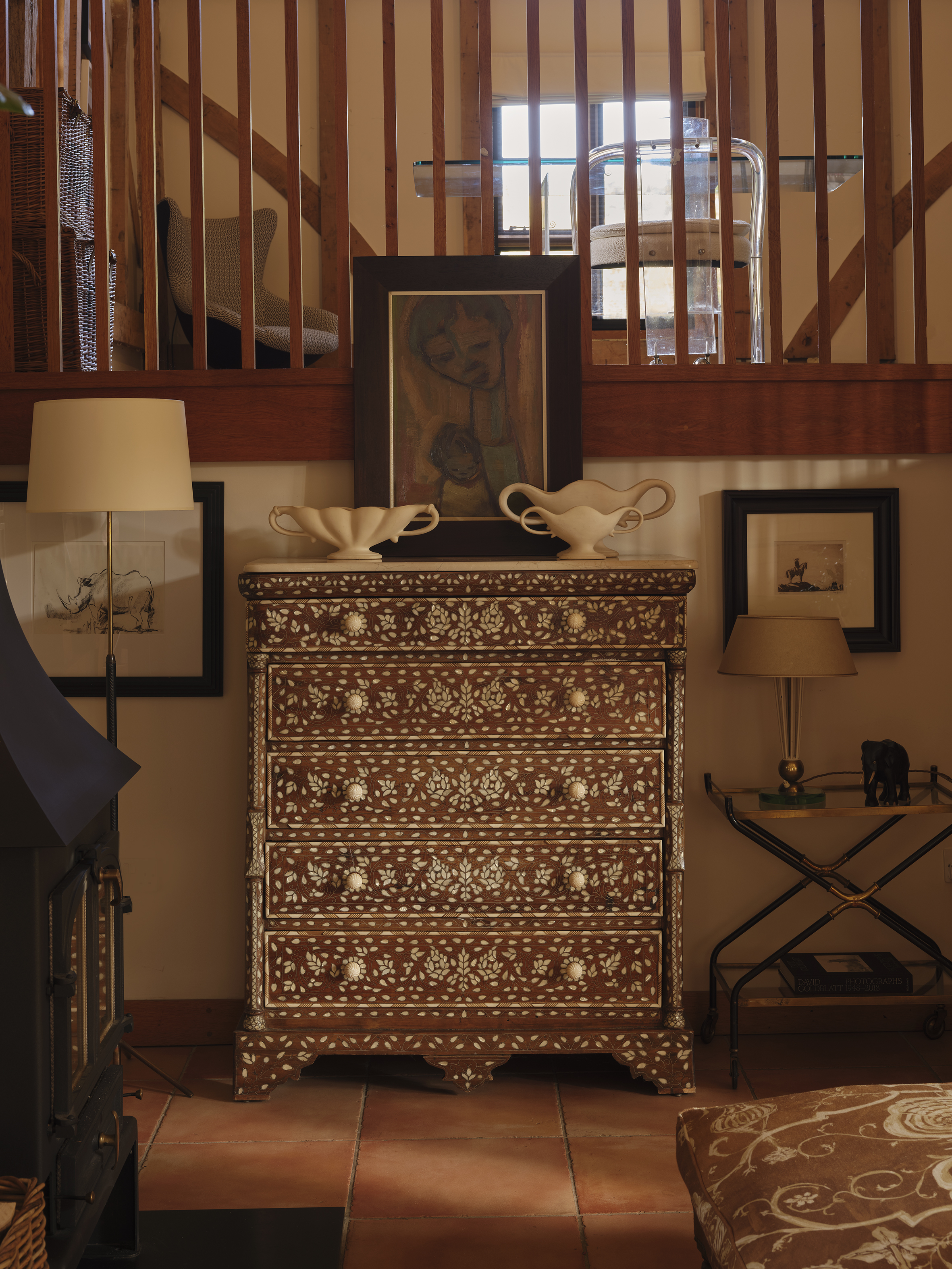
Constance Spry vases sit on a Syrian chest of drawers
SIMON BEVAN
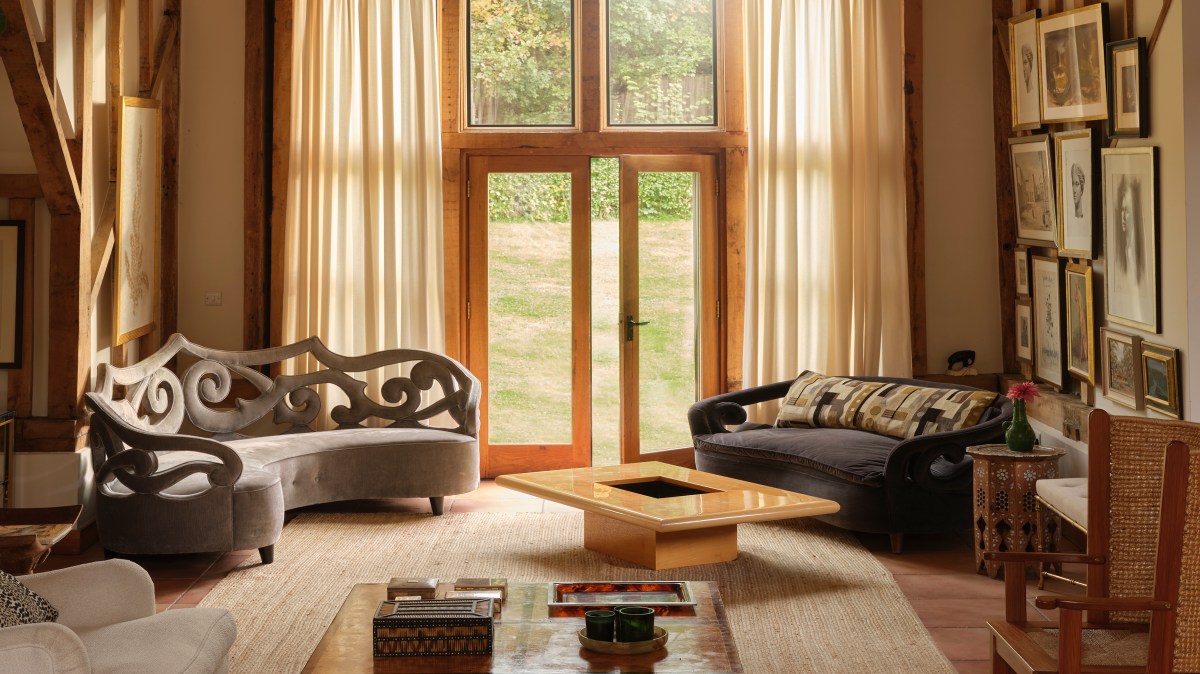
As it happens, most of Swire’s initial instincts were right. Her sculptural sofa for instance, “was too heavy to move” — and happily so: its curved silhouette now hugs its corner position neatly. Placing another 1930s sofa on the opposite wall therefore became a no-brainer. A Jean Claude Mahey coffee table and a mirrored bar trolley from the 1970s now complete the space, the retro European flavour a counterpoint to the English architecture that frames it.
Swire divided the living space into pockets, using furniture as her markers. This has worked particularly well in front of the wood-burner, which the barn’s owners had placed in a small space with little room for sitting. Instead of trying to squeeze a sofa in, Swire leant into the limitations. Now a plump footstool covered in fabric from Vanbrugh — her daughter Alice’s company — fills the area and has become the go-to spot for her dog, Adelaide.
• How an interior designer created a chic home from a wreck
The house has forced Swire to be less restricted by her own principles. She has even come to like the stained woodwork, seeing it through an almost 1970s lens. That said, there were a few areas where she was unwilling to compromise, namely art and curtains. Happily her landlords let her put up curtain poles — “so I didn’t feel like a sitting duck when darkness fell” — and pictures.
Now, Swire says, it feels like home. “The whole experience has been a lesson in relaxing,” she continues, “in not being too judgmental.” It is, she adds, a great reminder that “as long as you fill your home with the things you love, somehow they’ll fit. Things don’t have to be perfect.”
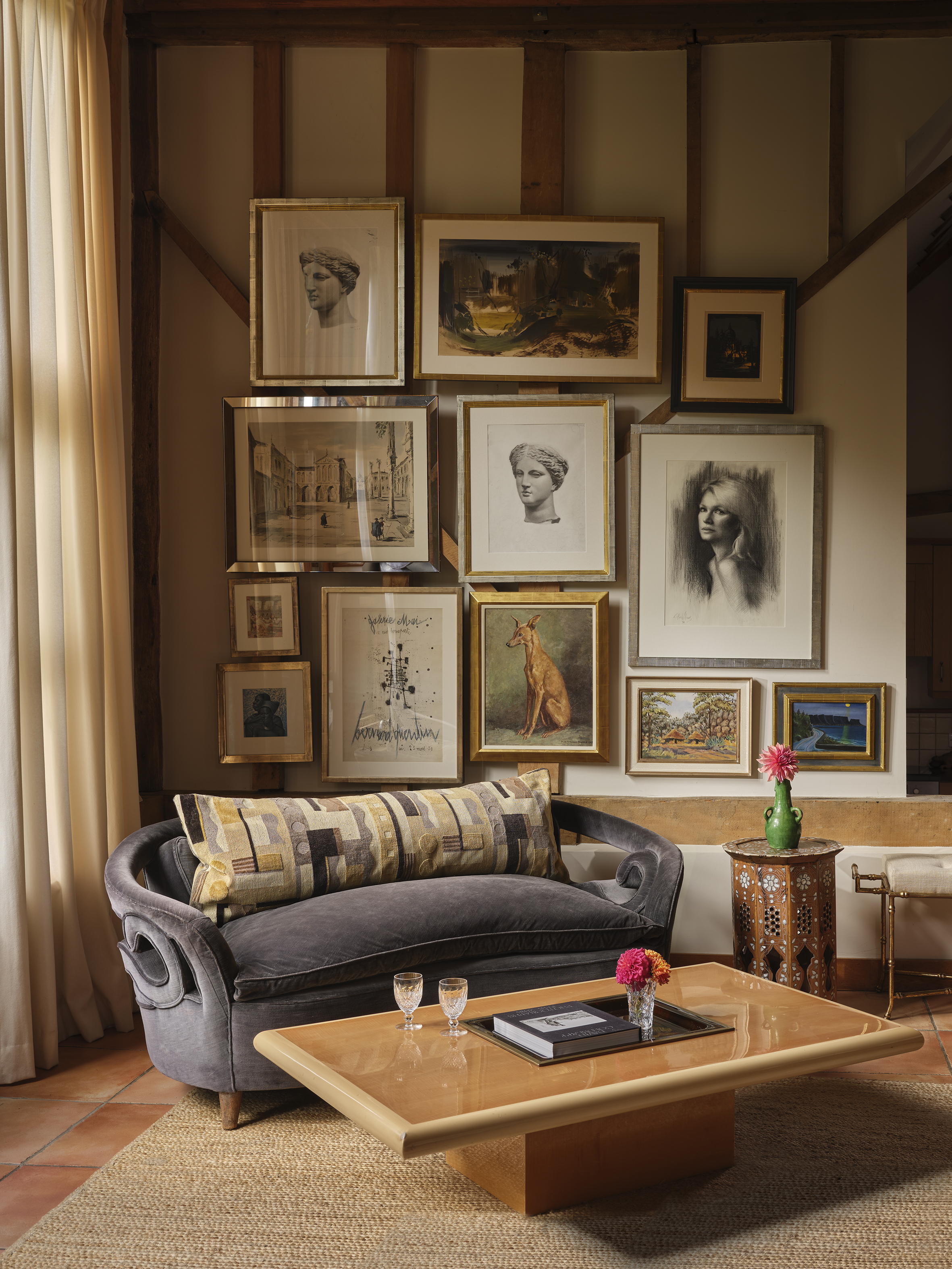
Assorted artworks jostle behind the sofa and 1970s coffee table by Jean Claude Mahey
SIMON BEVAN
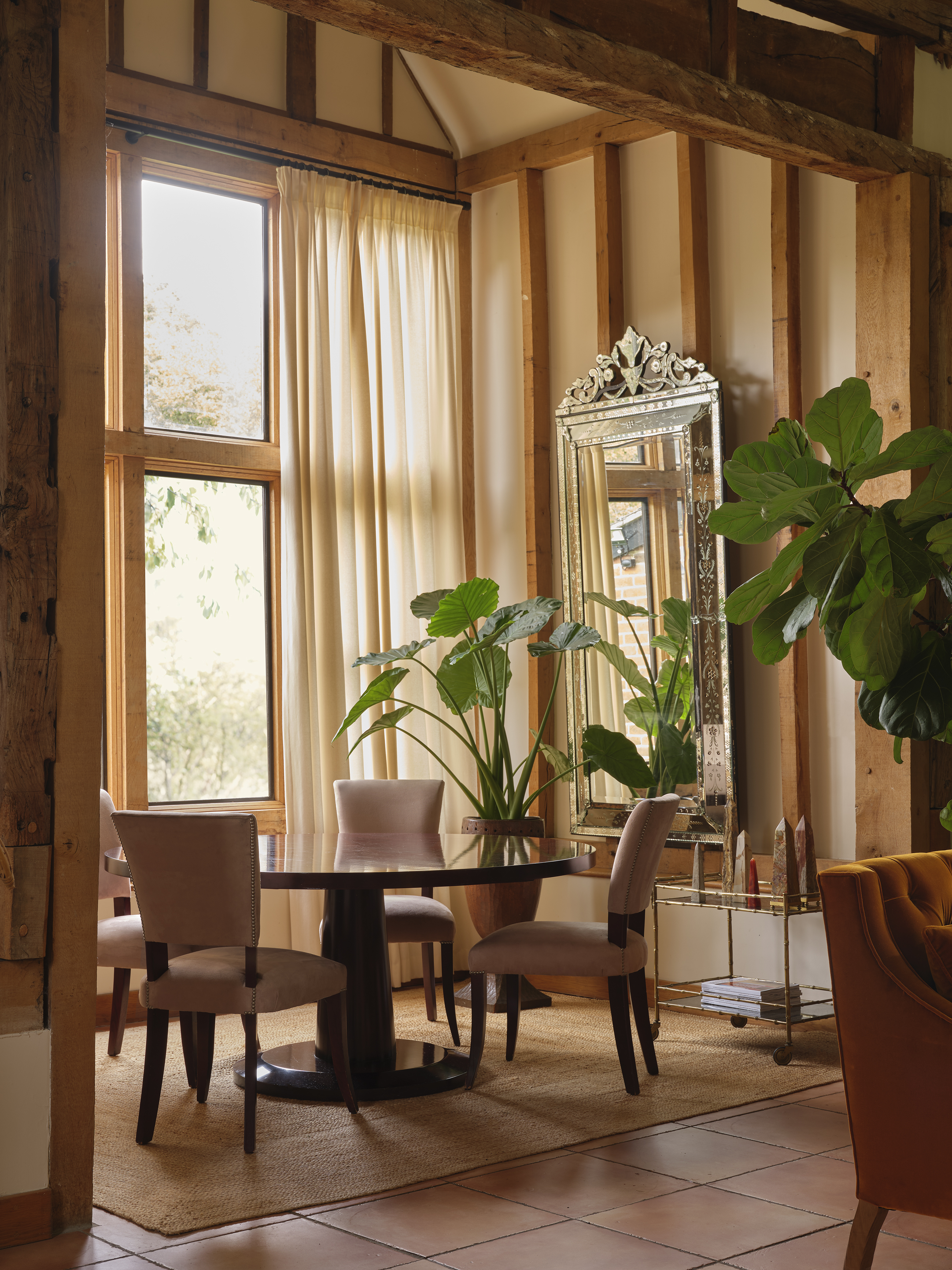
The curtains by the dining area are made of wool fabric from AW Hainsworth
SIMON BEVAN
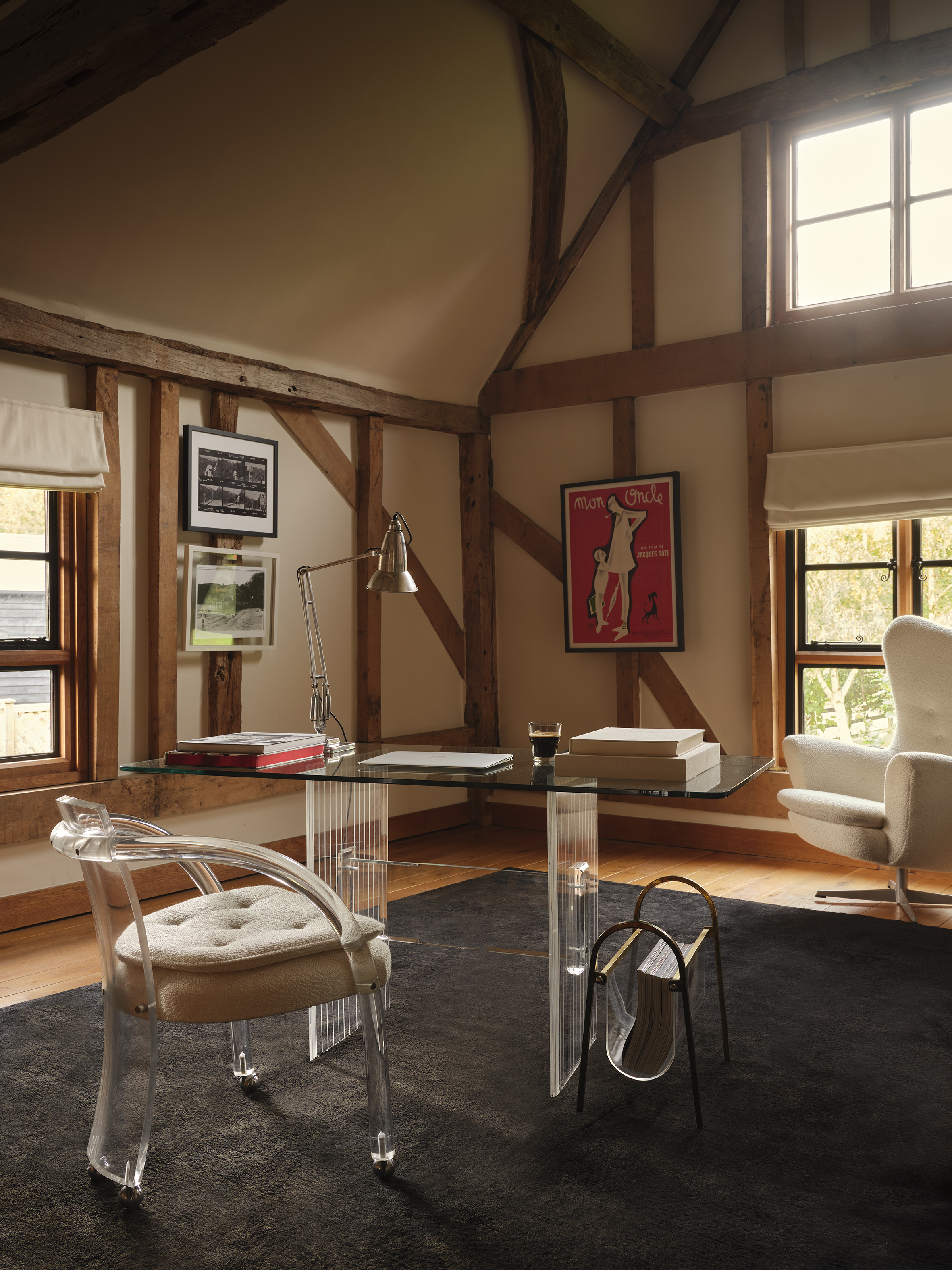
Swire uses a Charles Hollis Jones Perspex chair and dining table in her workspace
SIMON BEVAN
• Read more expert advice on property, interiors and home improvement