
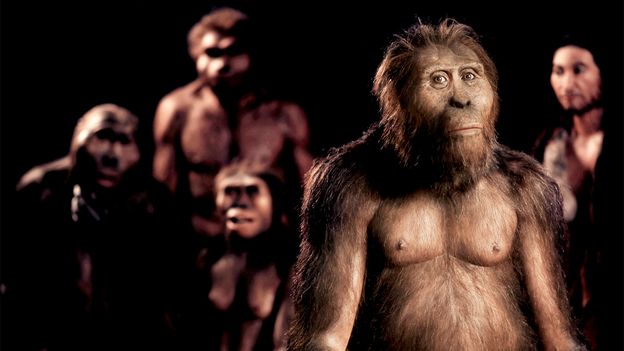
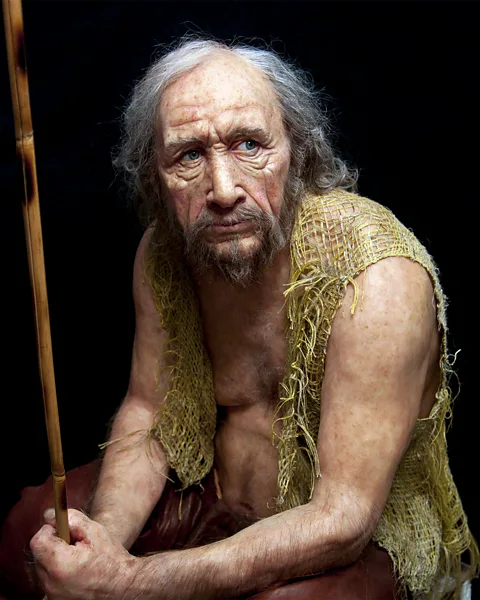
 Elisabeth Daynes/ Science Photo LibrarySome of the earliest examples of prehistoric art are Cro-Magnon (Credit: Elisabeth Daynes/ Science Photo Library)

Homo sapiens finally had it all – the physical capability to use a wide range of sounds, including the final vowel, the all-important “i”, as well as the cognitive capacity to process and transmit abstract ideas.
We are the “wise men”, according to the translation of “Homo sapiens”. Over our 300,000 years of existence (or perhaps even longer), we have finally mastered the most complex communication system of all life on Earth.
Language is “infinite”, says Vialet. “You can talk for hours, going from digression to digression, combining a succession of words in all directions.” It’s “pretty incredible”, she says.
But listen closely and you might hear echoes of the distant past, says Mithen. “I think some of the words we use are really ancient. If we look across all languages today, there are some commonalities, like the words for ‘mother’ is often mum, mom, mama – it’s an ‘m’ sound. There’s an argument that the ‘m’ sound originates from babies sucking at the breast. That’s a typical example of an iconic word. I’m sure the Neanderthals probably used a very similar word to that for their own mothers.”
Today, there are over 7,000 languages spoken all over the world. Sadly, almost half of these are in danger of disappearing. But language, like us, is always evolving. As the world we live in changes and human needs change with it, so too will our mode of communication. What will humans sound like in millennia to come?
—
If you liked this story, sign up for The Essential List newsletter – a handpicked selection of features, videos and can’t-miss news, delivered to your inbox twice a week.
For more science, technology, environment and health stories from the BBC, follow us on Facebook and Instagram.