
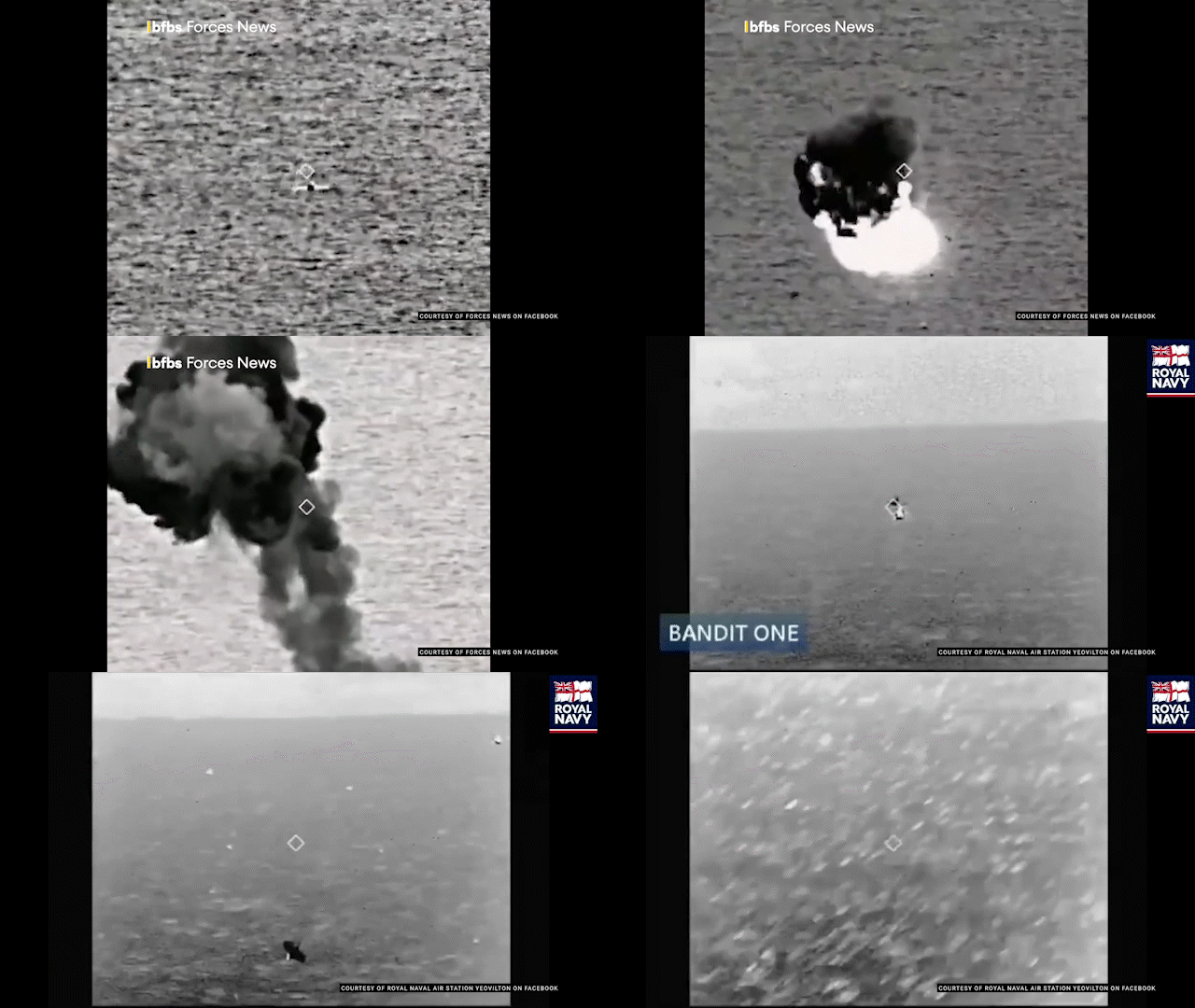
Specialist British troops have been blasting Iranian drones out of the sky with cheap high-tech missiles fired from ground launchers, The Times can reveal.
A small unit operating in northern Iraq has downed more Shahed-style drones this week than squadrons of RAF fighter jets defending the airspace above Qatar and Jordan.
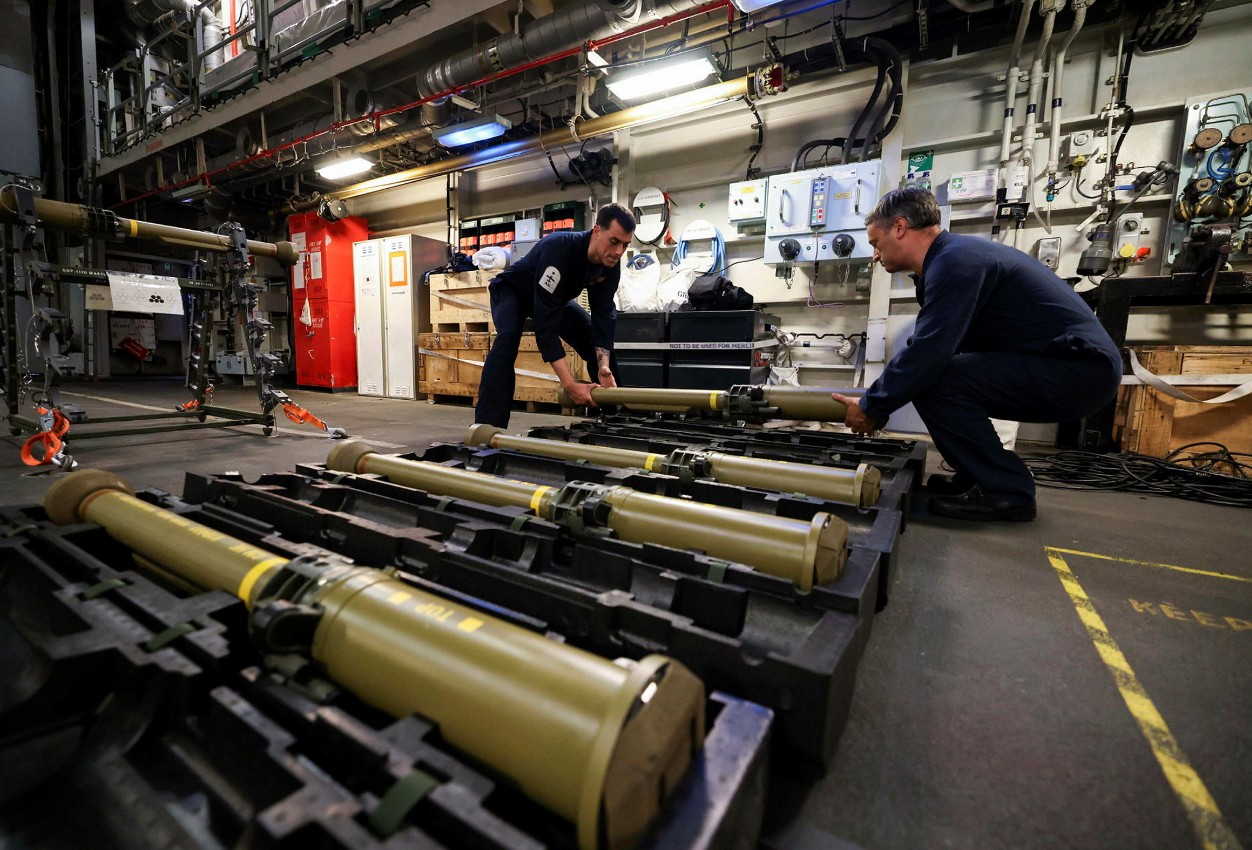
Its soldiers are using laser-guided Martlet missiles armed with 3kg warheads, which obliterate targets with shrapnel at ranges of up to 8km.
Although not publicly identified, they are thought to belong to the RAF Regiment’s specialist counterdrone unit.
This serves as a last line of defence against unmanned aerial attacks.
The troops, who are protecting a coalition base housing UK forces, sprang into action when Tehran launched waves of kamikaze drones at Gulf nations in response to US-Israeli strikes that killed the country’s supreme leader last weekend.
They destroyed one suicide drone on Saturday, several on Monday, and several more overnight on Wednesday, the Ministry of Defence said. It did give specific figures.
RAF Typhoons took down two drones in Qatari airspace on Sunday and Monday, and F-35 warplanes destroyed multiple targets over Jordan on Monday.
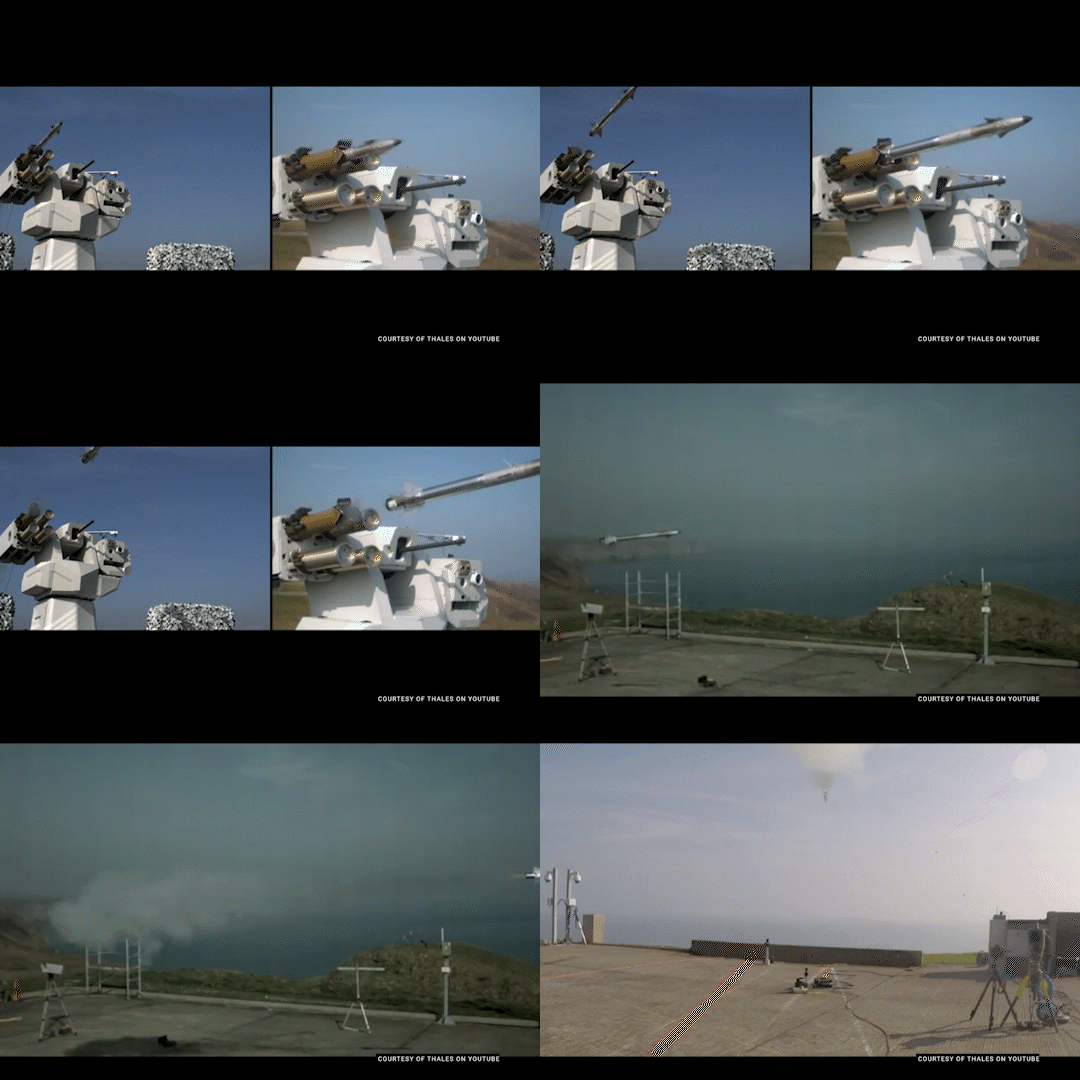
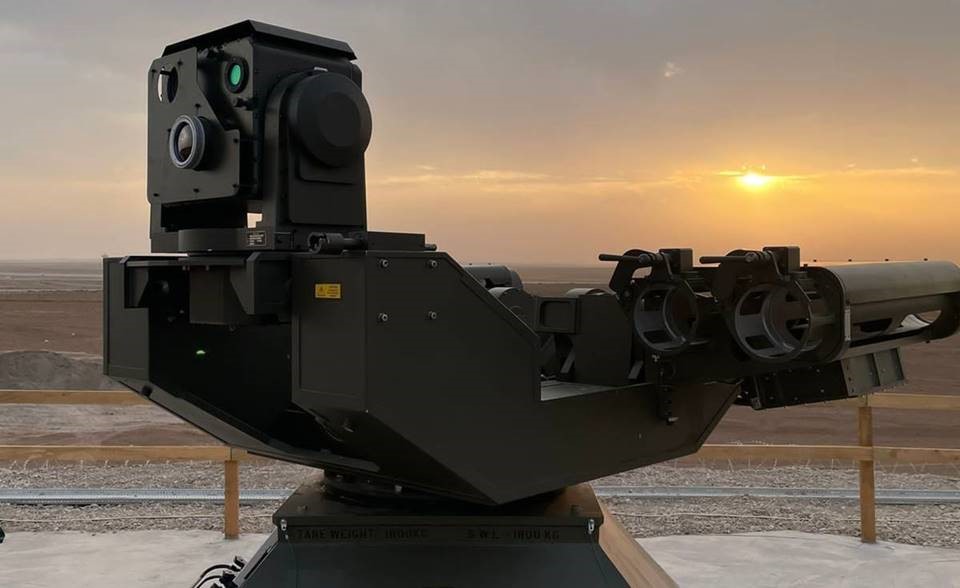
The RAF Regiment is equipped with Rapid Sentry, a static turret-like ground launcher for laser-guided lightweight multirole missiles (LMMs), as well as surveillance radars and an electronic warfare system that can neutralise aerial threats.
The Martlets are estimated to cost about £50,000 each — a quarter of the price of the Asraam short-range air-to-air missiles fired by RAF combat aircraft, which are about £200,000 per shot and have a range of up to 25km.
This week weapons analysts criticised the RAF’s use of expensive air-to-air missiles to intercept cheaply made Iranian Shahed drones, which cost between £26,000 and £67,000 each to manufacture, depending on the variant.
They said fighter jets were effectively “firing golden bullets at plastic targets”, and could instead use their cannon to bullseye slow-moving drones in the air.
Questions were also asked about why the UK appears to have failed to learn lessons from Ukraine, which uses drones to intercept thousands of Russian kamikaze devices, as well as heavy machine guns, anti-aircraft artillery and helicopter gunships.
The government said on Tuesday that it was sending two Wildcat helicopters armed with LMMs to defend RAF Akrotiri, Britain’s large airbase in Cyprus.
The announcement was made after the base took a direct hit from a Shahed-style drone that slipped past UK air defences and blew a hole in a spy plane hangar.
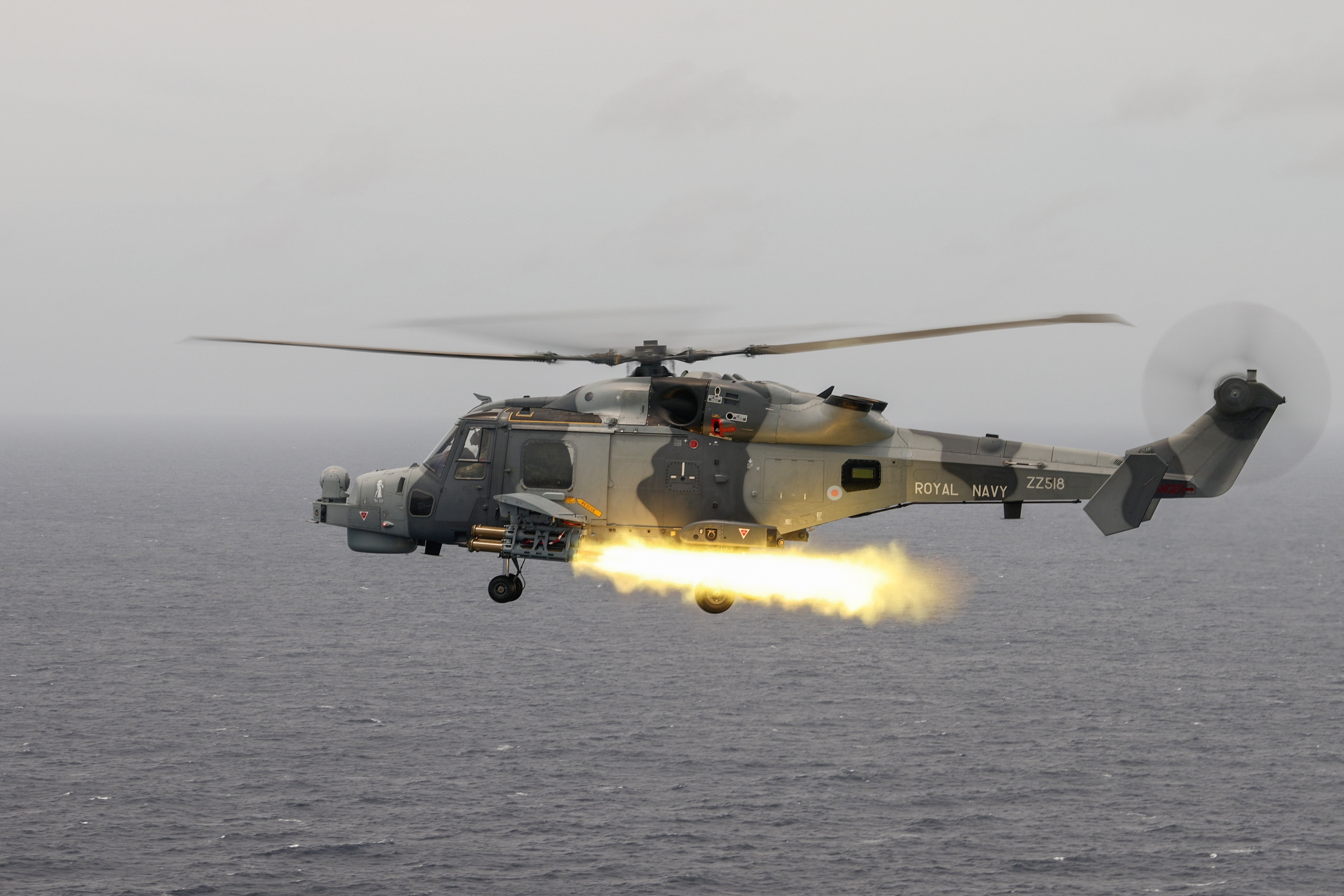
A Wildcat
LPHOT UNAISI LUKE/UK MOD CROWN
The government also announced that UK and Ukrainian counterdrone experts had been deployed to the Middle East to bolster British air defences and assist allies.
It is not clear if the 7th Air Defence Group, which is part of the Royal Regiment of Artillery, has been mobilised as part of the force.
This unit, based at Baker Barracks on Thorney Island, West Sussex, shoots the weapons from smaller shoulder launchers and turrets mounted to the top of Stormer combat vehicles.
The soldiers were visited by the King only last week, when he was photographed inspecting the missiles and aiming a launcher.
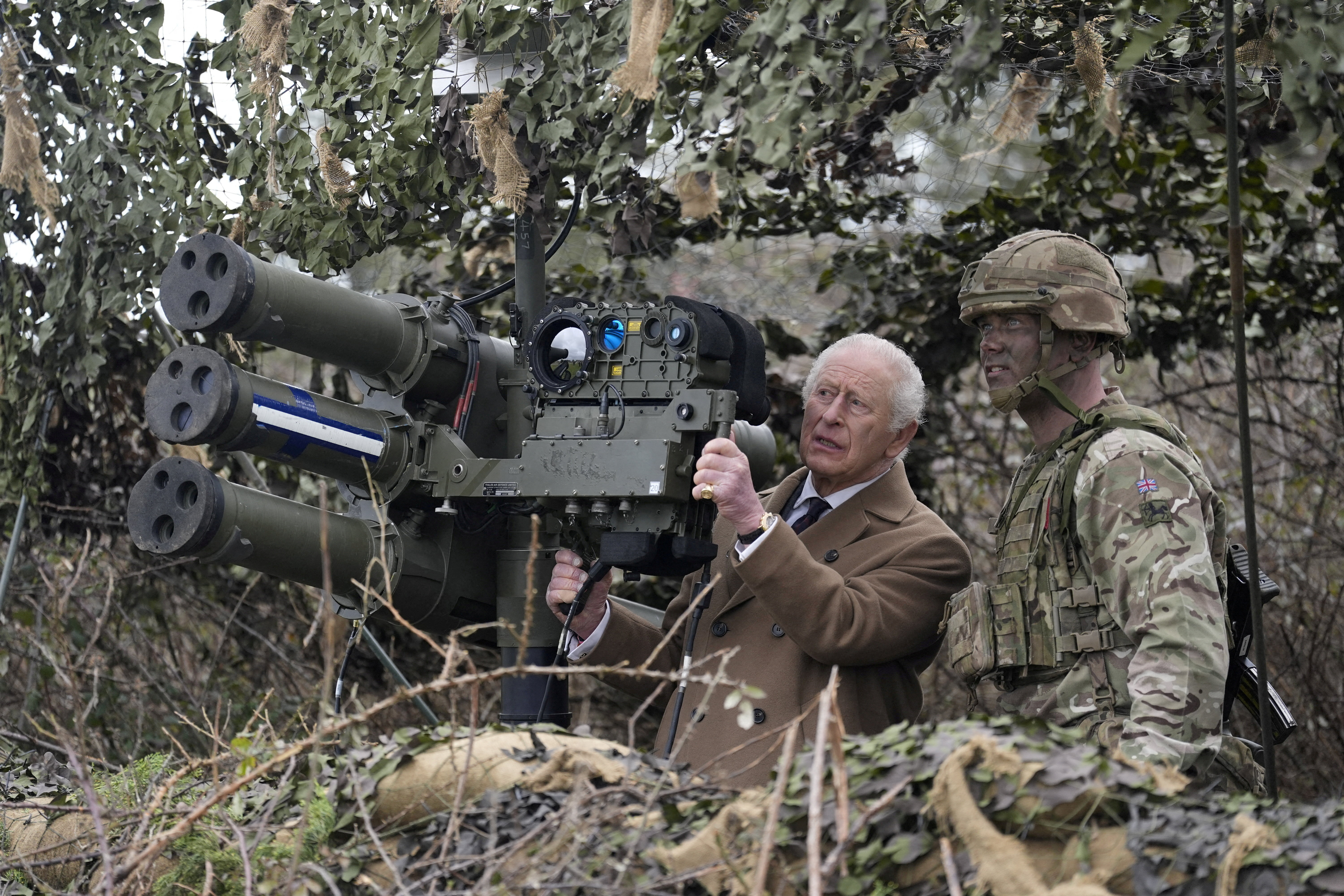
The King at Baker Barracks, Thorney Island, on February 26
ANDREW MATTHEWS/REUTERS
However, The Times understands that RAF Akrotiri has been stockpiling LMMs and the unit’s Stormer vehicles since January, after military planners assessed that threats to the base were increasing amid growing hostilities in the region.
Also in use at the base is the Orcus Counter-Uncrewed Air System, an advanced electronic warfare weapon that neutralises drones by jamming their communications links or interfering with their internal control systems.
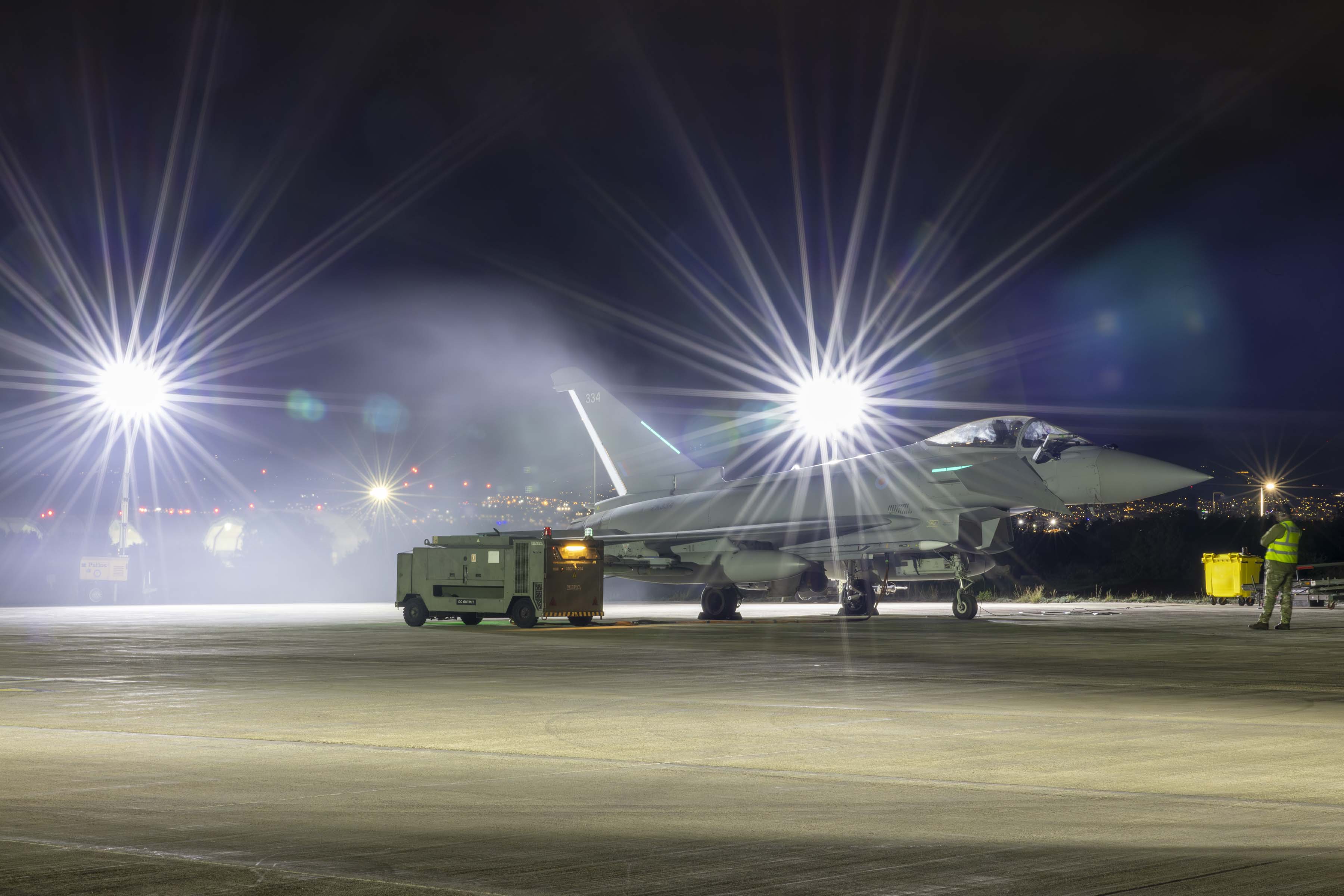
An RAF Typhoon aircraft
GETTY IMAGES
When combined, the missiles, aircraft, warship and jamming technology at RAF Akrotiri will create a “layered” air defensive shield around the base.
However, the single drone that got past some of these defences was able to do so due to its small size, and because it was flying low and close to the water at night amid electronic interference.
The Wildcats were chosen to help secure the skies because they have advanced on-board sensors that allow them to better detect smaller overseas threats and neutralise them with LMMs.
A military air special adviser for Thales, the defence firm that created the LMM, told The Times the missiles were effective against drones because of their fragmentation blasts.
He said: “When it gets close to the target, because it’s a laser beam riding weapon, it will fire and has a larger circumference to cause maximum damage.”
The advisor stressed that while these short-range weapons are highly effective and cheaper than alternatives, they should not always be used instead of more costly longer-range missiles.
LMMs are designed to complement other assets, he said, adding: “You need a multi-layered defence and it depends on what you’re trying to protect. It isn’t about the value of the target you’re shooting down — it’s the value of what you’re trying to protect.
“If what you’re trying to protect is hugely important, then you need the best weapon system to engage it as far away as possible. If that happens to come off a F-35 or a Typhoon, then that is what it needs to be.”