
(Credits: Far Out / Alamy / Bent Rej / Catharine Anderson)
Fri 6 March 2026 14:00, UK
In 1993, nearly 20 years after he’d left the band, Mick Taylor was asked how long he’d been a member of The Rolling Stones. “Too long,” was his initial response, then he did the maths, seemingly surprised at just how short a time it actually was, “Five or six years, actually”.
“The good thing about those days,” Taylor told reporter Timothy Mattox, “Was that being from England and admiring American music so much…we couldn’t wait to get to America and hear people like BB King. It was great to go to places like Chicago and go to clubs on the South Side and sit in and play with those people.”
Taylor was slightly less enthusiastic, perhaps, about playing with the guys in his own band, for while he was friends with Mick and Keith and admired them, the early ‘70s Stones lifestyle was a bit fast and dirty for his liking. Despite playing during what many people consider to be the peak era of the band, with Let It Bleed, Sticky Fingers, Exile on Main St, and more hitting the airwaves, he got out while the getting was good.
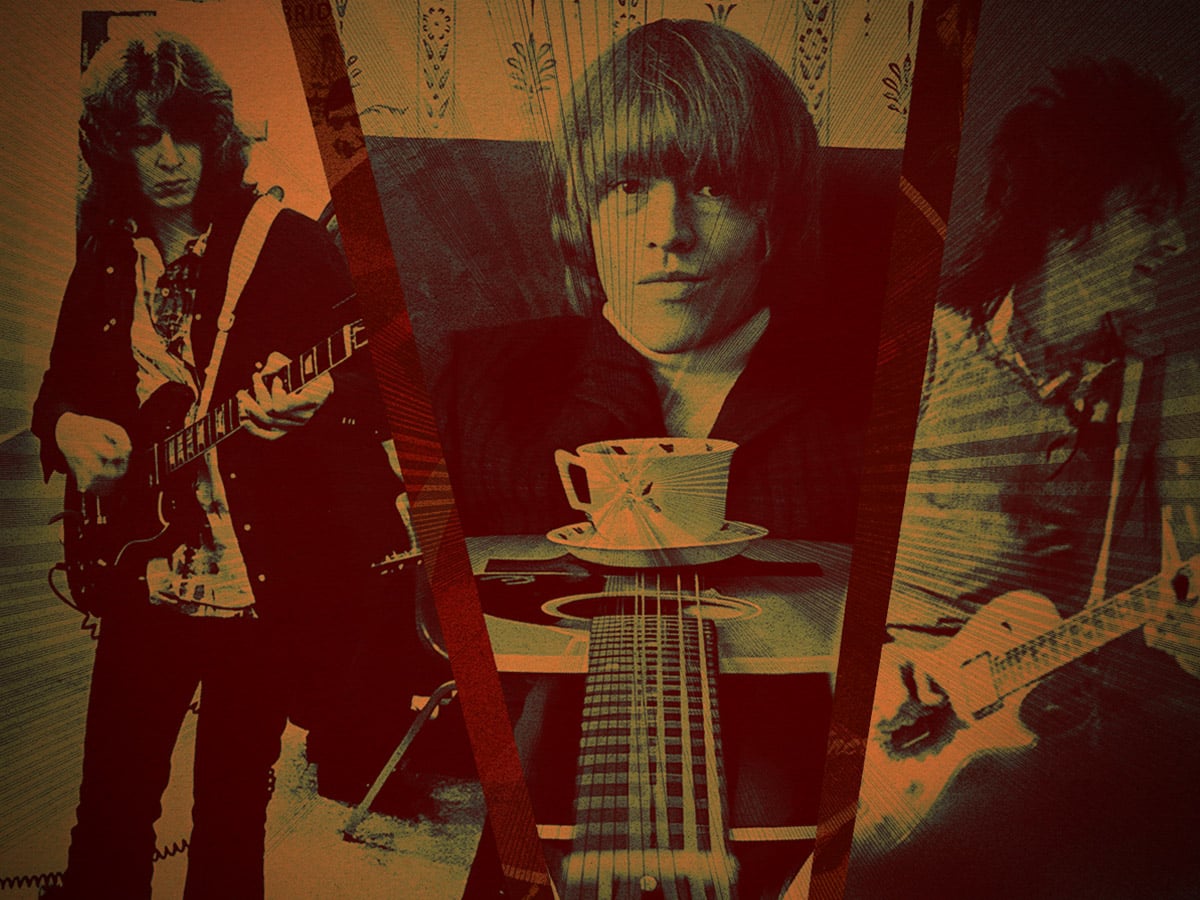
Playing roughly 70 to 80 songs during his tenure, Taylor will always have his supporters in the debate over who best filled the lead guitar role in the Stones, but he certainly couldn’t claim to be the most prolific. So what about the legendary Brian Jones, the man who founded the Stones back in 1962 and served as their initial creative engine?
Rock bands didn’t take very long breaks between recording sessions in the ‘60s, so it is possible that Jones played on enough tracks before his death in 1969 to still outrank Taylor and Ronnie Wood in terms of Stones-related credits.
Bear in mind, Jones wasn’t just a lead guitarist, but the band’s jack of all trades, adding harmonica, sitar, marimba, dulcimer, and just about anything else lying around the studio. Albums like Aftermath and Between the Buttons are unimaginable without Jones’s depth and colour.
Of course, the balance notoriously started to shift by the time of Beggar’s Banquet in 1968, and as Jones spiralled toward his demise, his contributions became more sporadic. All told, he appears on about 120 to 130 officially released Stones studio tracks, putting him ahead of Taylor. For fans who prefer the Stones’ original run in the ‘60s, of course, point totals are secondary in the legacy debate as Brian Jones will always be the original and the best.
So, who featured the most?
To settle the simple question posed in the conceit of this piece, though, I’m afraid the suspense will be minimal. Ron Wood, who left the Faces to take the place of his friend Mick Taylor in the Stones’ 1975 line-up, is still a member of the band more than a half-century later.
Even with increasingly large gaps between new Stones records over that period, it would be virtually impossible for Wood not to take the title as the lead guitarist with the most Stones credits, and indeed, any method of calculation is going to get you to the same conclusion.
Wood has steadily played on every studio album from Black and Blue through 2023’s Hackney Diamonds, meaning he has appeared on well over 200 Rolling Stones studio tracks, easily outpacing both Jones and Taylor. It is noteworthy, though, that a joint combination of Jones and Taylor’s totals, from 1962 to 1974, does create a considerably tighter competition, as the Stones were almost equally prolific in their first 12 years as they have been in the subsequent 50.
Brian Jones laid the foundation, Mick Taylor took the band to artistic heights, but Ronnie Wood, through patience, adaptability, and pure survival, became the most recorded guitarist in Rolling Stones history.