
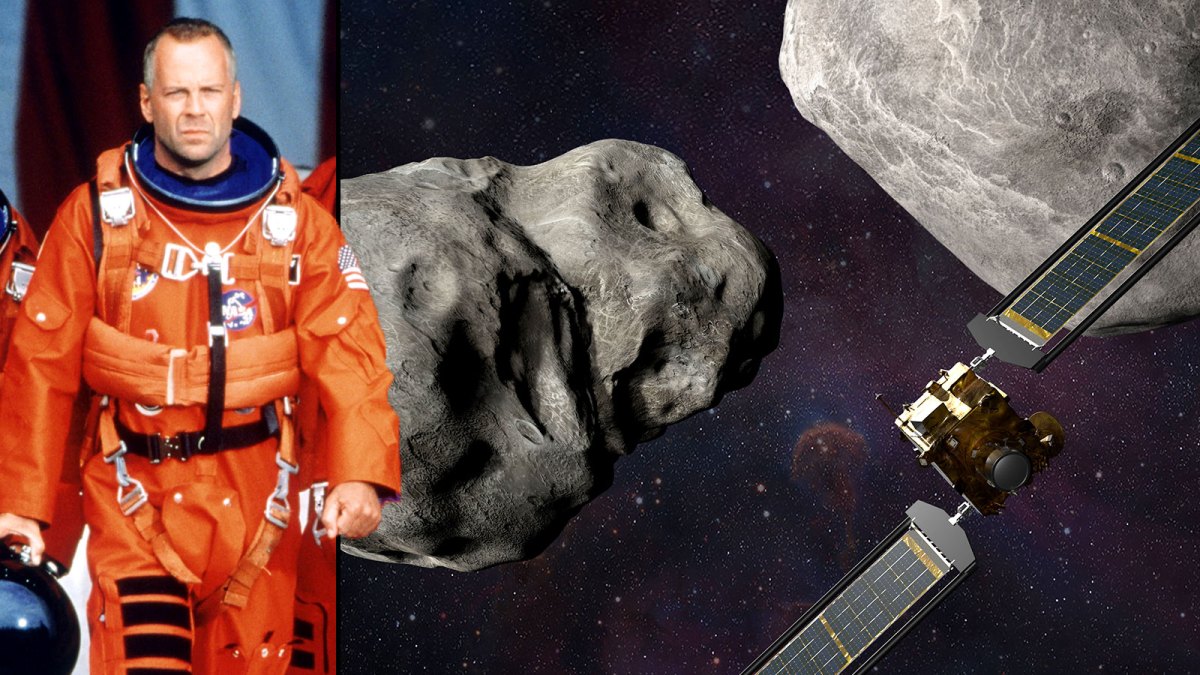
Bruce Willis tried it in Armageddon. Robert Duvall attempted it in Deep Impact. But the ability to deflect an asteroid off a collision course with Earth has long remained in the realm of science fiction.
Now, Nasa scientists have changed the trajectory of an asteroid’s orbit around the sun for the first time, and in so doing took a “notable step forward” in avoiding the fate of the dinosaurs.
In 2022, the US space agency deliberately smashed a spacecraft into an asteroid “moonlet” that orbited a larger asteroid. Remarkable footage was beamed back to Earth as the probe, called Dart, hurtled closer and closer to the space rock’s rubble-strewn surface, before crashing into it.
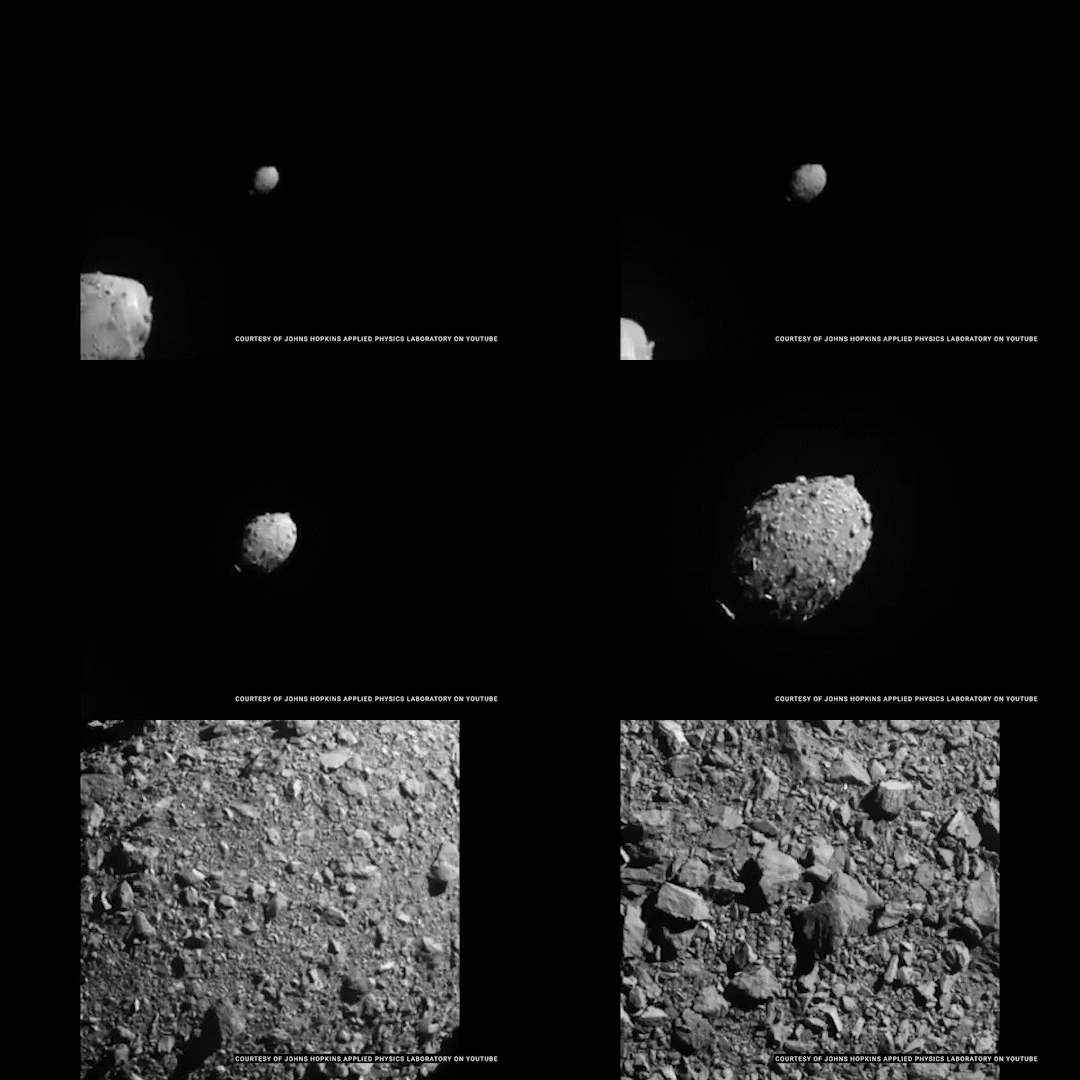
Analysis found that the mission succeeded in changing the path of the asteroid moonlet, called Dimorphos, around its parent asteroid, called Didymos, reducing the time of its orbit by 32 minutes and bringing the two about 37m closer.
It marked “humanity’s first time purposely changing the motion of a celestial object”.
New analysis has now examined the effect of the mission on the larger asteroid, as well as the asteroid moonlet.
Researchers at the University of Illinois Urbana-Champaign in the United States examined almost 6,000 instances in which Didymos flew in front of a star, blocking out its light, to examine changes in its orbit.
They have calculated that the speed of Didymos as it orbits the sun has been reduced by about 11.7 micrometres per second through the Dart collision. It is the “first ever measurement of human-caused change in the heliocentric orbit of a celestial body”, scientists noted.
This is a small step for an asteroid, but a giant leap for humankind.
“By demonstrating that asteroid deflection missions such as Dart can effect change in the heliocentric orbit of a celestial body, this study marks a notable step forward in our ability to prevent future asteroid impacts on Earth,” noted the study in the journal Science Advances.
The change in momentum was created by the impact of the Dart spacecraft, known as a “kinetic impact deflection”, and also the cloud of debris it created, which formed a tail more than 6,000 miles long.
It means that missions could target small moonlets in orbit around large asteroids in order to change the orbit of the bigger space rock, the study found. “Our results demonstrate that targeting the secondary asteroid in binary systems constitutes a possible strategy for kinetic impact deflection, adding to humanity’s planetary defence capabilities.”
• How scientists could stop a planet-killing asteroid
This development could be important for the future of humanity.
Nancy Chabot, a scientist from Johns Hopkins University who helped lead the Dart mission, warned that there were currently no defensive probes or weapons ready to launch if we do spot an asteroid on a collision course with our planet, noting that it “keeps me up at night”.
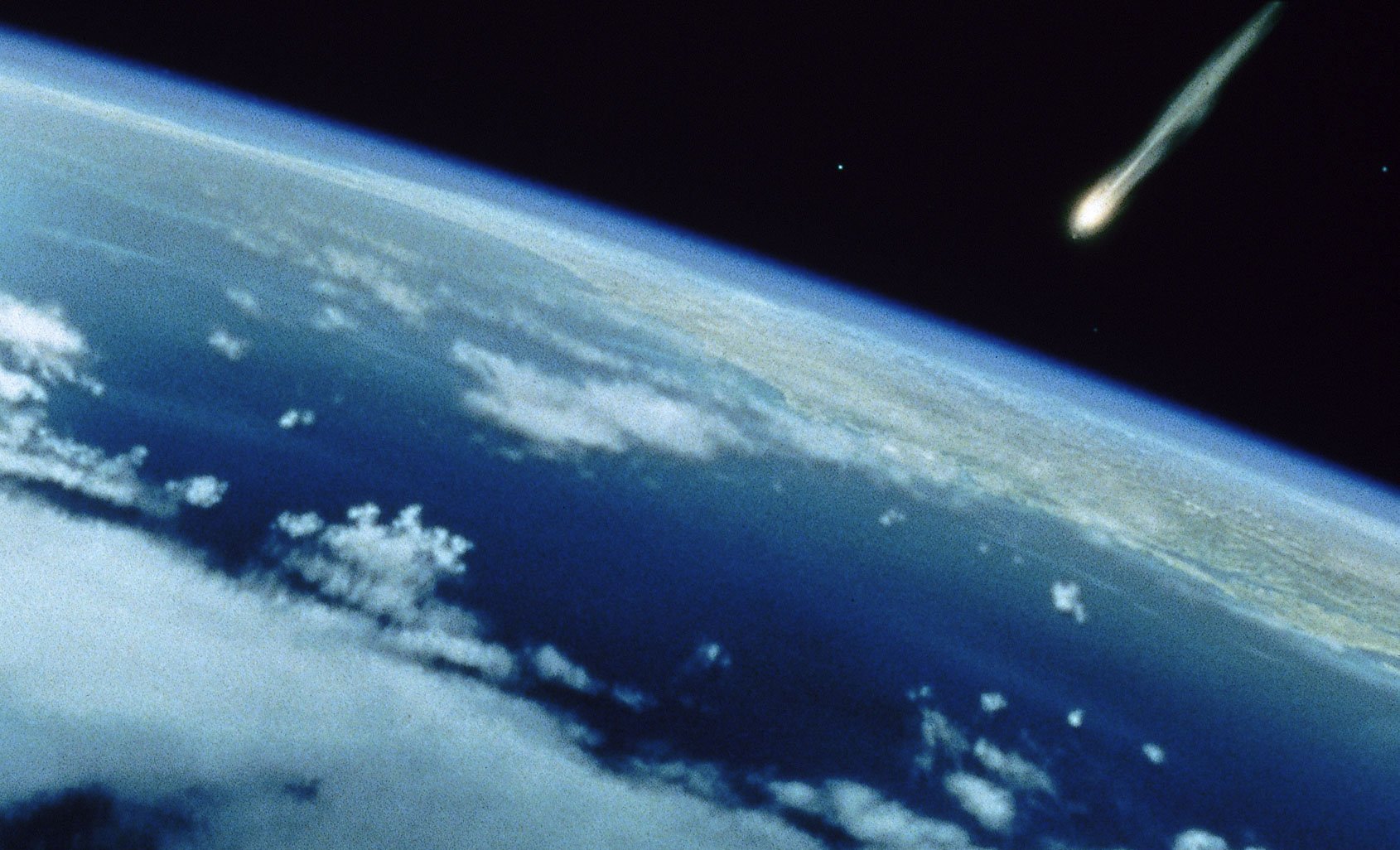
Asteroid strikes such as the one depicted in Deep Impact could be consigned to Hollywood blockbusters
UIP
Last month, the woman in charge of defending the planet from rogue asteroids, Nasa’s head of planetary defence, Kelly Fast, warned that there were still about 15,000 large space rocks in the vicinity of Earth’s orbit whose precise whereabouts are unknown.
It was announced on Friday that a 90-metre wide asteroid called YR4 will now definitely miss the moon. It was initially thought that YR4 might smash into the Earth until the threat level was downgraded in stages to finally reach zero last year, but there remained a 4 per cent chance of it hitting the moon.
Nasa and the European Space Agency said new observations confirmed it would pass safely by, about 12,400 miles from the lunar surface, making it still a relatively near miss at just one twentieth of the distance from the Earth to the moon.