
Research reveals the majority of self-employed women fail to calculate how maternity leave could affect their long-term retirement savings
Hannah Strong was used to her pension contributions coming out of her salary each month before it hit her bank account, so when she went on maternity leave with her two children, she did not initially realise the full implications.
Hannah, 37, who lives in Newcastle with her husband Kev and their two children Amelia, six, and Ollie, four, told The i Paper that during maternity leave, her pension was not a consideration at all.
For a lot of her time off work after having a baby, whilst she was not making any contributions, she did not appreciate that her reduced income would mean that her employer was also making little contributions to her pension.
New FeatureIn ShortQuick Stories. Same trusted journalism.
She started her own business four years ago when her son Ollie was six-months-old and is now paying into a SIPP (Self-Invested Personal Pension) to make up for lost time.
“Women should not be penalised in their pensions for having time off to have a baby,” she told The i Paper. “I think a lot of people don’t think about the impact on their pensions when they go on maternity leave.
“You get so used to not thinking about that money because it goes into your pension before it hits your bank account. So you don’t realise it is missing.
“I know pension contributions from my employer took a hit when I was on both my maternity leaves. I was earning a lot less, so my pension was a lot less.
“The first three months of maternity leave were on full pay, but the second three months were on half pay and the final three months were statutory maternity pay.
“I actually gave up the last three months of my maternity after having my son to my husband [who works in digital marketing] so he could do shared parental leave and he took three months off.
“That is when I started my self-employed business. But taking parental leave meant his pension dropped too during that time.”
For the last three years, since becoming a self-employed director of her own limited company, Hannah has put £60,000 a year into her SIPP, bringing the total amount to £240,000.
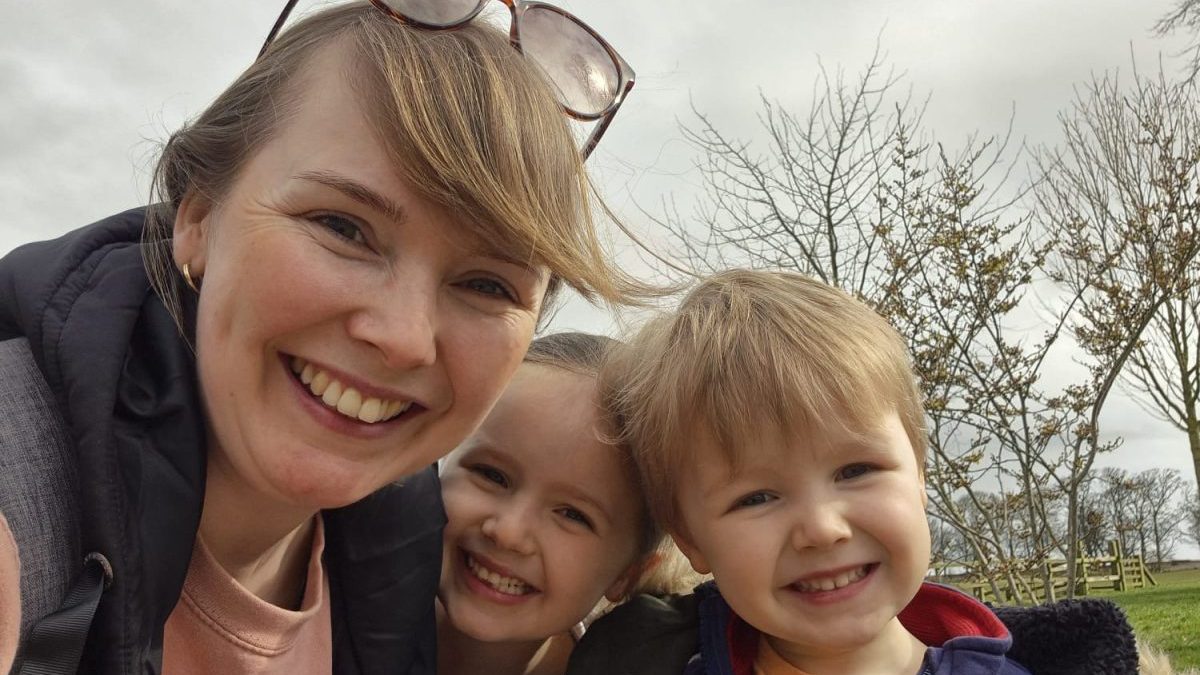
 Hannah Strong with her children, Amelia and Ollie. She did not initially realise the implications of maternity leave on her pension
It comes as new research shared exclusively with The i Paper reveals the majority of self-employed women fail to calculate how maternity leave could affect their long-term retirement savings.
The findings from pension provider PensionBee show 62 per cent of self-employed women have not calculated the pension impact of maternity leave.
Within this group, 36 per cent have not thought about it at all and 26 per cent have thought about it, but not carried out the calculations. Only 18 per cent say that they have completed detailed planning.
Some 47 per cent said they either reduce their pension contributions or stop saving altogether during maternity leave, according to the survey of 1,000 women in self-employed, contract, gig or freelance roles in the UK.
Only 36 per cent said they maintain the same level of pension contributions while on maternity leave.
Household expenses and a lower income were the main reasons given for reducing pension contributions.
Hannah described how she was working as a Google adverts manager for a digital marketing company and was a senior specialist. She was promoted but in the same week discovered she was pregnant with her first child.
“I was promoted to head of department in a role that was created for me,” she explained. “I had grown the team and the revenue but in the same week I found out I was pregnant.
“I got a pay rise but was only in that role for six months before I went on maternity leave. I was due to be off for nine months and return on 1 April, 2020. But Covid hit the week before and everything shut down so I was furloughed, which was fine for me because I got an extra three months maternity leave.
“I eventually went back to work in the July and three months later, I found out I was pregnant with Ollie.”
Hannah returned to the agency in a different role as she went part-time, and could no longer be in charge of a team of 10, so was put in charge of a team of two in a different department instead.
She did not enjoy it so quit the agency towards the end of her maternity leave and set up her own business managing Google ads for clients.
“When I went back to the agency part-time, because I was doing 40 per cent less hours, they docked my pay – so my pension contributions were less again.
“It was a double-edged sword as my pension was affected by maternity leave and then for going part-time.”
 Hannah wants to see employers carry on making full pension contributions while women are on maternity leave
In her first year of business, Hannah was a sole trader and was hit by a hefty tax bill as things went a lot better than she anticipated. She then set herself as a limited company and set up a SIPP with PensionBee and pays in director’s pension contributions from her company.
She said: “What I would like to see happen is for employers to continue to match the full-time equivalent of pension contributions for women while they are on maternity leave, for the duration of their leave.
“It is unfair to penalise women in their pensions for taking time off to have a family.”
Maike Currie, vice president for personal finance at PensionBee, said: “Maternity leave is one of the moments when the gaps in the pension system become most pronounced – with career breaks the biggest contributing factor to the gender pension gap.
“Most self-employed women want to keep saving, but the combination of lower income, the absence of employer contributions and uncertainty about living expenses and affordability make it challenging.
“The so-called motherhood penalty continues to damage women’s long-term pension savings, most notably for the self-employed.”