
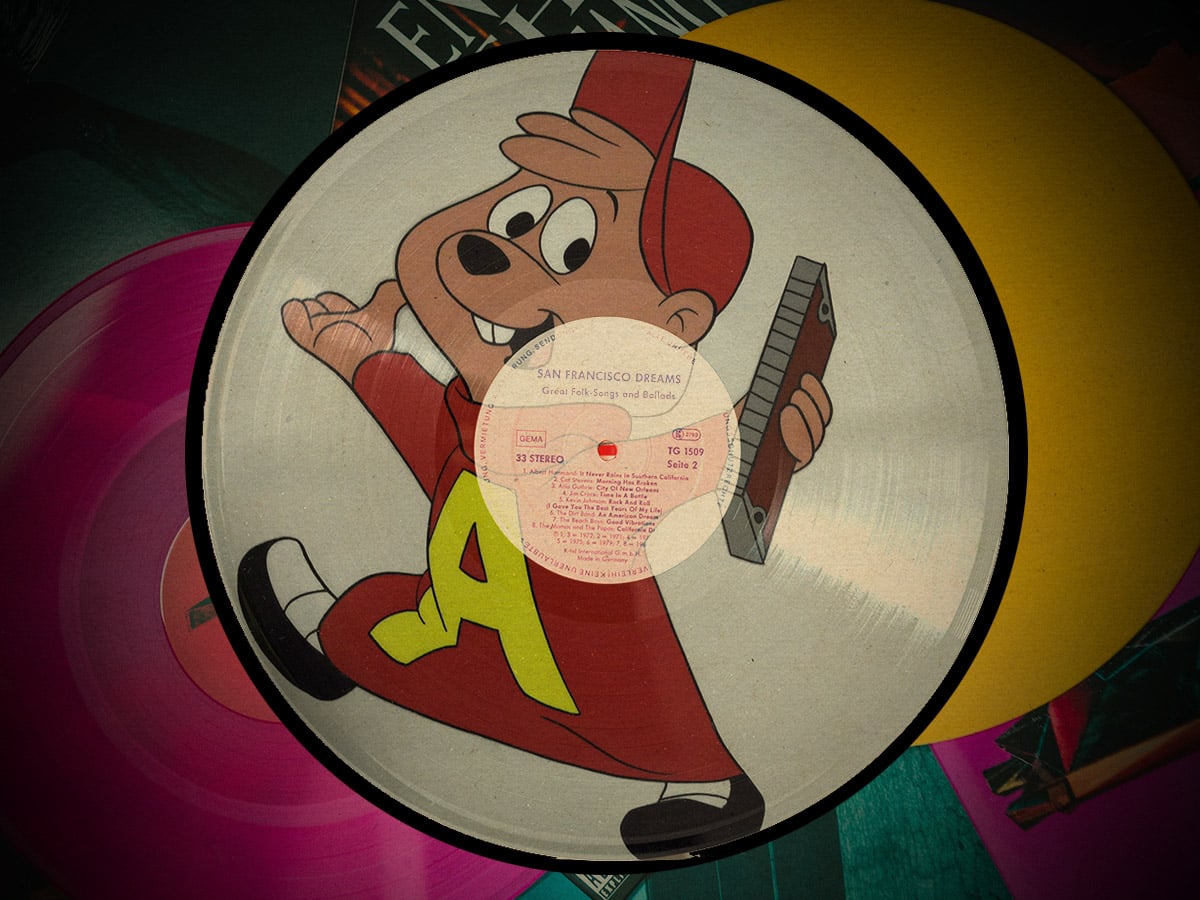
(Credits: Far Out / CBS)
Sun 8 March 2026 7:00, UK
“I can do things a trained musician wouldn’t do,” Ross Bagdasarian told a reporter in the 1960s, “He’d know better, but I don’t know better, so I do them, and they work!”
Bagdasarian, who performed under the stage name David Seville, was better known to the world for the trio of singing cartoon characters he also created and portrayed: Alvin, Simon and Theodore, the legendary Chipmunks.
The origin of the Chipmunks dates back all the way to 1958, when a nearly 40-year-old Bagdasarian was experimenting with a new tape recorder he’d bought, a state-of-the-art piece of home equipment for the time period. Up to this point, he had already had a fairly successful career as a character actor and mid-tier novelty songwriter, but when he messed around with the playback speeds on that tape machine, he was unknowingly on his way to becoming a multi-millionaire.
His first novelty song using the sped-up, comical version of his own voice, ‘Witch Doctor’, would be swiftly taken off the air in 2026, but it went to number one on the US Billboard in 1958, and inspired Bagdasarian to expand his new David Seville enterprise to include a set of recurring, fictional characters for him to voice, which he named after the execs at his record label, Alvin Bennett, Simon Waronker, and Theodore Keep. His next novelty hit, a 1959 holiday tune called ‘The Chipmunk Song (Christmas Don’t Be Late)’, officially introduced the Chipmunks to the world, and the results were a staggering 12 million copies sold and three Grammy Awards.
Naturally, everyone wanted to know the secret behind the Chipmunks’ sound, and Bagdasarian eventually admitted that it simply involved recording himself singing live at half-speed, then speeding it up on the playback. It wasn’t, he said, as easy as it sounded. “You have to be very careful of your enunciation,” he said, “I talk at half-speed, but I must enunciate at twice the force”.
Bagdasarian’s children kept the Alvin & The Chipmunks empire going after his death in 1972, with the characters and their instantly recognisable voices soon becoming deeply ingrained in popular culture all over the world, and yet, despite the simplicity of the tape effects that created that sound, copycats were surprisingly few and far between. It was only in the 2000s when a new utilisation of a similar concept took hold in an unlikely segment of the pop music landscape: indie hip-hop.
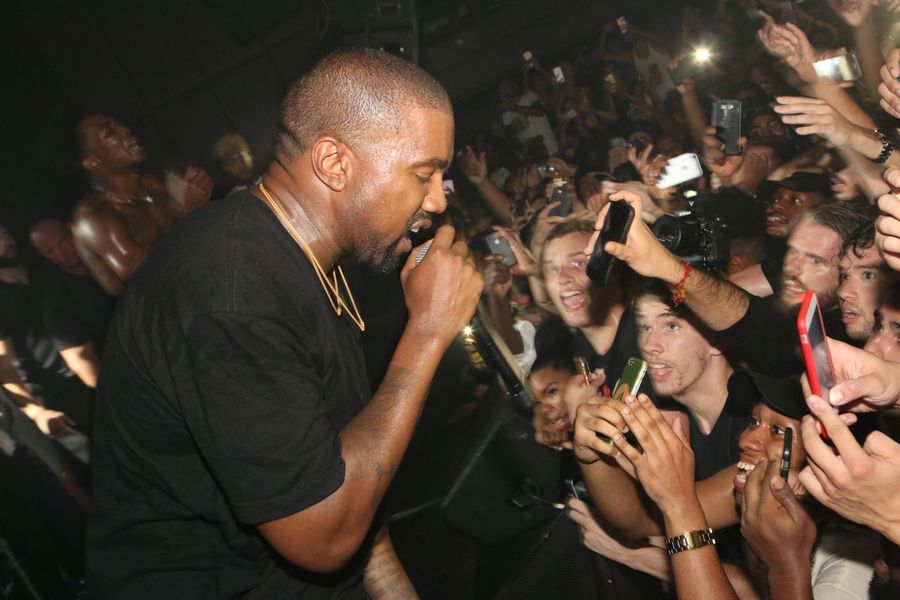 Credit: Alamy
What came to be dubbed “chipmunk soul” emerged as hip-hop producers began aggressively pitching up sampled soul vocals until they hovered in that same helium-bright register Bagdasarian had stumbled upon decades earlier, with the rapper/producer most closely associated with popularising the style was an unrecognisably likable and level-headed young Chicagoan named Kanye West, who leaned into sped-up soul loops as both a sonic signature and a statement of lineage.
Early examples like ‘Through the Wire’, built around a pitched-up Chaka Khan vocal, and ‘Spaceship’, which channeled Marvin Gaye’s ‘Distant Lover’, helped establish West’s reputation as one of the major new innovators in the game, and he eventually played the same cards as a producer for other artists, including mid 2000s tracks by Common, Twista, TI, and The Game. Producers like Just Blaze were on this bandwagon around the same time, as well, and used similar techniques on tracks like Jay-Z’s 2001 ‘U Don’t Know’ and Cam’Ron’s 2002 ‘Oh Boy’.
What separated chipmunk soul from Bagdasarian’s original method, besides a radically different sensibility, was technology, where instead of recording vocals at half-speed on a tape, producers could now digitally time-stretch and pitch-shift existing records using samplers like the MPC and software like Pro Tools, allowing for precise control with or without changing tempo. Even if they were altering their own vocals, there was no need to panic about enunciation the way Bagdarsarian had.
Some critics initially dismissed the chipmunk trend as gimmicky, but its use in this new context could provide a surprising amount of emotional clarity in the right hands. Those squeaky, yearning hooks also had a knack for cutting straight through dense beats, reconnecting the tracks to gospel, Motown, and ’70s soul in a way that felt reverent in the best sampling and crate-digging traditions, rather than ironic.
Chipmunk soul had mostly run its course by the 2010s, but it still pops up now and then, an unlikely but welcome piece of the Ross Bagdasarian legacy, as well as the much-missed Ye 1.0 legacy.