
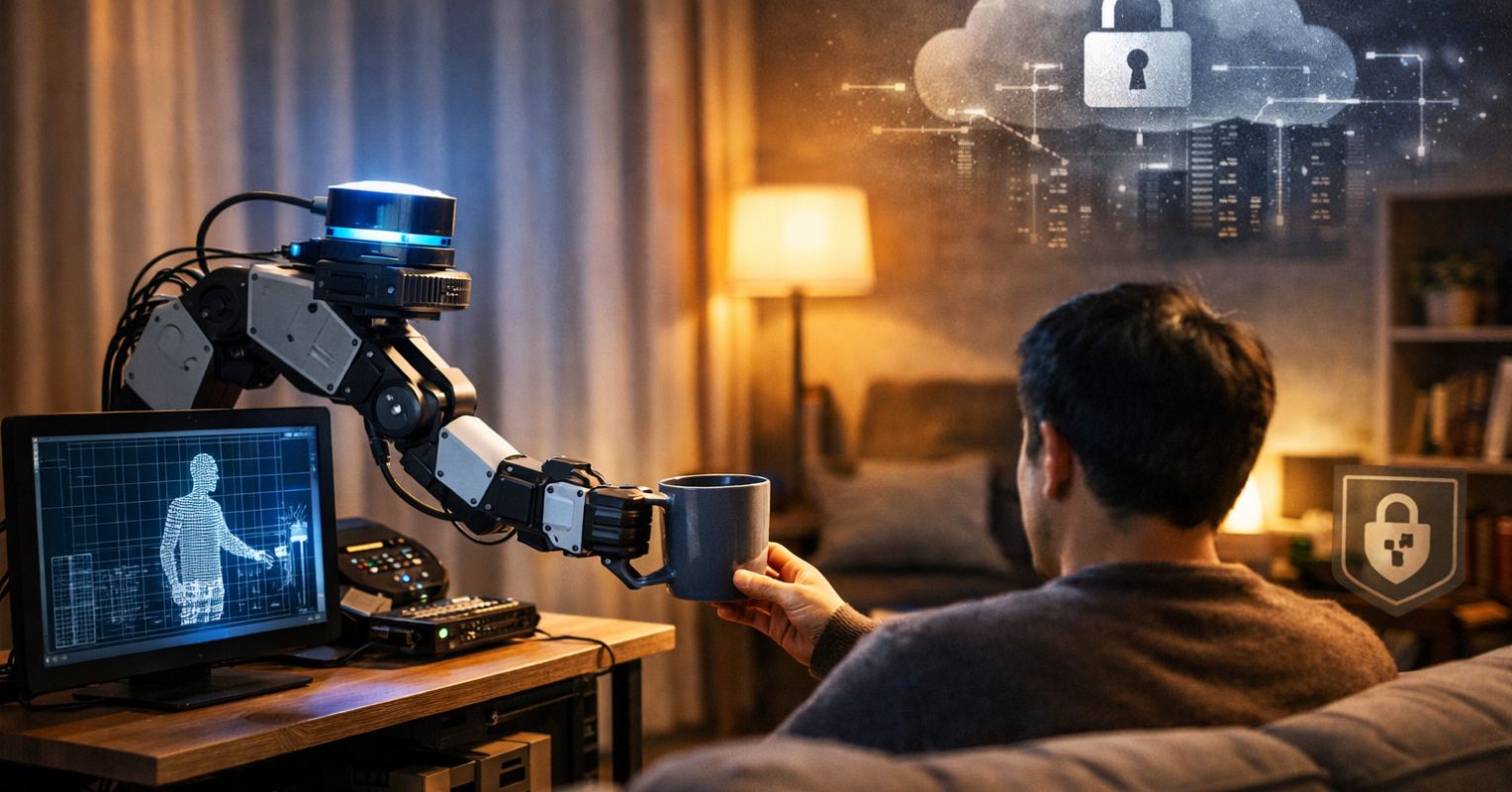
We have grown accustomed to artificial intelligence as a disembodied voice in our phones or a text box on our screens. It lives in the cloud as a distant, abstract server farm. But a quiet, radical shift is happening in garages and maker spaces around the world, and it is fundamentally changing the psychological boundaries between humans and machines.
Recently, an open-source project called OpenClaw surfaced on a maker community platform. Built on affordable edge-computing hardware, the project demonstrated a local AI agent controlling a physical robotic arm. It wasn’t just predicting text; it was moving motors, reading sensors, and interacting with its physical environment in real-time. From a psychological and sociological perspective, this transition from abstract AI to embodied local AI forces us to re-evaluate trust, privacy, and the sanctity of our personal space.
1. The Solo Gen and the Sanctuary of the Home
For the rapidly growing demographic of adults living alone, a cultural and sociological shift I explore deeply in my first book, Happy Singlehood, the integration of physical AI is both highly desirable and psychologically fraught.
When you live alone, your home is your ultimate sanctuary. It is the one place where you are entirely unobserved. As robots inevitably join our daily lives to assist with physical tasks, domestic management, or even just to provide an interactive presence, the psychological friction peaks. Introducing a camera-equipped machine into a single-person household can quickly feel less like assistance and more like an invasion.
2. Trust and the Privacy Problem
This is where the engineering choices behind grassroots projects like OpenClaw offer a fascinating psychological solution to the privacy problem. To allow the robot to “see” and navigate, developers are moving away from traditional RGB cameras (which capture high-resolution images of our faces, habits, and private moments) and instead repurposing tools like depth sensors and LiDAR. By physically covering the camera lens and relying solely on depth mapping, the AI understands the geometry of the room without ever capturing the identity or intimacy of the person in it.
The machine knows where you are to hand you an object or avoid bumping into you, but it doesn’t know who you are or what you are wearing. For the Solo Generation, this distinction is the bedrock of Relationships 5.0, which I describe in my second book. It allows individuals to enjoy the practical benefits of a physical AI assistant without sacrificing the psychological safety of their private domain.
3. Reclaiming Human Agency
There is a pervasive sense of collective helplessness regarding how fast technology is evolving, often dictated by billion-dollar corporations storing our data on remote servers. However, local, “air-gapped” physical AI flips this dynamic. By processing data strictly on the device itself, within the four walls of one’s home, the technology respects your boundaries. It demystifies the machine, reducing societal fear and replacing it with a sense of control. You are no longer a data point in the cloud, but the undisputed master of your environment.
The Future is Local and Private
The next frontier of human-machine interaction isn’t just about making models smarter; it’s about making them present, local, and profoundly respectful of human boundaries. As robots step out of the factory and into our living rooms, they must do so on our terms. We can embrace a future in which physical AI supports our independence, so long as it leaves our privacy intact.