
(Credits: Far Out / Tony Barnard / Los Angeles Times / UCLA Library)
Sun 8 March 2026 13:29, UK
The Beatles were responsible for a number of major studio innovations in the 1960s. Whether it was pioneering the use of backward guitar on ‘I’m Only Sleeping’ or splicing together two different takes of ‘Strawberry Fields Forever’ to create one seamless final product, The Beatles were experimenting on levels that were nearly unheard of at the time.
Much of that experimentation came from the band’s growing confidence in the recording studio as an instrument in its own right. Working closely with producer George Martin and engineer Geoff Emerick, The Beatles began to treat the studio less like a place to capture a performance and more like a laboratory for new sonic ideas.
One of their most notable innovations came completely by accident. While recording the 1964 single ‘I Feel Fine’, John Lennon left his acoustic-electric guitar resting up against Paul McCartney’s bass amp. The resulting feedback fascinated the band. Feedback wasn’t anything new, but it had routinely been eliminated and fought against by engineers. But The Beatles didn’t think that feedback would ruin ‘I Feel Fine’ – they felt it would make it better.
At the time, deliberately leaving feedback on a finished record was a bold move. Most engineers considered it a technical flaw that needed to be removed as quickly as possible, but The Beatles recognised that the shrill tone added a new texture to the track’s opening moments.
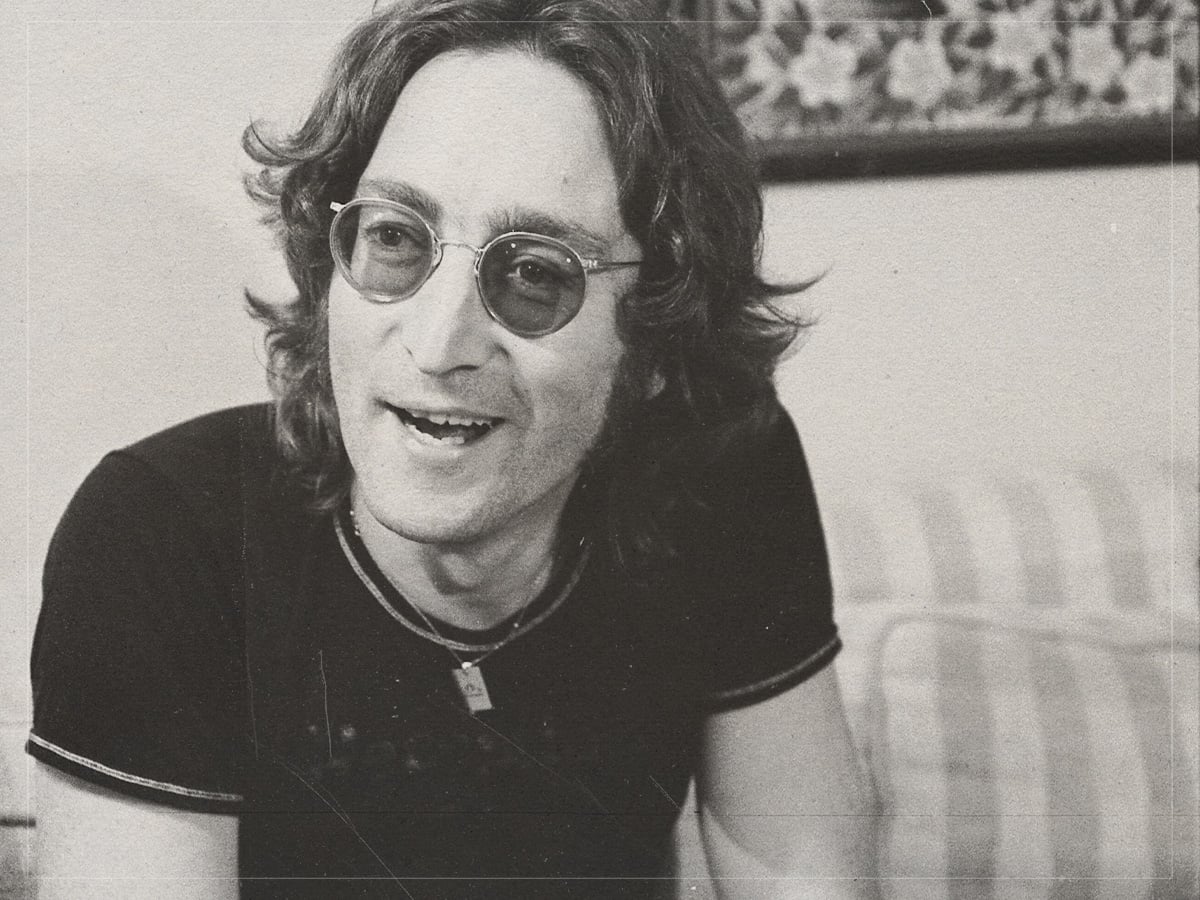
“That’s me completely,” Lennon told David Sheff in 1980. “Including the electric guitar lick and the record with the first feedback anywhere. I defy anybody to find a record – unless it’s some old blues record in 1922 – that uses feedback that way. I mean, everybody played with feedback on stage, and the Jimi Hendrix stuff was going on long before. In fact, the punk stuff now is only what people were doing in the clubs. So I claim it for The Beatles. Before Hendrix, before The Who, before anybody. The first feedback on any record.”
“John had a semi-acoustic Gibson guitar. It had a pick-up on it so it could be amplified. John and George both had them,” Paul McCartney said in the book Many Years From Now. “We were just about the walk away to listen to a take when John leaned his guitar against the amp. I can still see him doing it. He really should have turned the electric off. It was only on a tiny bit, and John just leaned it against the amp when it went, ‘Nnnnnnwahhhhh!’ And we went, ‘What’s that? Voodoo!’ ‘No, it’s feedback.’ ‘Wow, it’s a great sound!’ George Martin was there so we said, ‘ Can we have that on the record?’ ‘Well, I suppose we could, we could edit it on the front.’ It was a found object, an accident caused by leaning the guitar against the amp.”
Despite the revolutionary sonic aspects of the song, the origins of ‘I Feel Fine’ were composites of different songs. “The guitar riff was actually influenced by a record called ‘Watch Your Step’ by Bobby Parker,” George Harrison observed. “But all riffs in that tempo have a similar sound. John played it, and all I did was play it as well, and it became the double-tracked sound.”
For his part, Ringo Starr channelled another classic record. “The song itself was more John’s than mine,” McCartney observed. “We sat down and co-wrote it with John’s original idea. John sang it, I’m on harmonies and the drumming is basically what we used to think of as ‘What’d I Say’ drumming. There was a style of drumming on ‘What’d I Say’ which is a sort of Latin R&B that Ray Charles’s drummer Milt Turner played on the original record and we used to love it. One of the big clinching factors about Ringo as the drummer in the band was that he could really play that so well.”
Even though he remained proud of the feedback, Lennon ultimately didn’t think much of ‘I Feel Fine’. “I wrote ‘I Feel Fine’ around the riff which is going on in the background,” Lennon claimed in 1964. “I tried to get that effect into practically every song on the LP, but the others wouldn’t have it. I told them that I’d write a song especially for this riff. So they said, ‘Yes, you go away and do that,’ knowing that we’d almost finished the album. Anyway, going into the studio one morning, I said to Ringo, ‘I’ve written this song, but it’s lousy.’ But we tried it, complete with riff, and it sounded like an a-side, so we decided to release it just like that.”
The Far Out Beatles Newsletter
All the latest stories about The Beatles from the independent voice of culture.
Straight to your inbox.