
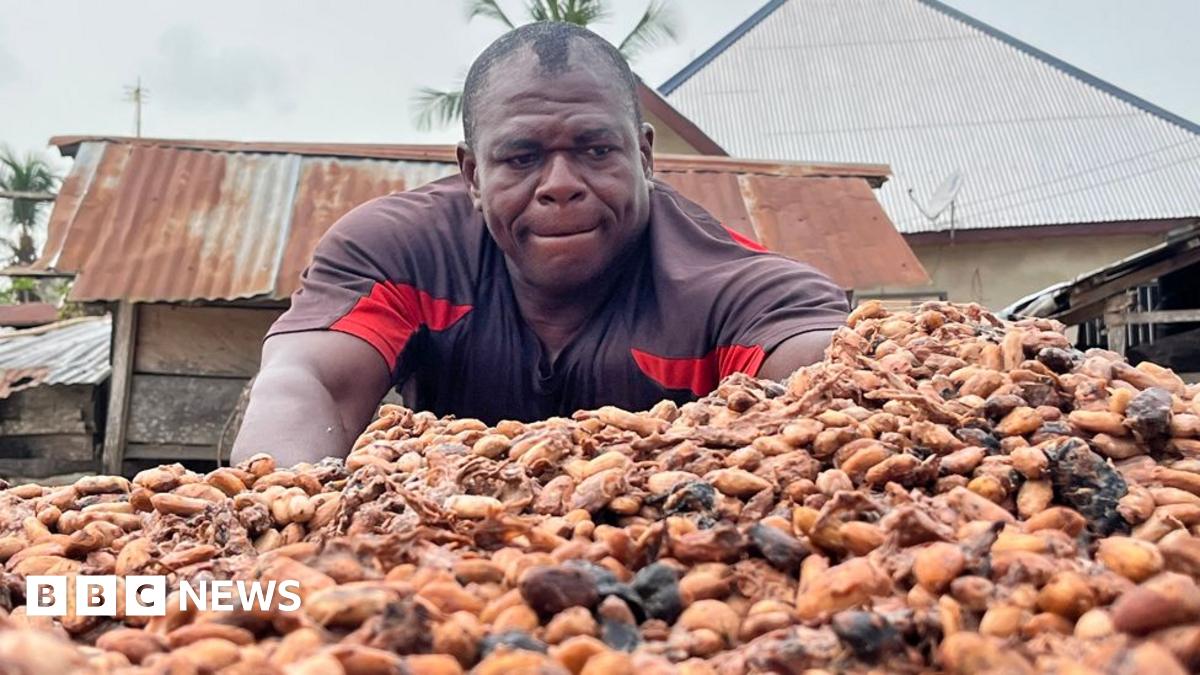
Even when prices were high, West Africa’s cocoa farmers felt they were not benefiting from the world’s chocoholics.
Their farms are in remote areas deep in the jungle with poor infrastructure – they live in villages where there is little access to electricity or running water.
The bright sunshine could not dissipate the heavy atmosphere of grief that loomed over the village of Suhenso in western Ghana when we visited last month.
Mourners squeezed into Frimpong’s home to pay their respects to her husband Malik Boahen, who had died earlier in February after his neck began to swell up.
She did not have the money to get proper medical care for him – something she blames on the Ghana Cocoa Board (Cocobod), which licenses companies to buy the country’s crop for international sale at a set price.
As those companies have not been able to sell the cocoa this year, the farmers have been left out of pocket. Cocobod has stepped in to buy much of it to save the industry from collapse, but many farmers say they haven’t been paid.
“The money I was anticipating from my cocoa bean sales is currently inaccessible. I’m a widow now and I don’t have anyone to support me,” said Frimpong.
The payment delay is thought to be affecting some 800,000 cocoa farmers – and it has had a knock-on effect on hundreds of thousands of rural livelihoods.
Last October, Cocobod set the amount to be paid to farmers at nearly $5,300 (£3,900) per tonne, but the price on the global market has fallen to well below this level.
The shortfall has added to the board’s debt, which now amounts to some $3bn.
In response to the financial difficulties, Cocobod officials took a pay cut in February – 20% for the executive management and 10% for senior staff.
The board’s spokesperson Jerome Sam acknowledged that while there had been delays in farmers getting their money, payments were now being processed.
Cocoa accounts for about 7% of Ghana’s GDP, or national income, and the beans’ export makes up around 15% of the country’s foreign exchange earnings.