
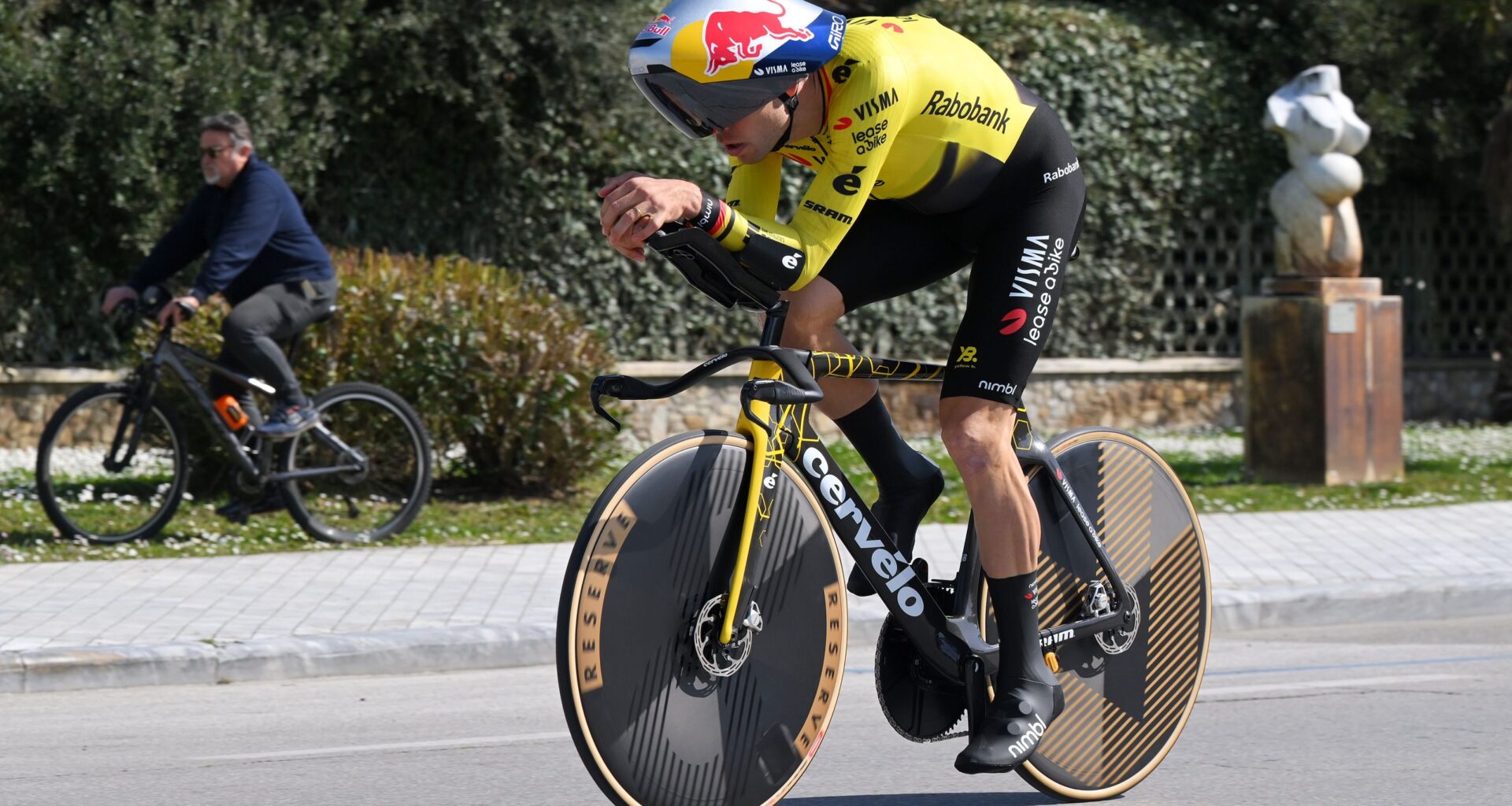
Fresh from a strong top 10 placing at Strade Bianche on Sunday, Wout van Aert, as well as his Visma Lease a Bike teammate Matteo Jorgensen, seemingly threw caution to the wind today by running double Reserve Infinity disc wheels for the opening time trial stage of Tirreno-Adriatico.
Van Aert paired the wheels with a huge 1x aero chainring and the bulbous Giro Aerohead helmet, but the super aero combination wasn’t enough to net either rider the stage victory and leader’s jersey.
Article continues below
You may like
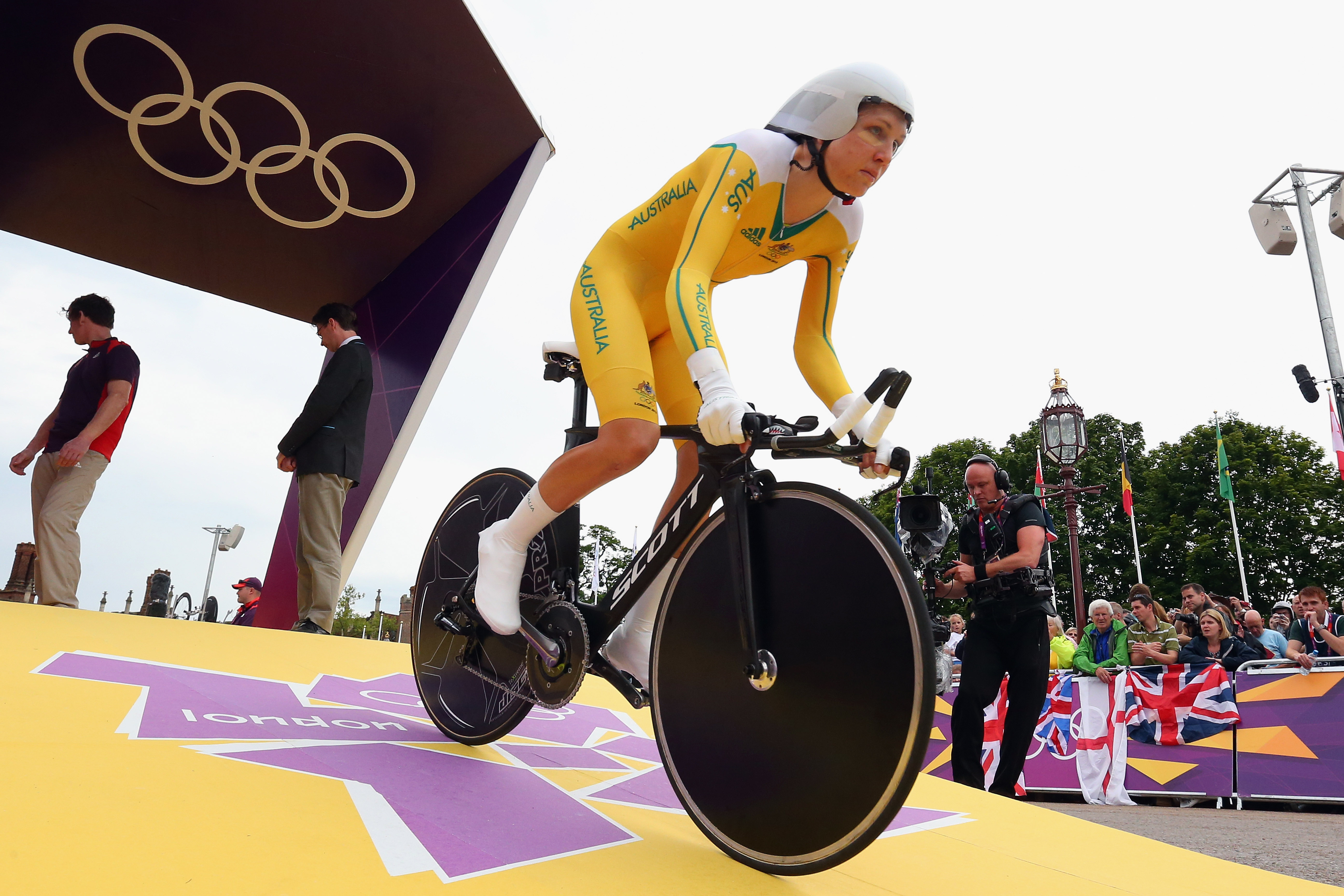
The amount of riders to use double discs on the road in the last few decades is very small indeed. This is Shara Gillow at the London 2012 Olympic time trial (Image credit: Alex Livesey / Staff)
This isn’t the first time Wout van Aert has used a double disc combination on the road. Much to the cycling world’s surprise, the Belgian star brought out the combination at the Paris Olympics in summer 2024 to take a bronze medal on the rain-soaked streets of Paris. Back in 2024, Van Aert claimed the team had found a 17-watt advantage from the system.
“When we tested it in the wind tunnel, there were different wind angles and speeds, but double discs were 17 watts faster than a normal time trial wheel. That’s quite a lot.” He explained at the time.
What to read next
It’s clear that Van Aert and his team believe there’s a performance advantage in using the combination, and most riders would probably sign on the dotted line for a 17-watt improvement.
Perhaps the two-year gap between Van Aert using the combination again points to a need for the conditions and course to suit double disc wheels. It also seems like the type of combination that just isn’t considered much (apart from by Visma), there can’t be very many current riders out there who must know what running double discs on the road feels like.
Perhaps now with wider rims and better wheel/tyre fitments, larger volume tyres and improved aerodynamics, double discs are no longer the handful they are perceived to be in some conditions.
It’s also worth mentioning that the recently updated UCI wheel depth rules don’t apply to individual time trials. Riders can use far deeper rims in time trials than the maximum 65mm depth that’s permitted for road races.

Van Aert used the combination during the Paris Olympic time trial (Image credit: DIMITAR DILKOFF / Contributor)