
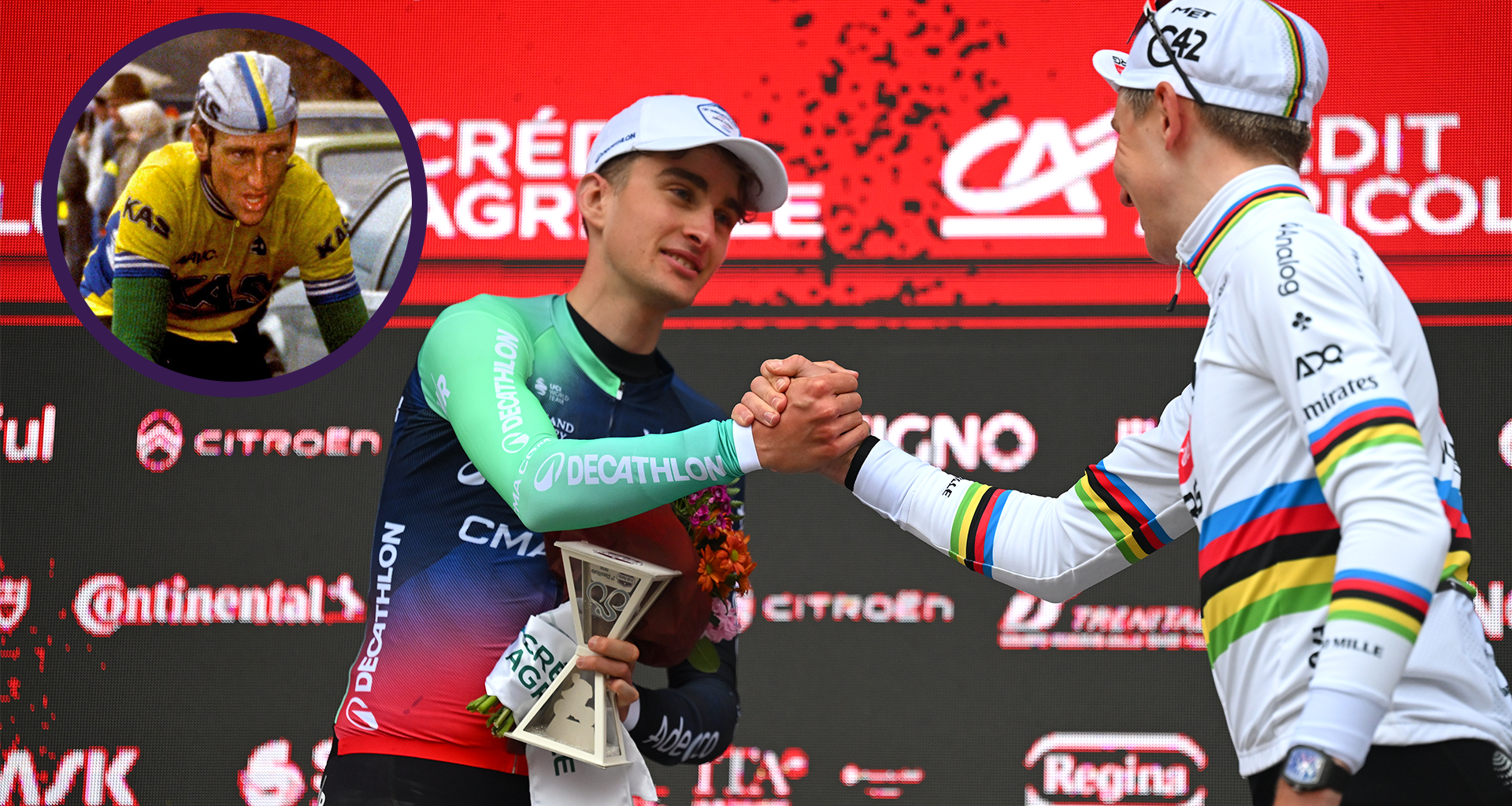
Tadej Pogačar moved clear as the outright most successful rider in Strade Bianche history with his fourth victory on Saturday, and to be honest, I think he did so with some energy still left in the tank.
While on commentary duty, we discussed what his rivals could actually do to prevent him from winning one-day races, as when you look at UAE Team Emirates-XRG‘s team and the Slovenian himself, there’s no way you can beat Pogačar with the way he’s riding at the moment.
His team knows how to control the race and the breakaway; they just let them go and then slowly ramp up the pace until they need to blow it into pieces, which is when the likes of Florian Vermeersch, Jan Christen, and Isaac del Toro – all riders individually capable of winning a race like this – set a pace so high, that when Pogačar attacks, there’s nobody that looks capable of following him.
Article continues below
You may like
Only perhaps, my man of the day, Paul Seixas. The way the Frenchman rode, while clearly on the limit and perhaps lacking experience in these race situations, was promising. He almost made it back across to the UAE leader after losing a few bike lengths, but it’s easier said than done on those gravel roads, and Pogačar showed his might by being able to accelerate again when he saw the 19-year-old closing in.
If Seixas was able to make contact with Pogačar’s back wheel and momentarily recover, it could have been a totally different race.
If I were to pick fault with Seixas and Decathlon’s approach to this year’s race, though, I’d question why, after Pogačar had escaped up the road, Seixas was the man pulling on the front of the chase group. There were approximately a dozen riders in the group, and he had two teammates spitting at the rear end of it. It’s hard to understand that tactic. Seixas was the other guy potentially able to win that race, especially when you think about it being Pogačar’s first race back; he may have hit fatigue with 25km to go, or even suffered a puncture. Keep the gap below a minute, and you just never know, but the team is sitting at the rear while their leader is riding at the front.

Pogačar stretches out his advantage on the gravel roads around Siena (Image credit: Tim de Waele/Getty Images)
The first of many Seixas vs Pogačar battles?
Of course, even if a rider attacked from the chase group, contending with Pogačar, who didn’t even look to be struggling, is a completely different question. He just rides at his own rhythm, and he knows what’s happening behind, because the team car is there providing him with updates. He’s got so much experience attacking at 50, 60 or 80km to go, he’s worked it out to a fine art.
What also worked in Pogačar’s favour this year was the additional elevation added to the route. The organisers have gone totally crazy with that alteration because it’s clear that the harder you make the route, the fewer riders there will be vying for the win.
What to read next
I think Pogačar proved on Saturday that he was untouchable again, except for Seixas, who stepped up big time. With Tadej, you always say, ‘Well, it’s his first race back, will he be good enough?’ But when you look at what he’s doing in December, riding up Coll de Rates at crazy speeds with a team and knocking so much time off his previous record, the guy’s level just doesn’t drop, regardless of whether it’s March or December.
Watching this race unfold, and looking ahead to the Ardennes Classics, I was thinking, ‘Thank God Paul Seixas is coming through the ranks’ because unless someone else rides into great form next month – the Cobbled Classics are a different story – Seixas looks like the rider that can get very close, or maybe even match Pogačar in those hillier Classics.
That’s something I’d really like to see this season from Seixas. I’m also aware that his strong early-season form immediately raises the question of whether he should be racing at the Tour de France this summer. Is there much foundation in that rumour? I don’t know. But it’s interesting to think about, because the French press and the cycling fanbase will naturally put pressure on him given his current trajectory.
I’m firmly against the idea, though. It would be the wrong thing to do to send Seixas to the Tour this year, and I hope that Decathlon CMA CGM have patience. When you put a guy like that into the Tour, with his character of racing, he’s going to get into the action. You can’t send a rider into a race for a week to gain experience, which, years ago, they sometimes did with talented youngsters. The races that Seixas is competing in at the moment are where his focus should remain.
A wrong turn and a blockbuster finale
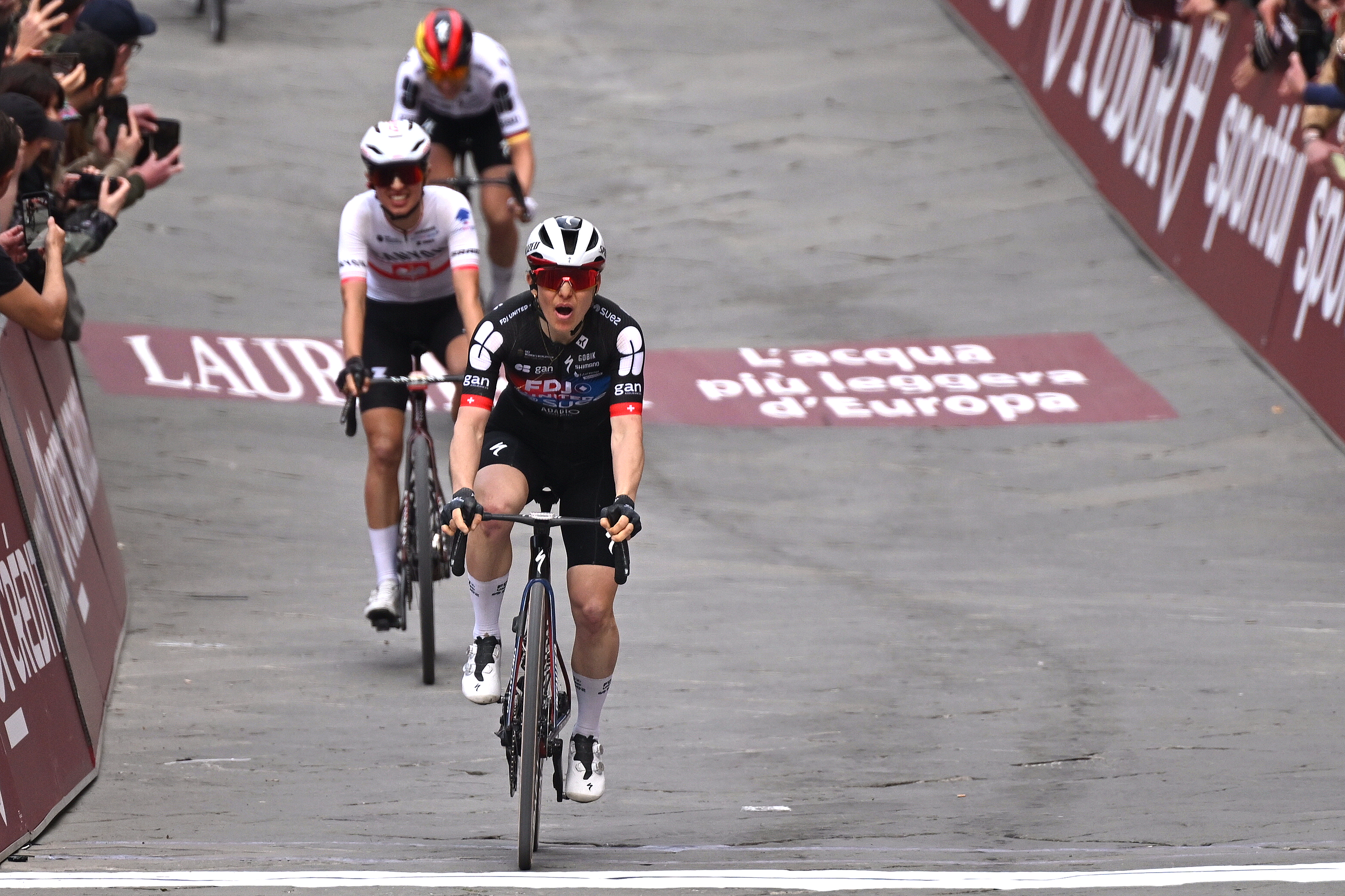
A jubilant Elise Chabbey as Kasia Niewiadoma-Phinney grimaces in frustration (Image credit: Luc Claessen/Getty Images)
It’s not controversial to say that for all of the talking points in the men’s race, Strade Bianche Donne proved the more entertaining of the two editions; from mechanicals and the chase group being led off course, to an almighty final kilometre that saw Elise Chabbey of FDJ-United-SUEZ come out on top.
I can understand both sides of the argument, with the chase group taking the wrong turn. I could see the state of the road, with stones sticking up and thought it didn’t look quite right as they kept going. I was surprised that someone didn’t immediately think, ‘this is not the way, this is not the reconnaissance we’ve done’, but again, when you’re in the heat of the moment, the race is on, and you’re maybe on the limit a bit, it’s understandable to take your eye off the route.
They do follow the route on their bike computers, but at the speed they’re going on a very fast section of the course, is a rider going to question the motorbike? Similarly, a rider further back in the group will follow the wheels in front of them. The organisers could have had better signage there; however, UCI rules place responsibility for following the race route on the rider, regardless of whether a race vehicle takes a wrong turn. It’s a difficult one, but it’s always been that you should know the route yourself.
As for the final kilometres of the women’s race, what a battle.
Small groups have hit the final climb together before, but the Santa Catarina ramp typically separates the wheat from the chaff ahead of the final few corners. Here they were all fighting for the win still, so getting the right run-in to the corners became key, and shoulders were touching as the tension rose.
Chabbey was half a wheel back, and it worked in her favour, providing a good line and run of speed, as others lost momentum. They were all fighting to be well-placed in those corners, but the Swiss rider was able to choose the better line and held on really well.
It’s another tough pill to swallow for Kasia Niewiadoma-Phinney, who picked up her fourth runner-up spot in Siena. When you’re so close on so many occasions, and you want to win, it’s only natural to be more nervous there in the finale. But unfortunately, positioning cost her and others in the final corners. A clean run, and it could have been a different result.
For Niewadoma-Phinney, if she was able to sacrifice slightly more on the final climb, to come into the final few corners with perhaps just one other rider, then I think she could’ve had a better shot at the win.
That being said, it shouldn’t detract from an amazing turnaround by FDJ-United-SUEZ. After Vollering’s puncture and wrong turn, her teammates were able to pick up the pieces and finish it off – it was a dream final for the team, with Chabbey claiming her first-ever one-day win, and Franzisca Koch clinching the final podium spot.