
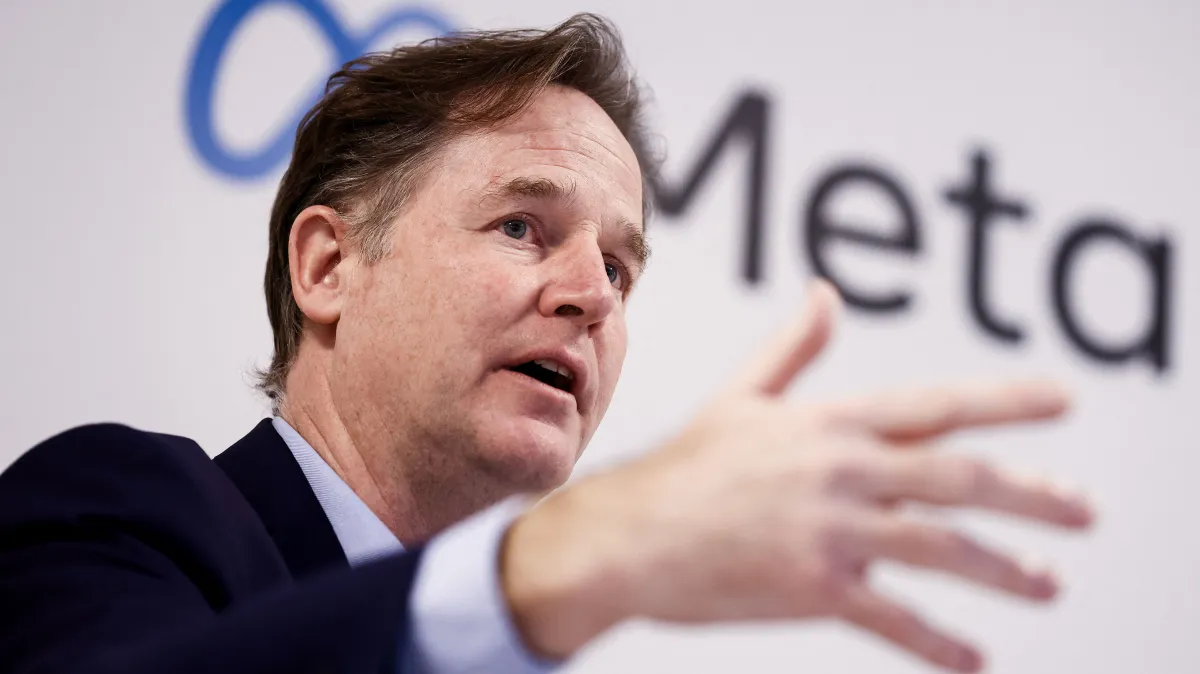
Sir Nick Clegg has joined the board of Nscale, the British developer of data centres for powering artificial intelligence technologies, as it completed a fundraising round that values it at $14.6 billion.
The former UK deputy prime minister and former president of global affairs at the social media group Meta became a director of Nscale alongside Sheryl Sandberg, Meta’s former chief operating officer.
The AI infrastructure business is among Europe’s most valuable start-ups after raising $2 billion from investors, including Nvidia, the Silicon Valley chip maker founded by the billionaire Jensen Huang, who has said the company “could be a national champion for the UK”.
Business newsletter
The business editor’s exclusive analysis of all the latest financial and economic news.
Sign up with one click
Other investors in the latest funding round included Aker ASA, an industrial investment company, and 8090 Industries, an investment firm based in New York. Last year the company secured an investment of £500 million from Nvidia and it also raised $155 million in a series A funding round, led by Sandton Capital Partners, the New York investor, in December 2024.
Sandberg became one of the most prominent women in Silicon Valley during her 14-year tenure as chief operating officer. She was one of the leading architects of the social media group’s advertising-driven business model, helping grow revenue from $272 million in 2008 to over $117 billion by 2021. She stood down from her executive role at the company in June 2022, before leaving the board in May 2024.
Clegg reported to Sandberg when he joined Meta, formerly known as Facebook, as vice‑president of global affairs in 2018. He was later promoted to president of global affairs, reporting to both Sandberg and chief executive Mark Zuckerberg on policy matters, including government affairs and content moderation.
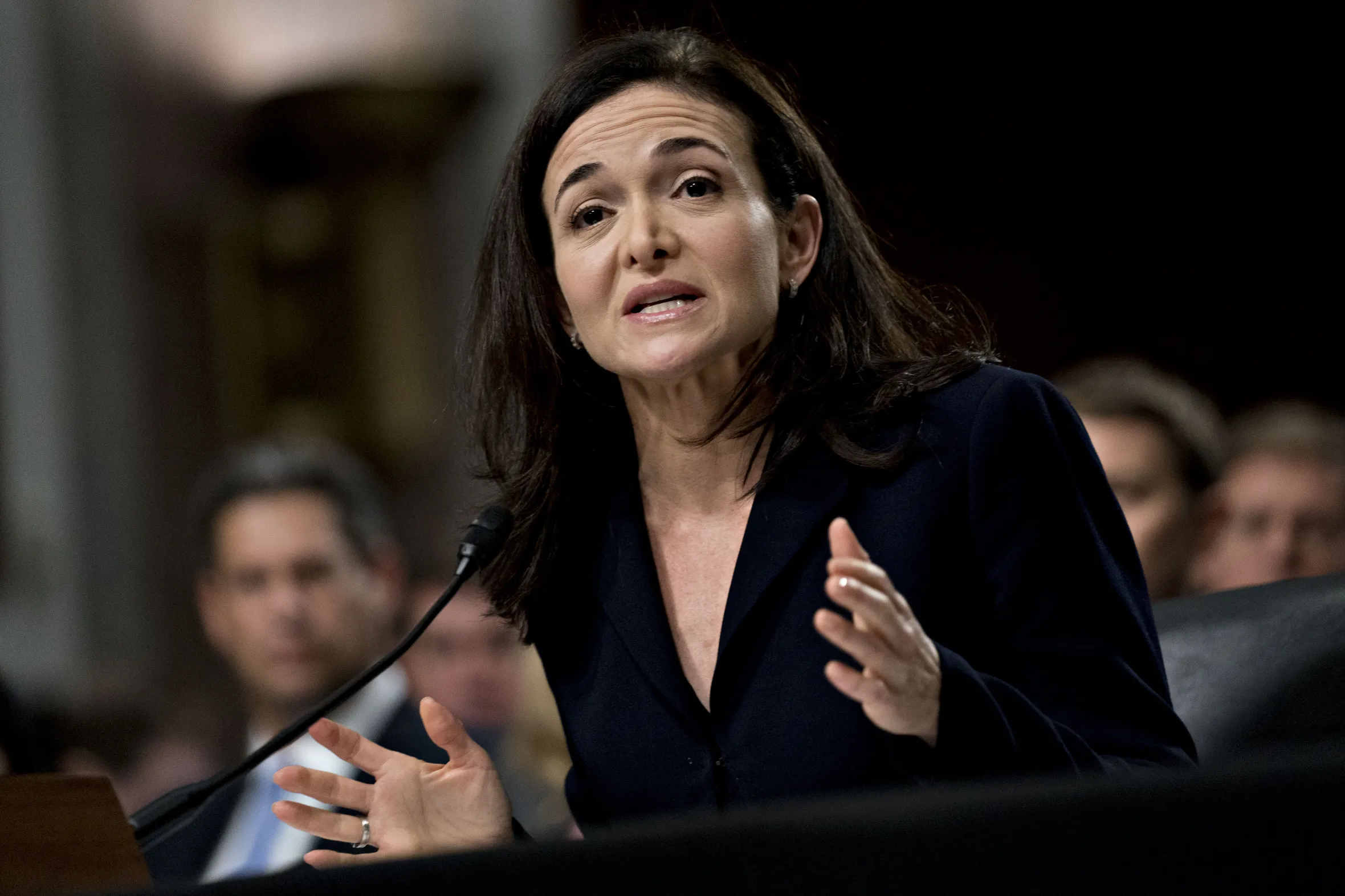 Sheryl SandbergAndrew Harrer/Bloomberg/Getty images
Josh Payne, chief executive of Nscale, founded the company in May 2024, and the group has pledged to invest $2.5 billion in UK data centre infrastructure. It has signed a contract to build the largest “UK sovereign” AI data centre in Loughton, Essex, by 2026.
Payne said: “Over the next five years, artificial intelligence will be integrated into every industry, every product and every job. Accelerating drug discovery, extending human life, automising travel and robotics, lifting productivity, and driving massive growth.
“This is leading to the largest infrastructure buildout in human history. Nscale is leading this buildout.”
Susan Decker, the chief executive and co-founder of Raftr, a software business for universities, has also joined the board of Nscale. Decker was formerly president of Yahoo, and sits on the boards of Costco, Berkshire Hathaway and Vox Media, among other companies.
Peter Kyle, the business secretary, said the government wanted British companies to “scale globally and build here at home, rather than being forced to look abroad”.
Kyle said: “Britain has no shortage of ambitious companies ready to scale and Nscale’s historic raise shows the strength of the UK’s AI ecosystem and the confidence global investors have in it.”At the age of 33, Josh Payne, the founder of Nscale, has built a company that is worth more than many of the businesses listed on London’s premier stock market index.
The $15 billion start-up
Payne has catapulted himself into the heart of Britain’s AI revolution by securing vast sums of money for a data centre developer he launched less than two years ago. Its $14.6 billion valuation makes the company worth more than the FTSE 100 stalwarts Marks & Spencer, St James’s Place and Admiral Insurance.
Nscale has pledged to build the data centres required to power machine-learning technologies, and has stated that the company will invest $2.5 billion in digital infrastructure, to include building a “sovereign” AI data centre in Loughton, Essex.
Nscale has bolstered its board with the appointment of Sir Nick Clegg, the former deputy prime minister who stepped down from his role as president for global affairs at Meta, formerly known as Facebook, last year. Sheryl Sandberg, the former chief operating officer, has also joined, as the group secures funding of $2 billion from investors.
Clegg joined after criticising the UK’s “level of dependency on technology” from the United States at The Times Tech Summit last year. He said that the UK’s lack of homegrown infrastructure and assets had left the country in a “perilous” position and turned the nation into a “vassal state”.
The former Meta executive also warned about the “crackers” valuations in the AI industry after the Bank of England warned the sector could face upheaval from a “sudden correction”.
Aker ASA, a Norwegian industrial investment company, will be the largest shareholder in Nscale, with a stake of 27.3 per cent. Oyvind Eriksen, chief executive of Aker, said: “Our increased ownership in Nscale reflects strong conviction in the company’s strategy, execution capabilities, and long-term value creation potential as it scales its AI infrastructure platform globally. Norway remains a core part of Nscale’s industrial footprint, and our ownership supports continued development and delivery across Norway alongside the company’s international growth.”
Nscale has said its Loughton site will initially house about 23,000 Nvidia graphics processing units (GPUs), to be delivered in the first quarter of 2027, and that the investment will help provide Microsoft’s Azure services in the UK. Nvidia’s GPUs are highly prized for their power and are efficient in processing the large amounts of data used by AI software products.
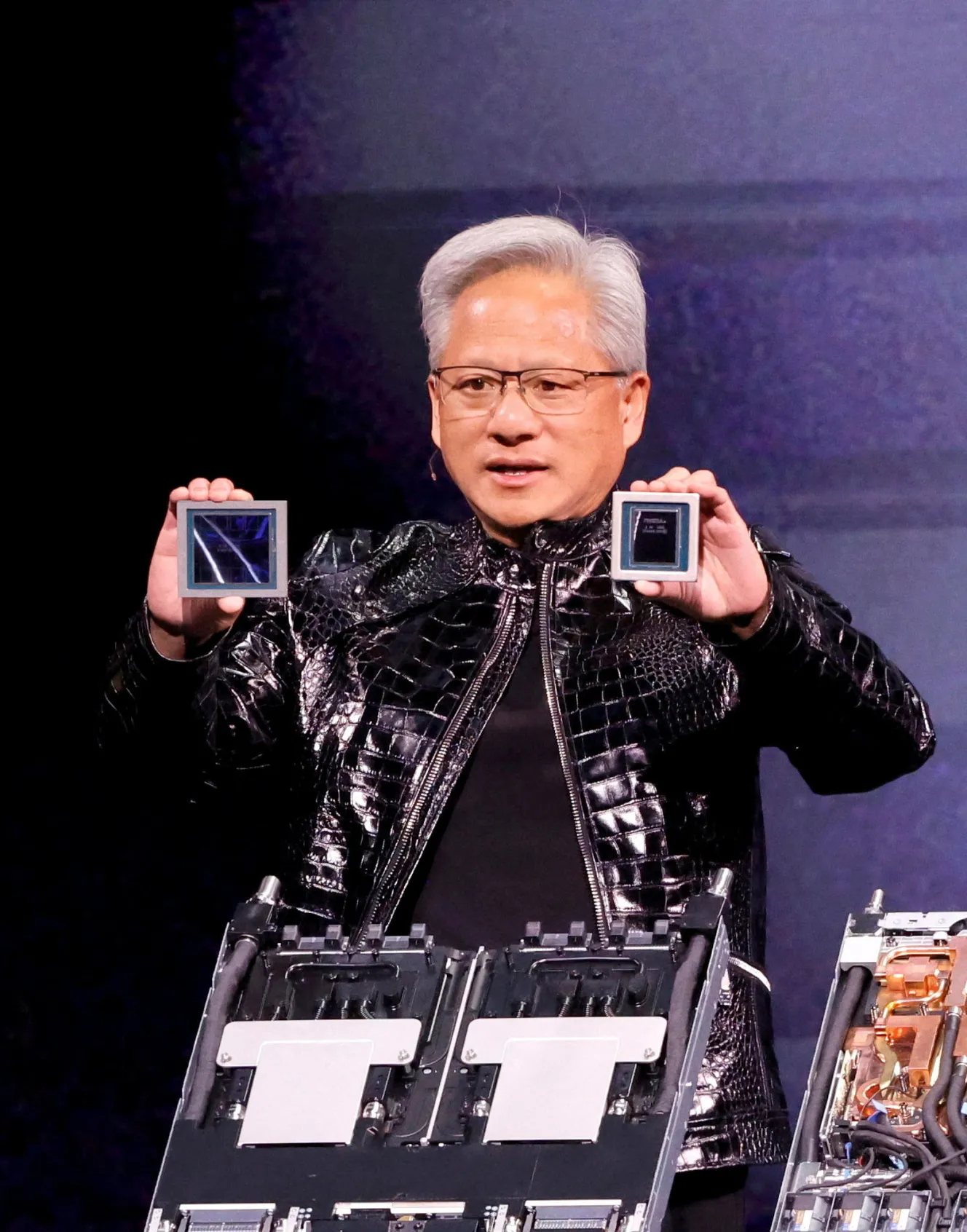 Jensen Huang, the chief executive of Nvidia, an investor in NscaleSteve Marcus/Reuters
Nalin Patel, director of private capital research at PitchBook, the private markets data platform, said Nscale’s fundraise was a “significant moment for European AI investment”.
Patel said: “This funding is among the largest rounds ever in the European venture capital ecosystem. In 2025, AI start-ups accounted for 35.5 per cent of the overall venture capital deal value in Europe, and we anticipate this share will rise above 50 per cent in 2026.”
AI companies attracted venture capital investment of €23.5 billion in 2025, up from €17.7 billion in 2024, according to data from PitchBook.
Meanwhile, traders have been trying to bet on which companies could lose market share to the products made by big AI developers such as Anthropic, which caused a stock market sell-off with its move into legal technology last month. Relx, Experian, the London Stock Exchange Group, Sage and others were affected by speculation over how AI could disrupt players in the publishing, data and software sectors.
Oxford Economics, the consultancy firm, said in a recent note that AI adoption by businesses had “risen markedly” over the past two years. The share of businesses using AI rose to 25 per cent in the final quarter of 2025 from 10 per cent in the final quarter of 2023. However, the note said the productivity gains in the UK economy had so far been observed in sectors with a low level of AI adoption, such as transportation, accommodation and food services.
The research note said: “There may be specific sectors or firms where this is already leading to higher productivity growth, for example professional services. Overall, however, there is a negative correlation between AI use and the change in productivity growth in 2025 from the 2016-2019 average at an industry level.
“In other words, productivity growth appears to have picked up more in sectors where AI use is relatively low rather than sectors where AI use is relatively high … If AI is going to generate major productivity gains that affect the economy, these effects probably still lie in the future.”