
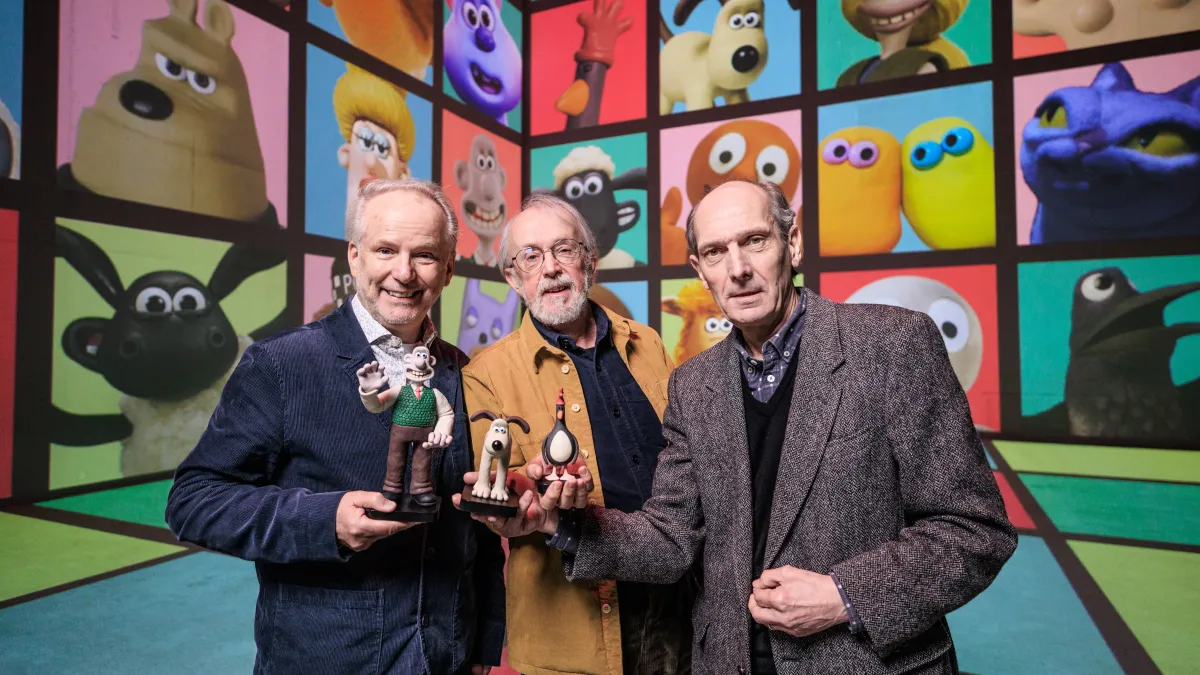
Trace the thumbprints through 50 cracking years of Aardman and the most striking thing is not how things have changed but how so many of its magic ingredients haven’t changed at all. The silent comedy. The absurdist humour. The quintessential Britishness of it all. Sidecars and marrows. Sheepdogs and toasters. The deep joy of hearing Peter Sallis say “gorgonzola”.
Technology may have transformed the way the animation studio’s stories are brought to the screen, but on that famously tactile clay surface at least it all looks and feels exactly the same as it did when Morph — one of Aardman’s early creations — first slipped out of a wooden pencil box on Tony Hart’s TV art show for children half a century ago.
Now the story of the Oscar-winning studio will be told from new and unusual angles at Lightroom in King’s Cross, London. If you’re unfamiliar with Lightroom, imagine being inside a giant cube where every surface is a cinema screen. Previous shows have focused on David Hockney, and currently there are events on the moon landings and the prehistoric world of the dinosaurs. David Bowie’s performances will be transformed into an immersive spectacle there this spring.
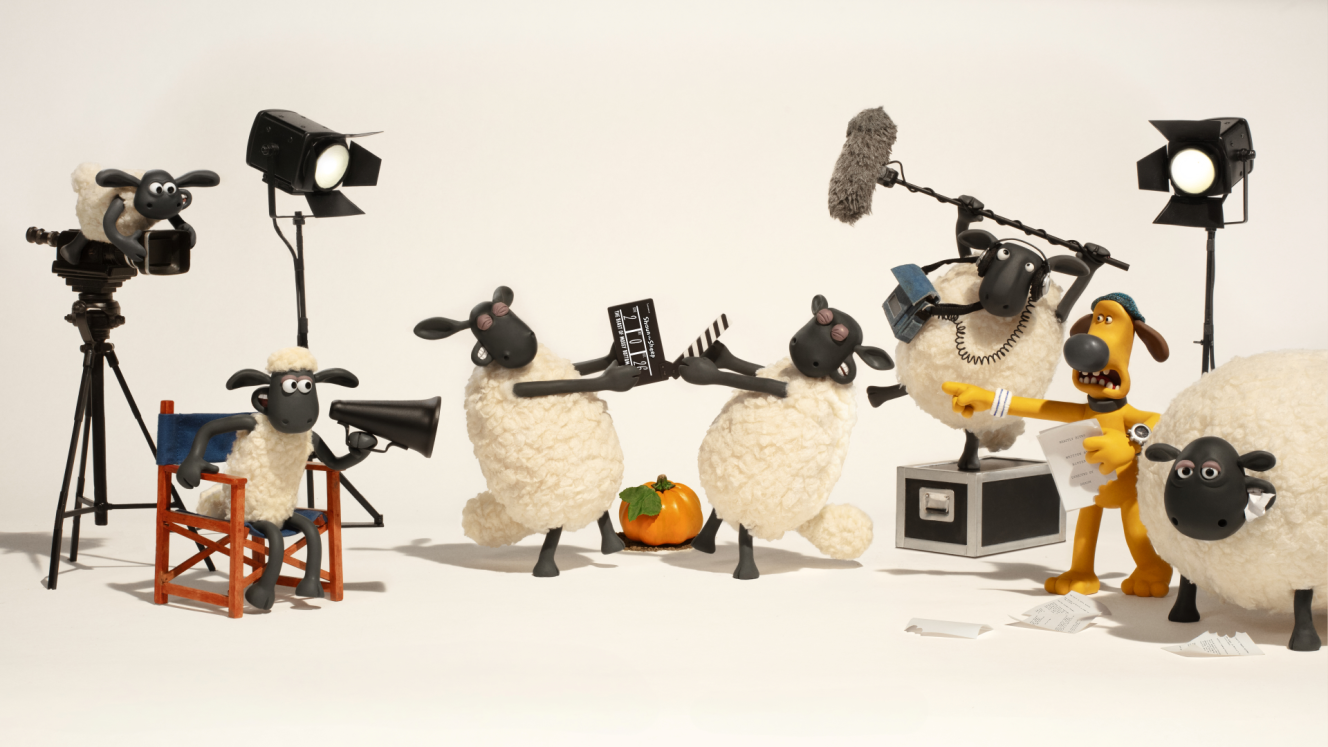 Shaun the Sheep: The Beast of Mossy Bottom is Aardman’s ninth feature filmSky UK
The Aardman show opens in October so it’s still a work in progress but expect to see Wallace at 12m tall, Gromit appearing on the ceiling and Feathers McGraw riding a toy train, 360 degrees around the room.
“I hope people will feel inspired and lit up by it,” says Nick Park, the Oscar-winning creator of Wallace and Gromit. The project will combine archive material with new animation and a behind-the-scenes peek into the Bristol studio. Watching it, Park hopes, will be like surveying “giant frescoes”. “You can get a big picture but you can also watch the minutiae of the detail if you like.”
The Lightroom show is one of three major events celebrating Aardman’s big 5-0 this year. Its ninth feature film — Shaun the Sheep: The Beast of Mossy Bottom — is released in autumn while a new interactive exhibition at the Young V&A in east London invites visitors to make their own stop-motion films (my three kids, aged 6-11, had to be dragged from their director’s chairs at closing time and were begging to go back the next day. It’s brilliant).
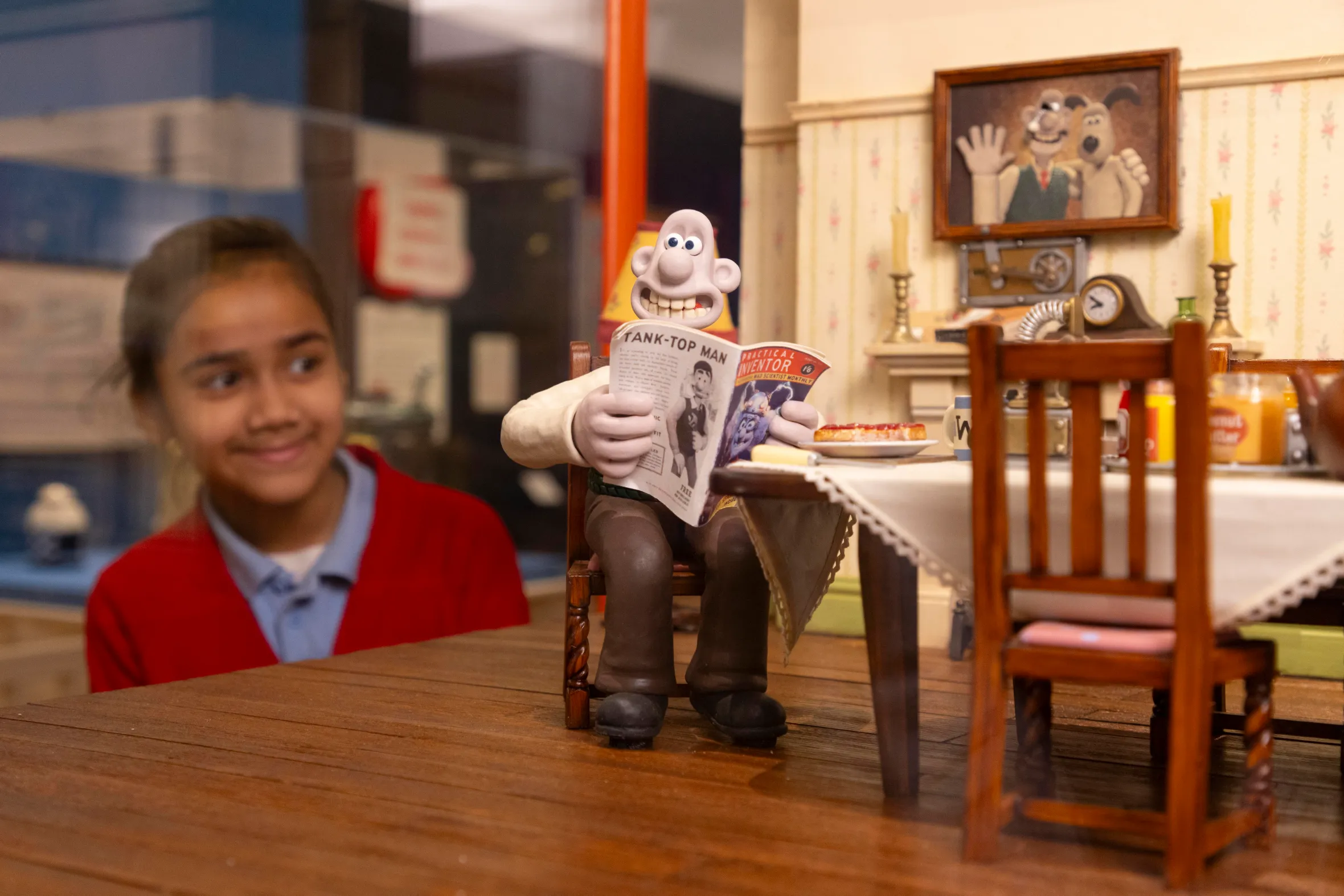 The Young V&A’s Aardman: Wallace & Gromit and Friends exhibition David Parry
Yet strangely for the world’s highest-grossing stop-motion film studio (its theatrical releases have generated about £600 million so far), there are curiously few imitators. Why, I ask cofounder Peter Lord, are there so few copycats?
“Good question,” he says. “I don’t know. There’s not much secret about what we do. Anyone can see that’s Plasticine, those eyes are beads. It’s not hidden. I am surprised that most people don’t just simply rip us off.”
Before its hat-trick of Oscars for best animated short (for Creature Comforts in 1991), The Wrong Trousers (1993) and A Close Shave (1995); long before its first feature film Chicken Run (2000) broke records to become the highest-grossing stop-motion film; and even longer before The Curse of the Were-Rabbit (2005) beat Studio Ghibli’s Howl’s Moving Castle and Tim Burton’s Corpse Bride to win the best animated feature Oscar in 2006, Aardman’s story began with two 12-year-old boys “messing about” with Plasticine on a kitchen table in 1960s Surrey.
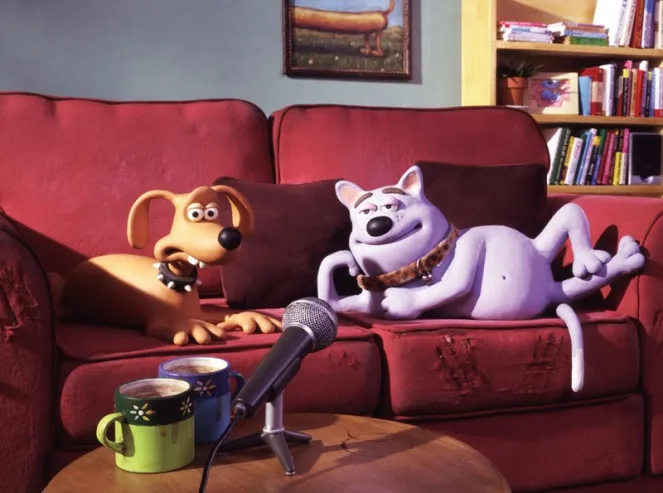 Creature Comforts won the Oscar for best animated short in 1991Aardman
When Peter Lord arrived at a new grammar school in Woking, he took the spare seat next to David Sproxton. The pair started making short films and Plasticine was the easiest way to do it. As Lord recalls, “If we had known how to make a proper animation puppet, with a skeleton, then we would have done that. But failing that knowledge, we made the simplest possible puppet, which is just solid Plasticine.”
They caught the animation bug. “Even though what we did was absolutely primitive and kind of meaningless — it was just stuff moving — animation is a powerful thing. You make a world, you populate it, you bring it to life. In a small, domestic way,” Lord says, laughing, “you thought you were God.”
They had found a way to make films without the faff. “You can do it on your own,” Sproxton says. “You don’t need actors. It’s very controllable. It’s your thoughts, your ideas — and they’re not dependent on the weather.”
The first inkling they were on to something came at school when a “stern biology teacher” caught a glimpse of a five-minute film they had made for an after-school film club. “He walked off giggling. And I thought, we’ve made him laugh. That’s got to be good,” Sproxton says. They are now both 72.
Nick Park joined the studio in 1985, having grown up in Preston obsessed with the Beano comic. He too was about 12 years old when he began experimenting with the “animation button” on his dad’s camera.
“Wallace and Gromit didn’t come overnight,” says the animator, 67. “A germ of an idea started. Art school, then film school allowed me time to develop it, then Pete and Dave gave me a corner of the [Aardman] studio to work in for about four years to finish it [while] working part time. So I had a lot of help.”
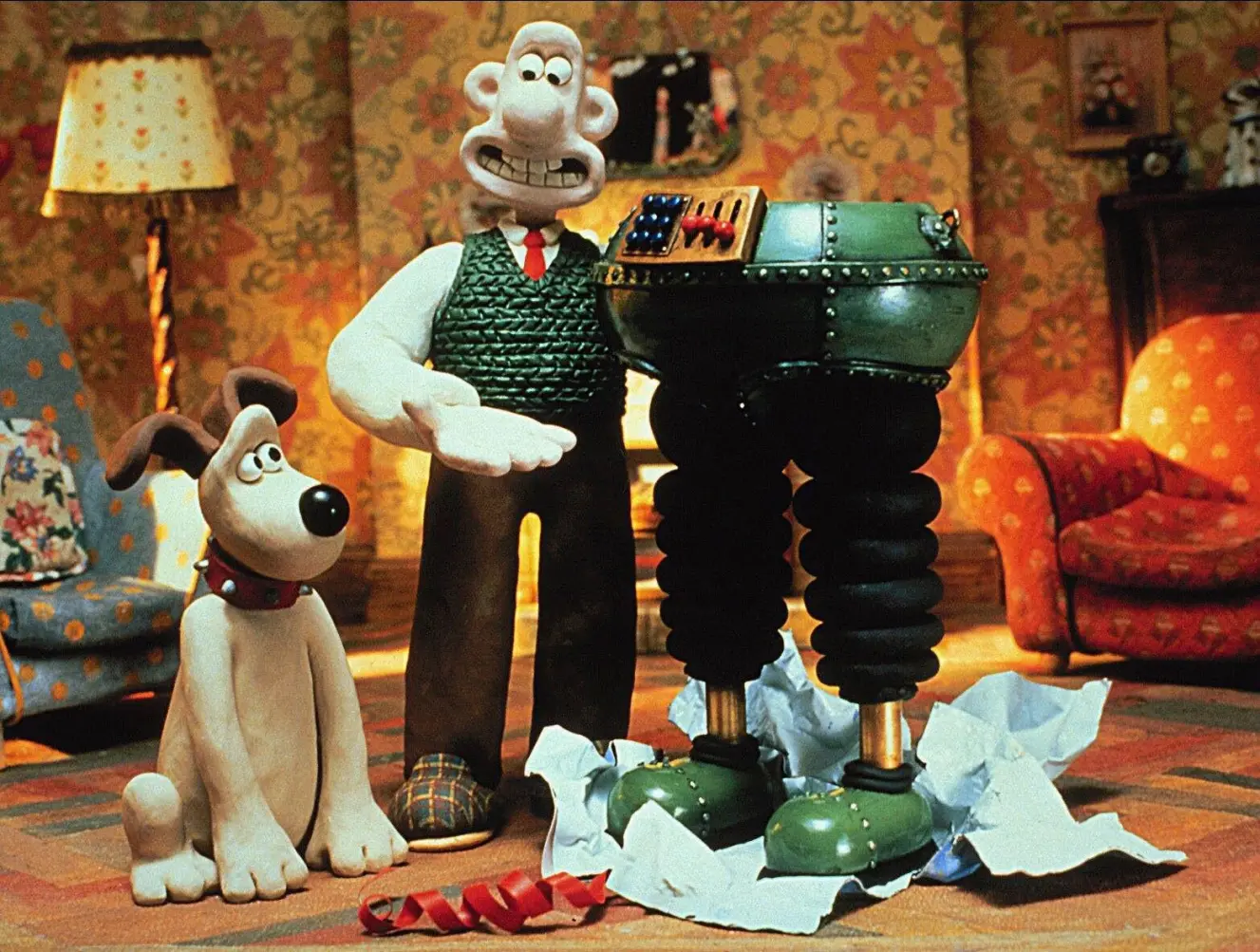 A scene from Wallace & Gromit: The Wrong Trousers, 1993Alamy
As computer-generated graphics changed cinema the trio stuck stubbornly to stop-motion. “When Toy Story came out,” Park says, “we were thinking, oh no, how long have we got?” However, it’s a fallacy that Aardman resisted technology. For every lentil used as a rocket rivet and clingfilm used as water, their ever-expanding team was also using digital editing systems “with names like Flame and Inferno”. Sproxton sings the praises of Dragonframe, the same industry-standard software used by Wes Anderson to make Isle of Dogs.
“Slowly technology came along to help us,” Park says. “We used it to do anything that we couldn’t do with clay, basically. But it was an instinctive thing.” Now he worries “there’s a danger animators rely too much on that technology and don’t rely on instincts as much”.
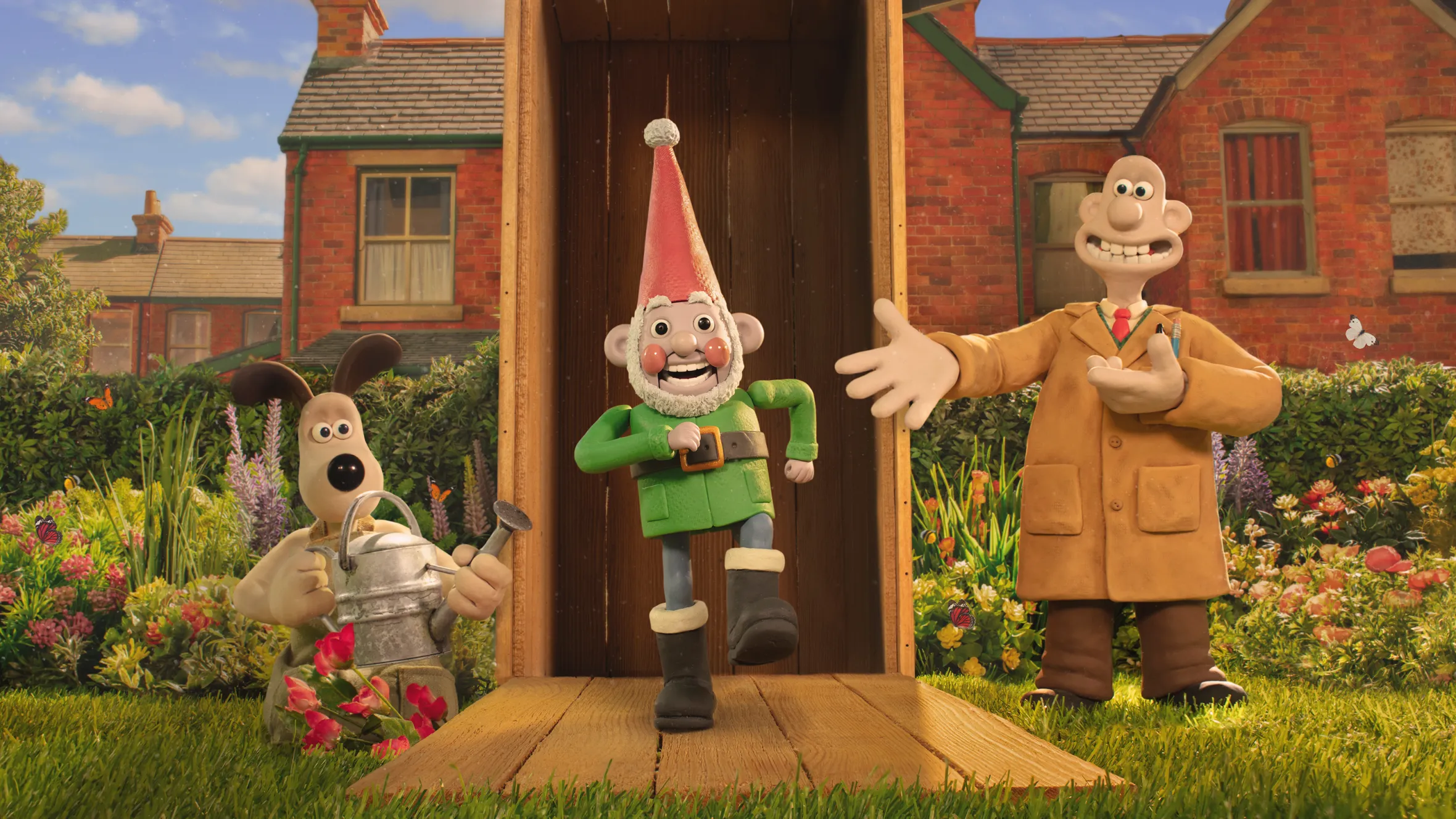 Gromit and Wallace with with their robot knome, Norbot, in Wallace & Gromit: Vengeance Most FowlNetflix via AP
Artificial intelligence seems to symbolise everything Aardman is not. “I don’t want to be a stick in the mud,” Park says with a sigh. “Obviously I can understand why people would want to try and experiment [with it], but at the moment it’s too easy to create rubbish… there’s a veil of blandness that seems to cover everything. And that’s where the artist comes in to make it something more individual and more unique.”
AI gives “the illusion of creativity”, he says. “That’s the danger of it. Taking what animators and artists have spent years painstakingly creating with blood, sweat and tears… I can just press a button and say, ‘I’ll have that. I’ll use it and then, oh, I’m an artist.’”
Lord is no less troubled about AI’s impact. “I’m sure it’ll be dramatic. The best thing for us to do is experiment. To be clear, I don’t mean that the next Wallace and Gromit movie will be AI. Don’t worry on that score.”
Aardman’s partnership with DreamWorks, the Hollywood studio founded by Steven Spielberg, ended in 2007 after its computer-generated film Flushed Away disappointed at the box office. However, the break-up was caused more by cultural differences than aesthetic ones. “We realised that what we do is very British, very European,” Lord says. “It was almost said to us, ‘We can keep on working together, but you need to make films which are more designed for the American audience.’
“We said, no thanks. Because there’s a billion American films and very few British ones, especially in mainstream family entertainment. So we’re very proud to occupy that ground. I have great respect for American culture. But we do something different. Our way of telling a story and telling a joke is different to theirs.”
Craft is important, but comedy even more so, Lord says, adding one more thing that has worked in the studio’s favour: resisting the temptation to go dark. In the world of animated films, “there’s lots of creepy, moderately scary stuff, like Tim Burton’s world, like The Corpse Bride. Of course that’s fine. But when we think of a new project, it being funny is very important to us. We have this simple instinct to make people laugh. To charm them.”
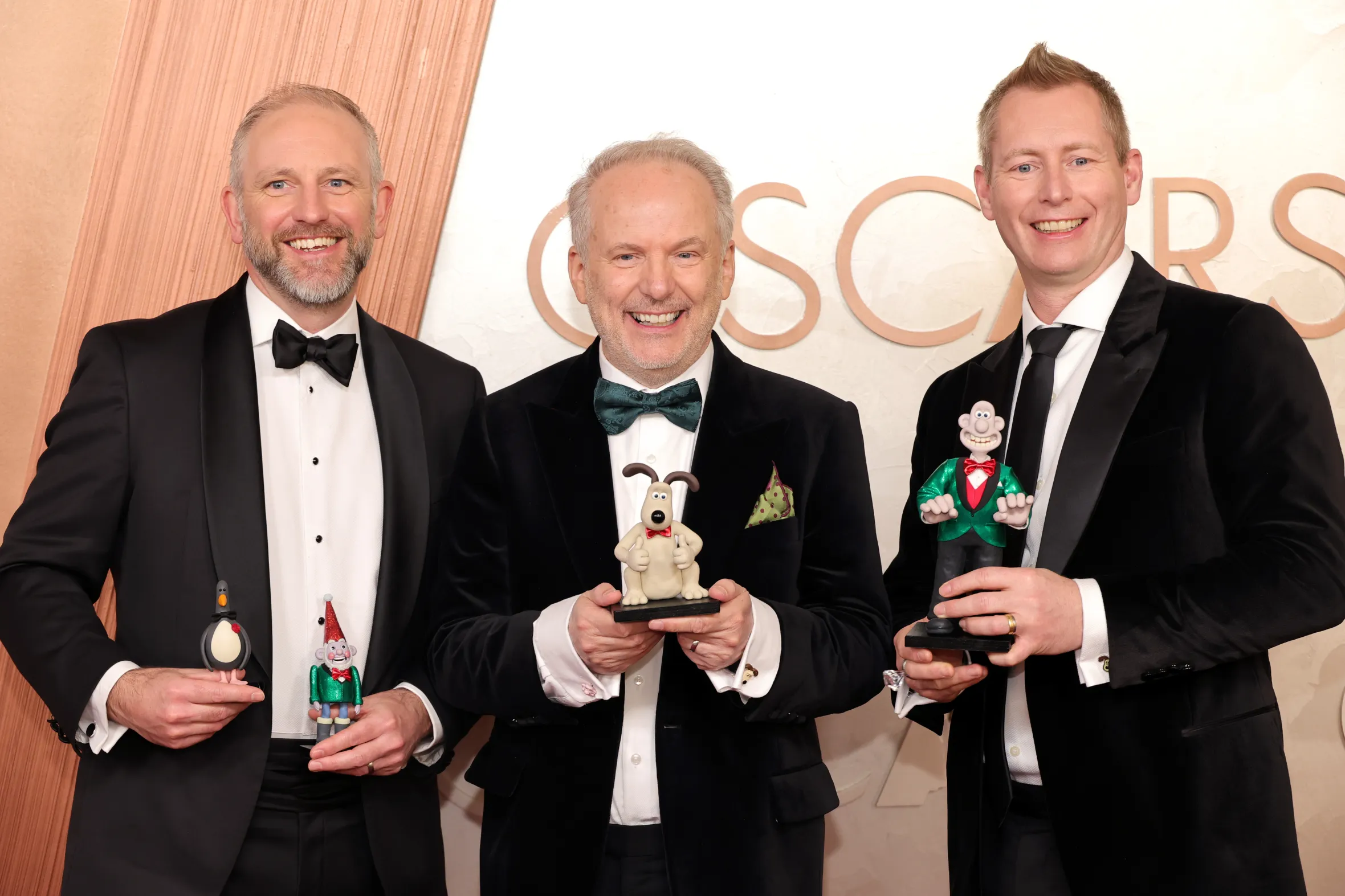 Richard Beek, Nick Park, and Merlin Crossingham at the Oscars last yearSavion Washington/Getty Images
Aardman became employee-owned in 2018 when Lord and Sproxton sold 75 per cent of their shares to a trust set up to hold shares for the benefit of employees. They felt this “John Lewis model” would be the best way to keep the studio independent.
“We realised at some stage we’d either retire or die,” Lord says cheerfully. “It was quite a conservative, defensive move in a way too, but for a noble end, which is to keep the company independent above all. We felt we had somehow created something very, very wonderful. I didn’t want it just sold.”
“As long as that audience is there, we’ll still be making stuff for it,” Sproxton says. And happily, Park has decades’ worth of sketchbooks for inspiration.
“I often go back to early sketches and early ideas that I once jotted down. So there’s quite a good store of them. And I can’t stop having new ideas.”
Larger Than Life: Starring Wallace & Gromit, Shaun and More is at Lightroom, London N1, from Oct 14, lightroom.uk