
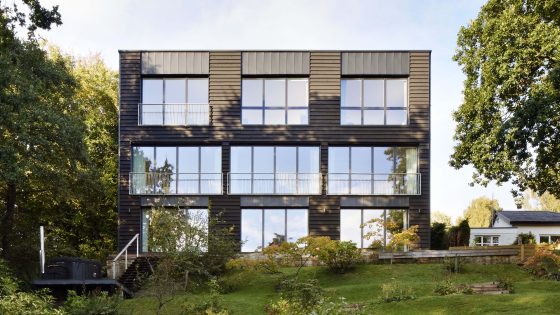
McGinlay Bell’s brief for this project was to rework and update a 1985 suburban house in an established residential neighbourhood in East Dunbartonshire, and create a flexible, sustainable and adaptable home.
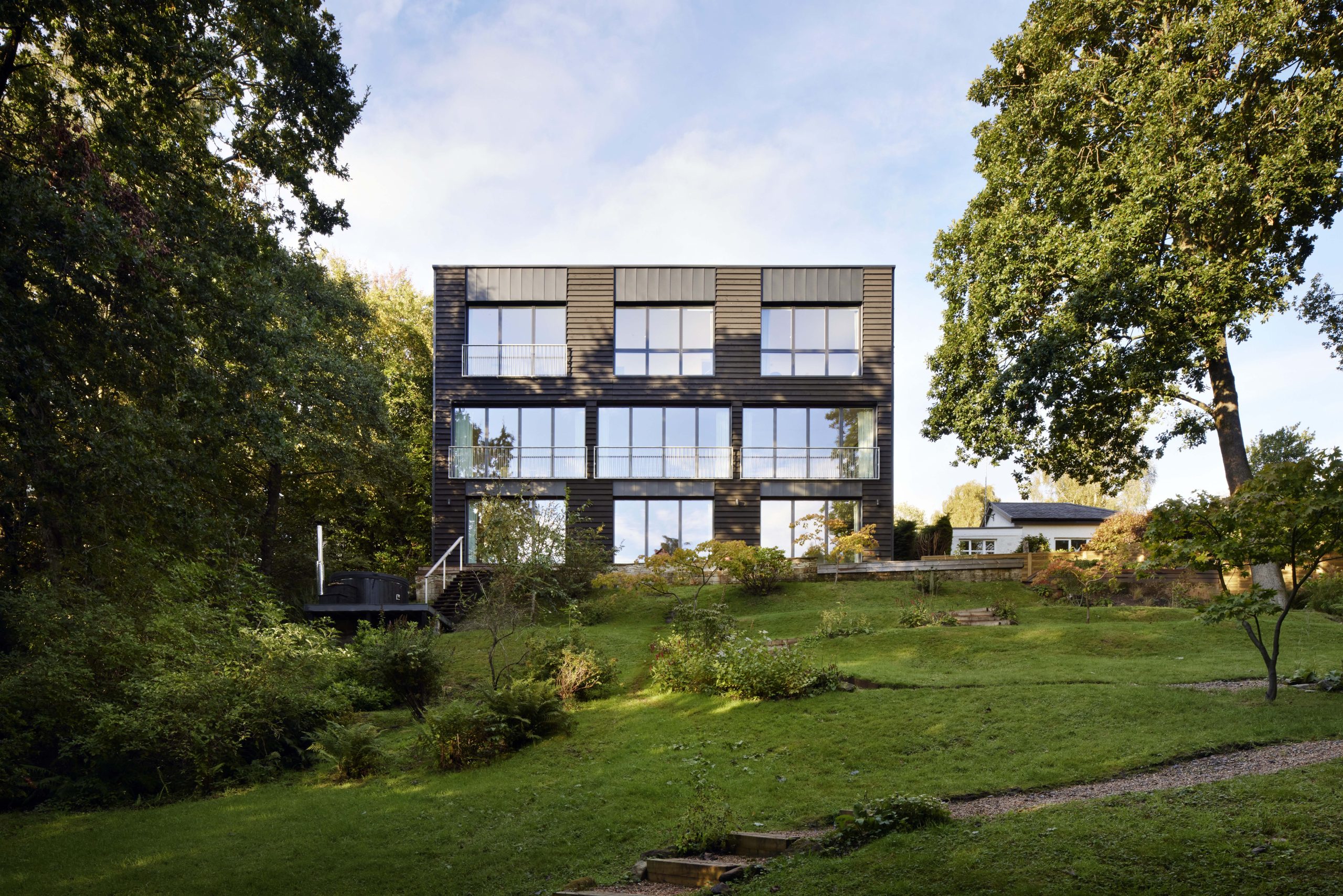
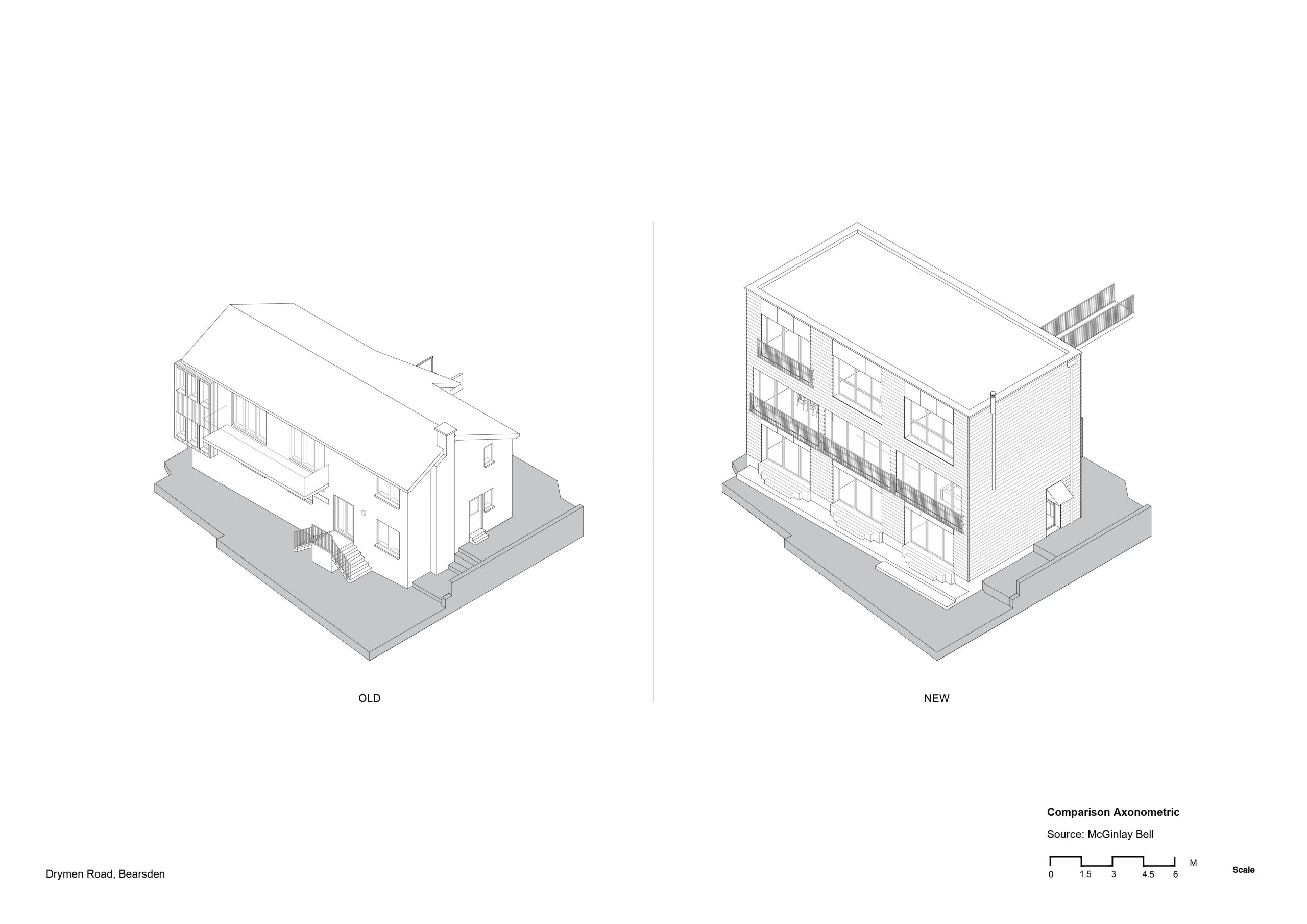
The practice retained the house’s original footprint while removing earlier unsympathetic extensions.
Its pitched roof, however, was replaced with a flat roof, enabling the addition of an extra storey and generous new openings. These frame views to the mature south-facing garden and the St Germains Loch beyond.
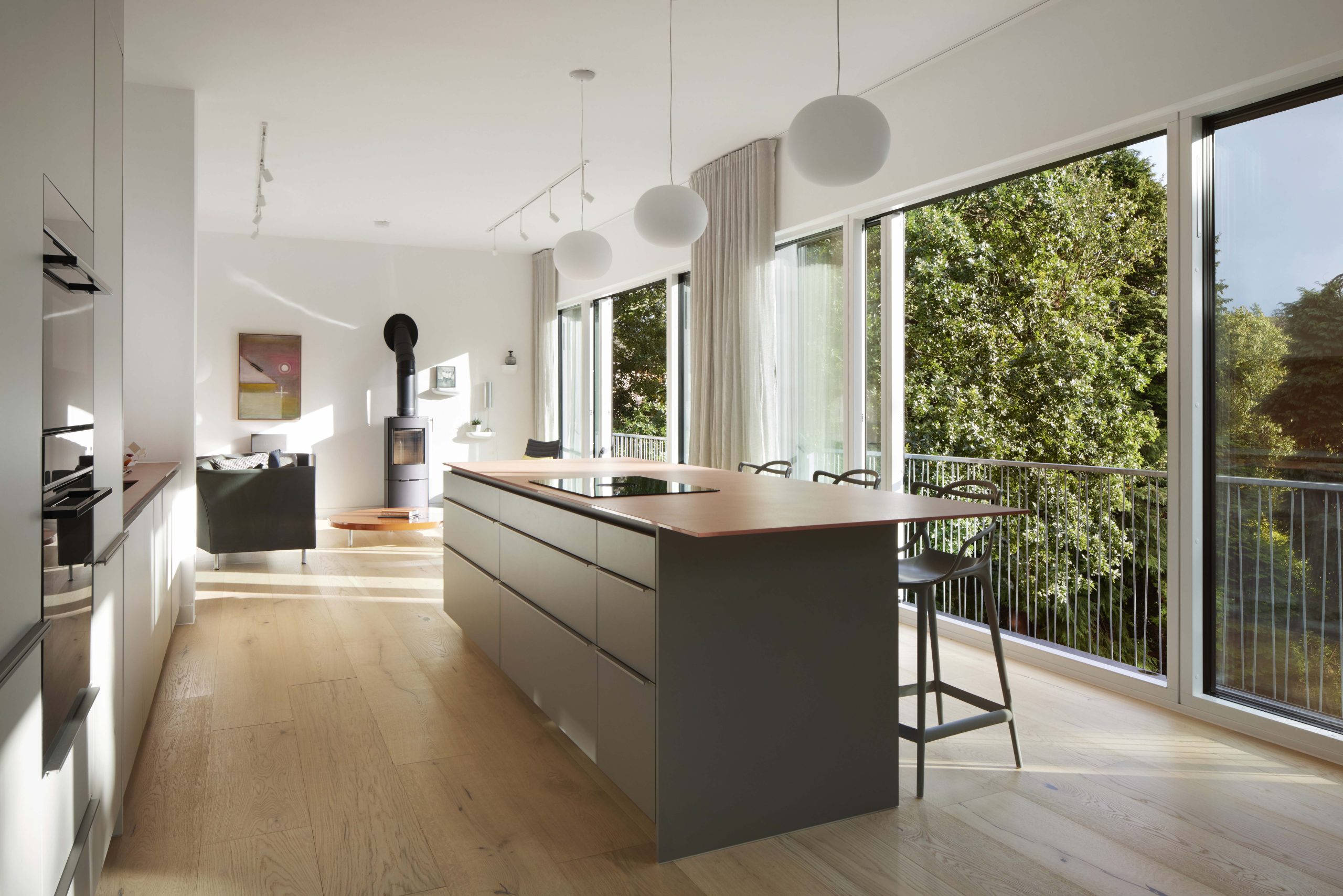
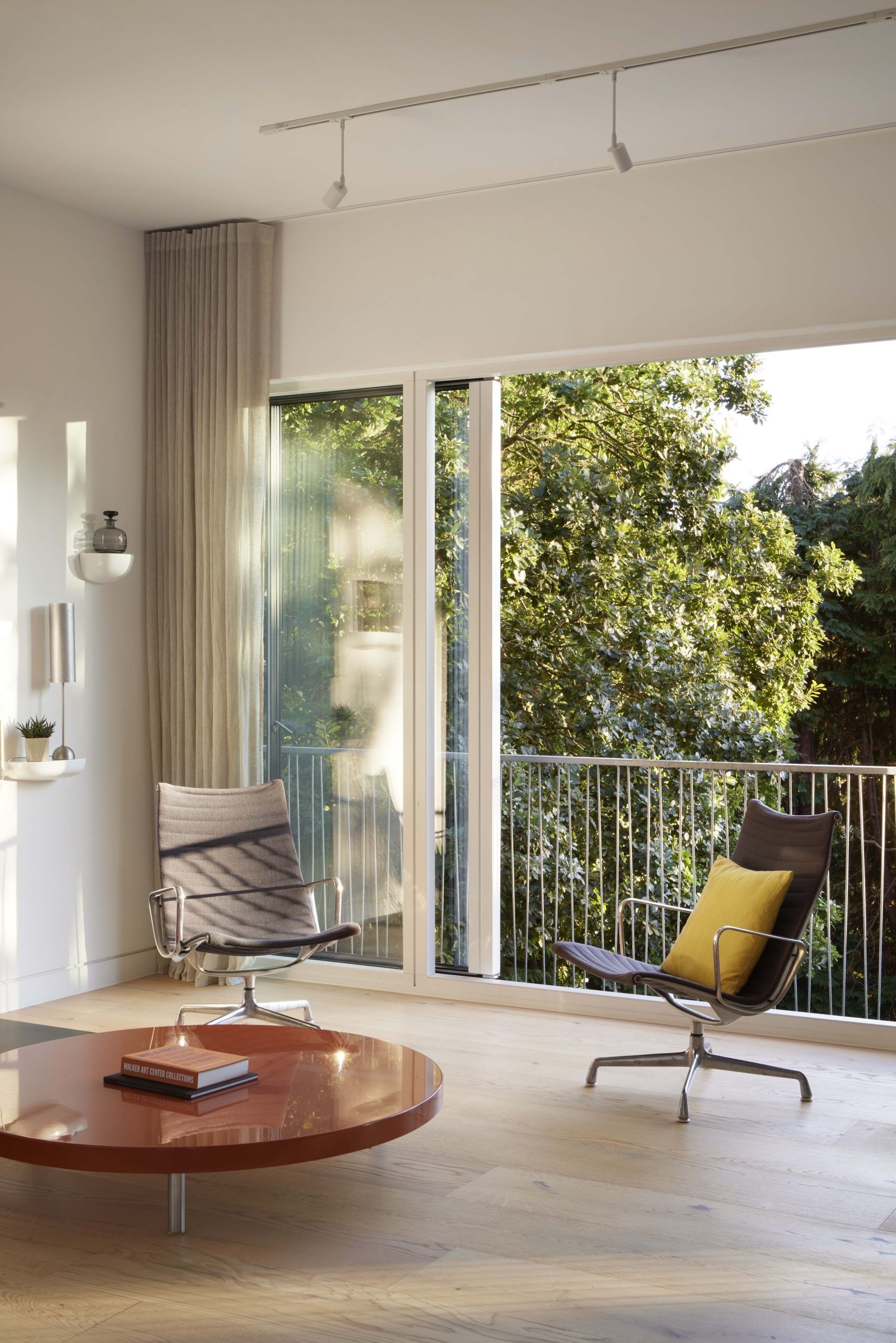
Rather than a set of conventional rooms, the internal layout is arranged as a series of fluid transitions between living, dining, working and sleeping areas. The plan’s adaptability supports future expansion or reconfiguration, while materials have been chosen to provide warmth and practicality.
The house’s new high-performance envelope, airtight construction and enhanced insulation enable mechanical ventilation with heat recovery and air-source heat pumps, while extensive reuse of existing materials reduced the embodied carbon in the build.
It’s not the first time that the Glasgow-based practice has worked in East Dunbartonshire. In 2020 it completed a house in Bearsden, inspired by the American mid-century Case Study Houses. The brick house embraced an open-plan pavilion.
Architect’s view
At McGinlay Bell, we approached this project as a retrofit-first transformation, enhancing the existing house rather than replacing it. Instead of introducing a new architectural object, we consolidated the house into a coherent form that asserts its identity while contrasting with the woodland landscape.
The exterior is fully clad in 225 x 38 mm structural timber boards, finished in Falu Rödfärg and meticulously lapped to articulate the envelope. This treatment creates a subtle, textured presence, unifying the structure into a calm, composed volume that sits quietly among mature planting.
Entry is conceived as a bridge over a landscaped threshold, marking the transition from public to private. The front façade remains composed and protective, revealing only the main circulation stair as a vertical marker. Private spaces open toward the rear, balancing restraint at the street with openness to the landscape. Internally, spatial organisation is defined by patterns of occupation rather than fixed rooms, with circulation, light and atmosphere forming an adaptable framework.
The lower ground floor hosts a home office and guest bedroom, both connecting visually and physically to the upper garden. Principal living spaces are elevated, with expansive views across the rear garden and surrounding trees, enhanced by Juliet balconies for light and ventilation. Bedrooms on the first floor capture extended views toward St Germains Loch.
Environmental performance is integral: high insulation, airtight construction and careful detailing support mechanical ventilation with heat recovery. Heating, cooling and hot water rely on low-carbon air-source and air-to-air multi-zone heat pumps, while the roof is prepared for future solar PV installation.
This retrofit strategy demonstrates how ordinary late-20th-century suburban housing can be reworked through editing, consolidation and performance-led redesign, resulting in a vertically transformed, contemporary home that extends the life of the existing fabric.
Brian McGinlay, director, McGinlay Bell
Project data
Location Bearsden, East Dunbartonshire
Start on site May 2023
Completion date November 2024
Gross internal floor area 300m2
Form of contract Traditional
Construction cost Undisclosed
Architect McGinlay Bell
Client Private
Structural engineer Forward Consulting Engineers
Main contractor Bridgewater Building Solutions
CAD software used AutoCAD