

It was the morning of the summer solstice and I was getting ready to film a vicar giving birth. I was a television documentary director working on a BBC2 series about midwives in Yorkshire.
As I sat on the steps of the vicarage, listening to the guttural roars of childbirth coming from inside the house and waiting for the nod to come in to start filming, I received a text message.
‘Your recipient has been in touch to let us know she is pregnant!’
A stranger was pregnant with my egg. She was going to give birth to a child that was biologically mine but would never call me mother. My donated eggs had been mixed in a petri dish with the sperm of a man I also didn’t know and placed into this woman’s womb – and now a baby was growing.
I had just turned 30. My stomach somersaulted through different emotions: happiness, relief and, yes, an undeniable touch of envy. I was thrilled that this woman was pregnant – it made all the weeks of medical appointments wonderfully worthwhile – but it also made me realise more than ever how much I wanted my own children.
In the years leading up to this moment, my life was increasingly peppered by stories of women unable to get pregnant. My mother, my aunt, a handful of friends and the stranger to whom I donated had all struggled with infertility – then, with a horrible irony, two years after I got that text outside the vicarage, I found myself in the same boat.
I had seen the psychological toll it took and the consequences of what happens when fertility secrets are hidden.
It all started when I signed up to the DNA website 23andMe and accidentally set off a bomb in my family. Like most people who send off their little saliva sample, I wanted to know more about my family’s heritage – but discovered, when I matched as a half-sister with a woman I’d never heard of, that the man I’d called Dad for the past 27 years was not my biological father.

Rebecca discovered that she and her three siblings were all conceived via donor through DNA website 23andme
It turned out that my three siblings and I were all donor conceived, in this case via a sperm donor (who was also the genetic father of my 23andMe match). My parents had kept it secret for decades. It felt like stepping on a landmine I didn’t know was there.
I was stunned but I didn’t blame them – when they first started their five cycles of IVF in the mid-1980s it was a process that carried such stigma, few spoke about it publicly. As late as 1991, when I was born, IVF was still surrounded by secrecy and donor conception was steeped in even more shame.
The facts were simple: both my parents had been medically infertile. My mother had endometriosis, which was blocking her fallopian tubes while my father’s sperm was unviable. IVF with sperm donation was their only route but it wasn’t until they were 35 and 36 that the process became accessible to them, with a clinic – the first in the Midlands – opening near their home in Nottinghamshire. They signed up immediately.
The very first round resulted in my older brother but there were four more failed attempts – until on the fifth, my mother gave birth to triplets. I was one of them.
Back then, donors were guaranteed lifelong anonymity. The internet did not exist, of course, nor did consumer genetic sequencing. No one could have imagined a future in which people could upload their DNA to a website and instantly be matched with their donor or their relatives.
And yet the fallout of my discovery was so emotionally painful, I spent a lot of time wishing I hadn’t sent off that saliva sample.
I’d always been told I looked like my dad and had never had any inkling at all that I wasn’t related to him biologically. I wonder what mix of emotions he’d felt when he heard people tell me that.
I didn’t blame my parents for not broadcasting their use of a sperm donor but it did make me question how loving parents like mine could keep such a big secret like that from us, their children, for three decades. ‘It doesn’t change anything, does it?’ asked Dad, openly upset. ‘No, of course not,’ I replied. But the truth is, it sort of did.
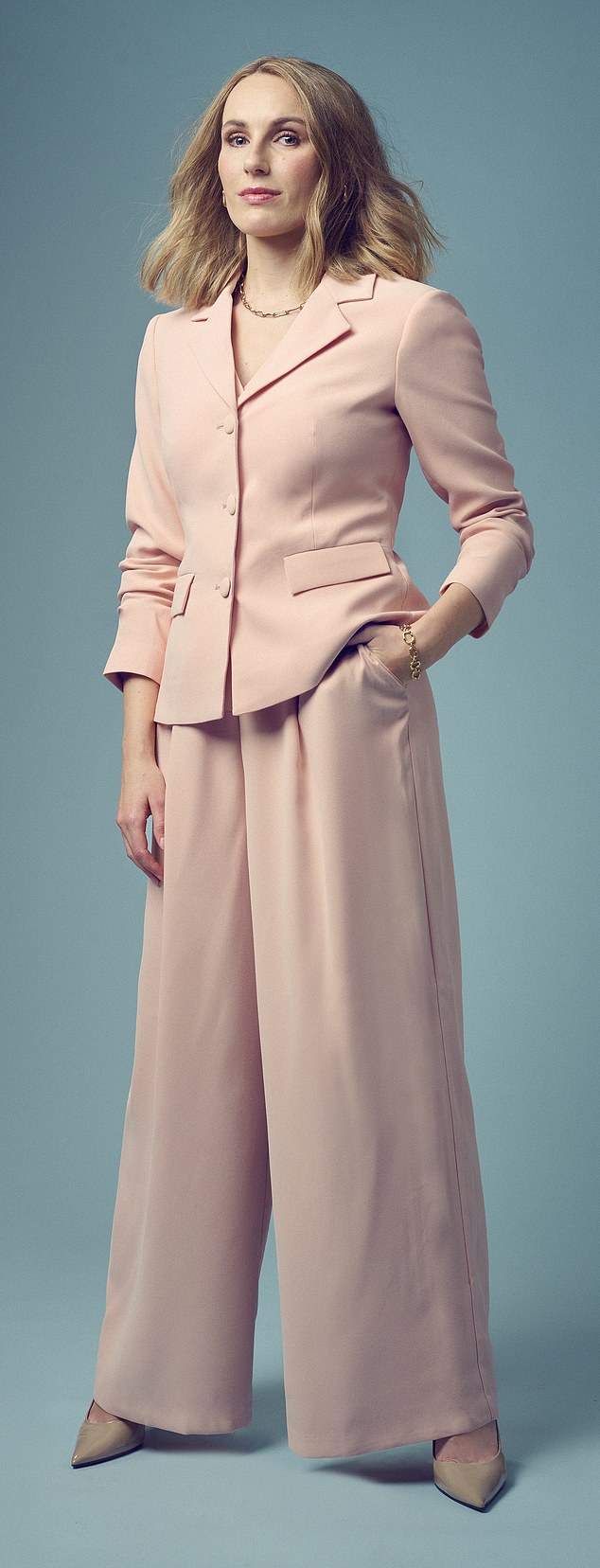
Rebecca didn’t blame her parents for not broadcasting their use of a sperm donor but she became fixated by the secret behind her conception
The secret behind my conception became a kind of fixation for me. I was living in London, doing well in my career and at that point in a happy relationship, though we weren’t ready for children just yet. In any case, could I have them? Like my mum, I had been diagnosed with endometriosis. Friends were already beginning to encounter problems with conception and both my parents had been infertile. The question gnawed away at me.
That’s when I started researching egg donation and, realising there was a shortage of donors in the UK, decided to do something altruistic and donate mine. I would also be able to use the process to check on my own fertility.
You have to have counselling before you donate either eggs or sperm to make sure you understand the emotional impact. Women need a blood test to check their AMH level (Anti-Mullerian Hormone), which is a good indicator of ovarian reserve – essentially how many eggs they have left. We are born with all our eggs but the number diminishes with time and age. For some women, it depletes faster than others.
After a few weeks, a blood test revealed that my AMH was on the low side, though still enough to donate. I was relieved but also concerned. Did it mean I might struggle to conceive myself?
I started to worry whether donating would diminish my own egg reserve more quickly, though the clinic reassured me it wouldn’t, since the eggs would be lost each month anyway.
Once the timeline was agreed and synced up with the recipient, I began daily hormone injections into my belly.
This process wasn’t as bad as I thought it would be. I have been known to faint from vaccinations or giving blood but I quickly got used to administering the shots, with my boyfriend by my side, giving me ice cubes to help with the swollen skin afterwards. Timings are crucial with this kind of medication, so I was most anxious about making sure I did everything at the right time, taking my pack of needles with me everywhere I went.
Every few days I had to go into the clinic to have a scan to check how my follicles were developing. Because of the risks and time it took, I received £750 in compensation (in 2024, the compensation for egg donors was increased to £985). After ten days of injections, it was time for the egg retrieval. I arrived at the hospital and was sedated for half an hour while eggs were collected from my ovaries with a thin needle and suction device.
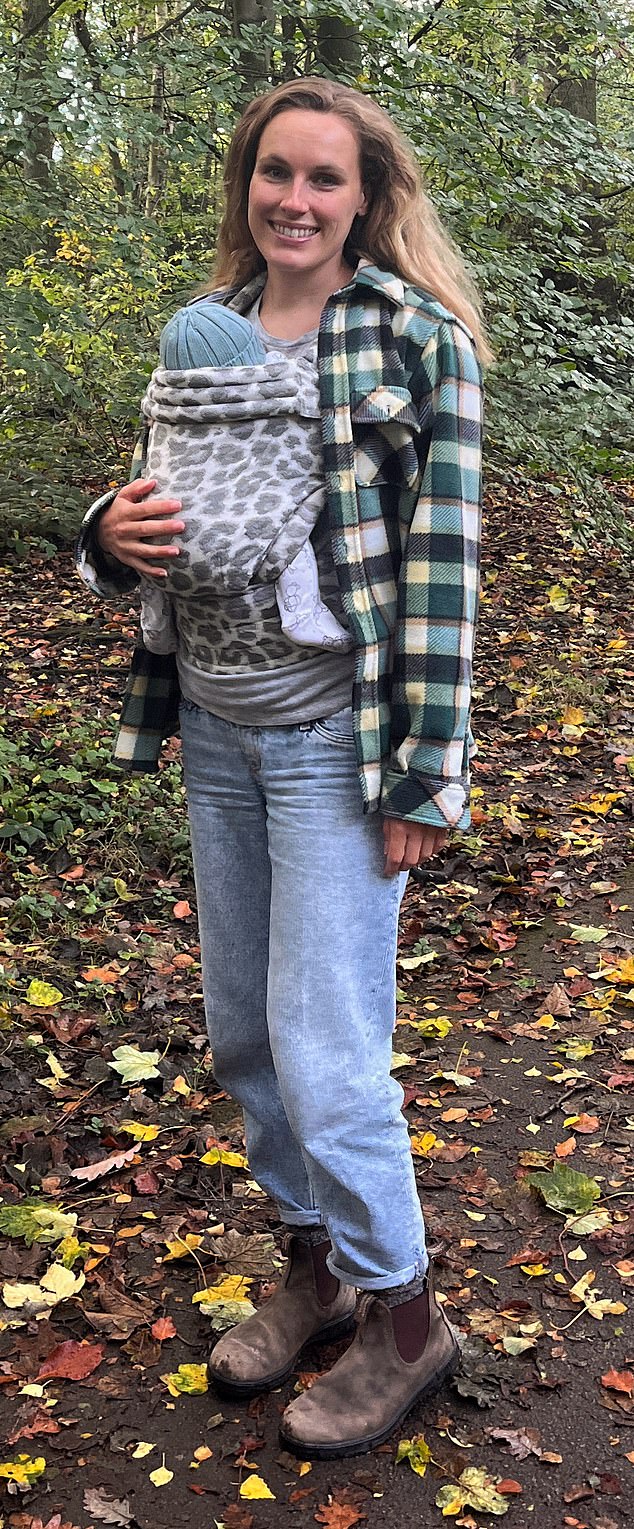
Rebecca with her son, who is now six months old. Rebecca has endometriosis and was concerned she wouldn’t be able to conceive naturally
When I woke up, the nurse said they’d collected ten eggs. I was delighted. There was a good chance at least one of them would result in a baby.
I messaged my mum to let her know how the procedure went. She replied saying: ‘Wow. Super. Well done. You’re a superstar!’
I felt so proud of myself. It was a full circle moment telling my mum the news that her donor-conceived daughter was helping another woman to become a mother through donation.
Now I knew my eggs were viable, my biological clock began to tick even louder. The problem was, my boyfriend James – 18 months younger than me – wasn’t ready for children. We had only been together for a year, so I understood. Yet while he could afford to wait, I felt like time was running through my fingers like sand. For the next two years I could feel the tension inside me grow.
Alas, my fears were confirmed. When, aged 30, James did agree to start trying, nothing happened. I was 31.
Month after month, my period arrived and my anxiety ramped up. My biggest worry was coming horribly true. Infertility is defined as being unable to conceive after 12 months of regular unprotected intercourse and we approached that deadline alarmingly fast.
I’d always wanted a family and facing up to the possibility that it wouldn’t happen was agonising.
People who know me always ask if this sudden twist was made harder by knowing that somewhere out there another woman was raising a toddler who was biologically related to me. But I can honestly say no – at no point did I regret donating my eggs to her. That and my own struggle to conceive were separate things in my mind. In fact, I thought donating was good karma if it now turned out I needed an egg donor myself.
After a year of trying, we were referred for IVF at our local clinic and I started hormone injections again.
A few weeks later six eggs were retrieved – but they were never mixed with my partner’s sperm.
At the last minute, he decided to stop the process because he still ‘wasn’t ready’. I felt shock and devastation. His actions seemed to pile cruelty upon hurt.
In fact, for a while he disappeared – before breaking up with me over the phone two weeks later.
I was almost 33 years old, heartbroken, single and no closer to having the family I’d always longed for.
As the months rolled on and my fertility prospects worsened, I considered having a child on my own and going down the sperm donor route.
Another full circle moment. Would I do what my parents had done, what my own egg recipient had done, and rely on the extraordinary generosity of a stranger to fulfil my dream of motherhood? I decided to give it until I turned 35.
Instead, the universe intervened and I met Ollie on a dating app. He was 34 and we hit it off instantly. He was sympathetic to my fertility situation but told me he wasn’t sure if he wanted kids. After a few months of dating, I said we should give it six more months and if he decided he didn’t want children, or wasn’t ready, then we should go our separate ways.
A few months later he suggested we start trying. I was elated but after ten months of negative pregnancy tests, we turned to IVF. I contacted a clinic abroad, where IVF is much cheaper, and started researching flights.
But I never booked them. A few weeks later – to our total surprise – I discovered I was pregnant naturally.
We now have a gorgeous, healthy, six-month-old baby and could not be happier. Ollie is a terrific dad and it’s been wonderful seeing how much he enjoys fatherhood.
Funnily enough, when I was pregnant I joined a brunch club for pregnant women. Of the three women I happened to sit next to, all had experience with donation. One had conceived their baby with egg donation, another with sperm donation and the other was sperm donor-conceived herself, like me.
What were the chances? All four of us gave birth to baby boys within a few weeks of each other and I have no doubt they’ll be best friends as they grow up.
I had hoped that the stigma my parents faced was firmly relegated to the past but I’ve noticed that when people share their personal experiences of IVF, donor conception or fertility treatment on the internet, there are almost always negative comments left by strangers below.
It is such an odd response. Are we less worthy of being here? Me, my siblings, the child born of my donated egg? Are my parents less deserving of having a family than others? All I know is that we were deeply wanted and yearned for which, sadly, cannot be said of all children conceived ‘naturally’.
I recently learned that the recipient of my eggs gave birth to a baby girl.
Because of a law change in 2005 which removed donor anonymity, she will be able to contact me when she turns 18 if she wants to.
If she ever does, I will tell her that life is a gift; one I was very happy to give in return for having been gifted it myself.
Inconceivable: On The True Meaning Of Family, by Rebecca Coxon, (£16.99, Big Day) is out tomorrow.