
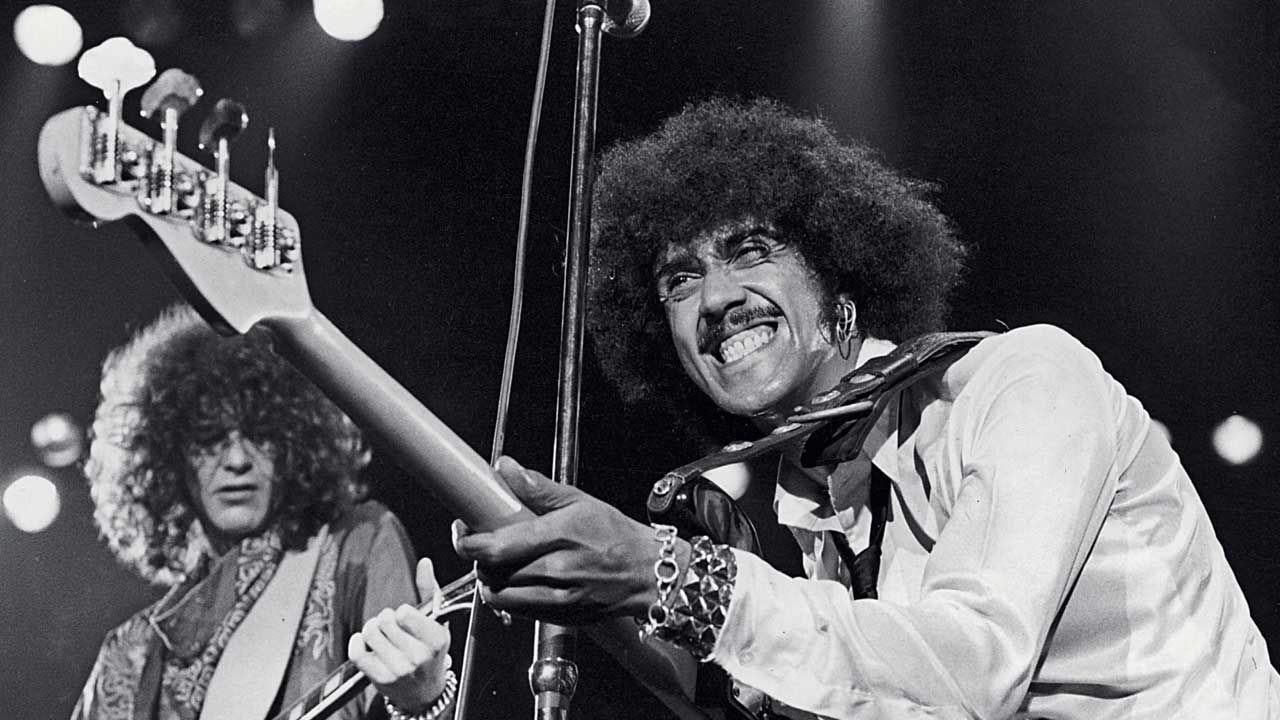
“My friends call me Phillip.”
Those were the first words Phil(ip) Lynott ever spoke to me. I was 18, did an ordinary job, and thought I must be dreaming. I still had pictures of Thin Lizzy on my bedroom walls. We’d been introduced by our mutual friend, Peter Makowski, who was 20 and one of the star writers on the weekly music paper Sounds.
It was November 1976. Lizzy had just headlined their third night of three at London’s Hammersmith Odeon. Still one of the greatest concerts I ever witnessed. The first night had been recorded, the bulk of which would appear 18 months later as the instant-classic live double album Live And Dangerous.
Article continues below
You may like
I was Pete’s astonished plus-one. When he then took me to the aftershow party I couldn’t believe my eyes. These were the filthy-rich golden years of the rock biz – free bar serving anything you fancied. A ‘bevvy of lovelies’ from Page 3 over there; sports ‘bad boys’ George Best and Alex ‘Hurricane’ Higgins over here; soap stars and radio DJs swanning around like sprinkles on a cake.
Along with interesting rock personages such as a snarling drunk Frankie Miller looking for a fight, Wings’ cherubic guitarist Jimmy McCulloch looking for a fix, and a lot of young Colin Farrell lookalikes. “Dublin mafia,” Pete said.
Oh, and Johnny Rotten. I hadn’t heard of the Sex Pistols (their first single was 10 days from release) or punk rock, and definitely not a singer by the name of Johnny Rotten. Pete had just introduced me to Phil – I mean Philip, now we were friends – when this bloke with sticky-up orange hair and a pointy rat’s nose and teeth lurched over and fixed Lynott with a myopic squint.
“I thought the gig was farking great, Phil,” he announced in querulous cockney. “Up the farking IRA and all that. But I can’t stand these parties. They’re so farking boring…”
“Ah, go on, Johnny,” Phil said in his low Dublin brogue. “Have anudder fockin’ drink and grab a burd. Enjoy yersel’…”
As I was to discover over the next few years, if ever there existed a place where ‘enjoying yersel’’ was practically a biological imperative, it was at a Thin Lizzy party.
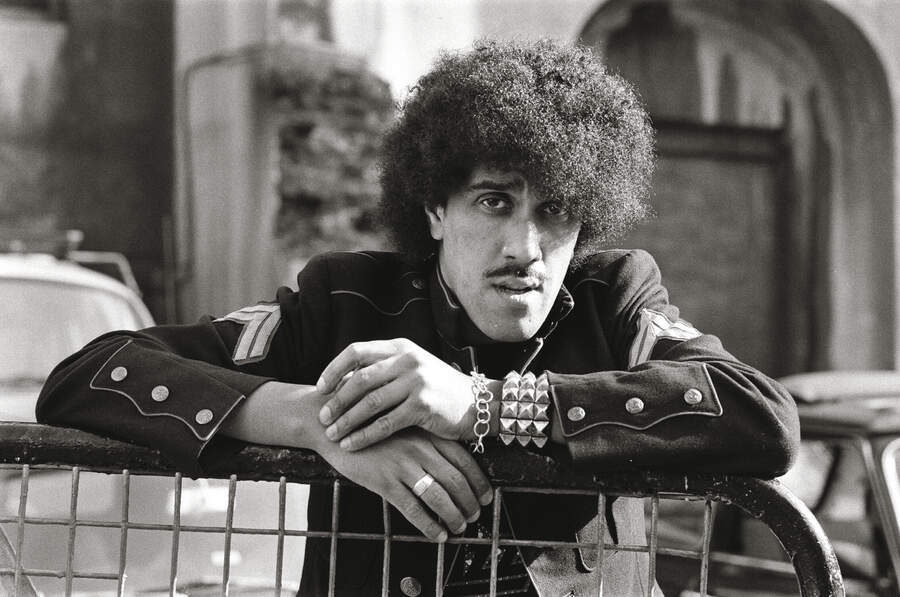
(Image credit: Peter Stone/Mirrorpix/Getty Images)
I’d been a fan since Whiskey In The Jar hit the UK Top 10 in February 1973. Because it had that Irish diddly-diddly thing, my father, who was a traditional Irish musician, loved it, too. It was the one thing we bonded over – ever. I had also been intrigued by the B-side, a powerful Lynott original called Black Boys On The Corner. Like Zep-meets-Shaft. After that I couldn’t stay away.
What to read next
Meeting Mr Thin Lizzy himself in the afterglow of The Boys Are Back In Town, the band’s first significant success since Whiskey In The Jar, was to meet Philip Lynott at his magnificent, preening peak. Less than 10 years later he would be dead. In 1976, however, I had never known anyone so alive.
By the time we met again, in 1979, Lizzy were about to release Black Rose, their soon-to-be fifth gold album in the UK. I was now 21 and the rising star of a PR firm called Heavy Publicity. Clients: Dire Straits, UFO, Journey, Black Sabbath and others, including Wild Horses, formed by Lizzy’s firebrand guitarist Brian ‘Robbo’ Robertson after being sacked (for the second time) by Lynott.
Wild Horses were managed by the same people as Lizzy and they were all still a gang, touring together, partying together, hanging out at the same hangouts. Robbo was still in awe of his former boss. Of his seemingly boundless capacity for drugs and alcohol, his hypnotising effect on women, his transfixing charisma, his brilliant songs, his huge hands.
“Phil punched me once,” Robbo told me. “I said something he didn’t like and he hit me so hard I went flying backwards across the room. Hands like fuckin’ shovels!”
In that now vanished world before watchphones and online sunglasses, once a band set out on the road for weeks and months at a time, they were on their own. Road warriors like Lynott’s longtime ‘Percy’ (personal roadie) Big Charlie Maclennan were more than high-value employees, they were family.
As were Philip’s friends in the North like the Quality Street Gang, a real-life Manc crime dynasty referenced in The Boys Are Back, all deeply loyal to Lynott’s formidable mother, Philomena, whose ‘members only’ club in the basement of the Clifton Grange hotel became the gang’s second home – and where Phil became pals with lowriders like Jimmy Donnelly, whose gang nickname was Jimmy The Weed, if that rings any bells.
Brian Downey, who went to school with him, told me: “Phil would get picked on, called the ‘n’ word. But he used to go to the boxing club. Had a flair for it. One guy brought a homemade metal blade to a fight. It lasted about 25 seconds. Phil completely laid the fella out. Phil was tough. You didn’t mess.”
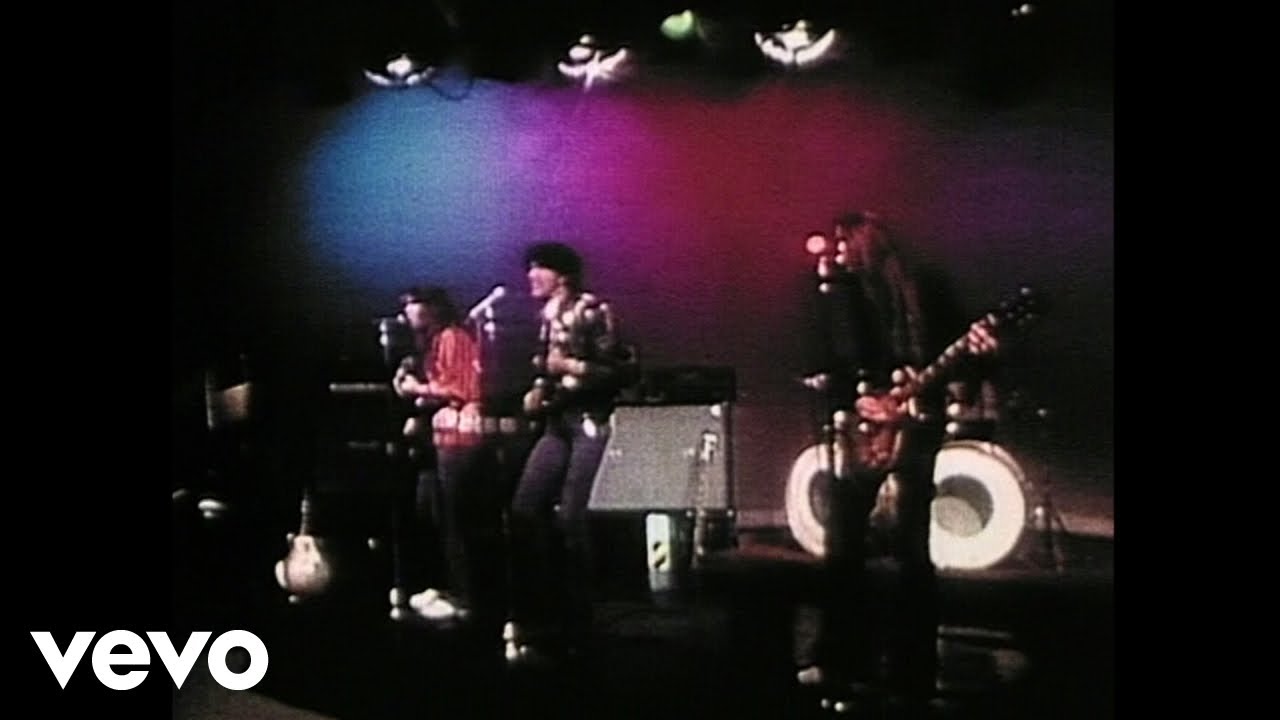
Thin Lizzy – The Boys Are Back In Town (Official Music Video) – YouTube
I remained in Philip’s orbit off and on for the next few years. I was in the studio where he recorded his first solo album when Paula Yates late came in, short skirt no knickers, plonked herself in front of him and spread her legs wide so Phil could… do an inspection? I averted my eyes so can only guess. (Cough.)
I was at his stag do (not as much fun as you’d imagine). I was at his Richmond home after his wife Caroline left with the kids (exactly as much fun as you’d imagine). I didn’t have his picture on my wall any more, but I had his “schtum” phone number.
I never considered Philip a real friend, but we were mates for a while. We were both Irishmen born in England; both illegitimate boys given their young Catholic mothers’ surnames. I wasn’t black, but as Phil enjoyed reminding me, “The Irish are the n***ers of Europe”.
His knowledge of Irish history and politics was encyclopaedic. He swore he knew the names of every well in the land. He would tell you this stuff until you begged him to stop.
One night we were on our way to Hammersmith Odeon. We used to knock on the backstage door and they’d let us in and we’d mosey upstairs to the backstage bar. Marco the barman would show us card tricks.
This night we got there early so went to the pub around the corner. The place was virtually empty, they’d only just opened. He suggested I grab a table and wait for him. Then walked over to the bar looking sad, head down, as if deep in thought.
Out of nowhere, a most attractive young lady suddenly appeared by his side, checking he was all right. He nodded pensively. Literally one minute later another pretty girl came over, concerned, too. Then another. Then he led all three over to the table where I was, where they continued fussing over him. Poor Phil. He had a lot on his mind, they said.
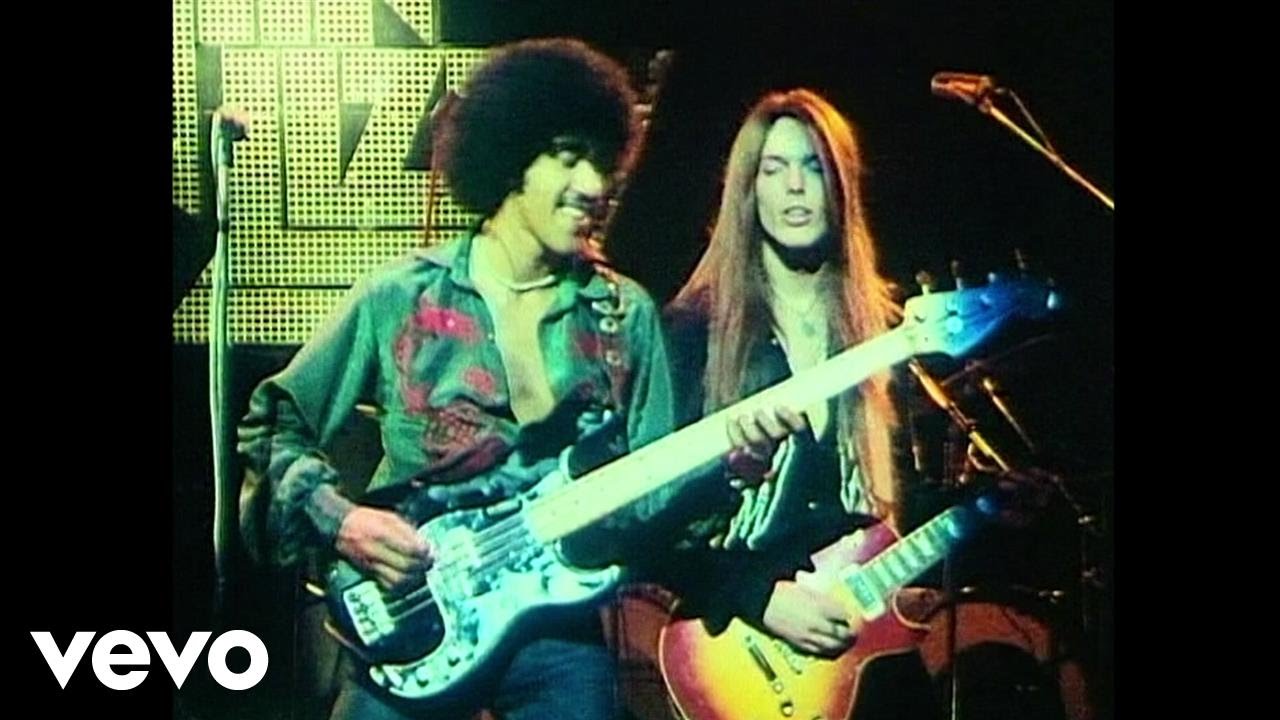
Thin Lizzy – Johnny The Fox Meets Jimmy The Weed (Official Music Video) – YouTube
Within minutes he’d disappeared with one of the girls and I was left to keep the other two entertained. He returned minutes late then disappeared again with another girl. Then came back and did it again with the third girl. Not just because he was a rock star. He’d been pulling similar stunts since he was a kid playing for beer money in Dublin pubs, he told me.
Not so far beneath the cool-as-fuck exterior, however, dwelled another Philip Lynott. The incurable romantic and voracious reader who wrote poetry. The Prince Charming who opened doors for the ladies, pulled chairs out for them and always let them go first, holding their soft little hands safe inside his giant shovels.
Gary Moore once warned me: “Don’t ever bring a girlfriend when you’re seeing Phil. Don’t even bring your mother. He can’t help himself.”
He was the oldest, boldest, luckiest black cat with the laziest smile and twinkling eyes. The one who wrote the songs that made the girls coo and the boys want to stand tall. All while telling a dirty joke or two.
Best of all, yes, he really was just like that in ‘real life’. At least while the good times lasted.
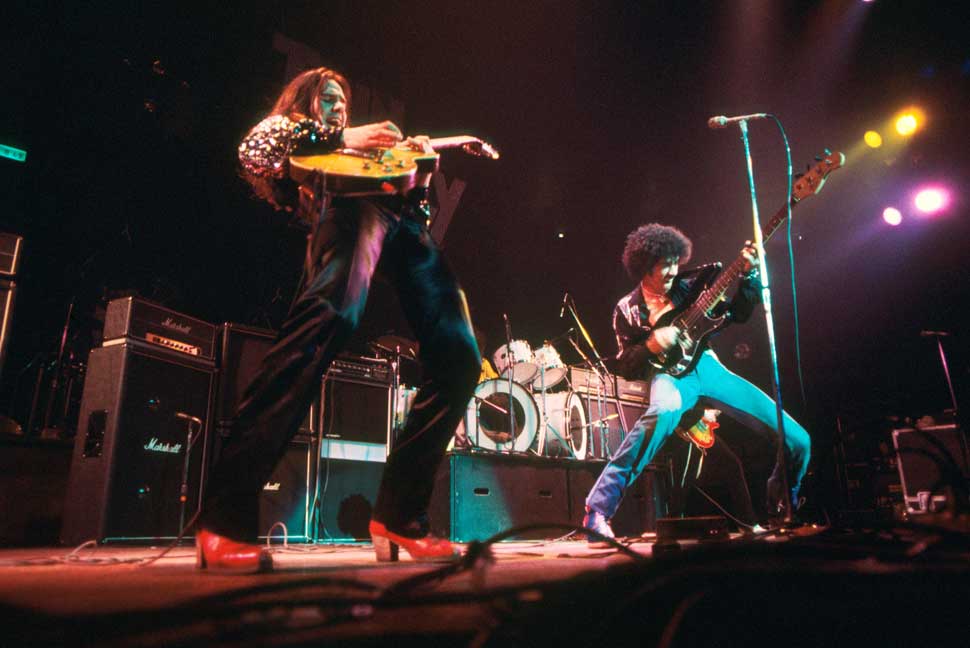
Gary Moore and Phil Lynott onstage with Thin Lizzy, February 1977 (Image credit: Michael Putland/Getty Images)
Philip Lynott was also the person who gave me my first taste of heroin. “I don’t just offer this to anybody,” he’d teased when at first I hesitated to snort the pinch of brown sugar on the plectrum he was holding under my nose.
I became a junkie almost on the spot, and remained so for four of the worst years of my life. It wasn’t Philip’s fault, though, it was mine. And, unlike him, I came back. I’m not sure Phil ever tried to quit. Junkies only stop when they have to. When the money’s gone and they’ve already sold everything they own. Philip always kept big bundles of cash to hand. And the phone number of every smack dealer in London.
I last saw him a few weeks before he died. He was red-eyed and wheezing, overweight and perspiring heavily – because yes, he was high. I asked if he regretted Lizzy never having cracked America. “Naw,” he lied. “It’s like saying you regret never fucking Kate Bush. You still dream, though.”