
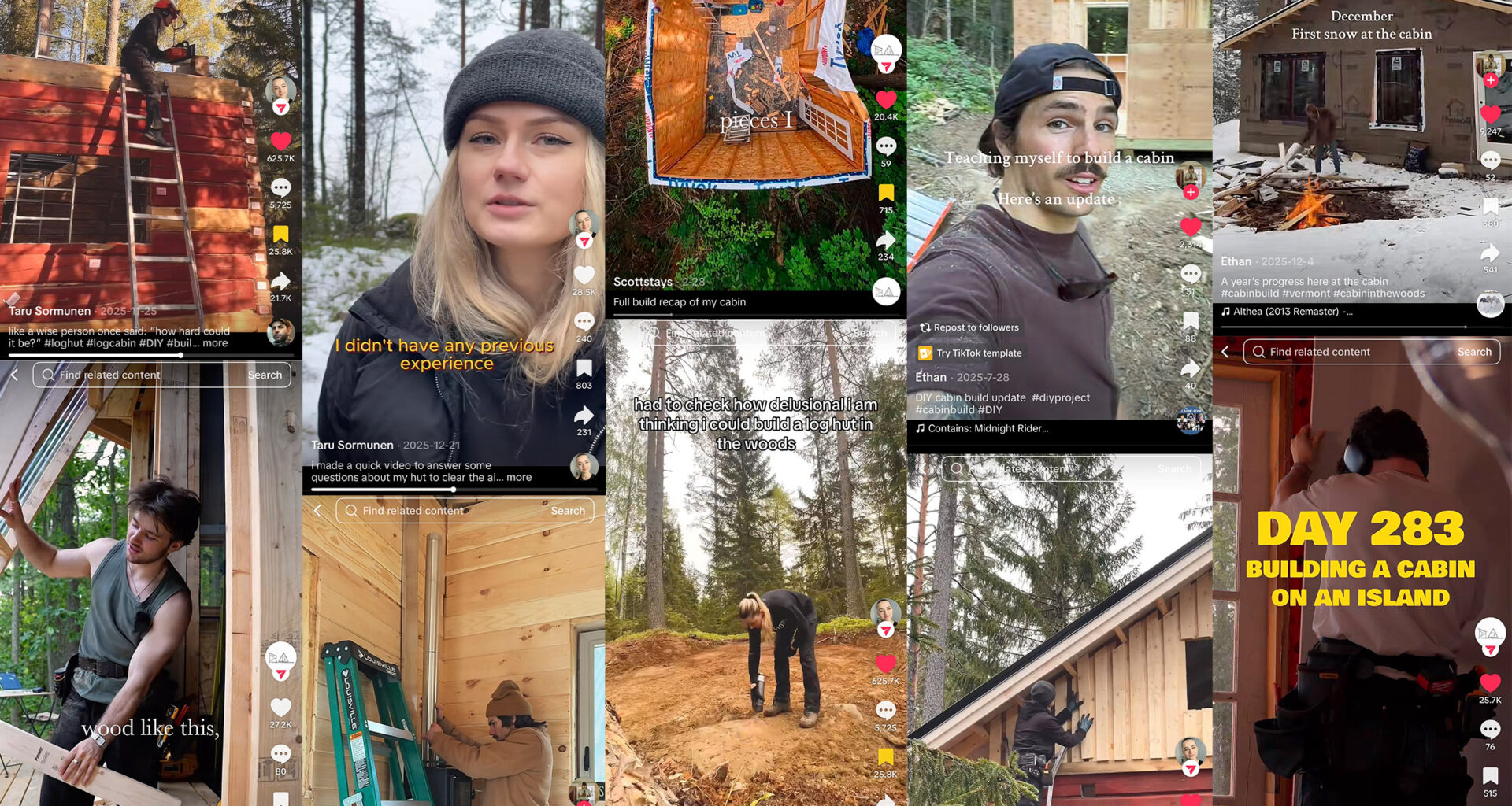
Novice self-builders are gaining large followings sharing their cabin construction successes and failures on TikTok. Amy Peacock explores the implications for professional architecture.
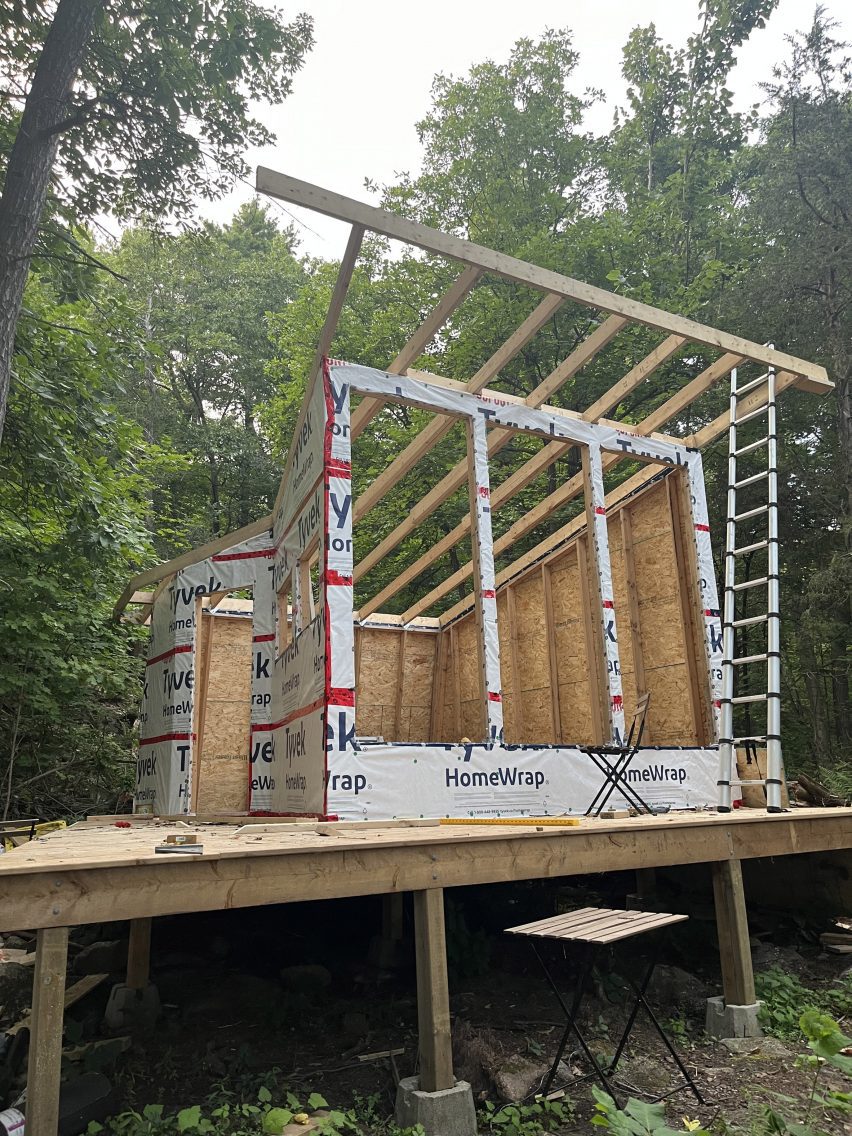
“This is day 205 of building a cabin on an island, and in about a month I’m moving in whether it’s ready or not, so today I’m making a window,” Ontario 23-year-old Arthur Scott tells his viewers in a video that’s been watched nearly 700,000 times.
“I probably could have just slapped on a piece of plexiglass and called it a day, but I thought I could try something a bit more interesting – a pair of sliding windows with a mosquito screen. I’ve never built a window before, but I don’t think it’s too complicated.”
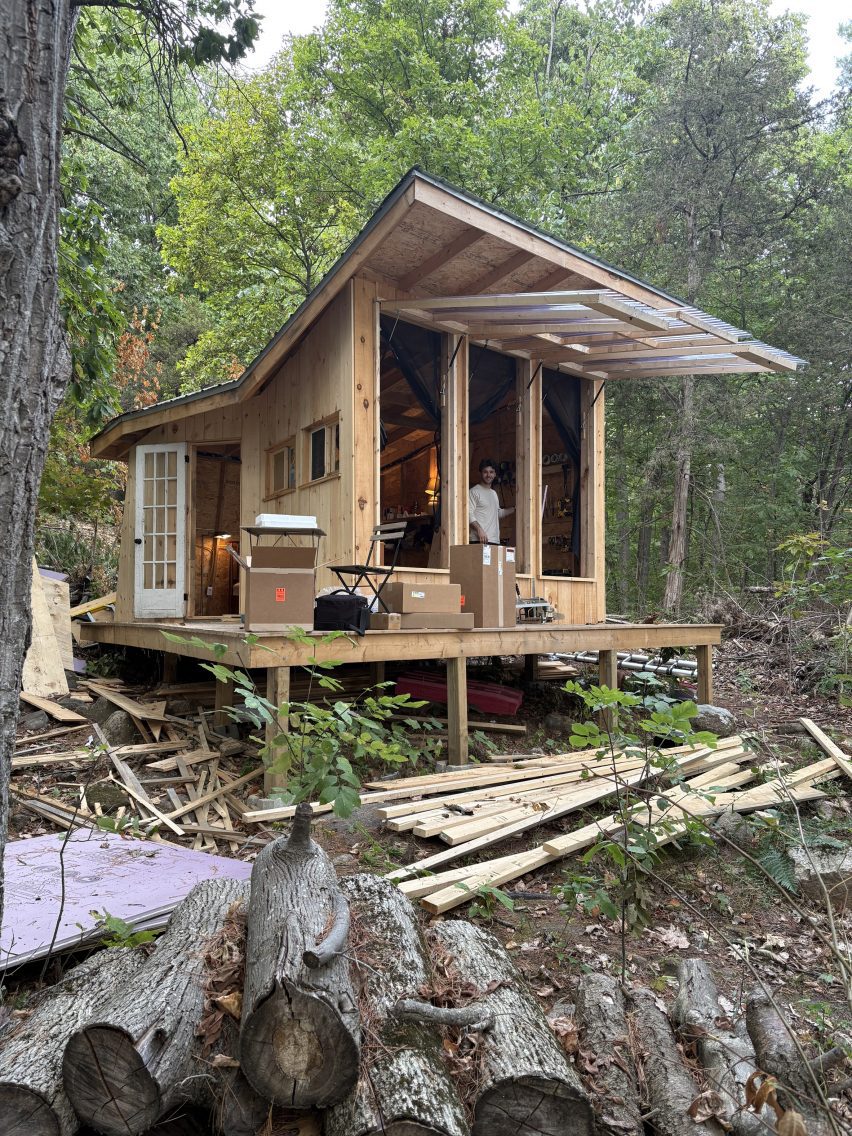 Arthur Scott shares daily update videos of his cabin construction on TikTok
Scott is one of a small but growing community of novice self-builders posting about their cabin construction projects on TikTok, sharing daily updates to his 125,000-and-counting followers.
“People are generally really positive and are encouraging me,” he told Dezeen. “They like the fact that I don’t know what I’m doing and learning along the way – that’s entertaining.”
“I would one hundred per cent encourage anyone to do something like this,” he added. “It’s so much fun. It’s kind of scary, kind of like, nerve-wracking, but it’s really rewarding.”
“There’s a 13-year-old kid that tagged me in his video who has started building his own cabin. This was the dream for sharing the building of the cabin – to do a little push in the world to make more cool stuff.”
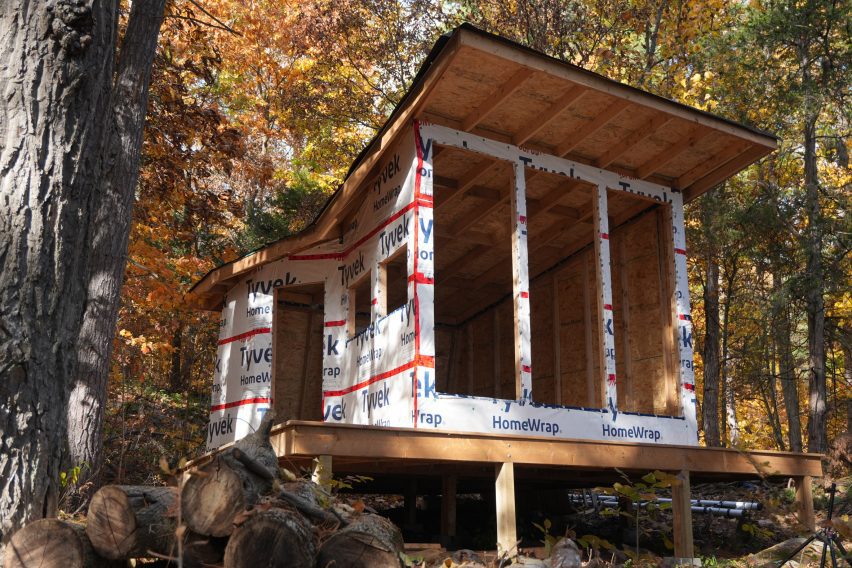 Scott believes that his lack of construction experience makes his content entertaining
Taru Sormunen, a 30-year-old mechanical engineer from Finland, completed a simple log cabin in North Karelia last year.
Lacking the funds to hire a professional to deliver her dream wilderness cabin, she decided to build it herself using tools borrowed from family and friends and sourcing the materials second-hand from a former home sauna.
“I don’t see a reason why I should have been able to do this, but when I started doing it, it just worked out,” she told Dezeen.
“On this level, I don’t see a reason why anyone couldn’t do it,” she continued. “It’s actually pretty simple and logical, and not as hard as people might think.”
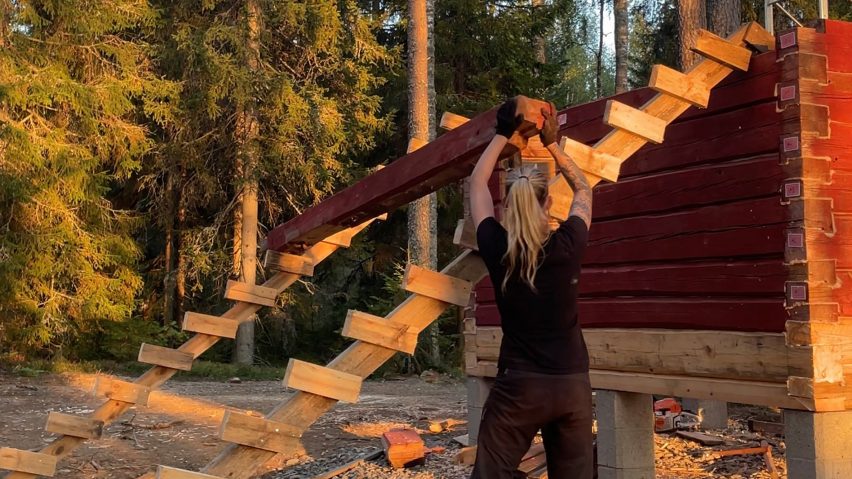 Taru Sormunen built a log cabin from reused materials last year
Her TikTok video showing the construction process has been viewed by more than 5.6 million people, attracting over 625,000 likes.
Like Scott, she’s been told by others that her content prompted them to embark on a similar project.
“I was surprised that it has inspired people on the internet,” she admitted. “I’ve got feedback from people who say, ‘I’m going to finally start the project I’ve been thinking of’, so that’s really cool.”
“And the aspect of women feeling empowered by it – I wasn’t aware of that side of it, but later on, I realised I’m a woman doing this man’s thing,” she continued. “It was interesting to realise it empowered women and they were proud of me.”
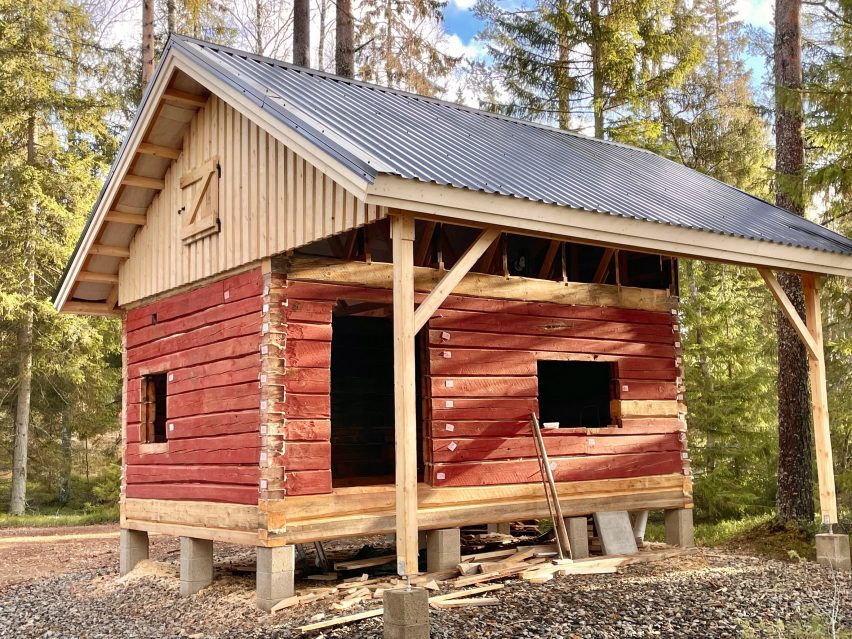 Sormunen borrowed tools from family and friends to keep costs low
The popularity of these videos is unsurprising, particularly when compared to content by more experienced architects and builders, according to HTA Design architect Shawn Adams, who himself has a sizeable online following.
“Everyone loves an underdog story,” he said. “Even when the end result isn’t even that good, sometimes it’s about the journey that you went on with them.”
“It’s nice seeing someone that’s not an expert, the average Joe. Because if they can do it, then I can do it,” he continued. “It makes things way more accessible.”
“Your cabin’s so ugly, you should stop!”
However, some seasoned construction pros appear to feel differently about the self-build influencers.
“People are really enthusiastic about it, but you get the occasional critiques,” said Scott.
“The first one I remember was a butt-hurt architect who was like, ‘you don’t even do architecture – your cabin’s so ugly, you should stop!'”
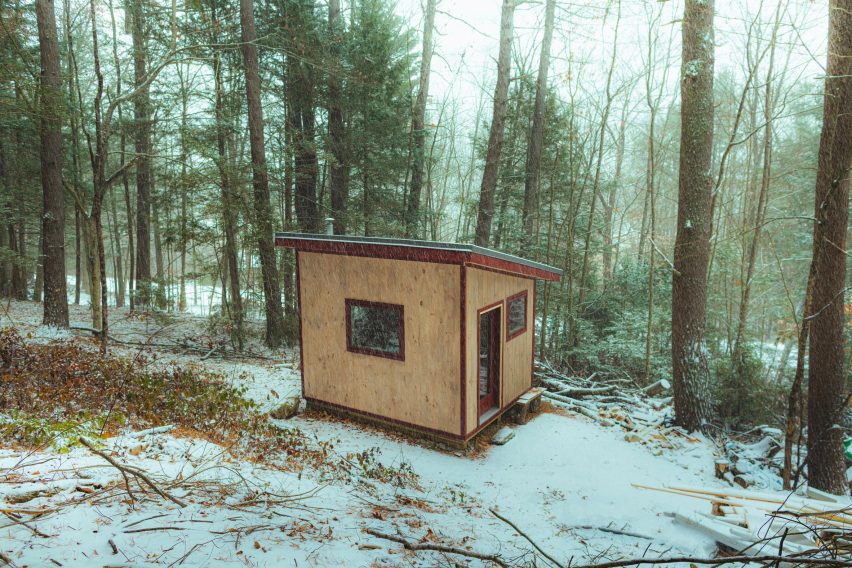 Ethan Abitz attracted positive and negative comments when sharing his cabin build on TikTok
Ethan Abitz, a 27-year-old photographer from Vermont, had a similar experience when posting videos of himself building a small artist’s cabin in two and a half months.
He used the simple 3-by-3.6-metre structure as learning practice for a full-sized house cabin, which he is currently in the process of completing.
“You should take the pipe out in a wall, not a roof, but I’m just a real construction guy,” said one commenter on a video of Abitz installing a mini wood stove.
“No joist hangers? No subfloor glue?” reads a comment on another video.
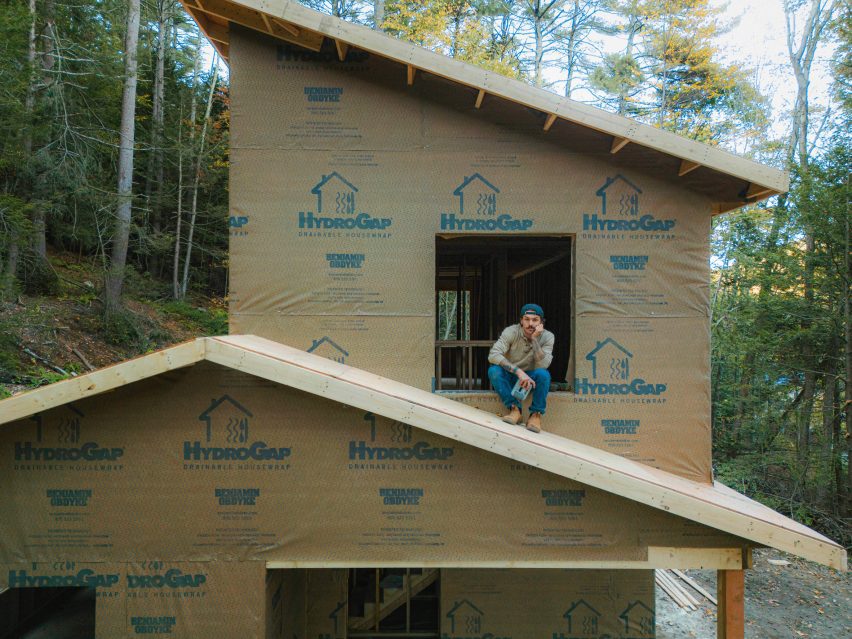 He built the small cabin to gain skills for building a larger home
“There are people that it’s their whole job and profession, it’s what they went to school for and given their life to – to see someone with very little, if any, design experience make up a design and almost do their role, I could see why they get territorial,” he told Dezeen.
But while some of the feedback has the tenor of ill-tempered nitpicking, Scott says expert commenters have also played a crucial advisory role in his build project.
In one such case, a commenter made the important suggestion to install tar paper to prevent his cabin’s decking rotting from below.
“There’s a lot of people that actually know how to build in my comments – a couple comments literally saved the cabin,” he said.
“I wouldn’t get a conventional job in construction”
In the process of researching and building her cabin, Sormunen acquired a new-found appreciation for traditional Finnish building methods, which she plans to utilise again this year when she builds an outhouse, sauna and woodshed at the cabin.
“I knew I was going to apply traditional Finnish building methods in my building, but I wasn’t too passionate about keeping it ‘clean traditional’ – I was using nails and plastic products as well,” she explained.
“But during the building process, I got a lot more conscious about how things were made back in the day, and why that might be a good thing for me,” she said.
“Next summer, I will consider those things more than just taking the easy route.”
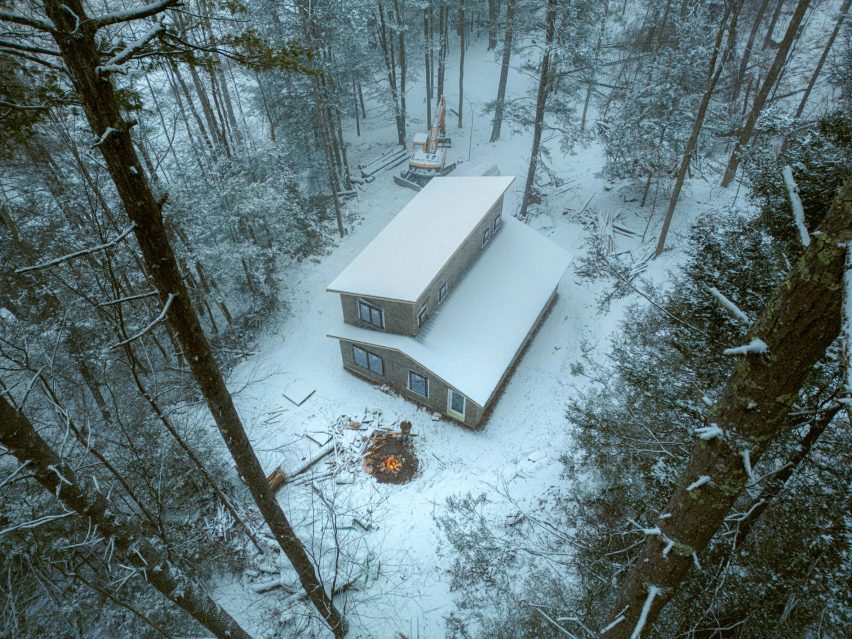 The three TikTok stars have no aspirations to enter the architecture profession
However, while Sormunen, Scott and Abitz are all thrilled with the fruits of their labours and their new skills, there is little chance of them going on to form the next generation of star architects.
None have a desire to pursue conventional careers in architecture or construction.
“My main focus has been to get myself a place where I can spend time, so when I’m done with all of that, I don’t think I will be too passionate about [building] anymore,” said Sormunen.
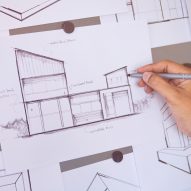
“Absolute freedom over who designs buildings only encourages the cowboy practitioner”
“I wouldn’t get a conventional job in construction, but maybe something creative in design marketing,” said Scott.
“For now, at least for a few years, I’m gonna give this full steam – I get to wake up and choose the project, how long I work and I feel like I’m learning a bunch.”
Scott is now close to finishing his cabin after building it over the last two years alongside his philosophy studies.
 Shawn Adams believes architects can learn from the TikTokers’ engaging content
Nevertheless, for Adams, the size and enthusiasm of these creators’ audiences represent a potential lesson for the architecture profession about connecting with the public.
Part of the appeal, he argues, is the candid nature of the videos, which reveal the behind-the-scenes construction process and mistakes made along the way.
“Whether it’s building full cabins or it’s interior design, people that I know who weren’t interested in interior design or architecture before are more involved because of seeing people make stuff on TikTok,” he said.
“People are a lot more honest on TikTok, and that’s how so many creators manage to make a really powerful community.”
“The design industry is behind in generating content”
Professional architecture projects are clearly of a different standard to self-builds by beginners, but Adams believes the experts can still benefit from sharing more informal content.
“A lot of the design industry is behind in terms of generating content,” he said. “Because of how architectural press and the media is, the kind of stuff that architects show is the final glossy image.”
“If they were to show the process, a lot of people would be more engaged because they’re buying into that architecture studio and their process, not just the end result.”
Before long, it might not be a matter of choice, Adams added.
“If architects don’t speed up with this, there is going to be a new generation of architects that are doing loads of content and the reality is, whoever’s the most visible gets to get the most work.”
Dezeen In Depth
If you enjoy reading Dezeen’s interviews, opinions and features, subscribe to Dezeen In Depth. Sent on the last Friday of each month, this newsletter provides a single place to read about the design and architecture stories behind the headlines.