
səl̓ílwətaʔɬ (Tsleil-Waututh), xʷməθkwəy̓əm (Musqueam) and Skwxwú7mesh (Squamish) Territories (Vancouver, B.C.) — International energy giant Drax has begun to phase out burning forest biomass from British Columbia at its power station in the United Kingdom. As reported by The Guardian, Drax will stop burning “controversial” wood from forests in Canada at its North Yorkshire power station within the next year.
This is a significant milestone. It demonstrates that burning forest biomass to generate energy at utility-scale is untenable and sends a warning signal to all governments and investors currently supporting the global biomass industry: this dirty form of energy is a weak economic proposition.
B.C.’s failure to properly protect old growth and enact a biodiversity law have been exposed on the international stage. As other countries examine their wood pellet supply chains, the facts are clear – there is no sustainable way to source biomass for export from forests in B.C.
This move by Drax follows years of political controversy and public outcry in the U.K. over the company’s Canadian sourcing practices. Most recently, a Stand.earth investigation confirmed that Drax purchased whole logs cut from old growth forests in 2024, and very likely in 2025. This conclusive finding adds to an existing body of evidence in reports, documentaries, and whistleblower testimony.
However, the broader problems with the biomass export industry in Canada continue. While the company will no longer burn biomass from B.C. in the U.K., Drax continues to hold a near-monopoly on wood pellet production in the province, and is likely to continue sourcing from old growth and primary forests to supply customers in Asian and European countries.
Unfortunately the B.C. government continues to look the other way. In an interview with CKPG Today, Minister of Forests Ravi Parmar denied old growth “or any other types of logs that have value” can be used to make wood pellets, despite clear evidence and robust research by multiple organizations. As detailed in Stand’s recent investigation, the government’s own publicly available data showed some high-grade logs arriving at Drax’s B.C. pellet plants.
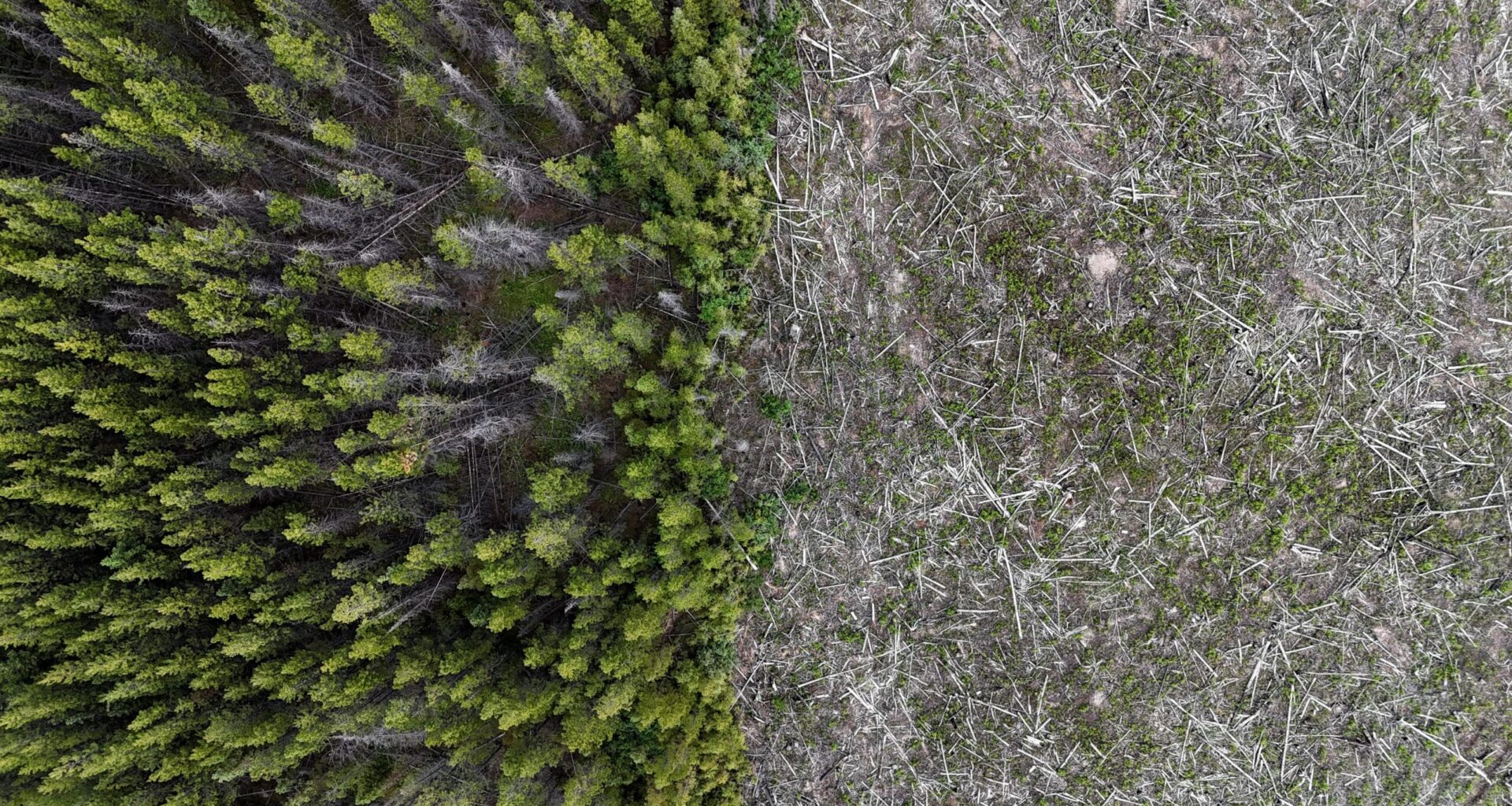
Drax is a business that benefits from business-as-usual clearcutting in B.C., a practice that makes communities – disproportionately First Nations, as well as rural communities – more vulnerable to flooding and megafires. Continuing to extract from these lands and fuel the climate crisis for something as egregious as burning trees for utility-scale electricity will exacerbate these impacts.
Forest biomass also risks locking B.C. communities into a boom and bust cycle that has plagued the province for generations. Union leadership has previously highlighted the wood pellet export sector as a poor jobs proposition, which is especially relevant in a time of unprecedented economic challenges. Drax is another in a long line of companies that risks leaving communities and working families to pick up the pieces if it closes shop. We need locally-driven solutions to find long-term jobs, not another foreign company extracting every bit of old growth it can from an already devastated landscape.
Stand.earth calls on the B.C. government to prevent more trees from old growth and primary forests from entering the wood pellet export supply chain, instead of continuing to stand by a foreign-owned company that is now under investigation by the U.K.’s Financial Conduct Authority.
The province should take immediate steps to ban sourcing from old growth and primary forests for wood pellets exports and should end provincial subsidies that prop up the sector. The province also has an opportunity to support real value-added milling under a framework that upholds its commitments to protect old growth and the United Nations Declaration on the Rights of Indigenous Peoples Act.
Drax will continue to burn pellets in its U.K. station imported from the Southeastern United States, where the company’s facilities that grind wood into pellets are often located on the doorsteps of low-income, majority Black communities. These communities face especially high levels asthma, chronic bronchitis and other respiratory diseases because pellet mills emit hazardous air pollution. We stand in solidarity with those communities in their struggle for justice.
Drax also continues to receive billions in green subsidies from the U.K. government, even though it was the highest source of carbon emissions in 2024 – a trend that is expected to continue. A group of U.K. elected officials has recently called for these subsidies to end.
Burning forest biomass to generate electricity is a highly polluting form of energy that masquerades as clean. At the international level, carbon accounting frameworks that fail to properly account for all of the emissions from harvesting and burning biomass must be urgently updated to end the global biomass industry’s devastating impacts on the climate, forests, and communities, once and for all.
###