
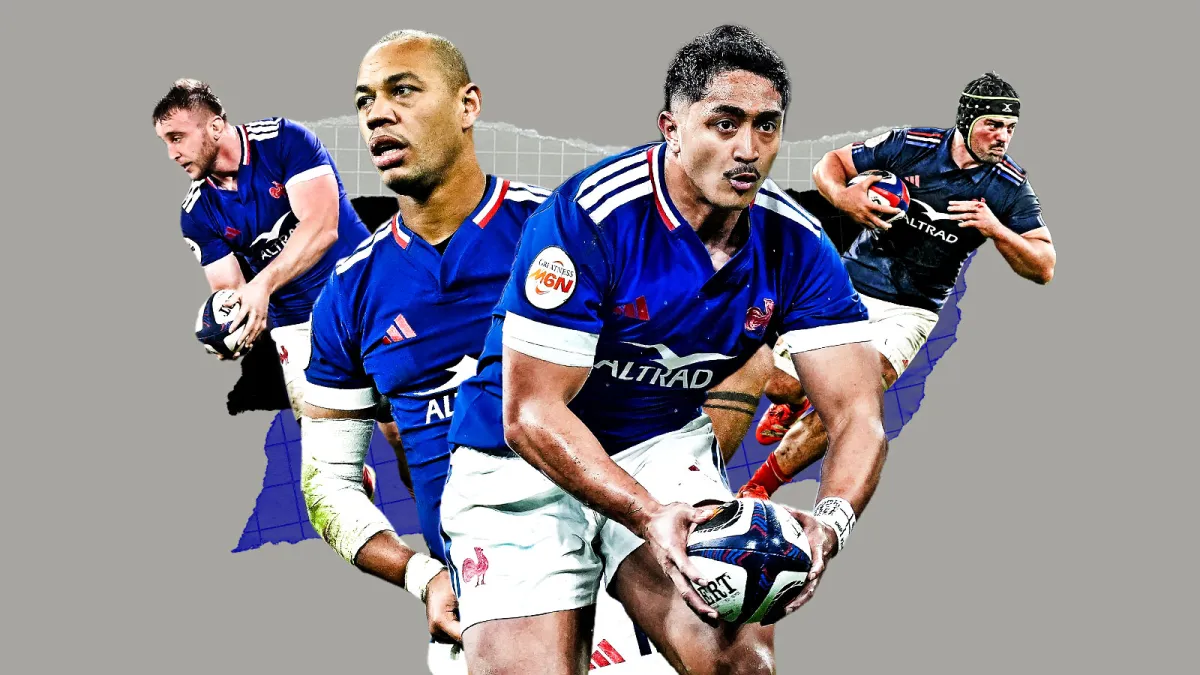
Remember that time when we were all marking our diaries for the grand-slam decider in Paris between England and France? It was way back in the dim and distant days of February 2026, a time when there was more certainty in the world, and the received wisdom was that England were building up a formidable head of steam, while France remained strong, but were taking on the look of a team in transition.
Fabien Galthié, the head coach, had taken the contentious decision to drop three of the players — Grégory Alldritt, Gaël Fickou and Damian Penaud — around whom he had built the team in recent years, not just from the match-day 23, but from the wider Six Nations squad. How France would shape up without these three pillars of their success was likely to be an intriguing thread in the tournament’s narrative.
While the wheels soon began to wobble on England’s chariot, France powered on towards a second consecutive title with three thumping victories, looking as though they had swiftly moved on from those absent senior players. Then, spectacularly, they were brought to a halt by Scotland last week. That was the first time they had been put under serious pressure in the whole tournament, those three victories coming after they had opened up sizeable early leads.
At Murrayfield, when they suddenly found themselves needing to chase the game, there was an absence of on-field direction and they ended up conceding a record 50 points. Those pre-tournament questions over whether Galthié had ditched too much experience at once were now being posed once again. England, in contrast to their recent performances, will look to start quickly on Saturday and trigger a similar tailspin.
Writing in L’Equipe, Jean-Baptiste Élissalde, the former scrum half, explained how France were unable to seize control as the game drifted away from them, describing the passage of play early in the second half as “22 minutes of hell” as Scotland streaked clear.
“I see it primarily as a series of individual mistakes, as if a negative contagion had taken hold of the French,” Élissalde said. “They were trailing for the first time in this tournament and becoming increasingly frustrated and annoyed as the minutes ticked by.”
When Galthié raised eyebrows with his squad selection for the tournament, the absence of Penaud attracted the most attention. In the autumn, the prolific wing had overtaken Serge Blanco to become France’s record tryscorer, and now boasted the impressive strike rate of 40 tries from just 59 Tests. He has been one of France’s signature players since Galthié began his revival operation six years ago and, in football terms, it felt as though the manager was summarily dropping his star striker.
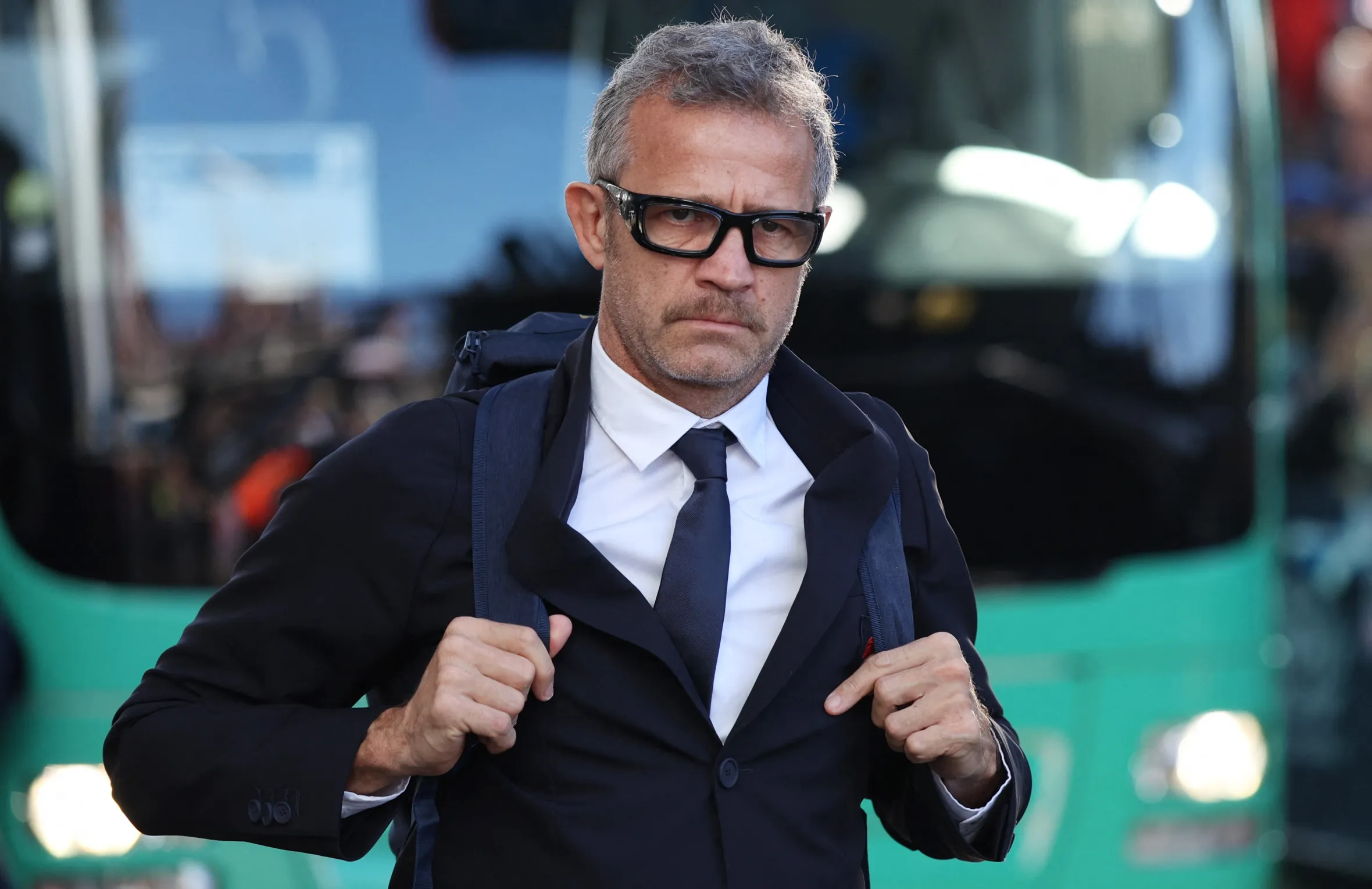 Galthié looks calm as he heads into Murrayfield … but the on-fire Scots then ran up 50 points against his side REUTERS/Russell Cheyne
But the omissions of Alldritt and Fickou were more significant to the functioning of the team. Under Galthié, Alldritt had quickly established himself as a No8 of considerable quality, reliably carrying in heavy traffic and making the short, purposeful gains that enabled Antoine Dupont to display his finery and feed a voracious back line. Fickou had been appointed defensive captain by Shaun Edwards as soon as he became defence coach in 2020 and had played a crucial role in developing an area of the game that had been a traditional French weakness.
More importantly, in the context of the Murrayfield meltdown last week, Alldritt and Fickou have both been highly experienced, highly dependable leaders, senior players to whom the eyes of team-mates would naturally turn when things were going awry.
All three had played a part in a decidedly mixed autumn campaign, in which France were well beaten by South Africa before securing victories over Fiji and Australia. The performances were patchy enough to persuade Galthié that his squad needed spring cleaning.
Given the strength of the Top 14 at present, and the quality of younger players emerging in France, he is in a stronger position than many national coaches in seeking the next cabs off the rank. In came Théo Attissogbe on the right wing for Penaud, while Yoram Moefana has become the senior midfielder in place of Fickou, and Anthony Jelonch has stepped into Alldritt’s shoes at the base of the scrum, although Jelonch’s injury means that Charles Ollivon will wear No8 against England.
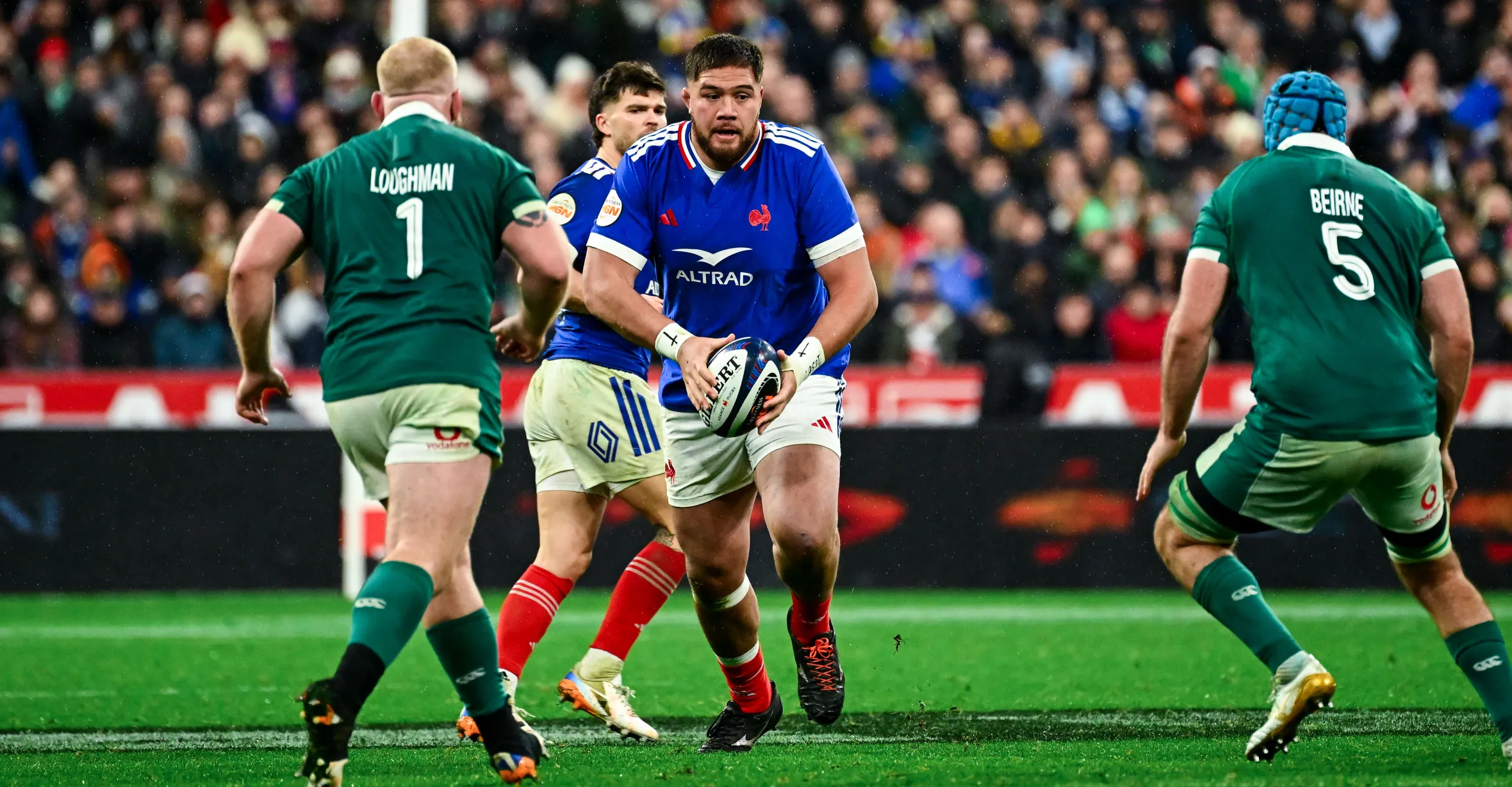 Meafou will beef up the France pack against England, who have added heft to their team for Saturday’s clashSandra Ruhaut/Icon Sport via Getty Images
Fickou’s absence was particularly keenly felt at Murrayfield, owing to the success Scotland enjoyed in carving open France’s midfield, as Moefana endured a difficult afternoon. Normally seen as a robust defender, his tackle success has been only 61.1 per cent during the Six Nations. During his two appearances in the autumn, playing at No12 against the Springboks and Wallabies, Fickou was still completing 89 per cent of his tackles.
Moefana is an experienced international now, with 38 caps, and at 25 he is much younger than Fickou, who turns 32 later this month. That may not be geriatric, but Fickou’s engine has plenty of miles on the clock, having won the first of his 98 caps at the age of 18 during the 2013 Six Nations. Moefana retains his place against England, but if France’s midfield defence fails to function, the chances of Fickou reaching a century of caps will improve markedly.
On the right wing, Penaud’s demotion has come largely due to the aerial game becoming an even more important part of a wing’s game over the past year, since the outlawing of escorts to protect the catcher. Attissogbe, who often plays full back at club level for Pau, is the stronger player in the air and has a more rounded game. Penaud has always been more of an out-and-out finisher and something of a throwback: socks rolled down, often looking only mildly interested until an attacking possibility arises, when suddenly he comes to life.
With France dominant in the first three rounds, Attissogbe has racked up four tries in the tournament, a tally exceeded only by his opposite wing, Louis Bielle-Biarrey. Like most of his team-mates, though, Attissogbe will hope to improve this weekend on his performance at Murrayfield, where he knocked on under pressure early in the game and later gave a poor pass that might have put Bielle-Biarrey in the clear.
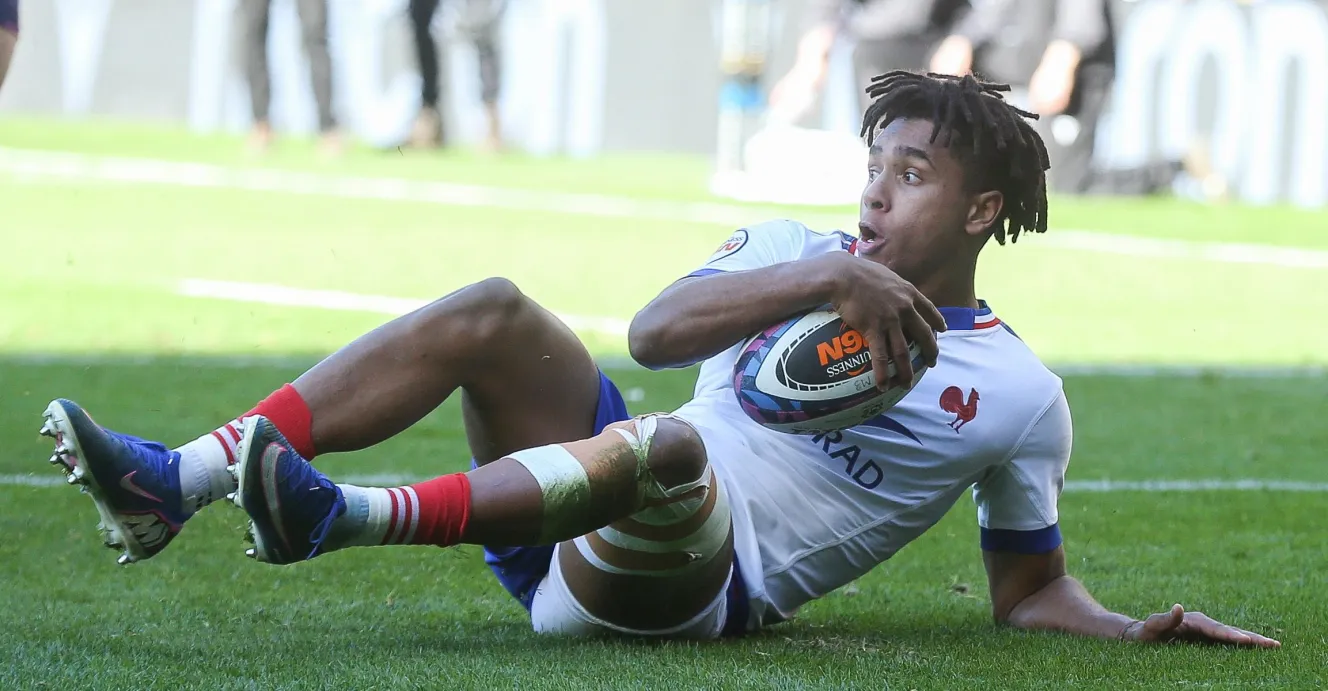 Attissogbe has come in on the right wing for Penaud and is strong in the airBruce White/Colorsport/Shutterstock
At No8, Jelonch gave strong performances over those first three wins, especially in defence, where he completed 91.1 per cent of his tackles, putting him among the leading players in the tournament for dominant tackles. But questions remain over whether he can be as effective with ball in hand as Alldritt, particularly if front-foot ball is not being generated.
He has averaged only 15 carrying metres per game in the Six Nations so far, compared with Alldritt’s 40 metres per game in last year’s tournament. He has played the majority of his international career as a flanker, starting at No8 for only five of his 35 caps before the tournament, and he has played No8 in only four of his twelve appearances for Toulouse this season. When he went off for a head injury assessment against Scotland, he was replaced by Lenni Nouchi, who was soon shown a yellow card and has been left out of the matchday squad against England.
How France were brought down to earth…
Without Alldritt, the back row looks a little less stable, which is what can happen to a team when a bank of experience is lost. Galthié was dispensing with a lot of leadership and the burden on Dupont was clear against Scotland, when even the world’s finest player lost his way at times. He looked to be missing his key lieutenants.
Galthié’s changes are, largely, forward-looking, broadening his options for the World Cup next year, at which point Alldritt and Penaud will be 30, Fickou 33. This fêted trio must prove that they are not ready to be put out to pasture just yet, but another poor performance from their replacements against England and they could soon find themselves back in favour.
Galthié brings in 23-stone lock to counter England’s beefed-up pack
The France head coach Fabien Galthié responded to Steve Borthwick adding heft to his pack by beefing up his own line-up for England’s arrival, starting the 23-stone Emmanuel Meafou at lock (Will Kelleher writes).
To combat the size of the French forwards, Borthwick selected Ollie Chessum — usually a second row — at No6. With Anthony Jelonch, the No8, ruled out with a hamstring strain, Charles Ollivon moves to the back row for France and Meafou replaces Mickaël Guillard, who is 19st, to partner Thibaud Flament in the second row.
Temo Matiu, the 24-year-old from Bordeaux Bègles, makes his France debut at open-side flanker after Oscar Jégou was banned for four matches for eye-gouging Ewan Ashman during the Scotland match last weekend, which France lost 50-40.
Elsewhere in the France team there is another change in the midfield, with Pierre-Louis Barassi partnering Yoram Moefana at outside centre.
France can win the Six Nations title for the second consecutive year with a victory over England on Saturday night. If they lose, they will have to rely on Ireland defeating Scotland in Dublin before their match kicks off.
France team to face England
Thomas Ramos; Théo Attissogbe, Pierre-Louis Barassi, Yoram Moefana, Louis Bielle-Biarrey; Matthieu Jalibert, Antoine Dupont (capt); Jean-Baptiste Gros, Julien Marchand, Dorian Aldegheri, Thibaud Flament, Emmanuel Meafou, François Cros, Temo Matiu, Charles Ollivon. Replacements Peato Mauvaka, Rodrigue Neti, Demba Bamba, Hugo Auradou, Mickaël Guillard, Joshua Brennan, Baptiste Serin, Émilien Gailleton.
France v England
Guinness Six Nations
Saturday, 8.10pm
TV ITV