
Your support helps us to tell the story
From reproductive rights to climate change to Big Tech, The Independent is on the ground when the story is developing. Whether it’s investigating the financials of Elon Musk’s pro-Trump PAC or producing our latest documentary, ‘The A Word’, which shines a light on the American women fighting for reproductive rights, we know how important it is to parse out the facts from the messaging.
At such a critical moment in US history, we need reporters on the ground. Your donation allows us to keep sending journalists to speak to both sides of the story.
The Independent is trusted by Americans across the entire political spectrum. And unlike many other quality news outlets, we choose not to lock Americans out of our reporting and analysis with paywalls. We believe quality journalism should be available to everyone, paid for by those who can afford it.
Your support makes all the difference.Read more
What is Yoko Ono? Is she the artist whose “Music of the Mind” concept was honoured with a major exhibition by the Tate in 2024? Or the author of Wrapping Piece in 1965, in which she swaddled an orchestra’s members in gauze? Or the maker of the experimental film Bottoms, in 1967? Or the woman who said “I was a rebel even in the avant-garde”, and whose paintings came with numbered instructions? The Ono of three husbands, each of whom added to her myth? The widow of fame and fortune? (With John Lennon, she ended up in tabloid hell.)
A further worry: is she even knowable? How seriously does she want to be taken? To approach her life and work is to enter a forcefield that will send the critic or biographer’s navigation spinning, with warning lights from every instrument panel: Love! Magic! Power! Danger! Bliss!
Mayday, mayday.
Love Magic Power Danger Bliss is a strange, perplexed, and unconventional book about a famously weird (or, to author Paul Morley, avant-garde) woman who happened to become the muse to one of Britain’s greatest popular artists of all time. Next to “Imagine”, we still remember John and Yoko for promoting “Peace” to the world’s press from their hotel bed.
Lennon, notoriously, once declared that he and his fellow Beatles were “more popular than Jesus”. By association, Ono is also damned to fame as the Other Woman who shattered the songwriting genius of “John & Paul”. That tormented chapter, the backstory to the documentary Band on the Run, would culminate in Lennon’s terrible murder just before Christmas in 1980.
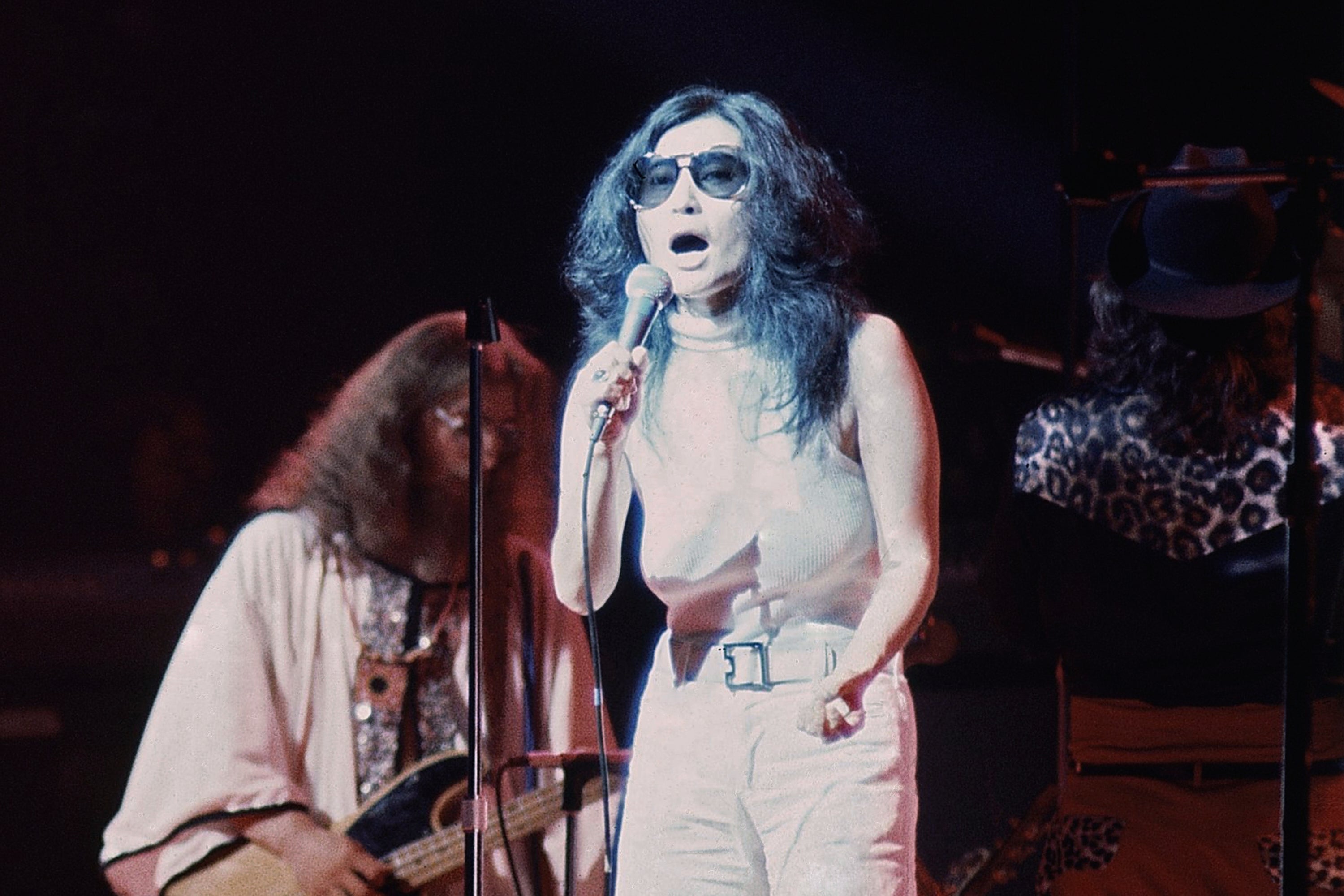
open image in gallery
Yoko Ono performs during a charity concert at Madison Square Garden in New York on 30 August 1972 (AP)
Generations later, his widow, a Sixties survivor, now in extreme old age, remains both a hostage to Beatles mythology and simultaneously an icon of the 20th-century avant-garde. This once glorious movement, corrupted by the marketplace, has disintegrated into irrelevance and self-parody, but the band has rarely been more revered.
Ono herself, slight, mute and inscrutable, was always a mix of Delphic sibyl and a spaced-out fairy from some experimental production of A Midsummer Night’s Dream. In Peter Jackson’s brilliant TV reconstruction Get Back, she hovers like a ghost at the aftermath of a great banquet, a symbol of the years when the world was young and high with dreams of love and fame.
All of this is distilled into Love Magic Power Danger Bliss – but not, disappointingly, in a way that does justice to its subject, if that’s even possible. Much like the avant-garde in its pomp, Morley’s homage to Ono is perverse, frustrating, grandiose and enigmatic. His 70 chapters (“Fruition”, “Projection”, “Separation”, “Dematerialisation”, etc) evoke concrete poetry while playing typographical games with the reader, but struggle with both narrative line and point of view.
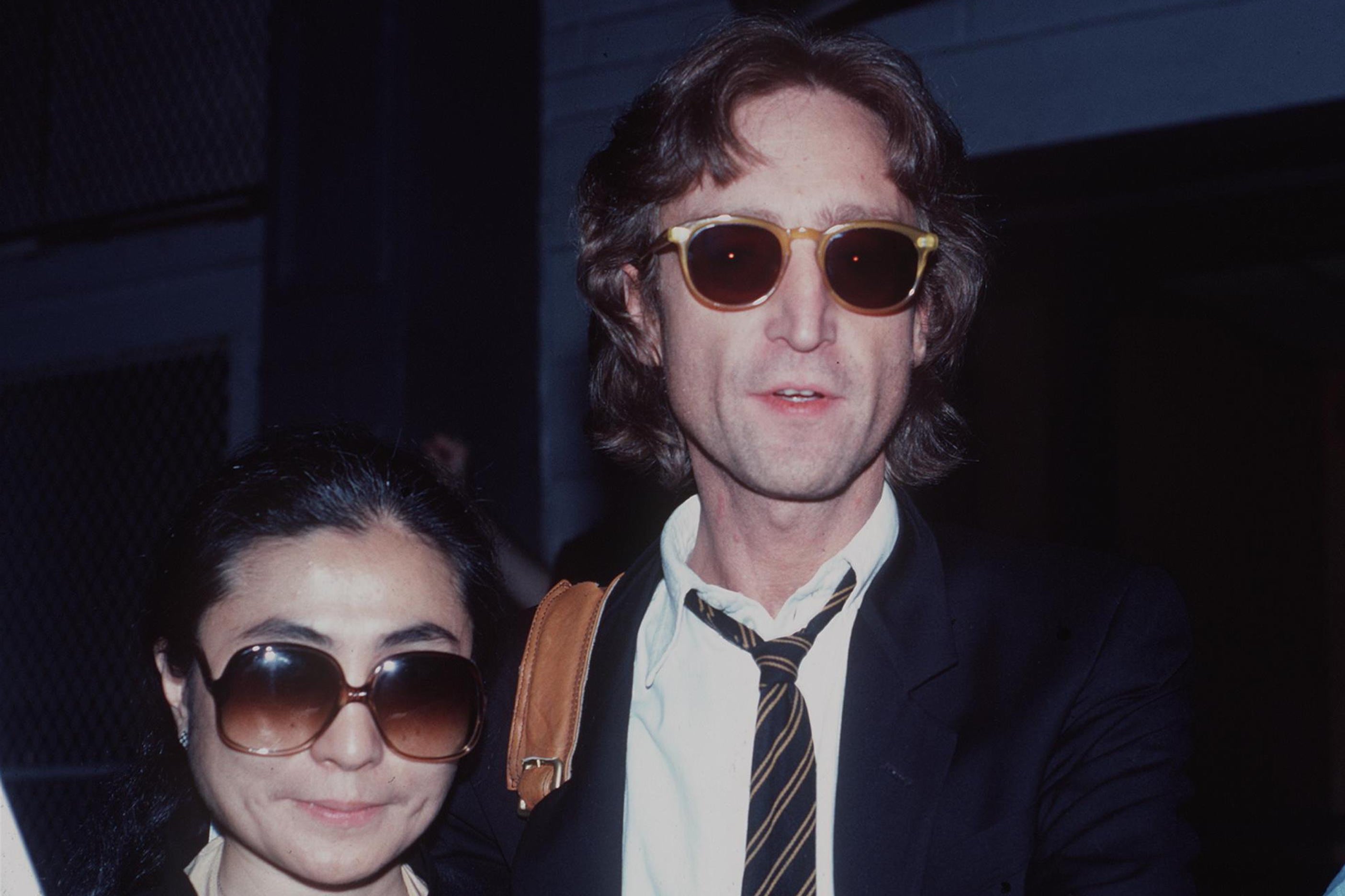
open image in gallery
Ono and Lennon in New York in 1980, the year of Lennon’s death (Getty)
Title and subtitle (Yoko Ono and the Avant-Garde Diaspora) hedge the author’s bets. Morley never quite settles on what kind of genre he’s in. Is this an avant-garde biography, a cultural history, or a “meditation” (dread concept) on off-the-wall creativity? Worse, there’s no guidance about “kinetic” Ono’s role in this project, assuming she can be bothered. Is it authorised, and has she given her blessing? Why ever would we expect her to do such a thing? But it might help to know the score, especially as Morley himself finds scant sympathy for Ono’s feverish decade with Lennon, or their grandstanding to the world’s press.
From the outset, Morley’s focus is exclusive: he’s only concerned with Ono (and the artists with whom she consorted). He declares, grandly, that “Lennon will not be mentioned” (actually, not true), with a gratuitous swipe at Beatlemania: “We can’t let all that other business blot out the light.”
Paul Morley strives to set the record straight on behalf of Ono – as best he can, amid a maelstrom of crazy data
What’s left? A history of the French – and later, the American – avant-garde is what: a labour of love by an established English commentator, steeped in contemporary music, setting the record straight on behalf of Ono – as best he can, amid a maelstrom of crazy data.
Strangely, in some ways, there can be few critics better equipped than Morley for this mission impossible. At the outset, with a potted history of the “Avant-Garde Diaspora” from its 19th-century beginnings to the “Happenings” of the 1960s – via Dada, Duchamp, Cocteau and Satie – it seems as if his biographical instruments are in good order. But then he hits extreme turbulence.
It’s the inconvenient truth of Ono’s place in this ecstatic gallimaufry that, once she’d uprooted herself from post-Hiroshima Japan, she became an obscure and marginal camp-follower. Her Opus 1 – appropriately titled “Secret Piece” – dates back to 1953, when she was still just an exile from her wealthy and aristocratic Japanese family, and had begun to nurture a gift for witty and enigmatic asides (“Leap Before You Look” is typical). Not until she meets another John does she find her mojo.
John Cage was the composer famous for 4’33”, a 1952 piece performed in the absence of deliberate sound (go figure). Inspired by Cage, and on the cusp of 1950s and 60s New York counterculture, Ono began to channel her profound alienation from postwar life into self-expression.
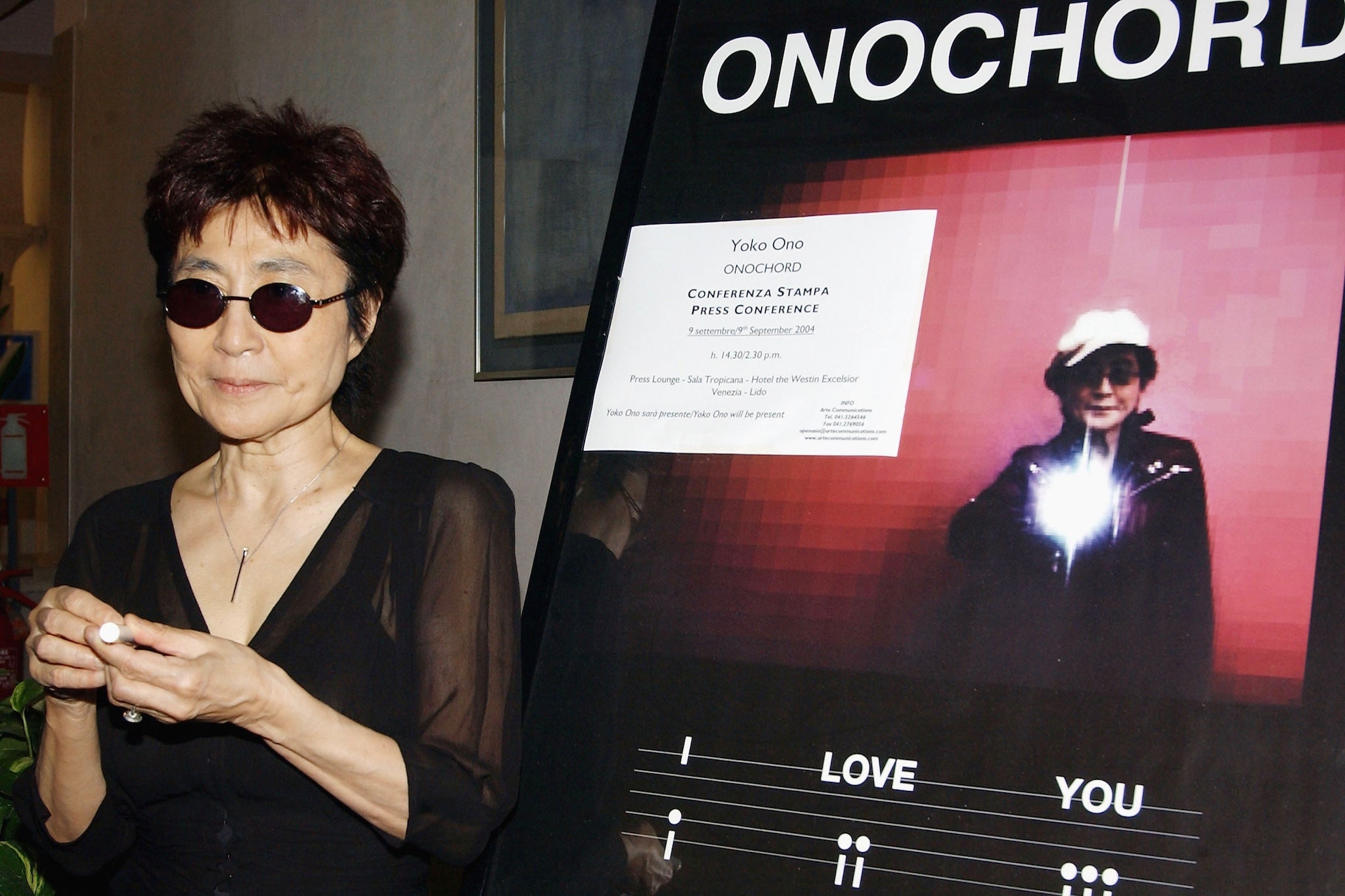
open image in gallery
Yoko Ono performs her video installation ‘Onochord’ at the Excelsior Hotel during the Venice Film Festival, on 9 September 2004 (Getty)
Ono soon met Marcel Duchamp, of “Urinal” fame; otherwise, her route to creative maturity was tortuous and agonised. She enrolled in college (Sarah Lawrence), and dated a boy who would later – seeking better luck – go with Sylvia Plath. Having dropped out, Ono arrived in New York “shrouded in invisibility on secretive high alert” [sic], under the spell of Cage. His 1960 variety act “I’ve got a secret” featured a grand piano, a watering can, a rubber duck, a food mixer, and a vase of flowers. Better laughter than tears, said Cage, weathering audience derision.
Ono’s idiosyncratic, semi-coherent quest, fuelled by hard drugs, inevitably landed in Lower Manhattan and Andy Warhol’s “Exploding Plastic Inevitable”. Describing her role in New York’s avant-garde, Morley decides that her gender, her Japanese background and her untraceable personality meant that Ono “never entirely belonged to the history and legend of the obscure … performances she helped make happen”. Beside Cage, Ono was also on the fringes of a musical avant-garde pioneered by Philip Glass and Steve Reich.
open image in gallery
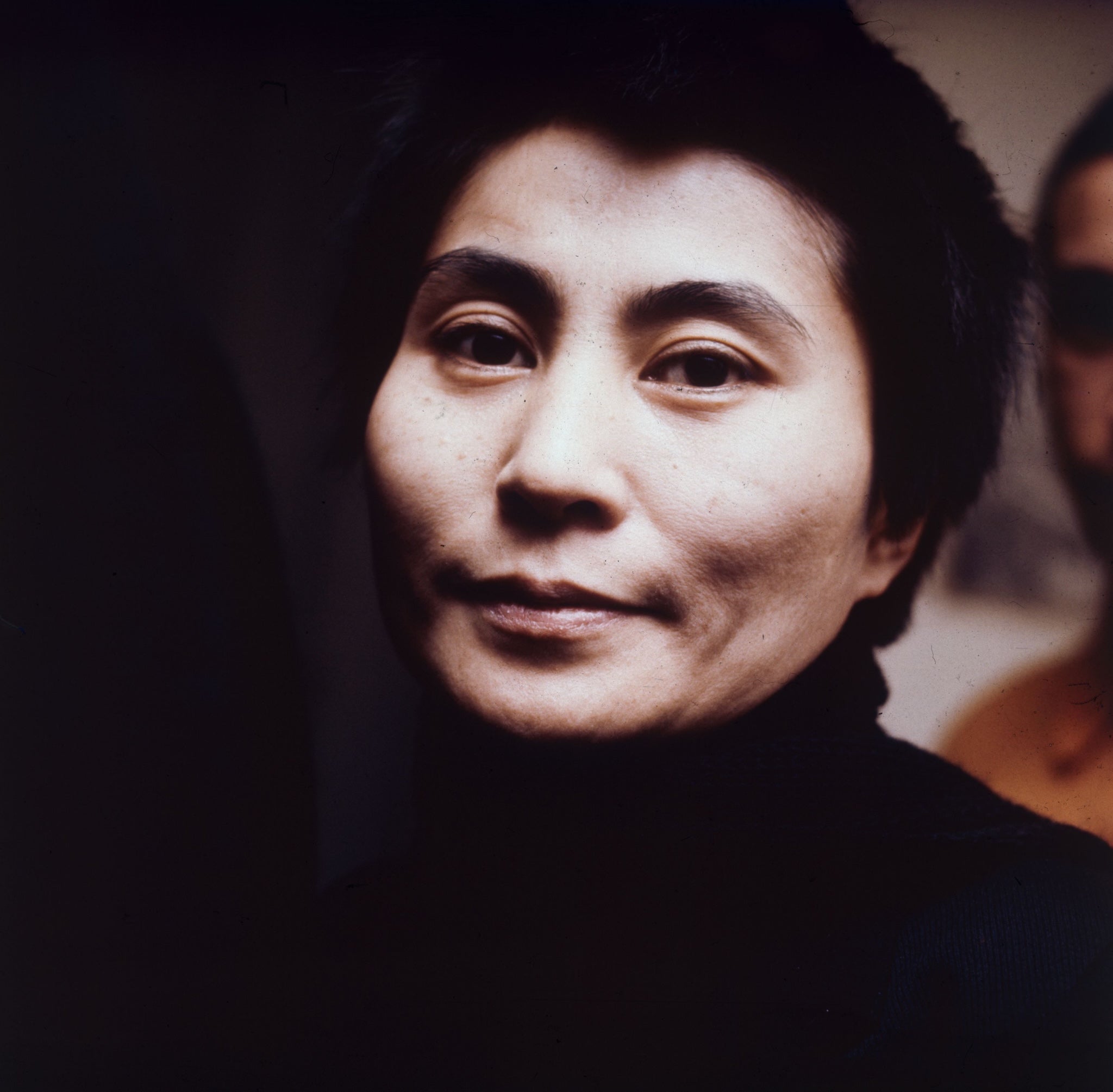
Yoko Ono, 1980 (Getty)
Simultaneously, in London, the Beatles, shedding their Fab Four identity, were becoming a rival pole of musical innovation, with Lennon’s literary imagination, inspired by Spike Milligan and the Goons, drifting towards Carrollian wordplay. Ono, meanwhile, was also perfecting the art of sublime nonsense. When asked why what she did was art, she’d reply, “Well, what else could it be?” Influenced by Samuel Beckett, she was now at the centre of the experimental network known as Fluxus, after Beckett’s mantra “all’s in flux”.
While the Sixties unfolded, here and in the USA, the noise of time coalesced, in Ono’s imagination, into a series of primal screams (and/or whispers) – for “freedom”, for “dear life” – the origins of what Morley dismisses as “Johnandyoko”. In 1967, after her long apprenticeship, Ono was ready to cross the Atlantic. She liked what she found. “There was a strange kind of shimmer in London,” she remembers, “and a very beautiful one. Once I breathed that, I thought, ‘OK, I’m here’, and never looked back.”
When Lennon turned up, clutching a late invitation, he asked the avant-gardist, whom he’d hardly heard of, what it was all about. Ono, seven years his senior and oblivious to Beatlemania, had no idea who he was
Ono’s encounter with Lennon seems pre-ordained. Morley’s painstaking account of her creative journey as an offbeat Japanese performance artist meshes seamlessly with what we already know about the Beatles in their final, chaotic years as a band after the death of their manager Brian Epstein.
London had become “its own kind of happening” with a unique counterculture star system. Ono placed an ad in the alternative broadsheet, the International Times (“Intelligent-looking bottoms wanted for filming. Possessors of non-intelligent bottoms need not apply”), and made her way to UFO, a new kind of club, where she grabbed a microphone and asked the crowd, many of them spaced-out on cushions, for volunteers.
open image in gallery
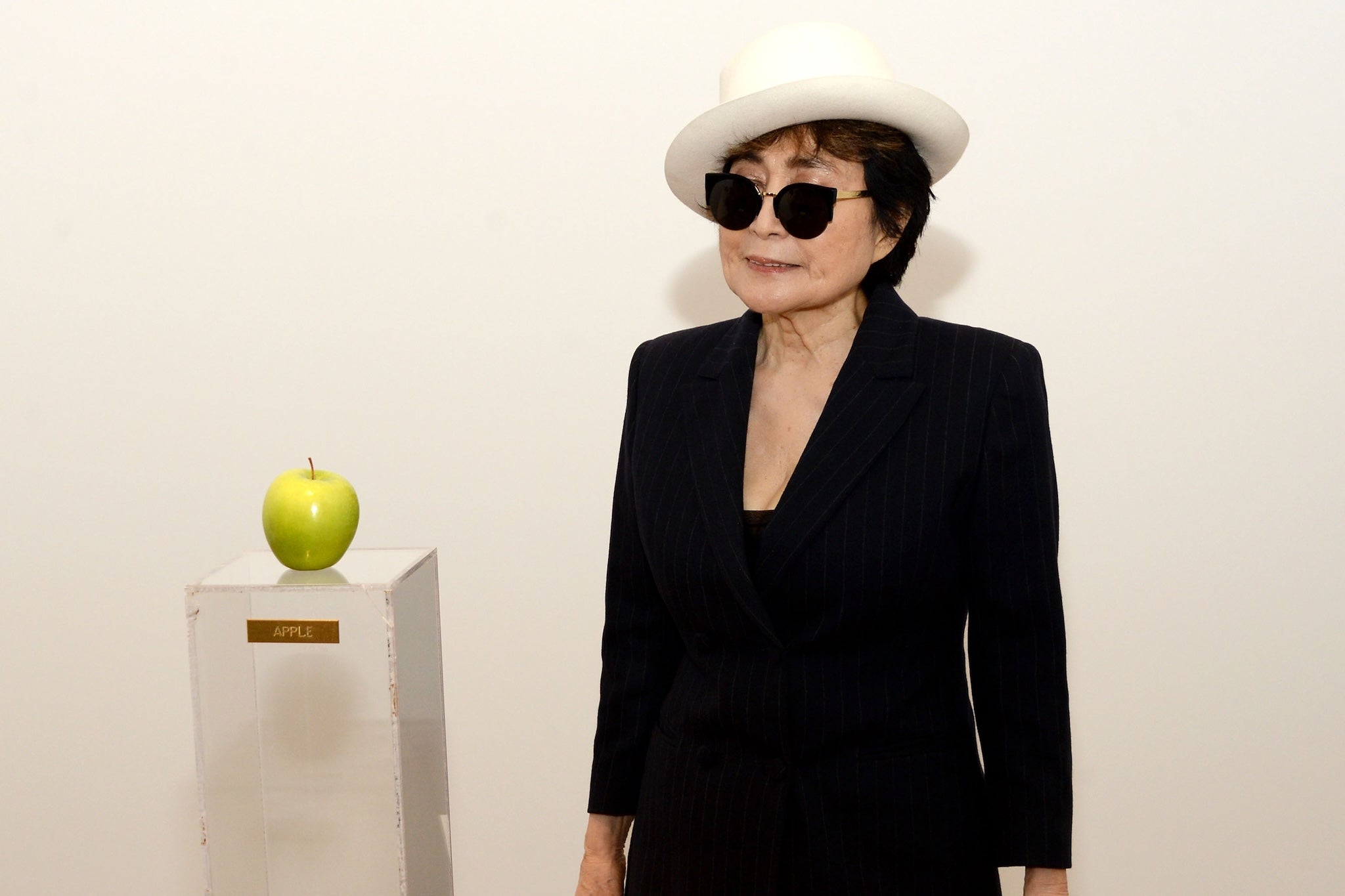
Artist Yoko Ono attends the ‘Yoko Ono: One Woman Show, 1960-1971’ press preview at the Museum of Modern Art in New York City, on 12 May 2015 (Getty)
Her appeal seemed very New York, and hardly made sense, but in no time, Ono’s Bottoms acquired its hard core of gawkers and thrill-seekers. Walking down the King’s Road past the fashionable boutique Granny Takes a Trip, she found teenagers screeching her name. From UFO she graduated to Indica, another cutting-edge, art-mad gallery space/bookshop favoured by a would-be metropolitan intelligentsia. It was here, on 8 November 1967, that she launched a landmark solo exhibition titled “Unfinished Paintings and Objects by Yoko Ono”. When Lennon turned up, clutching a late invitation, he asked the avant-gardist, whom he’d hardly heard of, what it was all about. Ono, seven years his senior and oblivious to Beatlemania, had no idea who he was.
Inscrutable as ever, she handed him a card that said, “Breathe”.
open image in gallery
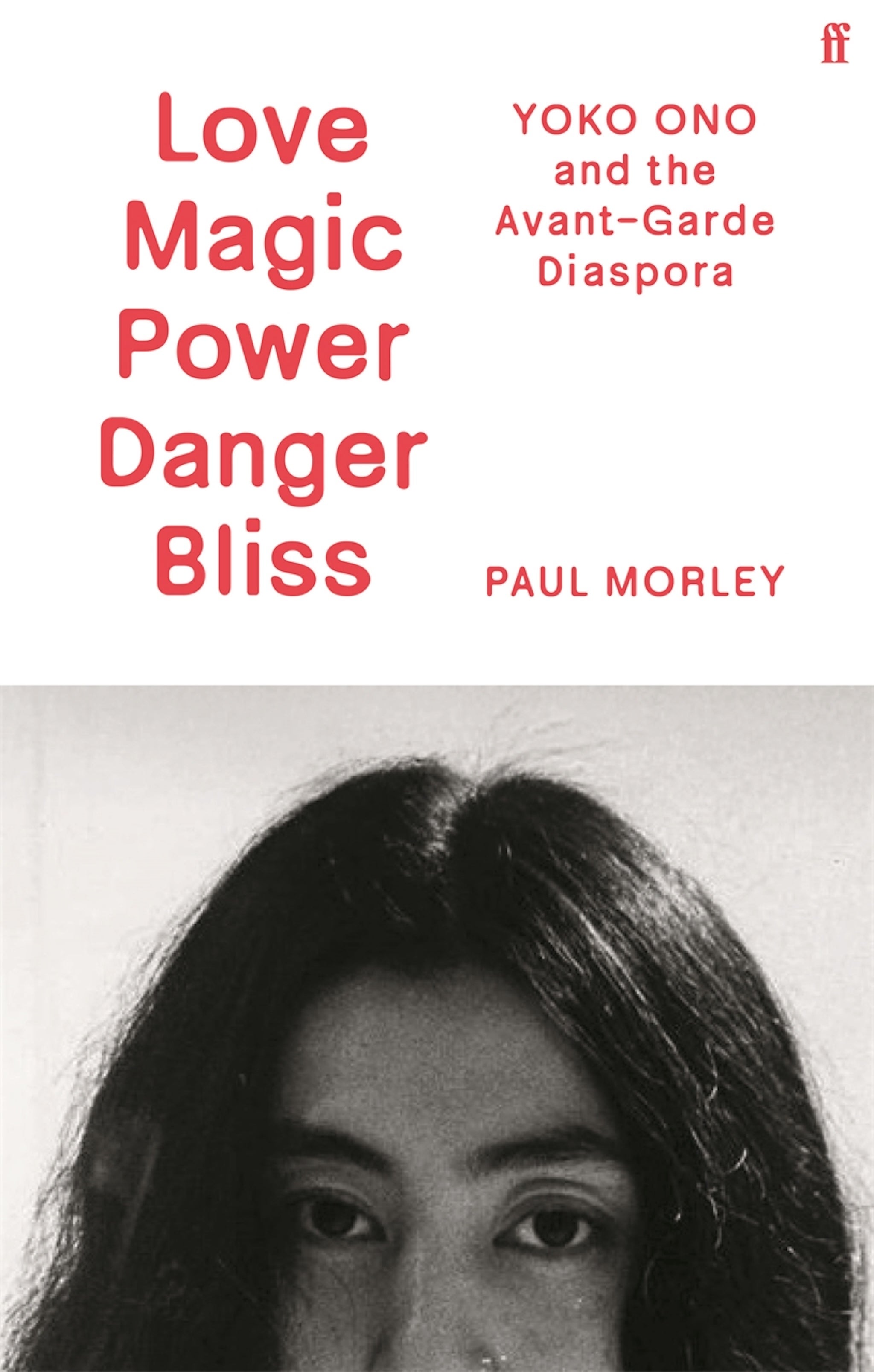
‘Love Magic Power Danger Bliss: Yoko Ono and the Avant-Garde Diaspora’ by Paul Morley is published by Faber (Faber and Faber)
Thus began the extraordinary, life-changing relationship, “Johnandyoko”, which Morley has already refused to anatomise. In fact, once we understand the subtle complexity of Ono’s long and painful struggle to find herself as an artist, there’s a case for saying that her role as mega-muse and “Mother” to the great songwriter would become the “Happening” of her life, the ultimate avant-garde declaration before a global audience.
It was, moreover, a role that gave her no end of self-gratification; she revelled in “Johnandyoko”. On the evidence of Love Magic Power Danger Bliss, Morley is too austere for such admissions. His book ends on an exhausted note of anticlimax, some 30 pages of vapid incantation about “Yoko”, “who is mistakenly never listed as a major musical influence in the standard rock histories and biographies” … “who was obscured by fame” … “who reached for the sky”. And so on.
The fact that Ono and Lennon were a devoted on-off couple from 1968/9 to 1980, with many celebrated moments of collaboration – including the birth of their son Sean, and the composition of “Imagine” – requires more than this. At 93, Ono has cherished her husband’s legacy for close on 50 years; her afterlife as his widow has its own authenticity.
Readers who want to know more should pick up John & Paul: A Love Story in Songs by Ian Leslie. Even in that abbreviated, popular rendering, the story of the years from 1980 (Lennon’s death) to 2022 (the release of Get Back) is enthralling. One day soon, some lucky music journalist/writer will dive into this material, and give Ono the biography we deserve to read.
‘Love Magic Power Danger Bliss: Yoko Ono and the Avant-Garde Diaspora’ by Paul Morley is published by Faber at £25