
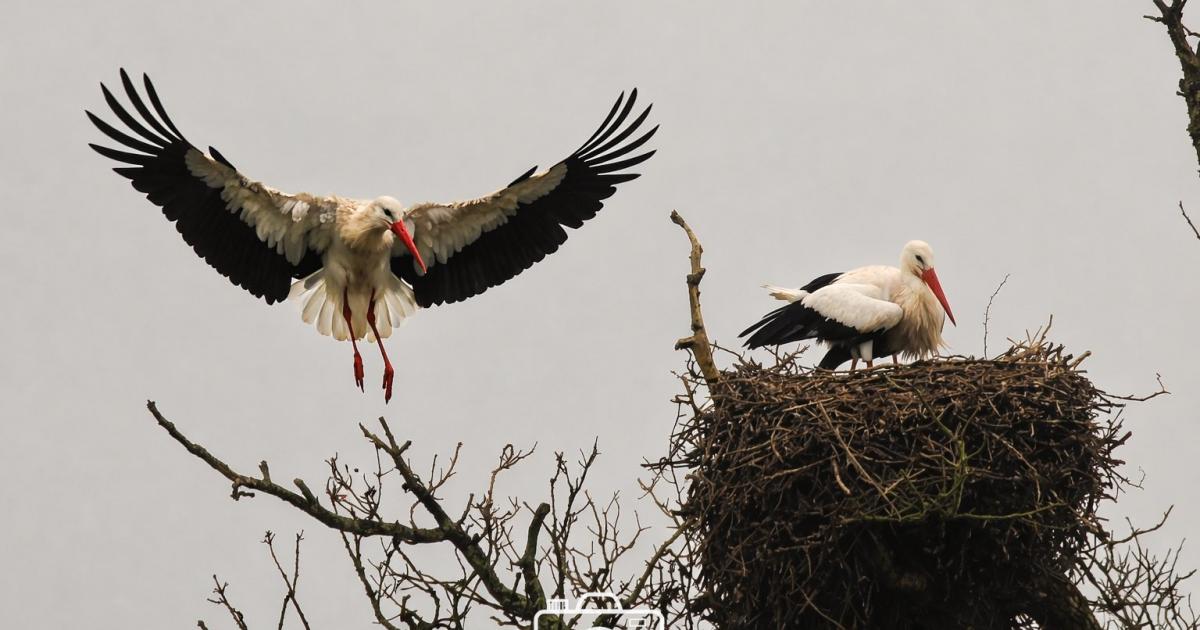
Images taken by Joshua Whymark on March 7 show the birds nesting at Knepp Wilding, near Horsham, raising hopes of a bumper new season.
White storks were originally introduced at Knepp in 2016, when a number of non-flying birds were imported from Warsaw Zoo, as part of The White Stork Project.
Juvenile birds were later introduced, which are allowed to fly freely once they reach maturity, encouraging them to build nests and raise their young.
White Storks nesting at Knepp (Image: Joshua Whymark)
Storks were first successfully bred at the site in 2020.
The birds were once common across Britain, with records of their presence stretching back 360,000 years.
They are particularly associated with Sussex, with the nearby village of Storrington originally known as “Estorchestone”, meaning “the village of the storks”.
However, they disappeared as a breeding species in the 1400s.
While a number of migrating storks are spotted in England every year, they have unique breeding requirements, which means an active process of reintroduction has been necessary to establish them here.
The storks have previously built shaggy nests in ancient oak trees and on the chimney of Knepp Castle.
More recently, several first-year birds bred in captivity have been released without clipping their wings, to help encourage migration.
These younger storks have embarked on the treacherous migration route to North Africa, with several birds from the colony having been spotted as far away as Morocco.
White Storks nesting at Knepp (Image: Joshua Whymark)
The White Stork Project, which also works to reintroduce the birds at Wadhurst Park in East Sussex, has set a goal of 50 breeding pairs on the south coast by 2030.
The project partners with the Roy Dennis Wildlife Foundation, which has worked on other wildlife restoration projects, including the reintroduction of white-tailed eagles to Southern England.
Last year saw 45 storks fledge from the wild at Knepp.