
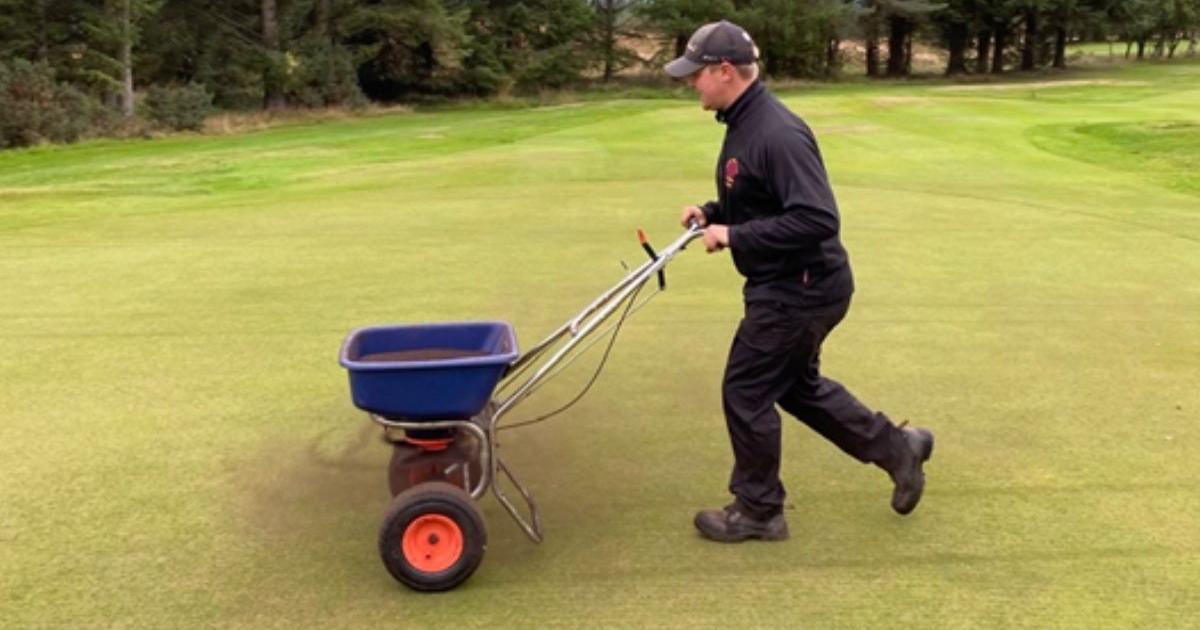
A relatively quiet multi-year investment programme is paying dividends at Paisley, with the club currently holding 69th ranking in the GB&I value-for-money top 100 cohort.
The programme has been led for the past four and a half years by head greenkeeper Jonny Caldwell, previously of Kilmarnock GC, the Wisley in Surrey, and Loch Lomond. Mr Caldwell also spent five years at Sea Island in Georgia, where he did his apprenticeship.
He explains how managing expectations has become crucial amid increasingly extreme weather conditions and a shift in how golfers use their club membership.
You’ve worked in some very different climates. How is the weather at Paisley affecting course management?
For me the biggest change has been the extremes. You’re getting really hot summers and then incredibly wet winters, but it’s not a gentle 20mm of rain over a few days – it’s 20mm in an hour. That sort of downpour in one hit is hard for any inland course to cope with.
I’ve been doing this since I was 14 and I’m 37 this year, and I’d say the extremes of weather are the biggest single challenge we face on the West Coast now.
How does that feed into your day‑to‑day decisions on when to open, close or protect the course?
That’s the balance I’m still learning, to be honest. When you get those big downpours you’re constantly weighing up when to close, when to stay open, when to go onto temporary greens and when you can safely keep people on the main greens through the winter.
According to a review on Golfshake, the quality of the course has ‘improved significantly’ during the past few years (Image: Supplied)
We’ve invested heavily in ropes and stakes over the last four or five years to manage traffic, because you can’t just rely on drainage and hope for the best. It’s about finding that line where the course can take the play without storing up damage for later.
What are you seeing at Paisley in terms of how people use the club?
When I started playing golf as a kid, people joined a club and maybe played 10 or 12 rounds a year. Now you’ve got guys playing 40 or 50 rounds a year. That’s a huge increase in traffic for the same piece of turf.
I also think people don’t join “for a club” as much anymore – they join for golf. That changes how we have to think. You’re dealing with a bigger, more active playing membership that quite rightly wants value for money, but it puts much more pressure on the course and the team.
Has the traditional social side changed alongside that?
Every club is unique, but here we don’t have the same big social side that some places do. Being on top of a hill doesn’t help – people can’t just have a few drinks and drive home, so we’re trying to build social and function business with things like funerals and christenings.
‘Fundamentally we know the golf course is the product’ (Image: Supplied)
But fundamentally we know the golf course is the product. That’s where more of the members’ money is going because that’s why they’re joining. It’s changed how we prioritise investment and how we judge success.
How hard is it to manage expectations when conditions can change so quickly and people are playing more than ever?
Managing expectation is one of the biggest challenges in the job now. I’ve worked in Surrey, I’ve worked in south Georgia, and you can’t pretend the west coast of Scotland is the same – the grass doesn’t grow as long through the year, winters aren’t as mild, and disease pressure is higher, but members still see what’s on TV or online and understandably want great conditions.
For me the key is communication: talking to them every day, explaining what we’re doing and why. If you tell people why you’re hollow tining, why a green is on a temporary, or why an area is roped off, most will accept it even if they don’t love it. We see ourselves as custodians of the golf course – every decision is about what’s best for the course in the long-term, not what’s easiest in the short-term.
Mr Caldwell’s dog, Rufus, has been ‘part of the team’ for the past four years (Image: Supplied)
Does that change how you run the team and plan work?
Definitely. The weather and the level of play mean you can’t just stick to a rigid calendar and hope it fits. We’re planning around windows in the weather, but we’re also planning around when we can get disruptive work done with the least impact on members’ experience.
That’s where being open with people really helps – if they know what’s coming and what the benefit is, you buy yourself some goodwill. And that’s vital when you’re asking them to accept short‑term pain so the course can stand up to those 40 or 50 rounds a year and the kind of weather we’re seeing now.
Click here to sign up for The Herald’s Business of Golf newsletter, out every Sunday.