
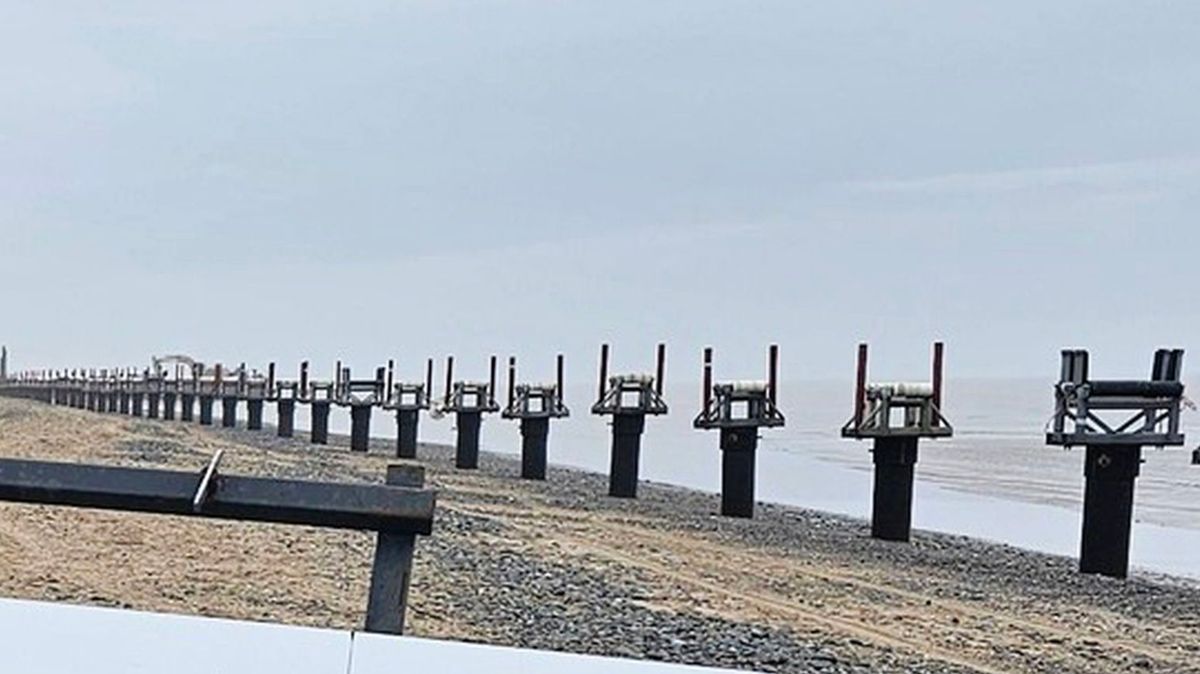
Talacre beach is under two hours away from ManchesterAndrew Forgrave Countryside and tourism editor and Ramazani Mwamba News reporter
07:55, 13 Mar 2026Updated 07:57, 13 Mar 2026
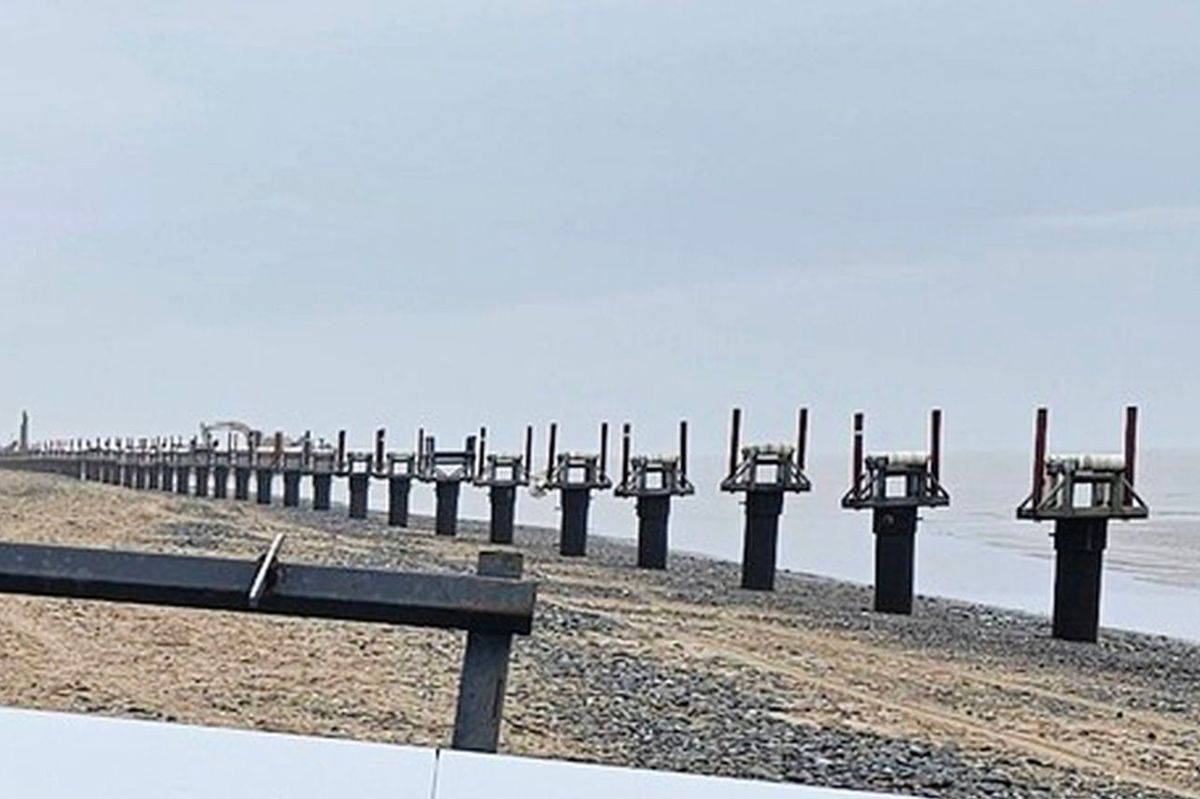
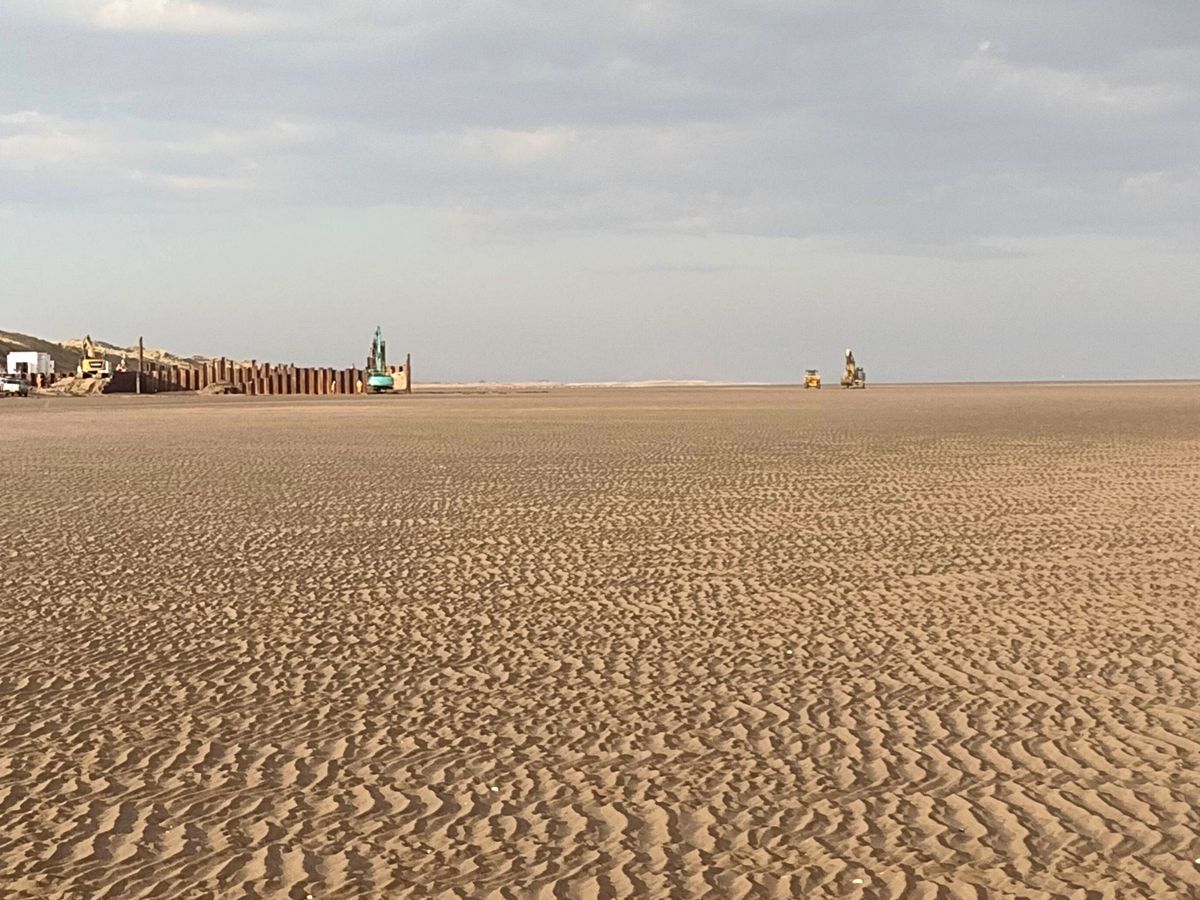
The steel stands disappear into the distance(Image: Vicki Smith)
Beachgoers were left scratching their heads after a number of steel structures appeared along the coast. Described as “eyesores”, the large objects were placed on the Talacre beach, in Wales, this week accompanied by “Danger Keep Out” signs.
The signs said that the items are part of a “pipeline welding highway”. They are only temporary and will be removed in April, say NorthWalesLive.
A new pipeline is being laid to the nearby Point of Ayr gas terminal as part of the multi-billion-pound HyNet scheme. Carbon emissions (CO₂) captured from industrial plants in North Wales and northwest England will be moved to the modified terminal, then piped under the sea to depleted offshore gas reservoirs in Liverpool Bay.
Get MEN Premium now for just £1 HERE – or get involved in our WhatsApp group by clicking HERE. And don’t miss out on our brilliant selection of newsletters HERE.
Point of Ayr’s existing natural gas pipeline, which runs from Flint to the offshore Douglas platform, will be re-purposed to transport CO₂ out to sea. However a new “conduit” is needed between the terminal and platform – this will carry a combined electric and fibre-optic cable.
“This cable will supply the power and upgraded telecommunications needed to support the receipt and distribution of CO₂ to the storage sites,” said a HyNet spokesperson.
The steel supports will enable sections of the underground conduit to be strung together. Using “trenchless” horizontal directional drilling (HDD), the completed conduit will then be fed back under Talacre’s towering dunes to Point of Ayr terminal.
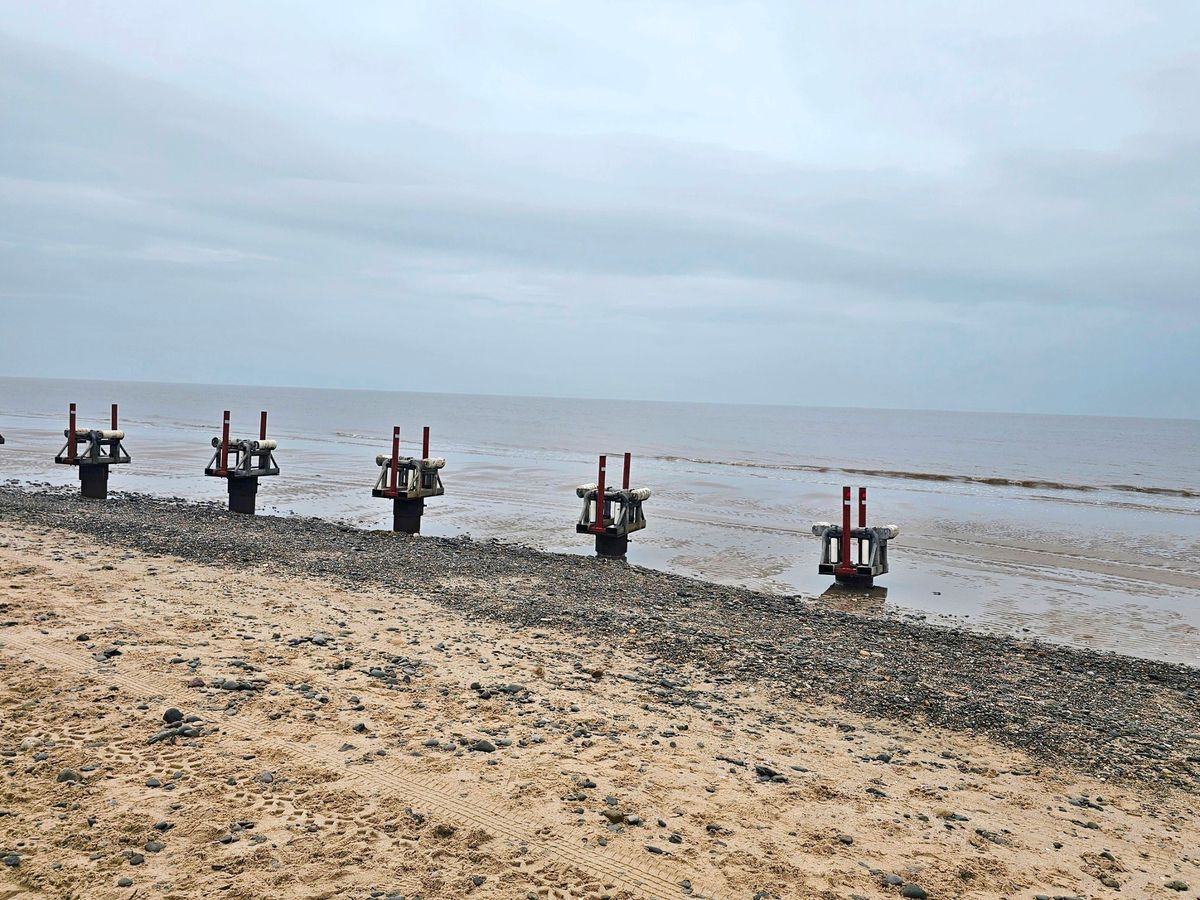
The steel supports are expected to be removed in early April(Image: Vicki Smith)
HyNet said: “Trenchless techniques are used to lay cables under rivers, roads, and areas of conservation like sand dunes, without digging a trench through them.
“HDD allows us to lay cables underground without disturbing the land above and means that we only need to dig small exit and entry pits on either side of the area.”
One of these pits is already prominent on the beach. A cofferdam is being built with temporary steel sheet piles to contain any drilling fluids. It will be removed once the work is completed at the end of August 2026.
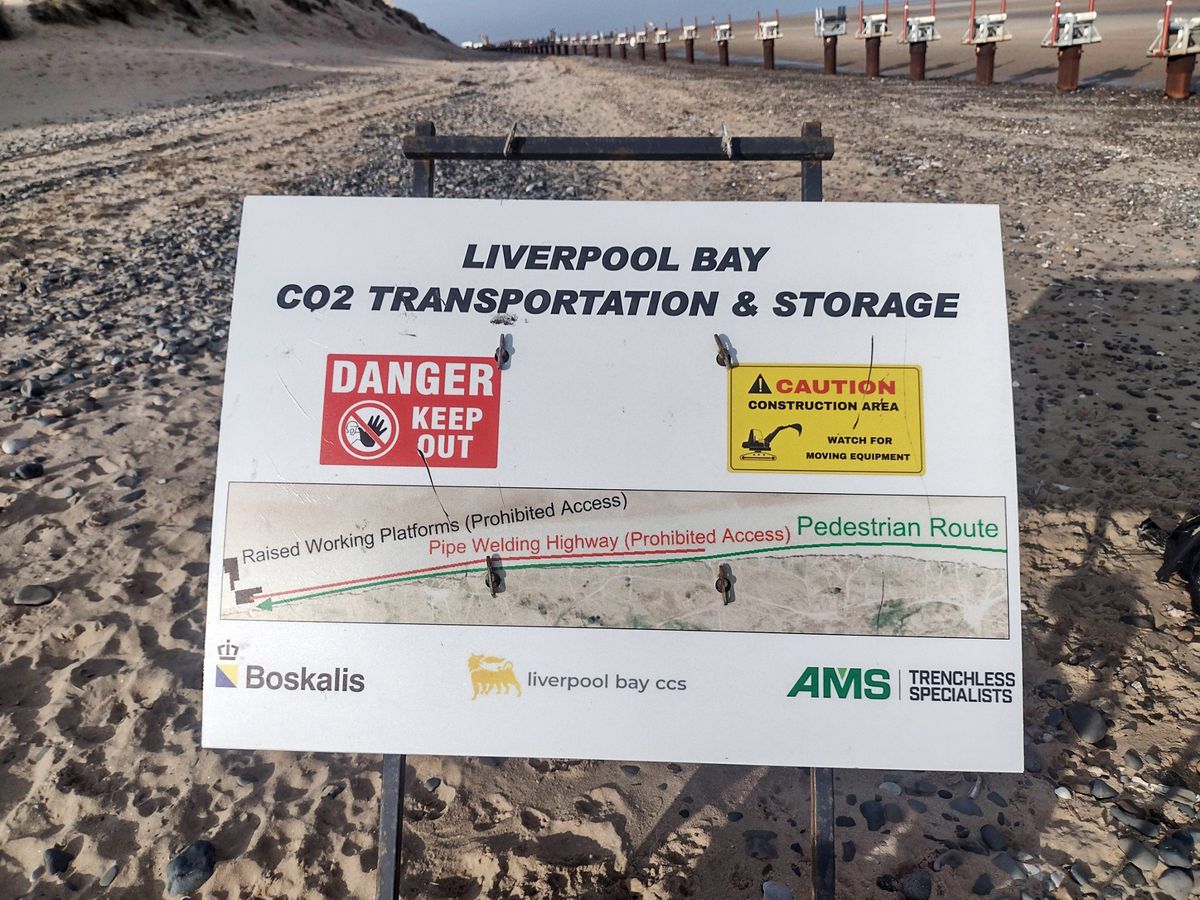
Warning ‘Keep Out’ sign advising walkers they must stay close to the dunes(Image: Linda Millwall)
This summer, cabling will be brought from the platform to the beach by boat. This will be pulled through the conduit by a cable-laying vessel anchored offshore.
A public footpath around Point of Ayr has been closed for the conduit work. A spokesperson said: “The conduit for the cable installation will take place between February and April 2026.
“Following this, a cable-laying vessel will be used to connect the cable from the beach area to the New Douglas Offshore CCS Platform. This cable pull is expected to take place from June 2026 to August 2026.”
Temporary screens have been positioned to protect walkers from dust, and to stop people peeking in HyNet said all equipment, including fencing, screens and signage, will be removed once the works are finished. On the beach, the conduit will be covered by sand, and any remaining equipment will be retrieved.
“This means that there will be no visible infrastructure on the beach when construction is complete,” said HyNet.
Construction of a cofferdam on the beach, through which a tunnel will be drilled under the dunes to accommodate the combined electric and fibre-optic conduit(Image: Linda Millwall)
Another current focus of the Carbon Capture and Storage (CCS) programme is the “Main Onshore Pipeline” between Stanlow, near Ellesmere Port, and Flint. This will see a 36-inch diameter pipe installed through Deeside over to Ewloe Green, then past Northop Hall and Flint Mountain.
Three spur pipelines are also planned, including a link from Northop Hall to the Hanson Padeswood cement plant near Mold. Topsoil stripping – to enable future reinstatement – is due to start this month on the Main Onshore Pipeline route.
Traffic management is already in place at Northop Hall. Further drop-in community information events are being arranged for the project team to share updates (see dates below).
Drop-in community information events (all 4pm-7pm)Tuesday, March 24: Vernon Institute, Saughall, Chester, CH1 6ENWednesday, April 22: Hawarden Masonic Hall, Hawarden, Deeside, CH5 3HETuesday, May 19: Mollington Banastre Hotel, Parkgate Road, Mollington, Chester, CH1 6NNWednesday, June 24: Ewloe Social and Community Club, 85 Old Mold Road, Deeside, CH5 3AX