
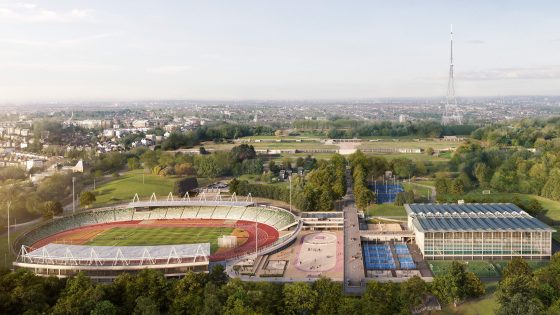
The team was selected last May to redevelop the facility, which has hosted major football, swimming, athletics and motor racing events over the past seven decades.
The scheme is a collaboration with the Greater London Authority (GLA), which has appointed contractor Morgan Sindall to lead the project, while FaulknerBrowns drew up plans for the Olympic-sized swimming pool with a range of internal and external improvements.
Woo architects created the ‘one park’ masterplan for the site, reimagining the whole sports centre with improve public access, a new central plaza featuring a running track, gym and café, and plans to revitalise both the athletics stadium and other indoor facilities alongside FaulknerBrowns’ vision for the swimming pool.
Built in 1953-54 to designs by London County Council’s Architects Department under lead architect Norman Engleback, the sports centre has hosted a women’s FA Cup final, a Grand Prix and a host of international swimming and athletics meets, among other events.
However, it has fallen into disrepair and is described by London Mayor Sadiq Khan as in need of ‘major investment and refurbishment’. In 2018 Hawkins\Brown was appointed by the GLA to draw up feasibility plans to regenerate the site and deliver a ‘revitalised, fit-for-purpose community asset that [would] be accessible to all Londoners, offering a wide range of activities for competitive and casual users alike’.
When the project was first announced, Khan described the sports centre as a ‘historic and much-loved sporting and community facility’.
He added: ‘I am committed to this once-in-a-generation redevelopment of the site, which will secure its future for decades to come.’
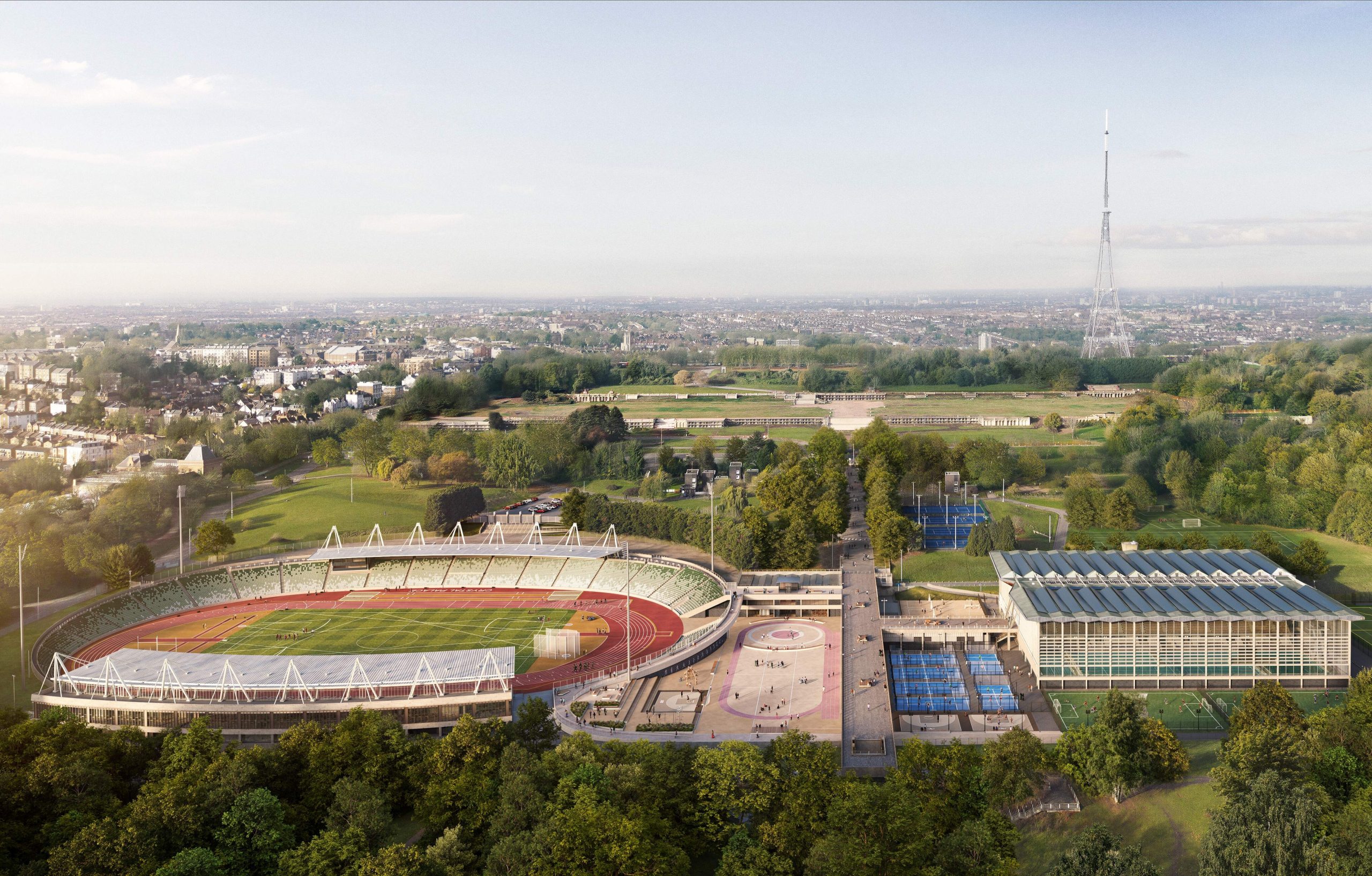
Steve McIntyre, partner at FaulknerBrowns, said: ‘The importance of this national facility and the rich cultural history which underpins its heritage make this project an amazing and exciting opportunity for us.
‘We are very excited to be able to help write the next chapter of Crystal Palace, making it more inclusive, efficient and accessible.’
Key elements of the design include improvements to accessibility, upgrading the building’s fabric to optimise energy use, introducing a glazed screen to divide the pool from the rest of the facility and removing fossil fuel systems to be replaced with heat pumps and solar panels.
Kevin Owens, founding director at WOO said, ‘Crystal Palace holds a unique place in the nation’s sporting history, and the GLA’s ambition for its renewal is truly inspiring. Submitting for planning is a key step in safeguarding Crystal Palace National Sports Centre as a vital public asset for London.’
Richard Dobson, area director of London at Morgan Sindall, said: ‘The ideas that have been laid out in the planning application for Crystal Palace National Sports Centre’s transformative regeneration represent something quite ambitious and different.
‘Everyone working on this scheme has pushed hard to make the design a showcase in what a modern, sustainable, inclusive and community-centred leisure centre should look like – all while paying homage to the venue’s inspiring legacy.’
In 2024 HTA Design was given the go-ahead for £17.75 million plans to overhaul the surrounding park. Construction is currently ongoing to deliver upgrades to key sites, including the Grade II-listed Italian Terraces and the Grade II-listed Paxton Bust, unique dinosaur sculptures and lakes. This scheme is set to be completed in late summer this year.
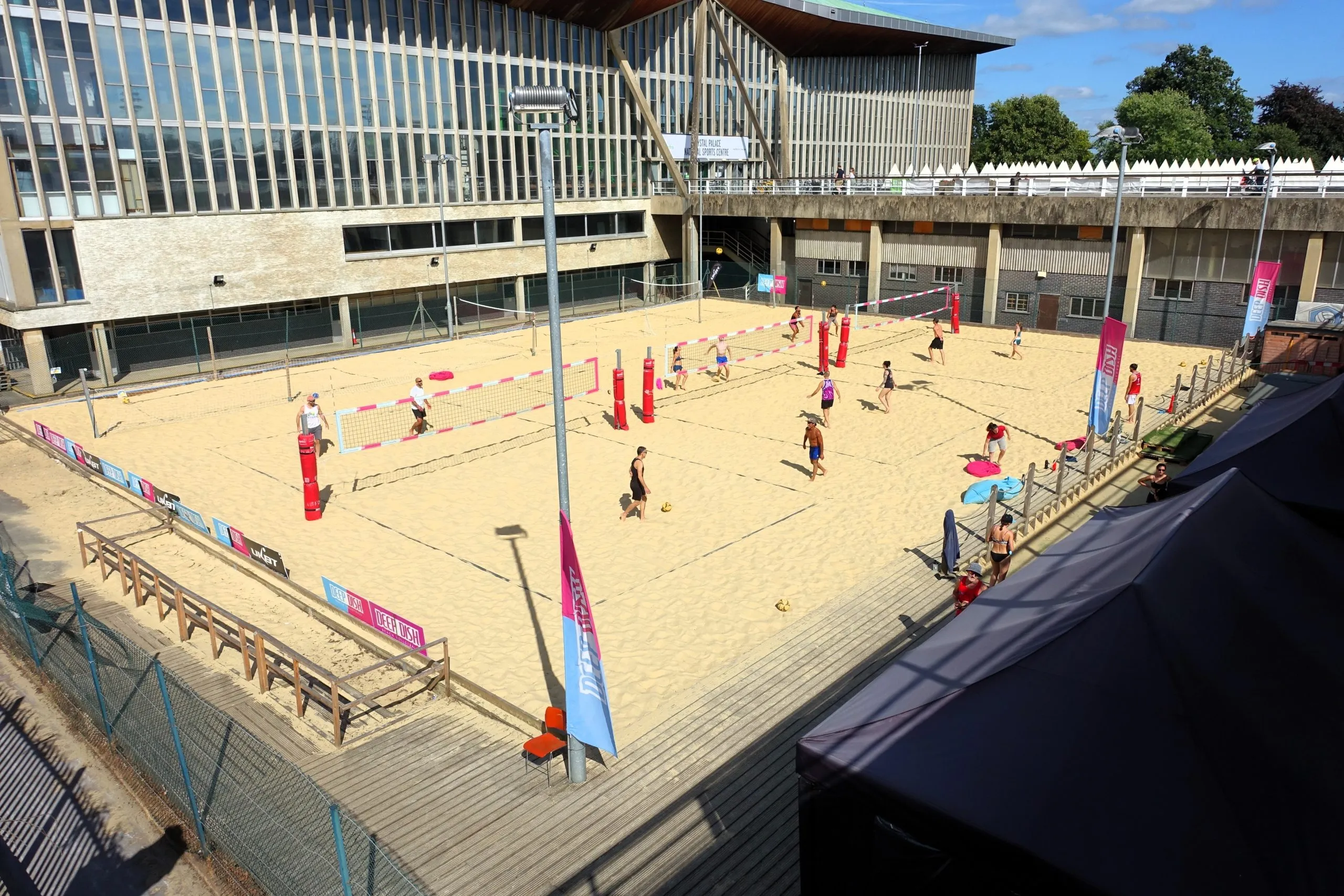
Crystal Palace National Sports Centre