
During his first trip to Italy in 1950, with little money to his name, Mark Rothko stood awestruck before early Renaissance frescoes. He remained at Florence’s San Marco museum, a former Dominican convent, until dusk, contemplating the vivid Fra Angelico religious scenes that line tiny monastic cells. Apparently unsatiated, he returned the next morning for another visit.
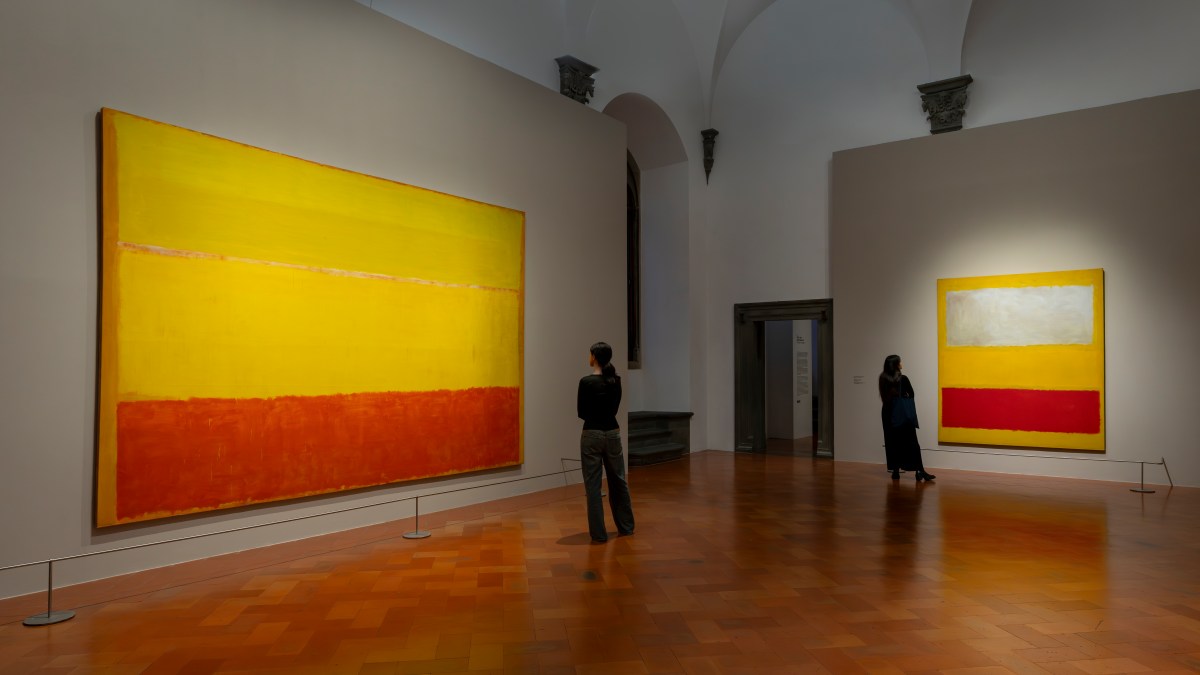
The art Rothko saw during that trip shaped his output, as an exhibition in the Tuscan city aims to show. Opening at the Palazzo Strozzi on Saturday, Rothko in Florence showcases 70 of his works, including iconic canvases from the Tate in London, Pompidou Centre in Paris and the National Gallery of Art in Washington. A handful are shown at two satellite sites: alongside Fra Angelico’s murals at San Marco, and in the Michelangelo-designed vestibule of the Laurentian Library.
The exhibition is co-curated by Christopher Rothko, the artist’s son, who describes it as the realisation of a long-cherished dream. “We have been discussing this show with institutions for 15 years,” he said. His father, he said, would have loved the idea. “This is the fulfilment of his highest aspiration.”
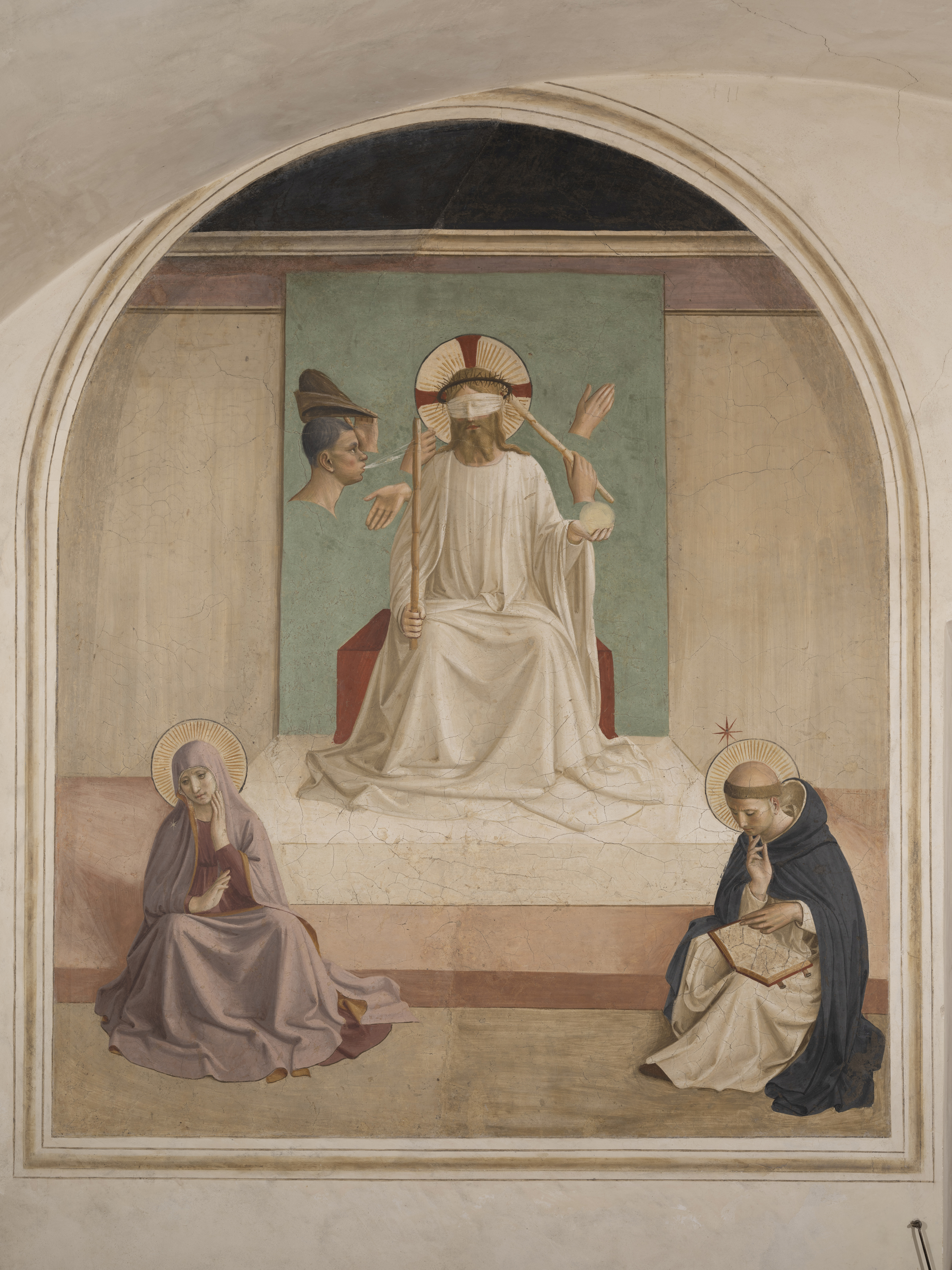
Mocking of Christ with the Virgin and Saint Dominic by Fra Angelico
Rothko returned to Italy in 1959 and 1966, visiting heritage sites and museums he could previously admire only in books. He toured the Forum in Rome and the Pompeii archaeological site, and saw frescoes by Giotto in Assisi and Piero della Francesca in Arezzo. “At the time, he really was able to holiday on five dollars a day,” Christopher Rothko said of that first trip, when the New York-based artist was accompanied by his wife, Mell.
Fra Angelico’s frescoes, which make their cells vibrate with spiritual intensity, arguably inspired inspired the Rothko Chapel paintings, for which Rothko created numerous dark canvases. There is a clear connection between the austere grandeur of Michelangelo’s vestibule, which Rothko first saw in 1950, and his large-scale Seagram Murals, commissioned eight years later for a Four Seasons restaurant in New York.
“[Michelangelo] achieved just the kind of feeling I’m after,” Rothko told a journalist of the Murals, some of which are now displayed at the Tate Modern, in the bar of an ocean liner bound for Naples in 1959. “He makes the viewers feel as though they are trapped in a room where all the doors and windows are bricked up, so that all they can do is butt their heads forever against the wall.”
• Child damages €50m Rothko in ‘unguarded moment’ at museum
As part of the show, 75 x 55cm studies for the Seagram Murals are being shown in the Laurentian Library vestibule where, hung in that narrow space, they intensify the sense of confinement. In a cell at San Marco, beside a Fra Angelico angel that seems to glow from within, a Rothko canvas with a beam of yellow shooting across layers of crimson quivers with corresponding intensity. In another cell, free-floating blotches of pastel colours perfectly match those used in the Renaissance painter’s mural of a blindfolded Christ.
Three years ago, Christopher Rothko organised a more comprehensive Rothko retrospective in Paris. For Florence, he has carefully selected works that both document the evolution of his father’s style up to his shocking suicide in 1970 and highlight his connections with Italian art. At the Strozzi, a 1936 painting of an architectural interior dominated by towering pilasters resembles Michelangelo’s New Sacristy at Florence’s Medici Chapels. The angrily simmering Four Darks in Red (1958) recalls the ochre hues commonly used for walls in ancient Pompeii.

The vestibule of the Biblioteca Medicea Laurenziana, designed by Michelangelo, with two works by Rothko on display
“Christopher [Rothko] decided not to ask for certain paintings for the Paris exhibition because they would relate much more to Italy,” Elena Geuna, the second co-curator, said, citing Four Darks in Red as an example.
Visitors have to buy separate tickets for each site, with a full price of €15 for the Strozzi and a reduced price for ticket holders of €7 at San Marco and €5 at the library. They will have access to some of Rothko’s greatest works. A loan for Gray, Orange, Maroon No 8 (1969), believed to be worth up to €50 million, was finalised only about six months ago, following a restoration after a child scratched it while on display at Rotterdam’s Boijmans museum.
A request for a throbbing, 3 x 4.5m untitled yellow on orange from the Bilbao Guggenheim, Rothko’s largest non-mural, was initially rejected five years ago before the museum changed its mind. “It had only been loaned once before,” Geuna said.