
Car industry expert Professor David Bailey of the Birmingham Business School said the tariffs “play a big role” in the job cuts.
“It wasn’t that long ago that JLR was reporting bumper profits – £2.5bn profit to the year ending in March – which was its best results in a decade,” he told the BBC’s Wake Up to Money programme.
The firm has also been taking on workers in preparation for producing more electric cars so the tariffs “have definitely had an impact”, he said.
Although tariffs UK carmakers face have come down from 27.5% to 10%, that is still “a big increase” from the previous tariff of 2.5%, he said, adding that one of its best selling cars, the Defender, is made in Slovakia and that still faces a 27.5% tariff.
US President Donald Trump has brought in a number of the taxes, which are paid by importers.
JLR initially stopped shipments of its vehicles to the US earlier this year after Trump announced a raft of tariffs.
The import tax was later reduced after the UK reached a deal with the US and JLR restarted shipments.
JLR is a large employer in the UK automotive sector with more than 30,000 workers.
Speaking before JLR made its announcement about job cuts, Preet Kaur Gill, Labour MP for Edgbaston in Birmingham, highlighted the importance of the UK’s recent trade deal with the US which cut tariffs on UK cars from 27.5% to 10%.
She told BBC Politics Live that it had helped preserve jobs at the company.
“In my region, Jaguar Land Rover is a really important employer. The fact that we’ve managed to save 12,000 jobs, bring tariffs down… this is an ongoing relationship and our commitment is to make sure we continue that,” she said.
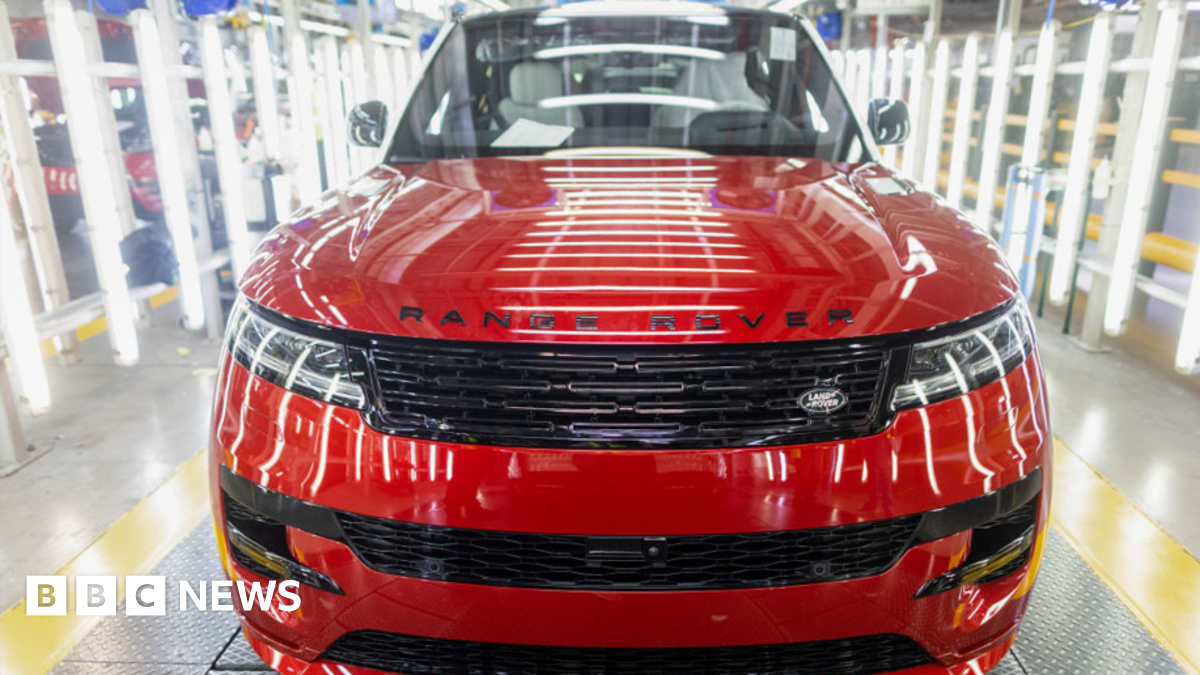
JLR has sites in Solihull, Wolverhampton and Halewood on Merseyside, and builds Range Rover SUV models in the UK.