
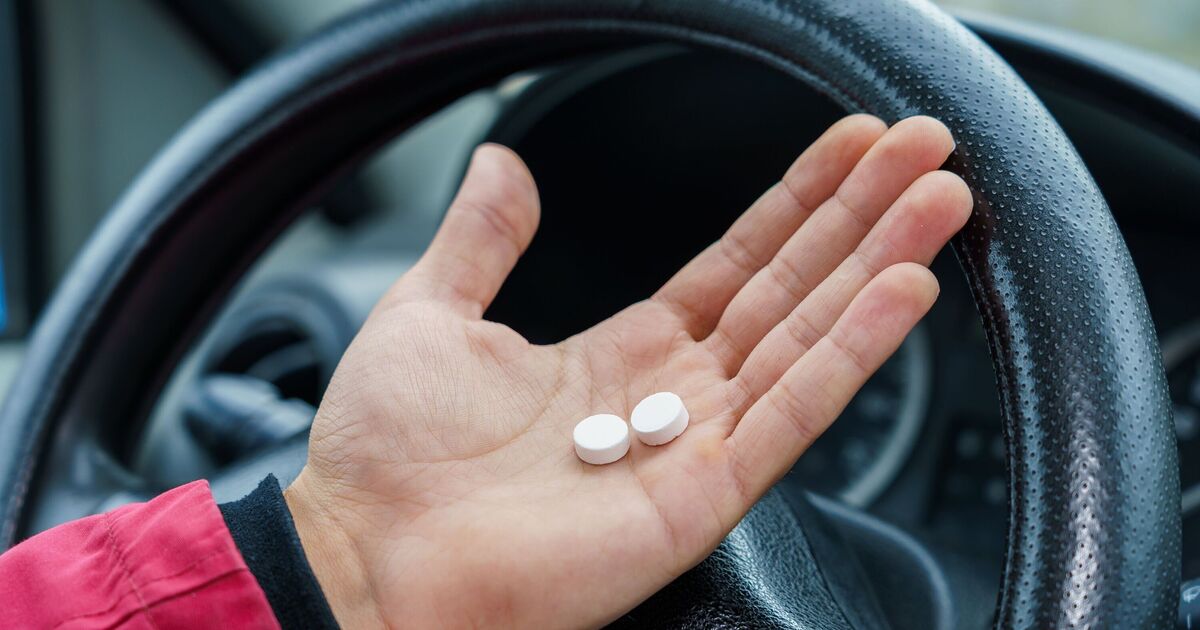
DVLA officials may tell road users to “avoid driving” if they get behind the wheel under the influence of common medications. Motorists also run the risk of being slapped with a minimum one year ban for drug driving even if road users have taken store-bought or prescription medication.
Legal drugs such as prescription or over-the-counter medicines can leave road users drowsy, impairing motorists’ ability to control the car safely. Side effects such as dizziness, slower reaction times and blurred vision are all possible and can often mirror the effects of illegal substances.
Greg Wilson, motoring expert at Quotezone.co.uk has warned DVLA bosses are likely to encourage motorists to not get behind the wheel if they have taken anything that could put individuals at risk.
He explained: “If you are on strong medications, it is likely that you will be recommended to avoid driving. Opioid painkillers, tranquillisers, and certain antidepressants are examples of medicines that can affect driving ability – as well as those that cause drowsiness or say ‘do not operate heavy machinery.”
GOV.UK has explained that road users could be prosecuted if they drive with certain levels of drugs in their body.
They said: “It’s illegal in England, Scotland and Wales to drive with legal drugs in your body if it impairs your driving.
GOV.UK added: “Talk to your doctor about whether you should drive if you’ve been prescribed any of the following drugs.
Road users taking morphine or opiate and opioid-based drugs, for example codeine, tramadol or fentanyl could also be under threat. Individuals taking oxazepam and temazepam could also be affected and may not be able to drive.
The only reason motorists can get behind the wheel under these medicines is if the drugs are not causing any ailments likely to make individuals unfit to drive. The RAC warned that even keeping medication a secret from DVLA chiefs could land road users with hefty bills.
They explained: “Failing to inform the DVLA of a medical condition and a prescription that can affect your driving can see you fined as much as £1,000.”