
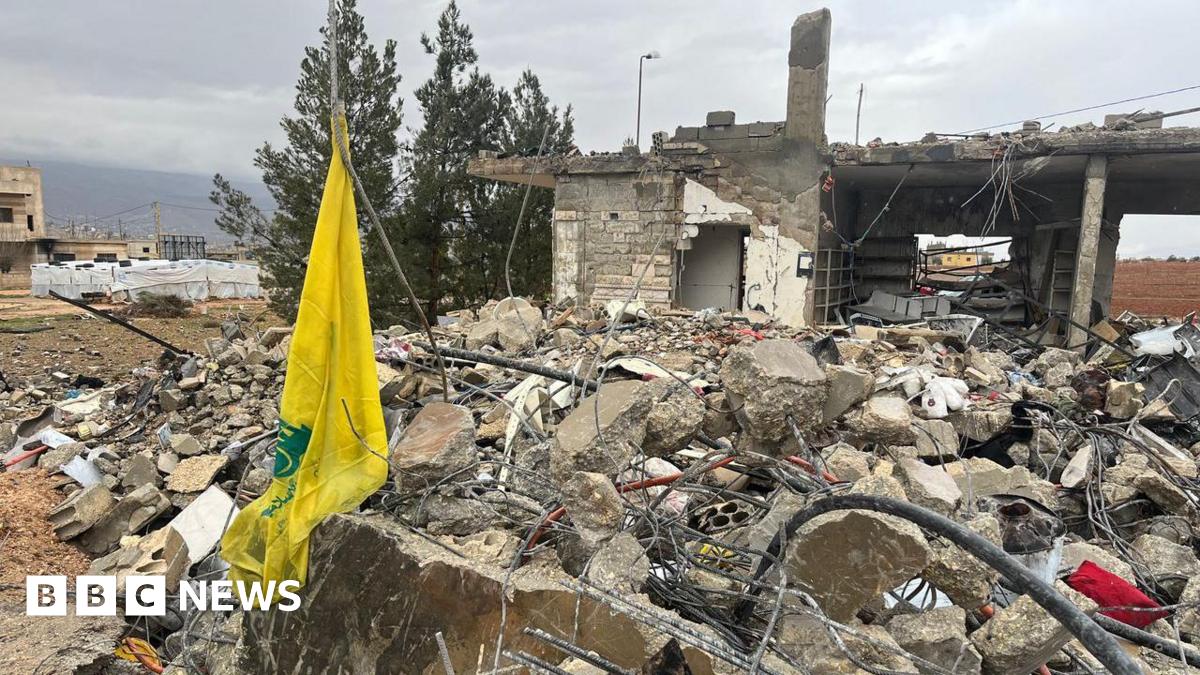
The Lebanese health ministry described the eight people killed as civilians, and a local official confirmed Hassan’s account that the Lebanese military had inspected the scene and found “no military items or weapons”.
The military did not immediately respond to a BBC request for comment, and Hezbollah has not commented on the strike.
The Israel Defense Forces (IDF) told the BBC it “takes the possible steps to mitigate harm to civilians and calls on them to distance themselves from the organisation’s terrorist infrastructure for their own safety”.
“The IDF emphasises that it operates against the Hezbollah terrorist organisation, which launched attacks against Israeli civilians, and not against the civilians of Lebanon,” it added.
As he spoke on the rubble of his brother’s home, Tahan pulled a yellow Hezbollah scarf from his pocket and put it around his neck, saying that after this “painful incident” he would now be willing to fight alongside the group.
“Even if we were not militarily affiliated before… From today, we are the soldiers of Hezbollah and proud of it,” he said.
Some in the area fled in fear after the strike, while those who had remained there were trying on Saturday to make sense of what had happened.
“Is it acceptable that a young girl was burned to ashes?” the shepherd asked. “If they wanted a specific person, why kill the rest?”