
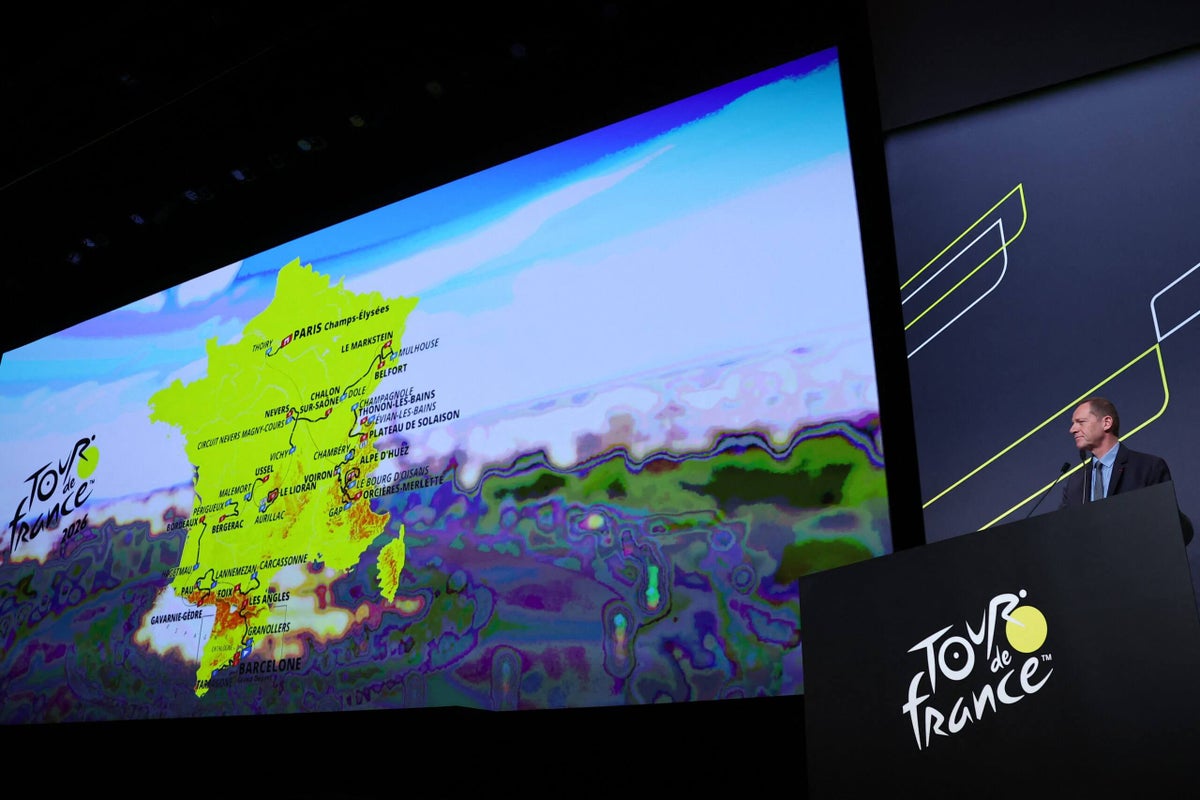
Switch on the cycling this week and you’ll be greeted with two prestigious WorldTour stages taking place at the same time: Paris-Nice and Tirreno-Adriatico.
In a few weeks’ time, when riders like Remco Evenepoel and Jonas Vingegaard compete at the Volta a Catalunya, there’ll be three famous one-day WorldTour races happening on different days in Belgium. It’s a bit like having multiple Formula One races staged simultaneously.
In December 2022, the International Cycling Union’s (UCI) director of sports, Peter Van den Abeele, promised an end to an era of eyes and attention having to be scattered across various places at the same time. “We’ll no longer allow overlaps and there will be fewer races,” he promised on the Cross van Play Sports podcast.
His superior, UCI president David Lappartient, went a step further, vowing to streamline cycling’s congested calendar. “Within the WorldTour, each year we’d have a number of races, maybe 15 one-day races and four to six stage races,” he said in a video following the UCI WorldTour Seminar in 2002.
There was finally, after over a decade of on-off pressure from teams, a realisation within the UCI that professional cycling was too confusing to follow for both newcomers and even seasoned followers. “The idea is to strengthen the attractiveness of our sport so that we can market it even better,” Lappartient said.
However, despite multiple ventures and projects to change the sport’s structure, nothing has been done about it. The 2026 men’s WorldTour calendar is as bloated as ever: after the trio of three-week Grand Tours — cycling’s marquee events — there are a further 12 WorldTour stage races (generally about a week long) that sit alongside the five one-day Monuments and 16 other one-day races.
For many in the sport, frustrations are at an all-time boiling point. Not only over the calendar, but also a financial model that makes teams and races almost entirely dependent on sponsors.
“We’re in a downward spiral as cycling, [whether] we like it or not, and I think that’s why, for everyone, the urgency becomes bigger and bigger every day,” warned Richard Plugge, general manager of Visma-Lease a Bike, at the team’s media day in January.
“You need to make sure that cycling stays [as] one of the top five sports in the world. That’s the whole issue, and now apparently we are losing eyeballs to other sports.”
The UCI rejected a Saudi Arabia-backed reform proposal last summer, but in the past few weeks it has launched a consultation with other stakeholders to redesign the future of the sport. Yet at the same time, a collection of billionaires and powerful team owners have been discreetly drawing up plans for their own project that they hope can finally accelerate cycling’s growth and popularity. The warring factions risk splitting the sport in two.
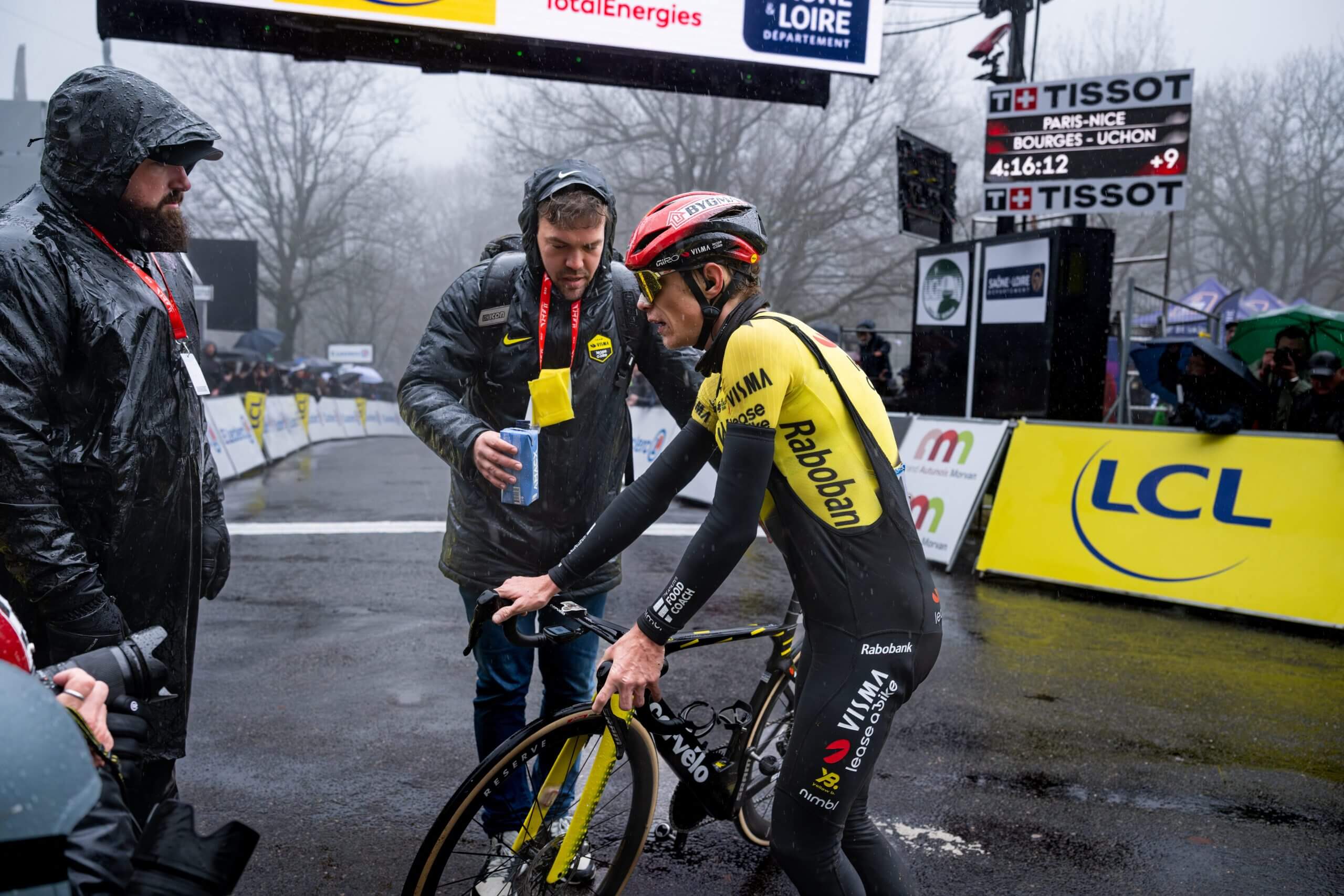
Jonas Vingegaard is competing in Paris-Nice this week – most of his Tour de France rivals are elsewhere. (David Pintens / BELGA MAG / Belga / AFP via Getty Images)
It’s a commonly-held opinion that cycling’s model is broken — despite that model having survived for well over 100 years.
Taking place on open roads and away from stadiums, the sport can’t generate the same sort of revenue from spectators that most other sports can. Sponsorship money is the lifeblood of teams and races.
ASO, the owners of the Tour de France, account for an estimated 70 per cent of all profit from WorldTour races despite only owning 25 percent of top-tier races. But most of that profit goes directly to the controlling Amaury family — they’ve been enriched by a reported half a billion Euros in the past decade alone.
Unlike in most other major sports such as soccer, NFL and F1, where teams receive a large percentage of all broadcast revenues, money from races is not shared among the various competing stakeholders. Though they receive a few thousand euros per day from organizers to cover basic expenses, teams essentially pay to race.
Iwan Spekenbrink, owner and manager of the Picnic PostNL team and a long-time backer of reform, told The Athletic: “[For] the people [teams] who bring most of the money into the sport — around 80 percent — there’s totally no reward for them and very little incentive. Because of the system we’re operating in, we’re not making any profit and therefore we don’t build value. If a sponsor pulls out, the team is in danger.
“On the other side, you have race organizers who make nearly €100 million net profit in just three weeks every year and they don’t pay the ones who bring the race to life.
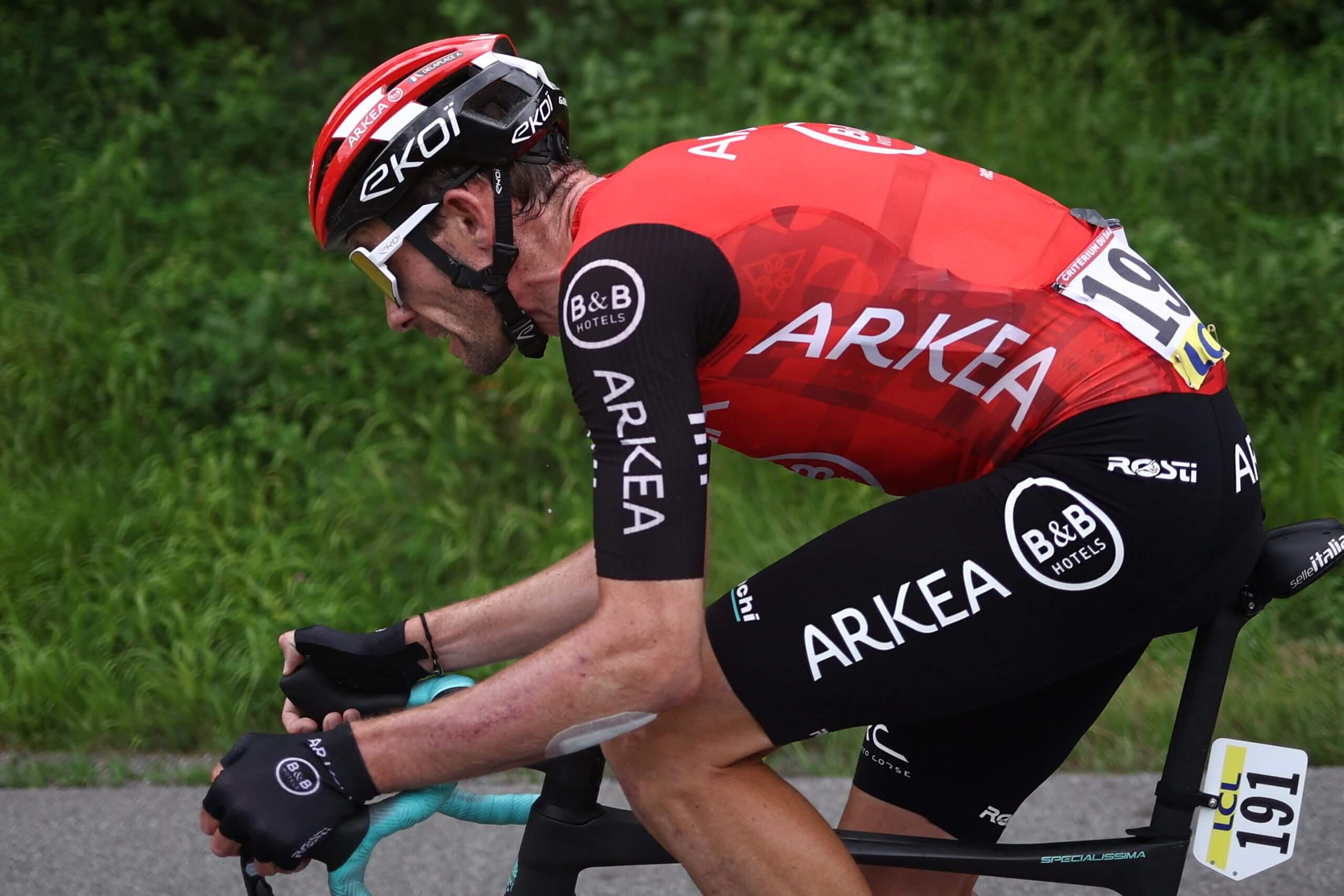
French team Arkéa-B&B Hotels folded at the end of the 2025 season. (Anne-Christine Poujoulat / AFP via Getty Images)
Though the stability and longevity of teams has never been greater — the average age of a 2026 Tour de France team is almost 22 years — the merging of Lotto and Intermarché-Wanty this winter, as well as the collapse of Arkéa-B&B Hotels, was further evidence, reformists argue, that the financial system is outdated and too perilous.
Those financial worries aren’t just limited to the smaller teams, either: in the autumn of 2023, two of the superteams, Visma-Lease a Bike and Soudal Quick-Step, were deep in discussions about merging. To continue the F1 comparison — a favourite of cycling reformers who admire how Bernie Ecclestone commercially revolutionised the motor sport in the late 1980s — that would have been like Mercedes joining forces with Aston Martin. Unthinkable.
There is an acceptance that the fundamental product of cycling — racing on public roads for several hours — cannot be changed, but there are plenty of ideas (most inspired by other sports) that have been studied and already partially trialled that many are pushing for, believing that it would lead to improved financial sustainability for teams and organizers, as well as increasing the product on offer.
At next month’s Tour of Flanders, thousands of fans who have paid at least €425 ($490; £367) each will be packed into VIP tents alongside three of the famed cobbled bergs, watching the men and women’s races come past them multiple times.
When in 2012 Flanders Classics — the third biggest race organizer in the sport — introduced these packages as well as a course redesign that made the final 50km of the race three laps of a circuit, there was backlash from cycling fandom who protested that cycling is a point-to-point sport and it ought to be free to watch at any point on the course, as it has been for over a century.
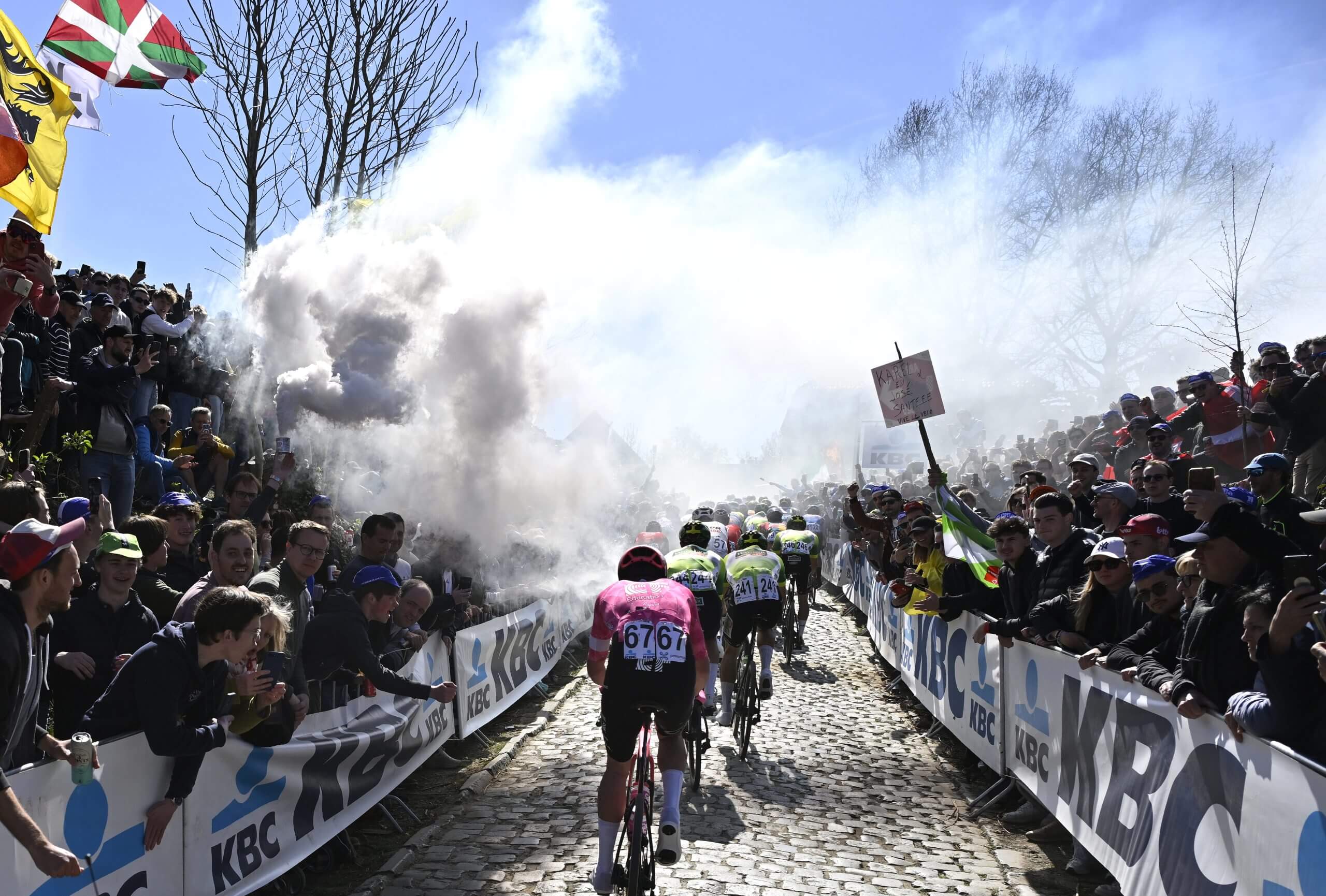
The finishing circuit at the Tour of Flanders has enabled the organizers to sell VIP packages. (Jan de Meulenier – Pool / Getty Images)
But the gamble paid off. The circuit racing has made the race’s finale more unpredictable, and the hospitality tickets are almost always sold out, with word having spread far and wide about the festive day out.
A cheaper version of that model is what people in cycling dream of emulating across the board. They strongly believe that fans would pay a small amount (€10-€20 is typically mooted) to watch a race at a critical juncture, with riders passing at least three times as part of a finishing circuit. Catering options and other entertainment would also be provided to make the day an event, rather than just witnessing the peloton fly past for 60 seconds as otherwise happens.
All that money — as well as income from broadcast rights and mass-participant amateur events like sportives and gran fondos — would be pooled into a central fund that would be divided among the race organizers and competing teams. That way, teams would finally be financially rewarded for providing the spectacle.
What reformists also want to do is what the UCI promised but has so far failed to act on a few years ago: to slim the WorldTour race calendar to around 80 race days a year (and create a stronger second and third division of races), and have the best riders competing against each other much more regularly than they currently do.
One point frequently made is how Vingegaard, Evenepoel, Tadej Pogačar and Primož Roglič, the four outstanding general classification riders of their generation, only ever tend to face off against one another at the Tour de France. In no other sport, it is argued, do the best athletes avoid each for most of the season.
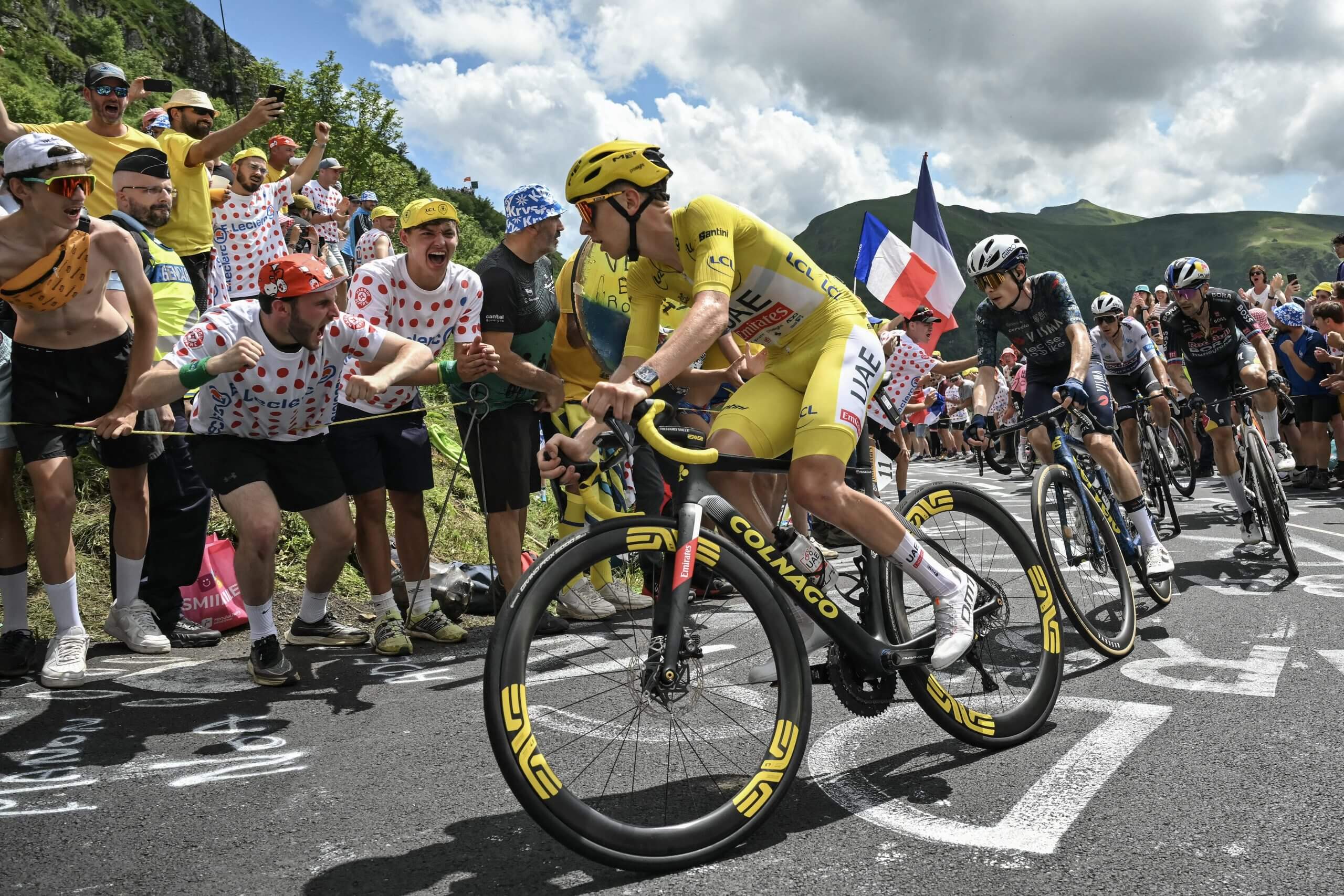
The rare sight of Tadej Pogačar, Jonas Vingegaard, Primož Roglič and Remco Evenepoel racing together at the 2024 Tour de France. (Marco Bertorello / AFP via Getty Images)
“The way it is right now, the calendar is blocked from mid-January to mid-October so that only a few weeks of the season can be extremely profitable,” Spekenbrink said, referencing how the Tour de France in July is cycling’s boom time.
“If we have a fair regulatory framework then one stakeholder could not just stop other stakeholders from co-creating good products. [It would be] more exciting for the fans, more economically viable, and then you could create a valuable product for the other 10 months [of the season]
“That would be better for fans as there’d be a high-quality product for a whole year, and not just for a few weeks. That would also allow for much more revenue to be generated and shared among all the stakeholders, thus creating value.”
These ideas were all part of the One Cycling plans that were stopped in its tracks by the UCI last summer.
The fourth attempt at reform this century, One Cycling had mostly been developed by six leading teams and it had the support of Saudi Arabia’s Public Investment Fund who were prepared to invest upwards of €250 million ($290 million) to restructure the sport and redesign the top-tier calendar around a global race series.
Official projections that The Athletic has seen show that earnings before EBITDA in the first year of operation would amount to a modest €10 million, but grow to €101 million after 10 years, thus awarding teams with several millions of euros every season.
It’s clearly not a get-rich quick scheme, though, and those sort of payouts wouldn’t be enough to make teams financially independent — they’d still require businesses or wealthy personnel to invest a minimum of €30 million per annum just to have a lower-ranked WorldTour team.
“You can say if we share the profits each team would only get €2-3 million and that it doesn’t make a difference. But that’s not the point — it’s about doing the right thing,” Spekenbrink added.
“Even if it’s one euro or €3 million a year, it’s the principle of sharing. Fair is fair. People deserve that money [and] it shouldn’t be up to someone else to decide you don’t need it.”
As well as bemoaning an apparent lack of transparency and consultations with others, the UCI rejected One Cycling because it feared it would have diminished its controlling authority over the sport, handing it to teams.

WorldTour teams are keen to share the broadcast revenues race organizers enjoy. (Thomas Samson / AFP via Getty Images)
In a private letter sent to WorldTour teams last July and seen by The Athletic, UCI president Lappartient wrote that the venture would see “certain stakeholders [teams — ed] collectively compelling others to agree to their terms, gives [sic] rise to serious sporting — and potentially competition — concerns and creates a potential conflict of interest.”
It was also not lost on anyone that ASO was not part of negotiations — a major stumbling block since they run the Tour de France, Vuelta a España and Paris-Roubaix, among others.
Neither the Amaury family nor anyone senior at ASO will speak publicly about reform plans, but the perception is that the French company has no interest in moving to a new model that would break up their monopoly.
But the plotters have not stopped plotting, and the UCI is back at the table, accepting what proponents of reform — almost all but not all WorldTour teams — have been preaching for a while: the sport has to evolve to keep relevant.
In an open letter sent to riders, teams, organizers and national federations in February and asking for proposals on how to change the sport, UCI president Lappartient wrote that while “cycling is now hugely popular across five continents, its media coverage and the revenues generated for its stakeholders do not yet fully reflect its potential… there is considerable room for improvement.”
He added that “the UCI is ready to consider significant developments in a sport renowned for its conservatism, if these changes would allow cycling to continue its growth and internationalisation, while ensuring greater stability for stakeholders in a particularly challenging environment.”
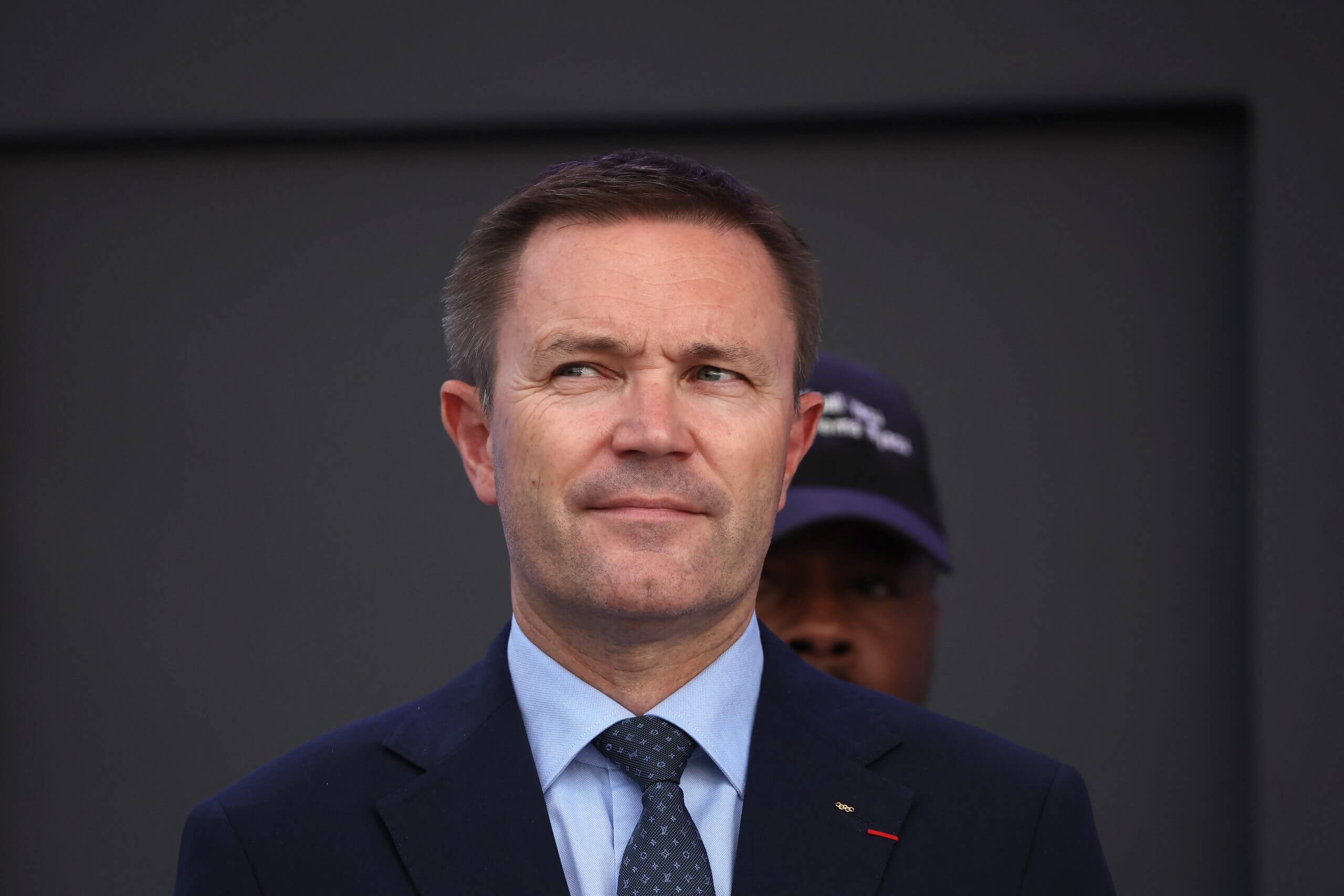
UCI President David Lappartient is facing calls for reform from WorldTour teams. (Anne-Christine Poujoulat / AFP via Getty Images)
It was quite the about turn from the UCI who just over half-a-year previously had effectively shut down One Cycling and threatened to strip the WorldTour licences of teams and organizers if they went through with reform plans.
The reason for their change in stance is that One Cycling never really died.
Whereas the original project was led by team managers such as Plugge, now influential team owners and billionaires have taken on the mantle in a venture with the working title of Team Co.
Ivan Glasenberg, who has a net worth of $12.2 billion and is the owner of Tom Pidcock’s Pinarello-Q36.5 team, has been leading Team Co alongside Soudal Quick-Step owner Zdeněk Bakala.
The owners of Red Bull, Decathlon, Lidl, Education First and INEOS are also said to be personally invested in the project which aims to bring about much of One Cycling’s ambitions, but to first to create a viable business model that can then be pitched out to investment companies, such as CVC Capital Partners, PIF and Ares Management.
According to one source, speaking anonymously to protect relationships, the UCI feels threatened by Team Co’s leading personnel, and thus have intervened to be seen as willing to force through change themselves.
But there is very little trust in the UCI’s own reform efforts. “The UCI wants to keep the status quo,” one source said. “They do not want to change anything.”
It has led to yet another situation where teams and a few race organizers are going down their own path to try to shake the sport from its apparent slumber, while the UCI and ASO try to prevent a revolution that they fear could upend over a century of traditions. It was telling, reformers pointed out, how Lappartient wrote in his letter that changes must be “based on a balance between the historical strengths of our sport and an approach adapted to future challenges.”
Whether it’s the crowded calendar or creating an economic model that splits revenues more fairly among its stakeholders, the UCI seems determined to let cycling’s heritage be the leading guide. The reformers, now led by powerful businessmen, want to be disruptors — and they’re hopeful that they’ll finally win the fractious battle. “It is clear that the billionaires are moving,” one source added…