


Add Silicon Canals to your Google News feed. 
The biggest regret people carry into their forties has nothing to do with the job they didn’t take, the business they didn’t start, or the money they didn’t save. It’s about the friendships they let quietly dissolve while they were busy building everything else.
I didn’t set out to write this piece as a survey. It started with a conversation over coffee with a clinical psychologist I know in Brisbane, who mentioned that her clients in their forties almost never bring up career regrets in therapy. They talk about the friend they stopped calling. The group that fell apart after someone moved. The realisation that they have colleagues and acquaintances but nobody they could phone at 2am. That observation stuck with me, so I reached out to eight more therapists across Australia, the UK, and the US. The consistency of their answers was striking.
The regret that keeps showing up
Seven of the nine therapists I spoke with identified some version of the same theme without prompting: clients in their forties most regret not maintaining their close friendships through their late twenties and thirties. The other two named closely related patterns (one said “emotional isolation from their partner,” another said “losing their sense of community”). All nine were describing the same underlying wound.
This tracks with what researchers are finding. Research describes a quiet ache that creeps in between work deadlines, family obligations, and the daily grind. For years, people may have been so focused on building careers and raising families that friendships slid to the bottom of the priority list. By the time they look up, the landscape has changed.
 Photo by Victor on Pexels
What makes this regret particularly painful is that it rarely involves a dramatic falling out. There’s no betrayal to point to, no argument to process. There’s just a slow fade. Unreturned texts that became a pattern. Cancelled plans that were never rescheduled. A growing sense that reaching out after years of silence would be awkward, or worse, unwelcome.
Why the thirties are a friendship graveyard
The therapists I spoke with pointed to a specific window: roughly ages 28 to 38. That’s the decade when people tend to make the biggest structural life changes all at once. New cities for new jobs. Partnerships becoming marriages. Children arriving. Mortgages demanding longer hours. Each of these transitions is individually manageable. Stacked together, they create a decade where friendship maintenance falls off a cliff.
One therapist in Melbourne put it plainly: “My clients in their forties describe their thirties as a tunnel. They went in with a circle of close friends and came out the other side with a partner, kids, and a career, but the friends didn’t make it through the tunnel with them.”
I wrote about a related pattern recently, exploring how people in their forties who say they prefer being alone sometimes deliver that line with rehearsal rather than peace. There’s a difference between genuine solitude and a narrative you’ve constructed to survive the loneliness you stopped fighting years ago. Several therapists echoed this exact distinction.
Research suggests a paradox: friendships in your forties and fifties feel harder to maintain but tend to be more honest when they do survive. Something shifts. The friends who remain feel more real. The problem is that many people arrive at this stage with almost no one left.
What this regret actually sounds like in therapy
I asked each therapist to describe, without identifying details, how this regret typically surfaces. The answers were remarkably consistent.
It often doesn’t arrive as a direct complaint about loneliness. It shows up sideways. A client mentions that their partner is their only real confidant, and they can feel the weight of that becoming unsustainable. Someone describes scrolling through their phone contacts and realising there’s nobody outside their family they could call for a meaningful conversation. A parent watches their child’s easy, unstructured friendships at the playground and feels a grief they can’t quite name.
One London-based therapist told me her clients frequently frame it as a question: “Is this just what adult life is?” They’ve normalised the absence. They assume everyone’s friendship circle has contracted to near-zero by 43. And to some extent that normalisation is culturally reinforced. We celebrate career milestones and family milestones but treat friendship like something that should just happen organically, requiring no deliberate investment.
In my earlier piece on the hardest form of loneliness to recover from in later life, I explored how the most devastating version isn’t losing a spouse or relocating. It’s the slow-motion realisation that friendships you believed were mutual were actually maintained by your effort alone. That pattern often begins in the thirties and crystallises by the mid-forties.
The science behind why this matters so much
This isn’t just an emotional preference. Friendship loss in midlife has measurable consequences for how well people age.
Research suggests that midlife may be a critical window to shape how healthily you age. While much of that research focuses on physical habits (exercise, sleep, metabolic health), social connection runs through all of it. Studies have shown that social isolation in midlife is a significant risk factor that can affect multiple aspects of health and wellbeing.
Research on aging suggests that people who age well tend to develop greater acceptance and less regret over time. But this transition doesn’t happen automatically. It requires the kind of reflective processing that close relationships facilitate. People who arrive at late midlife without trusted friends often get stuck in the regret phase longer.
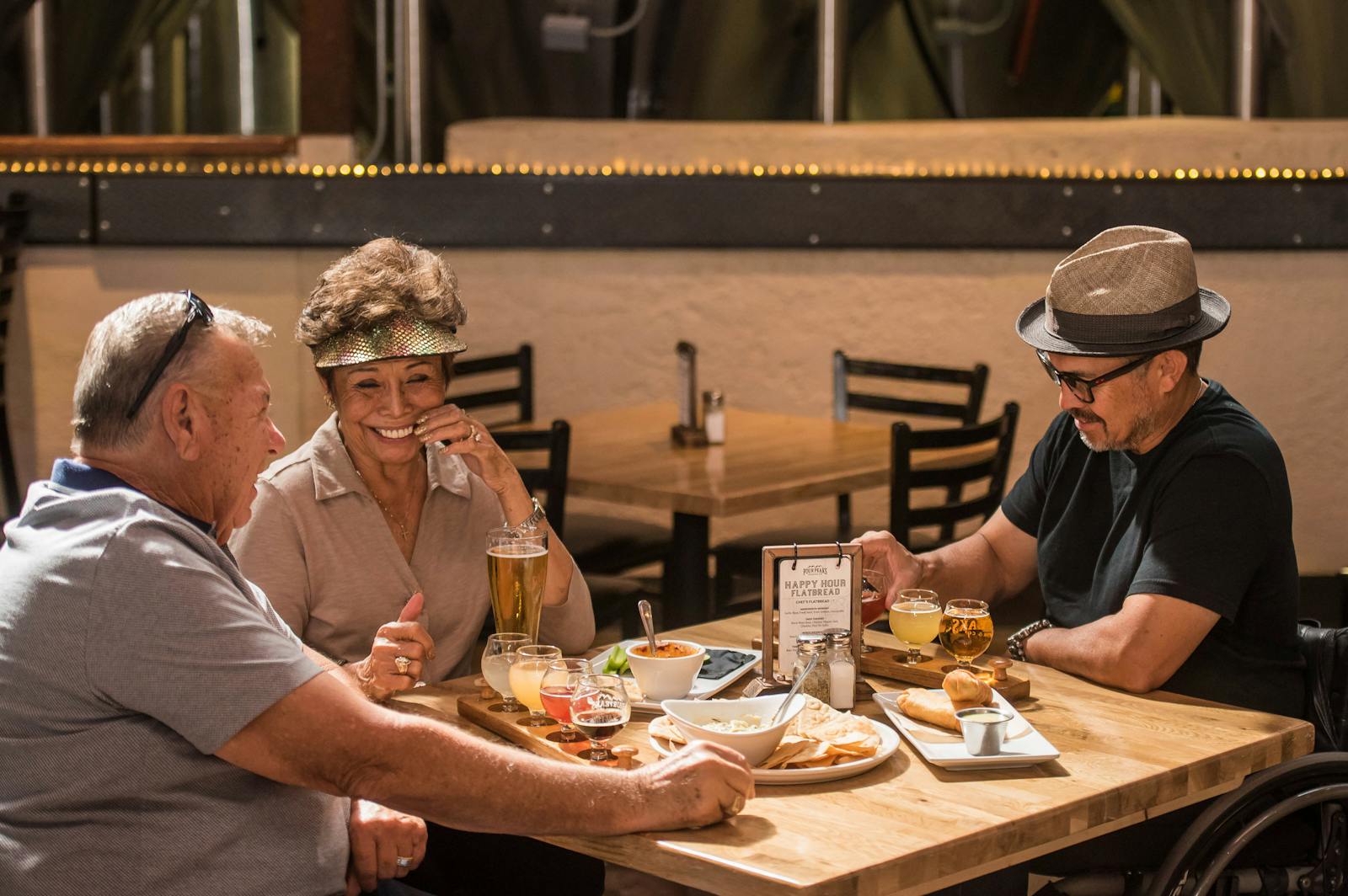 Photo by ELEVATE on Pexels
I’ve spent years reading longevity research, and one thing that consistently emerges is that social connection isn’t a nice-to-have bolted onto the “real” health interventions. It’s woven into every mechanism that keeps people cognitively sharp and physically resilient. Long-term research on adult development has consistently identified the quality of close relationships as one of the strongest predictors of healthy aging. Not the quantity of friends. The quality.
What therapists say their clients wish they’d done differently
When I asked the therapists what their clients wish they’d done, the answers were practical and specific. Nobody said “I wish I’d had more friends.” They said things like:
“I wish I’d kept showing up even when I was tired.”
“I wish I’d been the one to initiate instead of waiting for invitations.”
“I wish I hadn’t assumed my friendships would just survive on autopilot.”
“I wish I’d treated a night with friends like a commitment, not an optional extra.”
The common thread: they wish they’d treated friendship as something that requires deliberate maintenance, the same way a marriage or a career does. Not grand gestures, but consistent small ones. A text that says “thinking of you” without needing a reason. Showing up to something you’re too tired for because you know the connection matters more than the energy cost.
Several therapists noted that men in particular struggle with this. The cultural messaging around male self-sufficiency makes it harder for men to acknowledge the loss or to take active steps to rebuild. One therapist in Sydney described a pattern she sees repeatedly: men in their forties who have a wife, children, colleagues they get along with, and absolutely zero close male friends. They often don’t recognise the deficit until a crisis (health scare, job loss, marital strain) reveals that their support network is exactly one person deep.
In my recent piece on why men in their thirties who are about to become fathers start calling their own dad more often, I described that phenomenon as an audit rather than a reconnection. Something similar happens with friendships in the forties: people take stock and realise the account is nearly empty.
Rebuilding is harder than maintaining, but it’s possible
The honest answer, and the one the therapists gave me, is that rebuilding friendships in your forties is genuinely harder than maintaining them would have been. The social infrastructure that made friendship effortless in your twenties (shared campuses, shared houses, unstructured free time) no longer exists. Every connection now requires logistical effort.
But harder doesn’t mean impossible. Several therapists described clients who had successfully rebuilt meaningful friendships by doing a few specific things. They lowered the bar for what counts as “maintaining” a friendship. Instead of waiting until they could organise a proper dinner, they sent a voice note. They replied to an Instagram story with something genuine. They said yes to things they would normally have declined.
They also got comfortable with the vulnerability of initiation. Reaching out to someone you haven’t spoken to in three years feels exposing. Most of the therapists I spoke with said their clients consistently overestimate how awkward that reconnection will be. People are, for the most part, glad to hear from someone who was once close.
One therapist offered a reframe I found particularly useful: “Think of friendship the way you think of fitness. You wouldn’t expect to be fit if you never exercised. You can’t expect to have close friends if you never invest in closeness.” That comparison resonates because it makes the invisible visible. Friendship atrophy is real, and like muscle atrophy, it accelerates when you stop noticing it.
Research suggests that the act of naming and confronting what you’ve lost, rather than rationalising it away, is the first step toward change. You can’t rebuild what you won’t admit has crumbled.
If you’re in your thirties reading this: the best thing you can do for your future self is treat your friendships like they matter right now. Not next month. Not when things settle down. Things don’t settle down. They just change shape. The friends you invest in today are the ones who’ll still be there when you need them most.
And if you’re in your forties and recognising yourself in these words: you’re not too late. You’re just at the point where effort becomes necessary rather than optional. That’s not a failure. That’s simply what this stage of life asks of you.
Feature image by Mehmet Turgut Kirkgoz on Pexels
From the editors
Undercurrent — our weekly newsletter. The sharpest writing from Silicon Canals, curated reads from across the web, and an editorial connecting what others cover in isolation. Every Sunday.
Free. No spam. Unsubscribe anytime.