
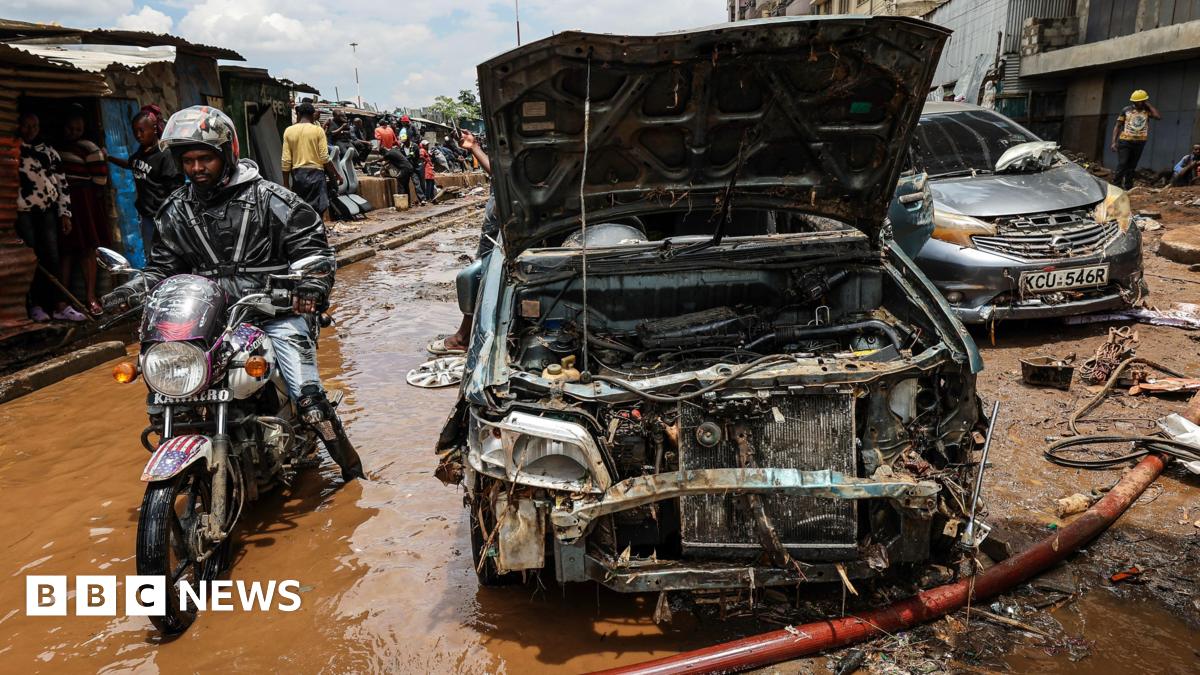
The authorities have urged residents in low-lying areas to move to safer ground and more than 2,000 people have had to leave their homes to seek shelter.
Police say that search-and-rescue operations are continuing following the “torrential rain and subsequent devastating flooding affecting various parts of the country”.
More than half of those killed – 33 – have been in Nairobi, where poor drainage has been a major factor, along with the obstruction of rivers and waterways caused by unregulated development.
Businessman Kareem Hassan Ali, who lives in the Parklands area of Nairobi, told the BBC that there was about 2m (6.5ft) of water outside his block of flats on Saturday night, although this had now subsided.
His flat was not flooded but cars in the underground parking area were submerged, he said.
Another Parklands resident, Deenesh Patel, said he had spent the night at a friend’s house. “I saw the warning and didn’t want to take any risks.”
Both men called on officials to do more to improve drainage and stop construction that blocked rivers.
“The rain was heavy but this happens each year,” said Patel. “Other low-lying areas were not affected because they have the proper infrastructure.”
President William Ruto on Sunday said that authorities were working to clear blocked drainage systems but Ali said they had seen no-one and the Parklands Residents Association had cleared up the debris themselves.
Ruto also said that emergency food supplies and medical assistance were being delivered to those affected.
The flooding has not just affected Kenya.
More than 100 people have been killed in neighbouring Ethiopia following floods and landslides in the south of the country.
Many factors contribute to flooding, but a warming atmosphere caused by climate change makes extreme rainfall more likely.
The world has already warmed by about 1.1C since the industrial era began and temperatures will keep rising unless governments around the world make steep cuts to emissions.