
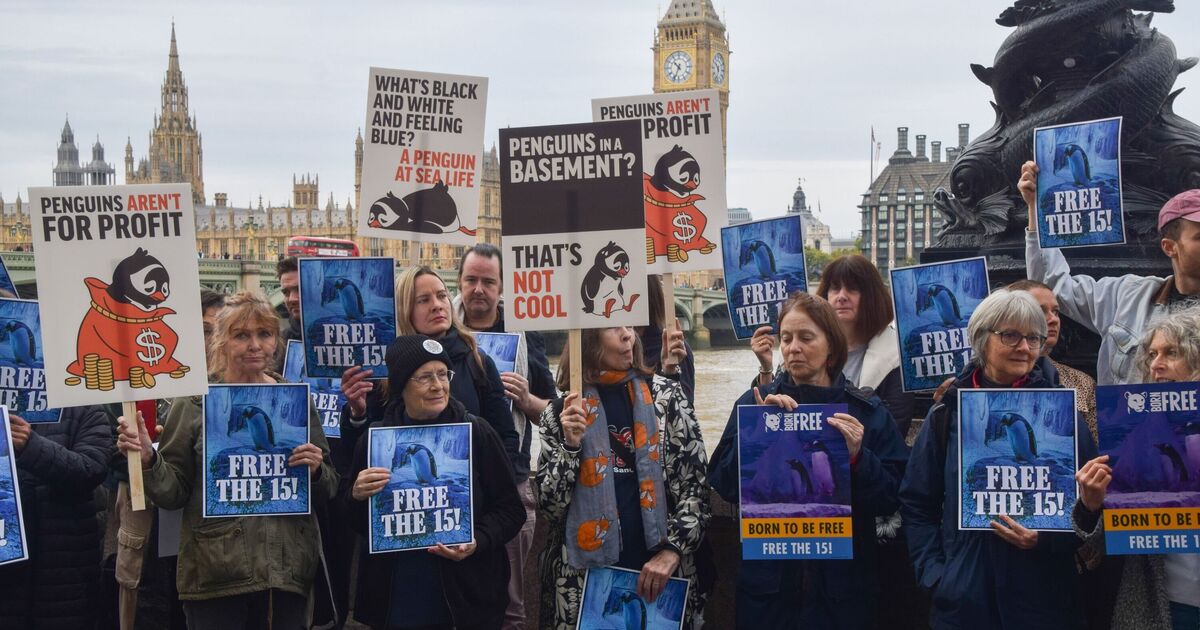
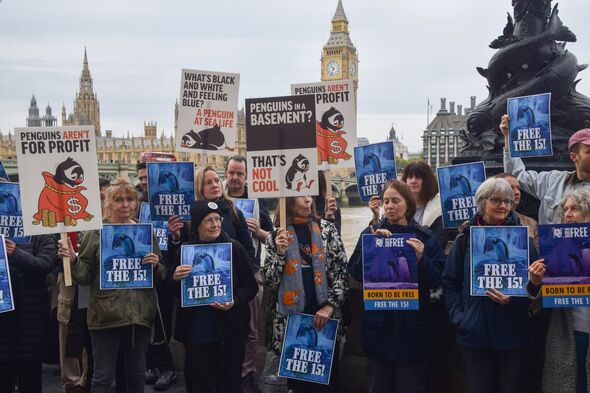
Protesters holding placards demand release of London Aquarium’s penguins (Image: Getty)
On the wind-swept shores of the Falkland Islands, thousands of gentoo penguins waddle freely along endless beaches shaped by wind and sea.
Nearly 8,000 miles away beneath the bustle of London, a starkly different scene unfolds in the basement enclosure of London Aquarium.
Fifteen penguins have been confined to Sea Life’s facility without fresh air or daylight for years – in stark comparison to the habitat their free cousins call home.
Mark Jones, Born Free’s head of policy, said: “Seeing images of gentoo penguins in their natural environment reminds us of the fulfilling and complex lives these fascinating animals have evolved to live, and how restricted and unfulfilling the lives of captive penguins is by comparison.”
The Falklands is home to the world’s largest population of gentoo penguins, with estimates suggesting up to 132,000 breeding pairs.
They are the most common penguin in the islands, with colonies distributed across more than 80 sites
Mr Jones added: “Penguins, like so many other wild animals, simply don’t belong in zoos or aquariums, particularly when they are denied access to outside space with natural light, fresh air, and opportunities to swim and dive as they would in the wild.
Read more: London Aquarium issues major update on captive penguins held in basement
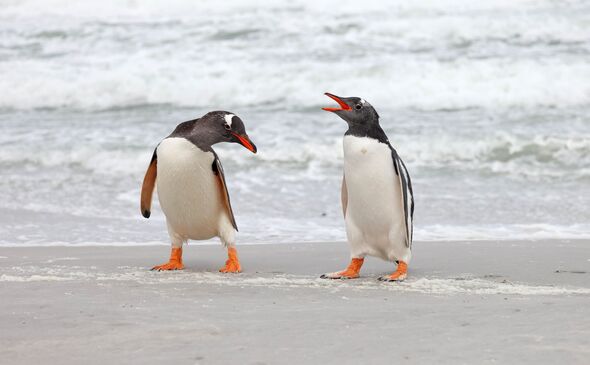
Gentoo penguins on the Falkland Islands (Image: Jonathan Buckmaster/Daily Express)
“We urge SeaLife and other such facilities to phase out the keeping of captive penguins, and in the meantime to provide those penguins currently in captivity who cannot be returned to the wild with the best possible living conditions.”
The Express, Born Free and Freedom for Animals have led a two-year fight to get London Aquarium’s penguins moved to a more suitable enclosure.
This followed a legal threat to this newspaper for calling the penguins “captive”.
Nearly 50,000 members of the public have backed the crusade, alongside Chris Packham, Feargal Sharkey and over 75 MPs.
Laura Walton, co-director at Freedom for Animals, said: “Seeing gentoo penguins in the wild, diving through vast ocean waters and interacting naturally with their colony, is a powerful reminder of how these remarkable animals are meant to live – thriving in the complexity of their natural environment.
“It stands in stark contrast to the confined underground enclosure at Sea Life, where the 15 penguins held captive there are being denied sunlight, fresh air, and the space to dive and explore as they would in nature.
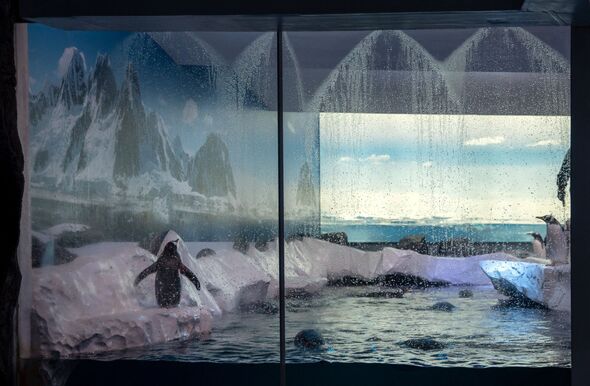
London Aquarium’s basement penguin enclosure (Image: Born Free Foundation)
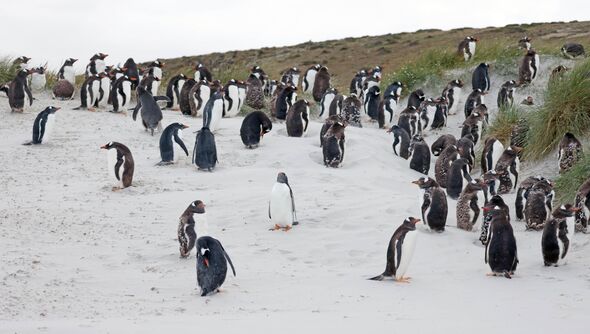
A colony of gentoo penguins in the wild on the Falkland Islands (Image: Jonathan Buckmaster/ Daily Express)
“Watching them flourish in freedom highlights why these intelligent, active animals belong in the ocean, not behind glass.”
The penguins in London can never be freed into the wild but campaigners believe their living environment needs to be significantly improved.
Gentoo penguins can dive up to 600ft and swim up to 22mph in their natural habitat but their 7ft pool at Sea Life deprives them of their ability to express their basic natural behaviours of swimming and diving.
Merlin Entertainments, which owns Sea Life London Aquarium, said in January it has made “meaningful progress in identifying areas for action” following criticism over its penguin enclosure.
But six months on from a celebrity-led protest attended by 300 people, the aquarium has yet to make any significant changes to the animals’ enclosure.
A spokesman for Merlin Entertainment said: “We’re in intensive, science-backed discussions with independent experts to determine best next steps.
“We all agree that no change is not an option and are together looking at the risks and opportunities associated with relocating the penguins, as an alternative to making further improvements to the habitat at SEA LIFE London.
“We are on track to share the plan, drawing on input from independent experts – including campaign groups and other key stakeholders – by the end of May.
“In parallel we’re enhancing the penguins’ habitat and providing new opportunities that encourage natural behaviours, implementing recommendations agreed via the group, and remaining firmly focused on their daily care.”