

The National Trust likes to present its renewable energy programme as a model of pragmatic environmentalism. Solar panels on visitor centres, hydro turbines in fast-flowing streams and biomass boilers behind outbuildings are designed to reduce the charity’s carbon footprint while generating a new stream of income to help fund conservation.
For an organisation responsible for more than 500 historic houses, hundreds of miles of coastline and vast swathes of countryside, the logic looks compelling. Yet the National Trust’s latest accounts reveal the risks of relying too heavily on that vision.
Profits from its renewable energy arm, National Trust Renewable Energy, have slumped sharply, raising uncomfortable questions about whether the charity exposed itself to a volatile source of income at a time when its finances were already under pressure.
Last year the subsidiary’s contribution to the charity fell by more than 40 per cent to £2.7 million, down from £4.6 million the previous year. It was by far the lowest amount contributed in the last five years.
The near-halving of profits underlines a simple truth about renewable energy generation: it is highly sensitive to unpredictable swings of the global energy market and government policy.
The trust’s move into renewable energy began in earnest in the early 2010s as part of a broader attempt to cut carbon emissions and energy bills across its estate. The charity has pledged to reach net zero emissions by 2030, 20 years in advance of the government’s target.
So far, it has invested an estimated £35 million in the installation of more than 130 projects across its properties. The rationale behind the strategy is clear enough. As many National Trust sites are remote and energy-intensive, installing local generation can reduce costs while creating additional income through electricity sales and government subsidies.
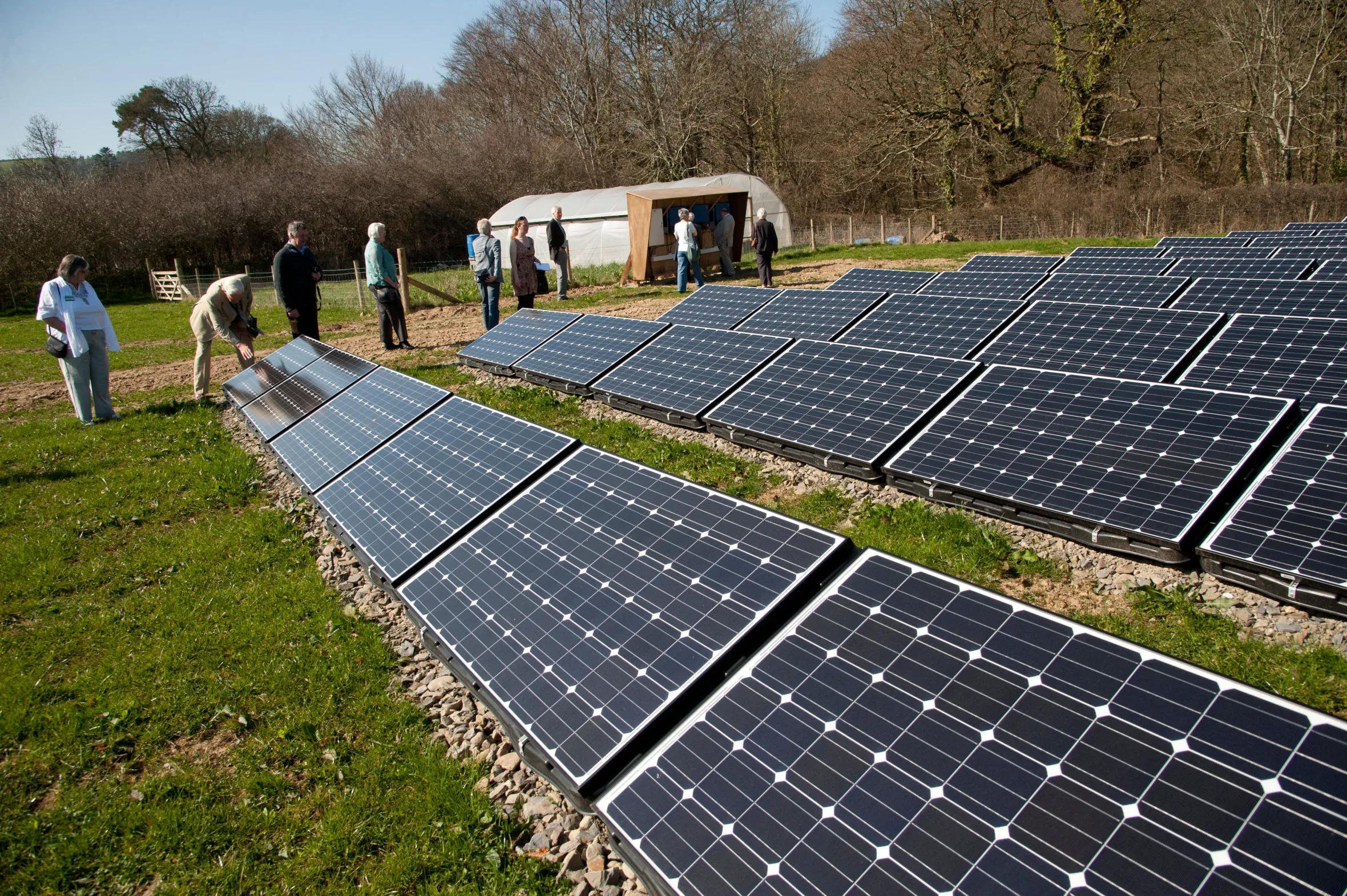 Photovoltaic cells in an array in a field at the Llanerchaeron National Trust site in Ceredigion, WalesAlamy
For a time, the model appeared to work. The renewable subsidiary’s profits rose strongly during the energy-price surge that followed the pandemic and Russia’s invasion of Ukraine. But the sharp fall in profits over the past year illustrates the flip side of that dependence. When energy prices fall, income can evaporate just as quickly.
For the National Trust, that volatility matters because it relies on relatively predictable income streams: membership fees, property income and commercial activities to fund the high maintenance costs of historic buildings and landscapes.
In recent years, those finances have come under strain. Membership numbers have fallen by 300,000 from their post-pandemic peak, while the organisation has raised subscription prices sharply.
The cost of membership has risen 30 per cent since 2023 and is now £100.80 a year, up from £63 a decade ago, prompting some members to question the value of staying signed up. At the same time, the trust faces mounting conservation costs as inflation pushes up wages, construction costs and insurance premiums.
Against that backdrop, relying on a revenue stream that can swing by millions of pounds from one year to the next begins to look less like prudent diversification and more like a gamble.
The financial outlook for renewable generators may also become more challenging. The government has proposed changes to how certain renewable subsidies are uprated for inflation, switching from the retail prices index (RPI) to the generally lower consumer prices index (CPI). For the National Trust, the policy shift is set to reduce future income further.
Cornelia van der Poll, of Restore Trust, a forum for concerned members, fears the charity is getting distracted from its core mission. She said: “In recent years, the trust has been reinventing itself as a nature and even climate charity. Our worry is that it’s neglecting pressing concerns of a more immediate kind. When you go around properties, you see a lot of damage and you see things that are not being fixed.”
Van der Poll added: “As a charity, it’s the National Trust’s duty to look after its charitable funds and not to take unnecessary risks.”
 The Hill of Tarvit Mansion house in Cupar, FifeAlamy
The Trust’s renewable programme has also drawn criticism on other grounds. Some campaigners accuse the charity of hypocrisy for developing its own energy projects while opposing renewable schemes proposed by others.
Renewables have also become entangled in a broader debate about the direction of the National Trust itself. Some critics argue that the charity has increasingly embraced environmental campaigning and political advocacy that falls outside its traditional role of conserving historic places.
A recent report by Zewditu Gebreyohanes, a researcher at the Prosperity Institute think tank and a trustee of the Victoria and Albert Museum, accuses the charity of climate activism. The report points to public interventions by senior trust figures on issues such as fracking and climate policy, arguing that mobilising members for political campaigns risks blurring the line between conservation and activism.
Supporters of the Trust reject that characterisation. They argue that climate change poses a direct threat to landscapes, wildlife and historic buildings, making environmental advocacy a natural extension of the charity’s work.
Whatever the merits of that debate, the trust’s financial decisions increasingly reflect its shift towards environmentalism. Alongside its direct investments in renewable infrastructure, the charity has allocated part of its financial portfolio to climate-aligned investment funds.
One example is the Robeco Climate Global Credits Fund, a bond fund that strives “to keep the global temperature rise to well below 2C” through its investments. Over the past five years, the fund has produced modest returns of 10 per cent, far below the 60 per cent cumulative gain in the FTSE 100 over the same period.
Critics claim that allocating capital to environmentally and socially responsible investments leaves less money available for conservation. The trust argues that the Robeco fund represents less than 8 per cent of its “highly diversified” portfolio and points out that its investments have met or matched their targeted return over one, three and ten years.
“Our renewable energy projects continue to perform in line with — or ahead of — expectations,” the trust said. “Last year’s change in income simply reflects the return of energy prices to normal levels after the exceptional Ukraine‑related spike. We take a consistent, principled approach to renewables: supporting projects that fit their historic and natural setting and challenging those that conflict with longstanding protections for landscape, heritage or wildlife.”
“We remain in a strong financial position thanks to higher retention of members than comparable organisations throughout the cost of living crisis, yearly increases in visitors and record-breaking donations in recent years. The same economic pressures are affecting all charities, but the cost of conservation is rising faster than inflation and our membership prices reflect this reality.”