
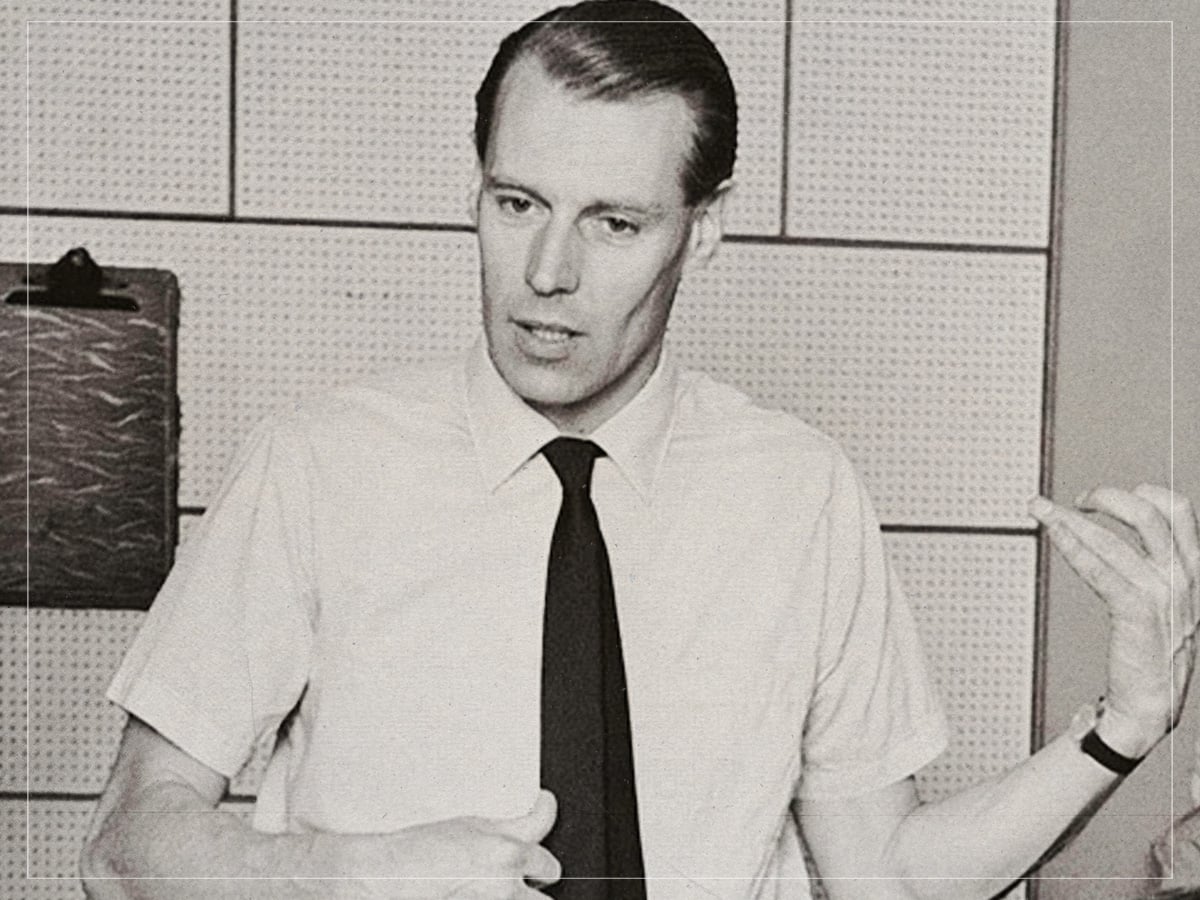
(Credits: Far Out / TIDAL / George Martin)
Sun 15 March 2026 15:30, UK
The entire appeal of The Beatles wouldn’t have existed on record were it not for George Martin.
There are plenty of artists who helped make the Fab Four what they were when they were still a scrappy garage rock outfit, but when looking at their later records, some of those beautiful orchestrations would have been considered good enough to warrant a writing credit had they been released today. Martin was the one helping make all of those songs sound beautiful, but he felt that there had to be a line drawn somewhere when it came to thinking outside the box the way they did.
But being experimental was almost second nature to The Beatles. There was no reason in their minds why they couldn’t get the sounds they heard in their head, and even when it seemed physically impossible to stitch two tracks together like on ‘Strawberry Fields Forever’, Martin was going to try every single trick he could think of until he found something that the band were happy with. But there was a fine line between experimentation and nonsense in his book whenever he walked into the studio.
This is the same person who worked with Jeff Beck and Mahavishnu Orchestra, so it’s not like he wasn’t used to songs that weren’t meant for the pop charts, but it’s also no shocker that he ended up having a sour taste in his mouth after working on records like The White Album. The weird tangents that the band were going on weren’t the fun kind of weird anymore, and by the time they fractured, it was time for him to switch up his usual styles.
And yet, a lot of Martin’s post-Beatles work did have varying degrees of success as well. Although he always had time to get together with Paul McCartney when working on records like Tug of War, it was hard to tell whether he was working on the soundtrack to the Sgt Pepper movie as a labour of love or being forced to do it against his will, judging by the quality of the tunes.
Abbey Road might have been the best way for the band to say goodbye, but years after John Lennon’s passing, the thought of them working on some of his final work would have been a great silver lining that the fans never got after their years of bickering. It was bound to be something special for every fan who lined up for the Anthology, but Martin was the first to say that he didn’t want anything to do with the project by the time the band started to work with ELO producer Jeff Lynne.
Martin could certainly help put together pieces that the world hadn’t seen before, but he didn’t feel comfortable working with music that Lennon had left unfinished, saying, “I was uncomfortable about using dead John on a record, and I heard the quality of what they had to deal with and it was quite a problem. If I had been asked to do it then I probably would have done it, but I wasn’t asked. But I didn’t have any great regrets about it, so it was no skin off my nose really. I think if I had produced it it would have been a different sound, but it doesn’t matter.”
In all fairness, though, Lynne was able to make the kind of production flourishes that Martin probably couldn’t have done on his own. He had said that it felt impossible trying to get Lennon’s voice separated from the demo tape, but when you hear what Lynne did behind the scenes, the whole thing sounded about as seamless as they could have hoped for, especially when they began adding McCartney and George Harrison’s vocals over the top of everything.
While it took a little more time for ‘Now and Then’ to see the light of day, the fact that Martin was able to step aside at the time was one of the more noble things that he had ever done throughout his career. Most people would have been miffed to think that someone like Lynne could have done a better job, but Martin was going to do everything he can to make sure the Fabs’ legacy could carry on properly.
The Far Out Beatles Newsletter
All the latest stories about The Beatles from the independent voice of culture.
Straight to your inbox.