
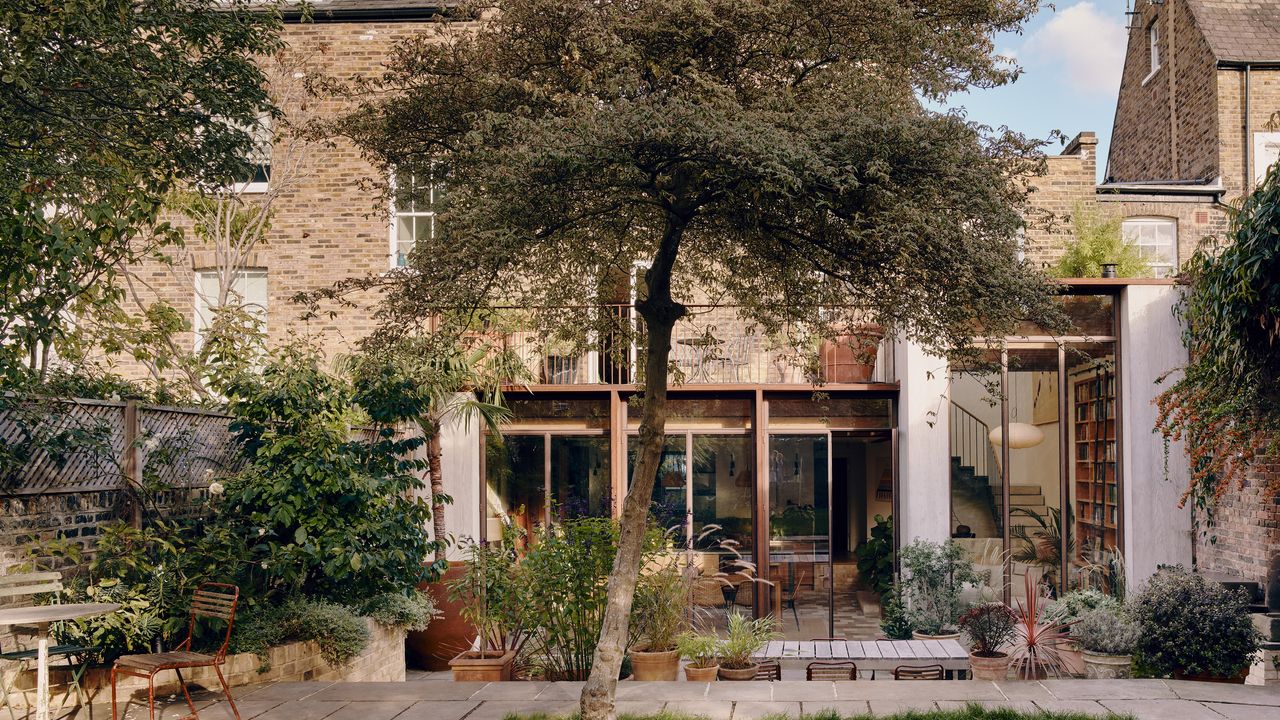
One of the wonderful things about a city as historic as London is that each building evolves and takes on new incarnations constantly. The result is that you never quite know what to expect behind the door of an unassuming terraced house. The wrought-iron gate, white-painted windows and pale brick exterior of this Victorian house in east London reveal little of the luminous, multi-level expanse behind it. Even less expected is the bountiful L-shaped back garden, which features a natural swimming pool and a sauna that feel worlds away from the busy surrounding streets.
The owner has a demanding work schedule and wanted ‘both a sanctuary away from a busy London life and a place to socialise and entertain’, says Nathaniel Mosley, who, along with Henry Thorold, founded architectural studio Mosley Thorold in 2017. In fulfilling the brief, they have sensitively added a new chapter to the house’s story, while preserving the elements that root it in its past.
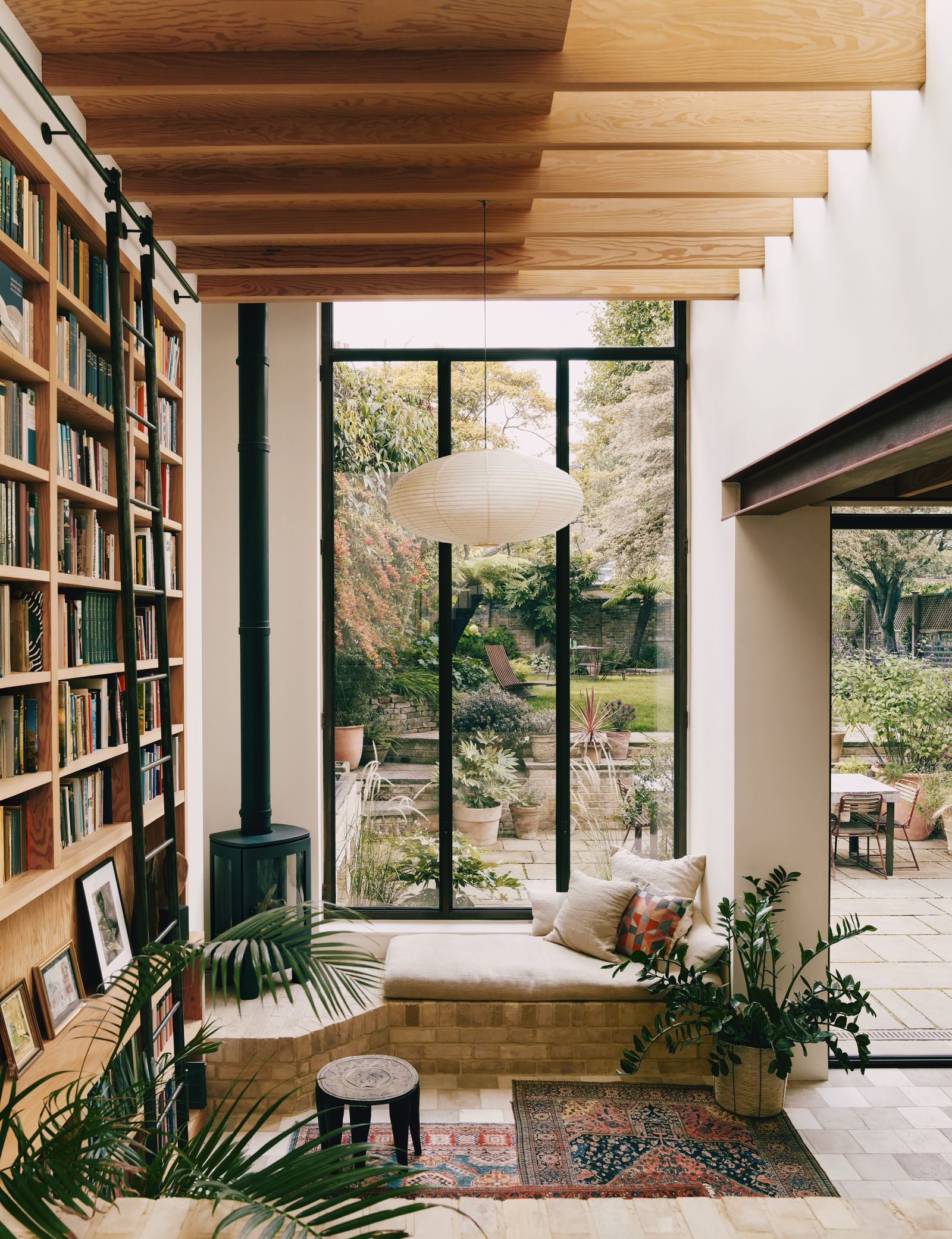
Natural materials and neutral tones enhance the pale and airy lower ground floor space. The Nupe wooden stool is from Sworders.
Michael Sinclair
‘We visited the house with our client before he bought it and could immediately see that, although it needed a lot of work, there was huge potential to unlock,’ recalls Nathaniel. The house, including the basement, had been renovated in the 1970s, but not necessarily to its advantage. The lower-ground floor was divided into small, dark rooms with ‘an awkward circulation and a staircase right in the middle, blocking off the space’. Upstairs, many of the Victorian details had been taken out and replaced with modern additions. ‘Our client wanted the whole space to have a country-house-meets-the-city atmosphere, and for it to feel like an oasis,’ he says.
‘The journey downstairs was important,’ Henry points out. ‘We wanted to be able to see the garden from the front door and to have the space open up in front of you as you walk down the steps.’ One of the first-floor rooms was replaced with an open staircase leading down to a double-height library space on one side and a kitchen, dining and sitting room on the other. This new staircase, coupled with double-height windows was, he says, ‘a big spatial move that unlocked everything – you can read the space as a whole. There are constant glimpses of the garden and it feels like an increasingly expansive and always diverting journey.’