
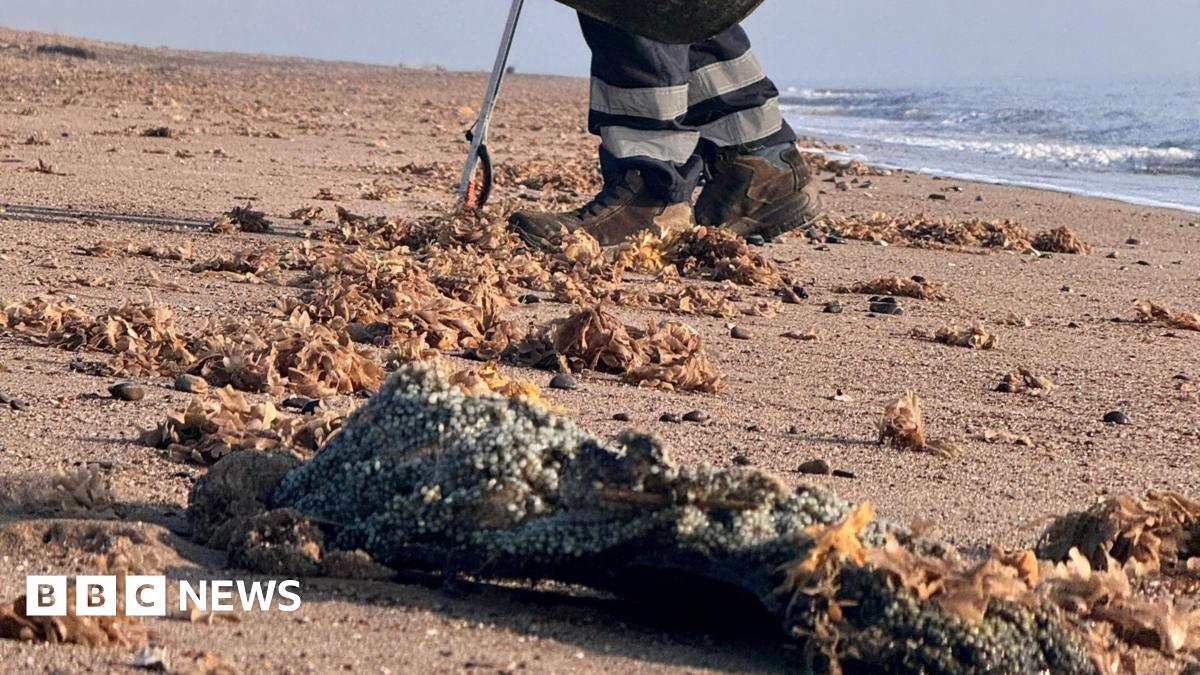
The Marine Conservation Society described The Wash as an internationally important, protected area for birds like waders, gulls and terns, and said it was deeply concerned.
According to the RSPB, The Wash supports more than 400,000 non-breeding waterbirds, the largest harbour seal colony in the UK, and is home to countless rare plants and invertebrates.
Lincolnshire Wildlife Trust and Norfolk Wildlife Trust were also anxious, and said the risks increased when nurdles became coated in highly toxic pollutants.
“Nurdles look like small fish eggs,” said Tammy Smalley, head of conservation at Lincolnshire Wildlife Trust.
“If you are a sea bird or a marine mammal, you might go ‘ooh, smorgasbord’, and they’ll feed on them and they’ll either choke or [the nurdles] will go through to the stomach and they think they’ve fed.
“So, gradually, it could cause starvation.”
Over time nurdles break up into smaller and smaller microplastic fragments, which then become an issue for smaller animals and enter the food chain.