
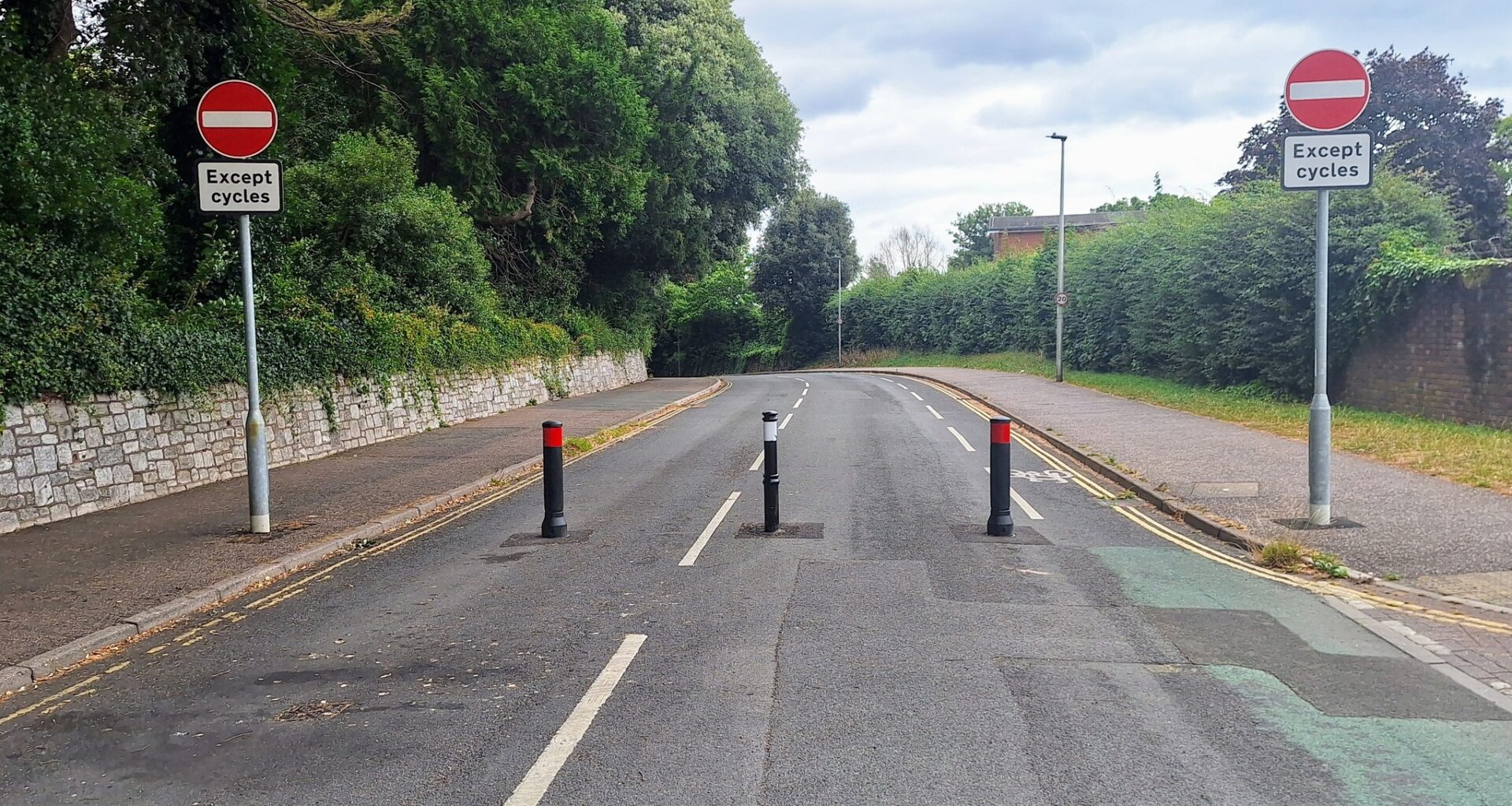
In the latest update to the consultation regarding a low-traffic route in Exeter which has been closed to motorists since the pandemic, a cycling club has joined the campaign to keep the ‘bike only’ route giving cyclists a “low-conflict and strategically important connection into the city centre”.
In recent weeks, a public consultation on the scheme was paused and then restarted, campaigners accusing the council of risking “sacrificing safety for drivers’ benefit”, the development that active travel funds could be used to reopen the ‘cycling only’ Dryden Road to motorists branded a “disgrace”.
Now, Exeter Wheelers Cycling Club has joined the calls to maintain the route as it is, highlighting that, while members are generally used to riding on public roads, “As a club, we strongly support the development and protection of safe, high-quality cycling infrastructure that enables a broader range of people, including less confident riders, younger users, and those travelling for everyday purposes, to cycle safely and develop confidence in wider road riding.”
In a five-page response to the consultation, the cycling club argues that Dryden Road “has provided a low-conflict and strategically important connection into the city centre, avoiding heavily trafficked routes”.
The road was made a ‘cycles only’ route during the pandemic, the council opting to install bollards to prevent other traffic accessing the route and “helping to create a safer environment for people cycling”.
The closure was made permanent in 2022, Devon County Council stating the move aimed to maintain lower traffic levels in the area and improve the safety and environment for people cycling.
However, sections of the community have vocally opposed the closure with protests and online discussion, a petition urging the reopening of Dryden Road attracting around 2,500 signatures.
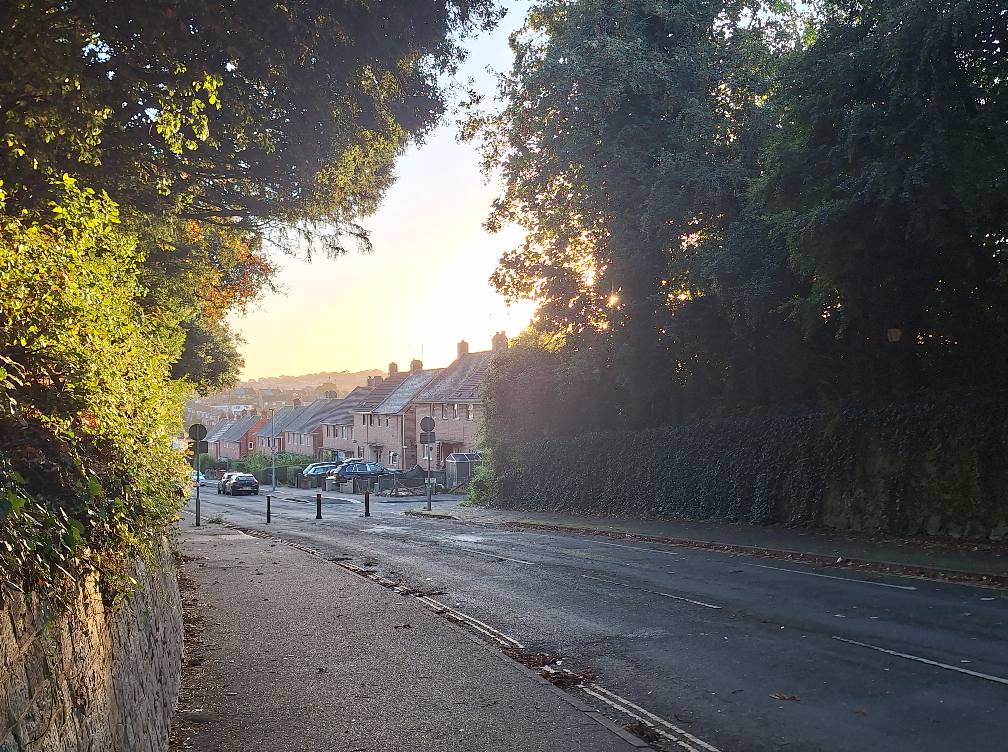 Exeter road closure (Image Credit: Ian Frankum/Facebook)
A consultation on the future of the route is underway, with the council giving three options, including installing a bus gate, or making the road one-way with a contraflow cycleway, or reopening the route to two-way traffic with painted cycleways instead.
According to the council, creating a protected bike route on the road, while retaining two-way traffic, would be “prohibitively expensive, impractical, and unviable” due to the width of the road and the apparent need to remove a retaining wall and encroach on private land to create enough space.
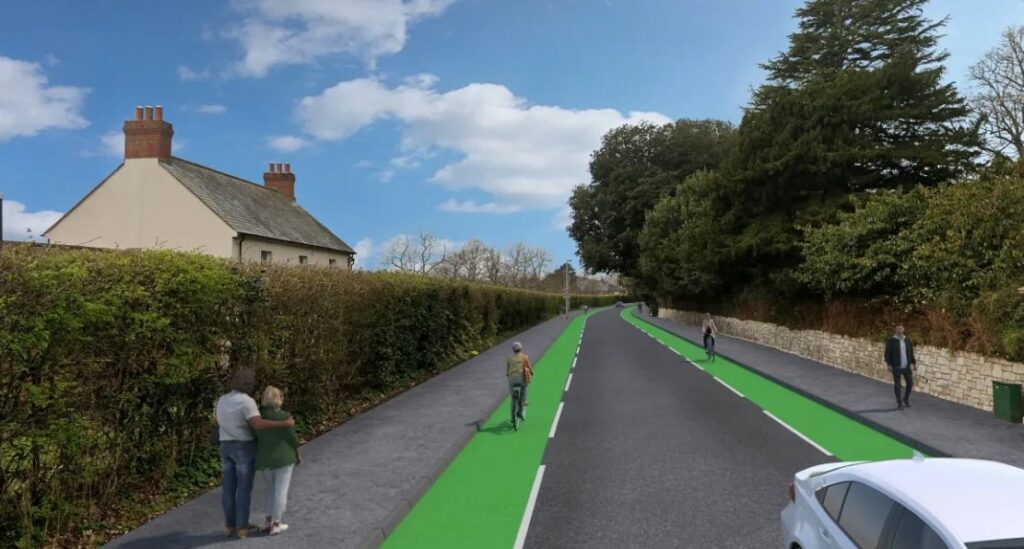 Dryden Road, Exeter plans – Option 3 (Image Credit: Devon County Council)
Consequently, option three, the proposal most popular with those vocally opposed to maintaining the low-traffic neighbourhood, features an advisory, painted lane, which drivers could enter in order to pass oncoming vehicles.
A further option, known as 3b, would see the road reopened with on-street parking maintained, effectively eliminating any form of cycling infrastructure from the road, something the council admitted would mean “poor” access for those on bikes, while also posing a safety risk.
Earlier this month the council briefly announced that it had “temporarily paused” the Dryden Road consultation “to clarify aspects of the options”. The council also said it would hold further discussions with the chair of Exeter’s Highways and Traffic Orders Committee at the “earliest opportunity to help identify the next steps”.
However, it was soon reopened with no alterations to the options offered.
In January, Exeter’s Highways and Traffic Orders Committee confirmed that £55,000 of Active Travel England funding has currently been allocated to support public consultation activities and any ongoing work.
If option three is passed, the council expects to spend between £200,000 and £1m carrying out the work. It is expected that a substantial portion of this sum will be covered by government active travel funding.
“The worst thing is the funding to do this, which will increase danger to cyclists, is coming from the active travel pot,” cycling writer Edward Pickering, the vice-chair of the Exeter Cycling Campaign, told road.cc.
“We were told by council officers that there was space for pedestrians, two-way traffic, and segregated bike lanes on Dryden Road,” he said. “Now it turns out there isn’t, and surprise, surprise, guess which is going to be the one to give?
“It’s a disgrace. They’re sacrificing cyclists’ safety for the sole benefit of drivers.”
Exeter Wheelers Cycling Club states its response “focuses on cycling safety, inclusivity, and network integrity”.
The club also questioned why the consultation does not include retaining the existing scheme as an option.
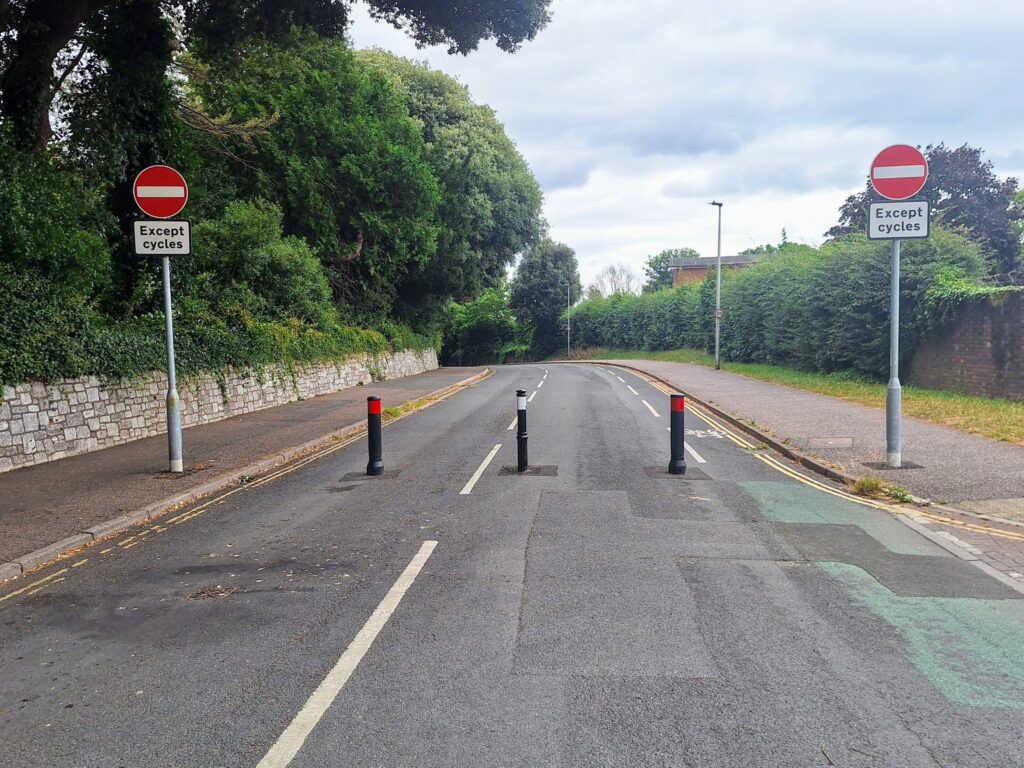 Dryden Road closure, Exeter (Image Credit: Ian Frankum/Facebook)
“This structure risks creating an impression that change is assumed or required,” they said.
In order of preference, the club said its top priority would be retain the current layout but, if change was pursued, it would support the bus gate option which would keep the road closed to drivers other than “authorised vehicles” such as taxis, waste collection and the emergency services.
Option three, with two-way traffic and unprotected cycle lanes “is not supported”.
“Option 3 fundamentally undermines the principle of the adopted Exeter Transport Strategy dismantling Exeter’s developing cycling network and may also be an unsafe legal decision for DCC to undertake as shown in a recent judicial review in Tower Hamlets,” the club said.
“The removal of the closure at Dryden Road would likely enhance calls for further removal of protection sections of the E9 [postcode] and increased risks to users across the developing protected network. This has been explicitly stated by well known anti active travel activists within the city as their ‘next goal’.”
Another local who got in touch with road.cc regarding the consultation called the Dryden Road scheme a “line in the sand” and believes “they will go for other closures on this route next”.
The Exeter Wheelers Cycling Club ended its consultation response: “Dryden Road is a strategic component of Exeter’s developing cycling network. The safest and most policy-aligned outcome is to retain the current arrangement. If change is pursued, it must not compromise cyclist safety or undermine the integrity of the adopted network.”