
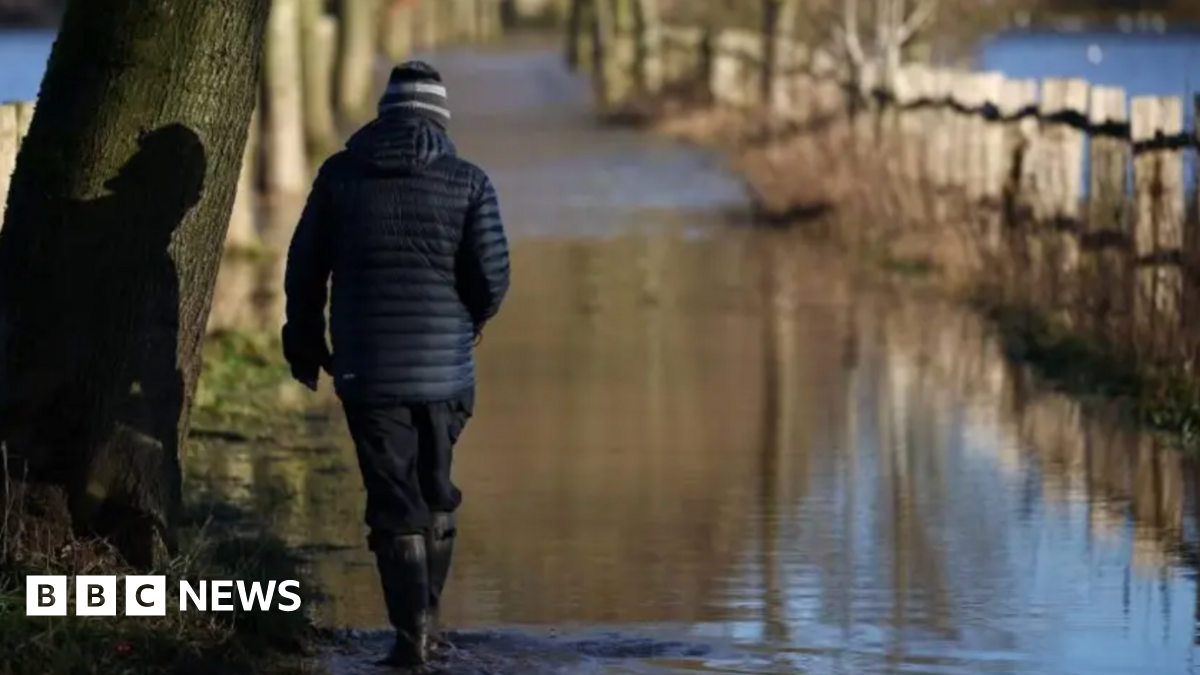
Among the methods being used will be the installation of natural flood defences, including ‘leaky barriers’, which the Environment Agency said would protect homes in Clitheroe, Lancashire.
The Ribble Rivers Trust which had installed the barriers, said they helped to slow and delay flooding in a more natural way than traditional flood defences.
Jack Spees, CEO said there were three natural flood risk management schemes in Lancashire, helping to protect propertes in Clitheroe, Darwen and Wrae Green, all funded by the Environment Agency.
Spees said: “In Darwen, we worked with Lancashire Wildlife Trust to fund peat restoration to keep the rain that falls there as long as possible.
“We’ve done some tree planting too – they help water to infiltrate the soil and makes the surface of the ground rougher so it slows water flow”.
He also said his team had installed several attenuation ponds at Blacksnape playing fields in Darwen which captured rainwater.
“With the predicted impact of climate change, flood risk is set to worsen, particulary in these locations”, Spees said.
The introduction of natural flood defences “complements” traditional flood defences, like concrete walls, to help mitigate flooding whilst also benefitting the environment.