
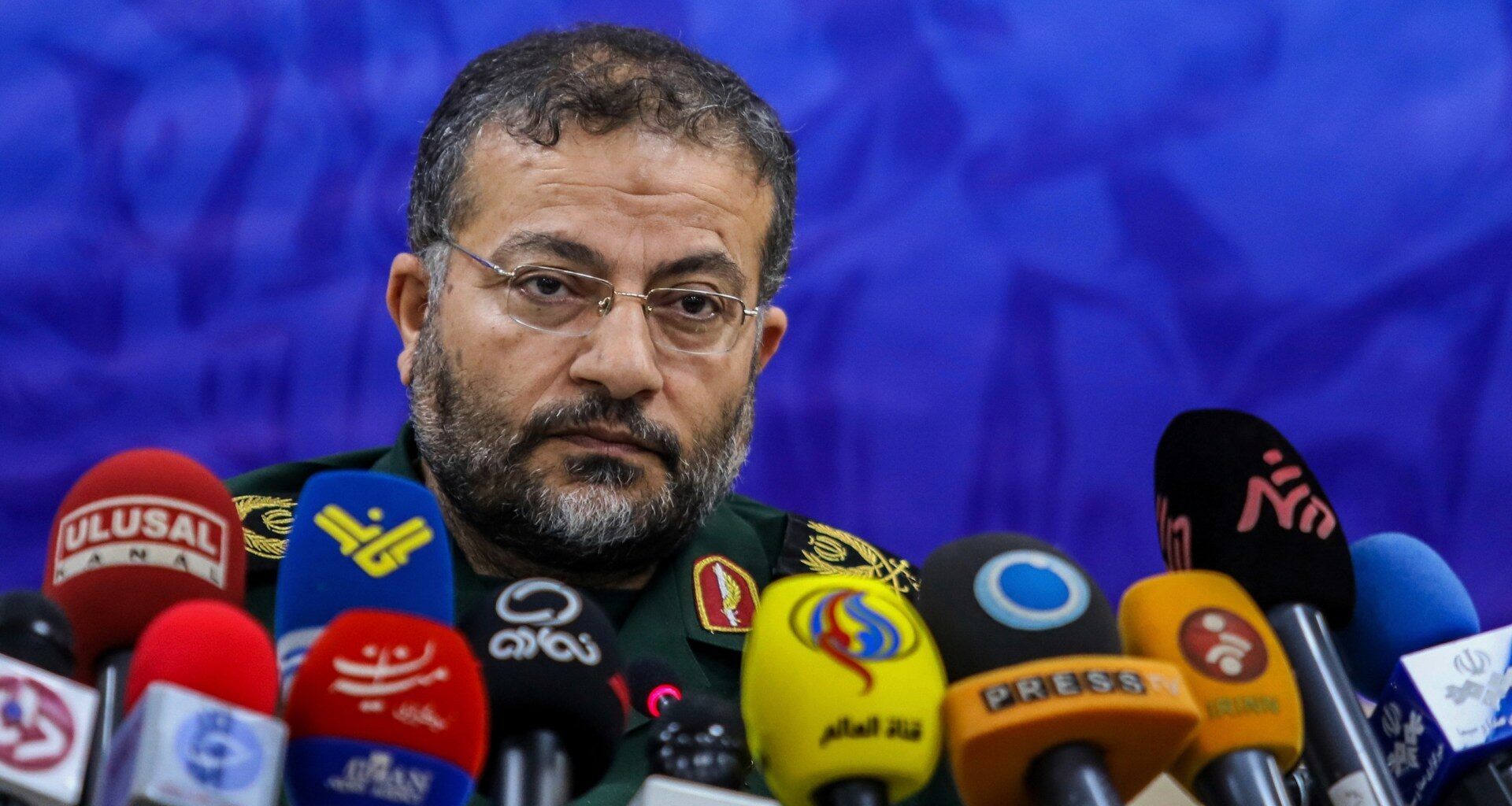
Brigadier General Gholamreza Soleimani, the head of Iran’s Basij paramilitary forces, has been killed in the US-Israeli war on the country, the Islamic Revolutionary Guard Corps (IRGC) has confirmed.
In a statement shared by Iran’s semi-official Tasnim news agency on Tuesday, the IRGC said the 62-year-old was killed in an “attack by the American-Zionist enemy”.
Soleimani was the commander of the country’s most powerful internal security forces for the past six years and a veteran of the Iran-Iraq War, having fought on the front lines.
Israeli Defence Minister Israel Katz also claimed that Ali Larijani, the secretary of Iran’s Supreme National Security Council, was killed in an overnight strike. Iran has yet to comment on that alleged assassination.
As US and Israeli forces increasingly target the Basij and other military apparatuses, Soleimani had emerged as a central figure in a war that has seen Iran’s top political and military figures killed.
From front-line volunteer to general
Soleimani was born in 1964 in the city of Farsan in Chaharmahal and Bakhtiari province. His military career was forged in the trenches of the 1980-1988 Iran-Iraq War.
He is not related to Qassem Soleimani, the late commander of the Quds Force, the elite clandestine wing of the Islamic Revolutionary Guards Corps (IRGC), who was assassinated in a US drone strike in Baghdad in 2020.
In the spring of 1981, Gholamreza Soleimani deployed to the Shush front lines at the Iraq border as a teenage volunteer. Over the gruelling eight-year conflict, he participated in several major offensives, including Operations Tariq al-Qods, Fath ol-Mobin and Beit ol-Moqaddas, serving as both a fighter and a battalion commander.
He joined the IRGC in 1982.
After the war, Soleimani held numerous high-ranking regional commands. His most prominent role began in 2006 when he took command of the Saheb al-Zaman Corps in Isfahan province, becoming the first commander to simultaneously oversee both the local Basij forces and the formal IRGC combat units. In July 2017, he was officially promoted to the rank of brigadier general.
According to his official biography published by Iranian media, he held a bachelor’s degree in history from the University of Isfahan. He was also a doctoral candidate preparing to defend his thesis in the Islamic history of Iran although state media did not specify the institution.
Taking the helm of the Basij
On July 2, 2019, Khamenei appointed Soleimani as head of the Basij, a volunteer paramilitary force under the IRGC. It is tasked with enforcing internal security through local branches across the country.
Both the Basij and IRGC were formed in 1979 after the Islamic revolution toppled US-supported Shah Mohammad Reza Pahlavi.
The official decree tasked Soleimani with “elevating the Basij and the culture of resistance” while expanding armed groups and deepening revolutionary values among Iranian youth.
As the commander of the Basij, Soleimani was frequently deployed to quell domestic unrest. In November 2019, months after he took command, the Basij was heavily involved in violently suppressing nationwide antigovernment protests.
The paramilitary force with an estimated 450,000 personnel has often been deployed to clamp down on protests against the government and has played a major role in suppressing uprisings in recent years, including the 2009 Green Revolution and the 2022-2023 protests in the wake of the death of Mahsa Amini in police custody.
Most recently, his forces were deployed in January to suppress antigovernment demonstrations across Iran, during which thousands of Iranians were reportedly killed.
A staunch defender of the Iranian government, Soleimani has been sanctioned by numerous Western countries and organisations, including the US, European Union, United Kingdom and Canada.
In 2021, the EU imposed its sanction on him, noting that the Basij forces under his command used lethal violence against unarmed protesters.