
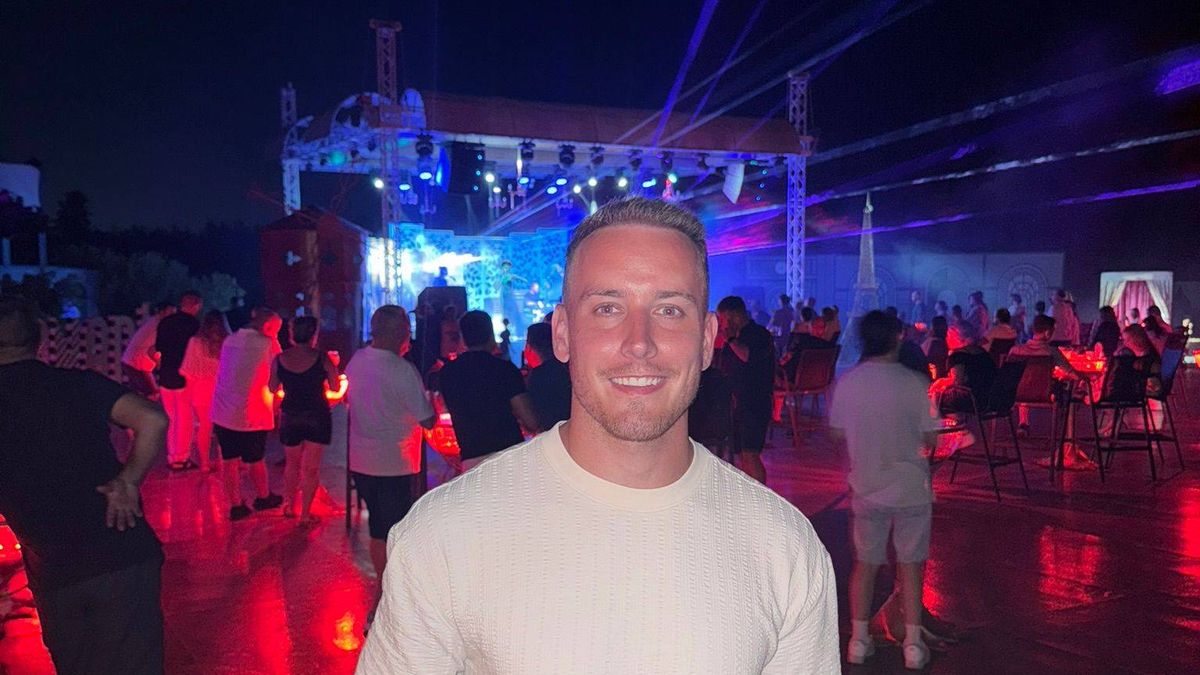
George Mckinty also started to lose vision in one of his eyes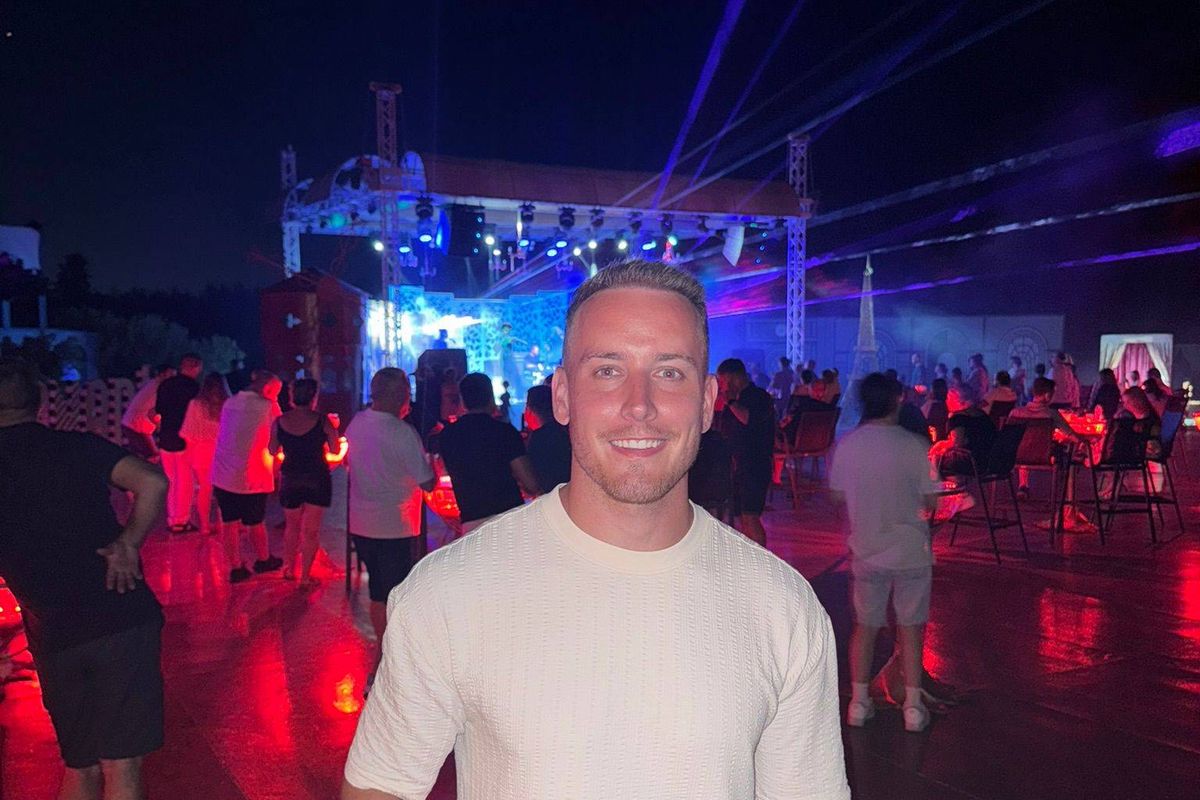
George McKinty was having vision problems and repeatedly falling over on a holiday to Ibiza in 2021
A young man received a devastating diagnosis after he started falling over while on a lads’ holiday. George Mckinty, now 30, first realised that something was wrong in August 2021. The then-26-year-old found that he “couldn’t see out of one eye properly” when at the gym.
When he covered his left eye, he realised that he had lost around 80% of the vision in his right eye, with severe double vision that affected his depth perception. Then when on holiday in Ibiza that summer, George repeatedly fell over, which he found “very embarrassing.”
He initially chalked this up to his depth perception being affected by his vision problems – but the falls were not the only thing he was concerned about. Always keep on top of the latest Welsh news with our newsletter.
George, from Barry, was also experiencing bladder symptoms such as hesitancy and nocturia – getting up several times a night to urinate – and he began to fear something more serious might be wrong.
After visiting an optician who identified a problem with his optic nerve and being referred to a neurologist, he had an MRI and a lumbar puncture which confirmed George had multiple sclerosis (MS) – an incurable condition that affects the brain and spinal cord and causes symptoms such as vision problems, fatigue, clumsiness, muscle spasms and urinary problems.
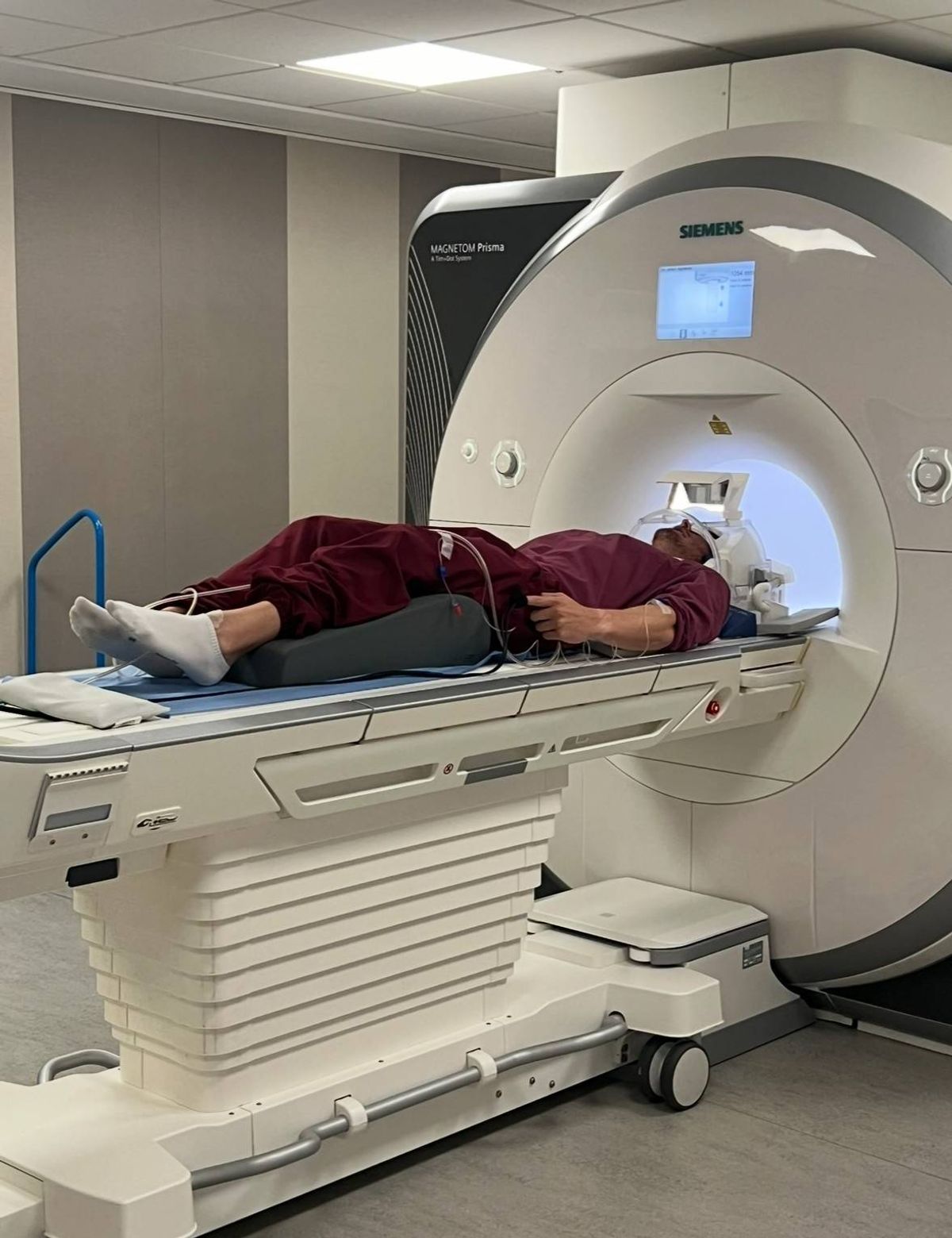
An MRI scan revealed lesions on his brain and spinal cord that indicated MS
He learned the flare ups at the gym and on holiday were due to Uhthoff’s phenomenon – a temporary worsening of MS symptoms triggered by increased body temperature.
“I had an uncle with MS (who was) in a wheelchair. I thought: ‘Oh, my God, that’s going to happen to me’,” George told PA Real Life.
George said the disease has “devastated” his social life and caused a “loss of identity”, but added that maintaining a healthy lifestyle by training at the gym and walking his two dogs “keeps (him) sane, keeps (his) mind at ease”.
Thanks to effective treatment, George is able to manage the symptoms of his relapsing-remitting MS, which is characterised by periods of worsening symptoms and periods of recovery, and has not faced a relapse since 2021. Relapsing-remitting MS is the most common form of MS, which affects 85% of cases.
George almost immediately began treatment to help manage his symptoms, which involves intravenous administration of ocrelizumab once every six months. According to the MS Trust, this treatment reduces the number of relapses by around 70%.
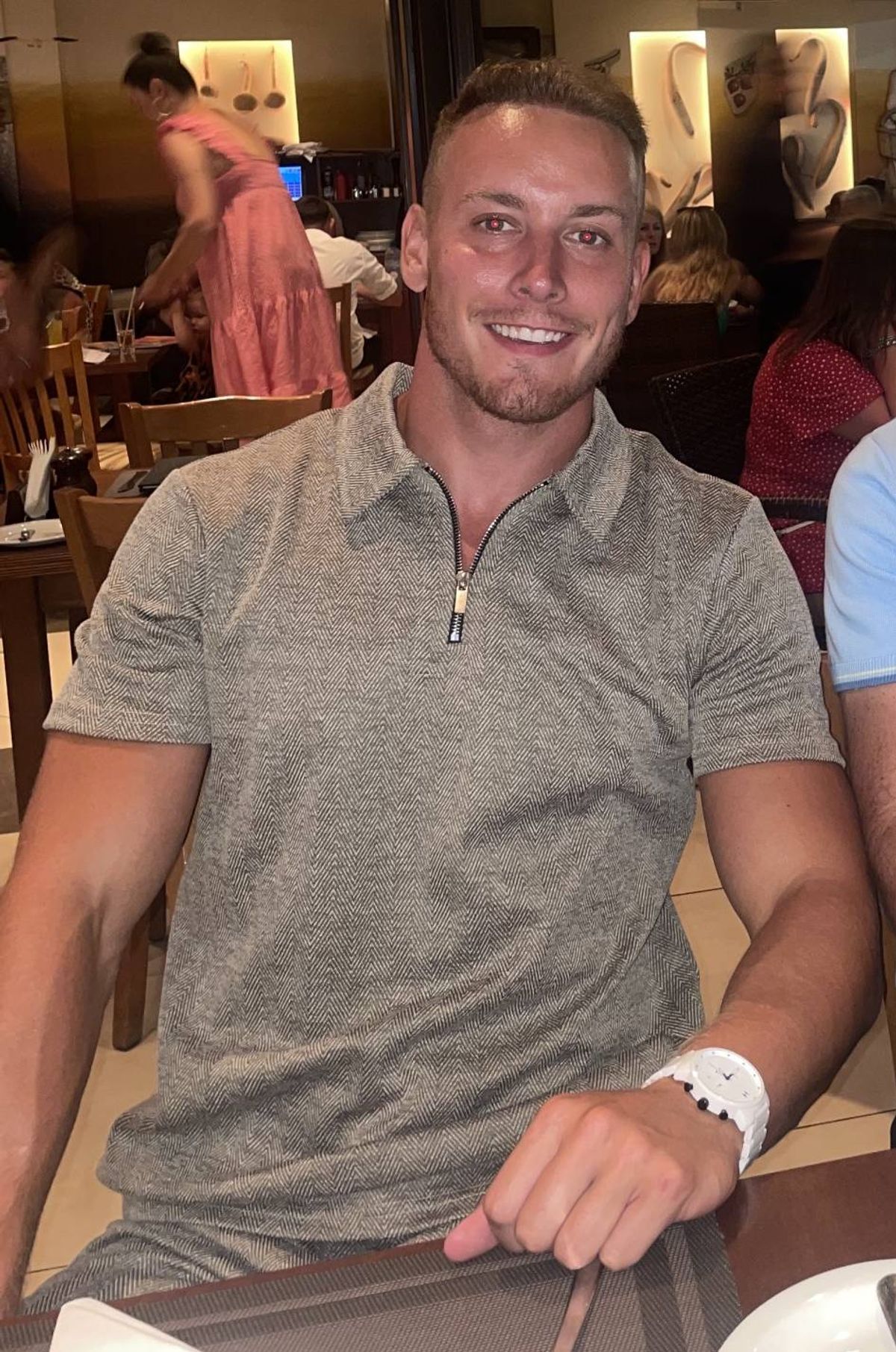
George said his social life has been ‘massively’ reduced by his illness
George has this treatment administered over the course of four to six hours once every six months, and he said it has “kept (his) condition stable all the way through”.
However, while the treatment George receives is effective at preventing another relapse, he still faces problems from the damage that “has already been done to (his) central nervous system”. “I’ve still got the eye issues in my right eye, where I’ve got double vision (that affects) depth perception. So I can’t do a lot of sports… which is aggravating,” he said.
“It affects you socially, because I’d love to play sports, my friends all play sports, and I can’t… (For) my leg, I’ve recently been with a physiotherapist, which is really good. I do a lot of stretching, a lot of hip exercises, just to improve my mobility…
“My bladder’s the most annoying, really, because it gives me nocturia, which is when you get up at night to use the toilet, and I get it four or five times a night. I self-catheterise because I can’t fully empty it, and if you can’t fully empty your bladder, it can become stagnant, and that can cause a UTI.
“But soon, hopefully, I’ll be getting Botox. I can’t wait for the NHS anymore, so I’m going to go private, to get Botox in my bladder of all places! That should calm it down, hopefully, and I’ll be able to sleep fully.”
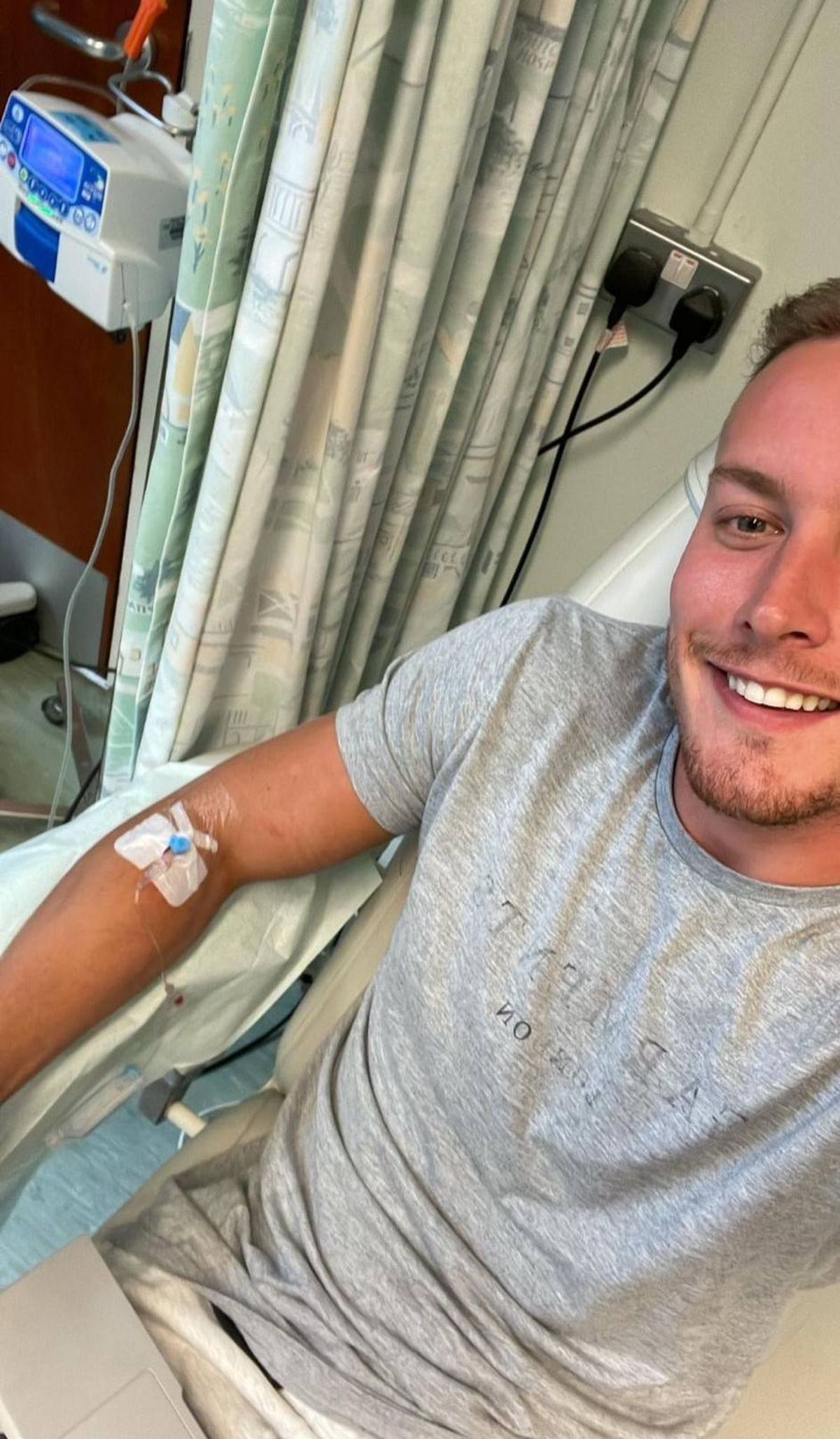
George’s treatment to prevent relapses involves intravenous administration of Ocrelizumab once every six months
George said he has also struggled with the impact the disease has had on his social life and identity. “It’s taken a vast dip, massively,” he said of his social life.
“I can’t drink the same, I can’t go out as much. I get tired. Fatigue is a factor in my life, definitely, because of the lack of sleep because of the nocturia.
“It’s the loss of identity, that’s the worst challenge overall.
“You have to become confident in saying no. People say: ‘Don’t let it dominate your life. It’s just something you have’, whatever. But it does dominate your life a lot…
“Early on, it affected my confidence quite a bit… The loss of identity, of who you were…
“It’s been four years, and I would say this year is the first time I started to feel better, in all honesty – like, mentally better about it, because it is a depressing thing.
“I mean, MS does affect your limbic system, which controls your emotions. Maybe that’s impacted, I don’t know. Maybe it’s just because I’ve got a disease that’s incurable.”
However, one thing that keeps George “sane” is training at the gym. He has been resistance training for more than a decade, now hitting the gym three to four times per week, and he believes that staying active helps him manage his MS both mentally and physically.
“It keeps me sane, keeps my mind at ease,” he said. “Things like nutrition and resistance training – I’ve got two dogs I walk every single day, I try to do 12,000 steps a day… I think those things (help with maintaining) a steady state of dopamine.”
“Lifestyle changes, while not a cure, can and do make a real difference to symptoms and quality of life for people living with MS. Yet too many people don’t know this, or find information about it in a haphazard way,” agreed Alexandra Holden, chief executive of Overcoming MS.
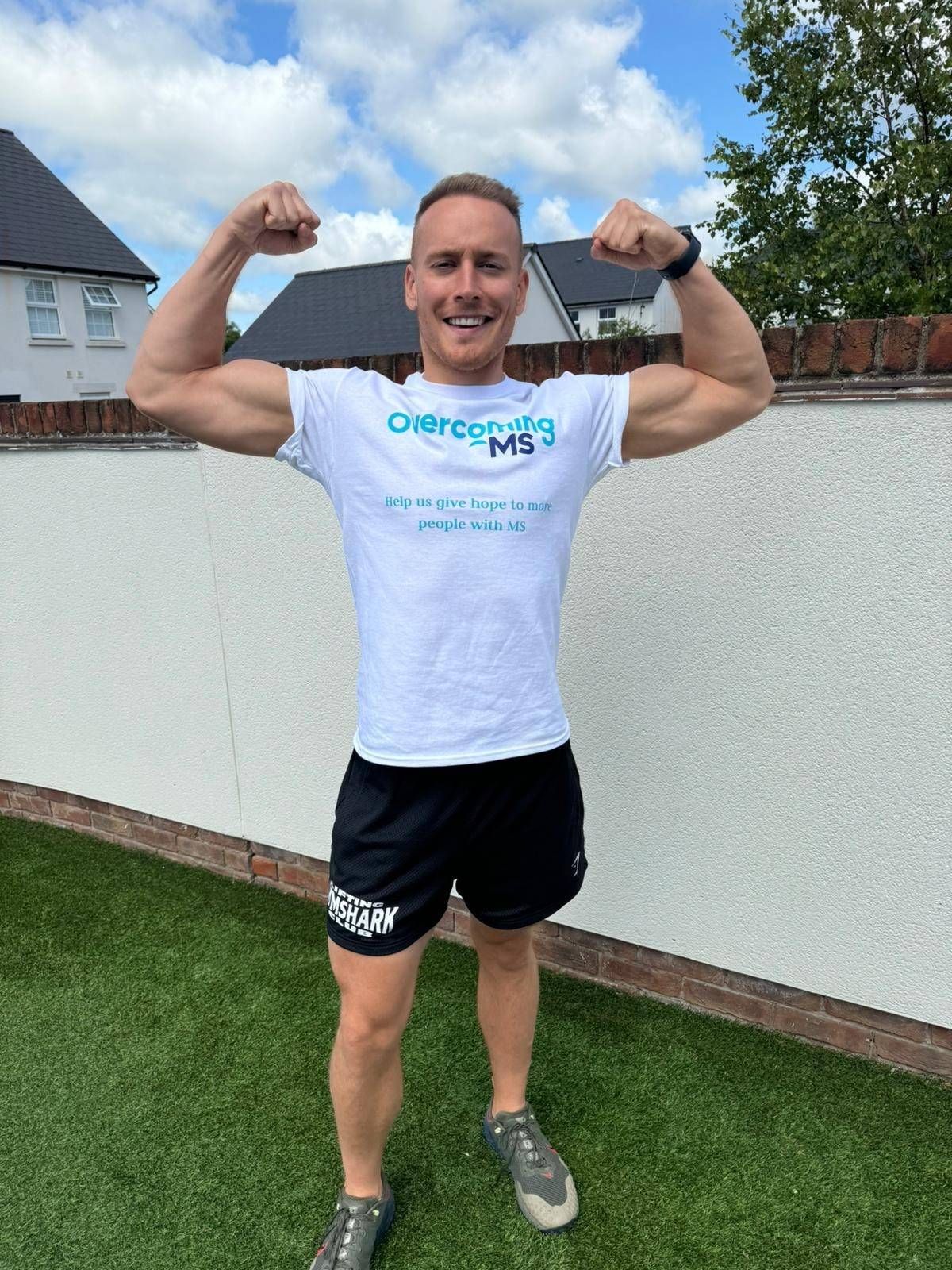
One thing that keeps George ‘sane’ is training at the gym
“With NHS resources under pressure, it’s more important than ever that people have access to evidence-based lifestyle strategies to support their health, alongside medication.
“The biggest challenge right now is lack of awareness, and misinformation, stopping people diagnosed with MS from accessing the full benefits of lifestyle-related support”.
In terms of the future, George plans to continue his treatment to ward off a relapse, but he knows that “MS will take what it wants”. “It really will, which is a scary thing to even say, to be honest, but there’s always going to be a way around it,” he added.
“There’s always a workaround, there’s always a way to reframe it in your mind, but also physically, what you can do with those symptoms.”
For more information about the positive benefits of lifestyle changes for people living with MS, visit: http://overcomingms.org/notadestiny
Get daily breaking news updates on your phone by joining our WhatsApp community here. We occasionally treat members to special offers, promotions and ads from us and our partners. See our Privacy Notice