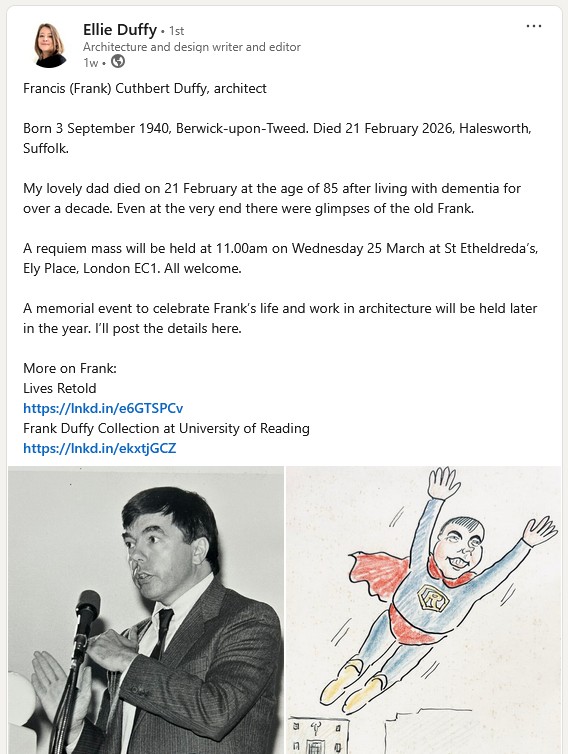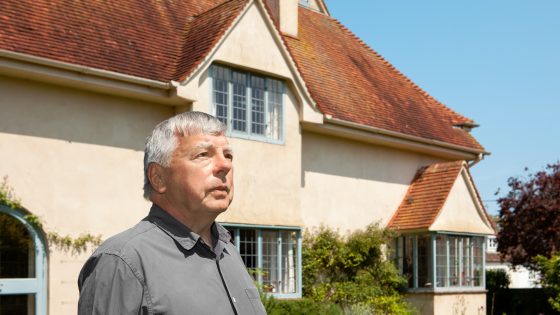
Duffy is best known as founder of international architectural consultancy DEGW and as RIBA President from 1993 to 1995. His work to shake up office architecture, incorporating early ideas on mobile and remote working, earned him a CBE in 1997. According to leading industry figures, his research in this field continues to influence workplace design to this day.
Colleagues and friends described Duffy as ‘subtle and generous’ and a ‘lovely man with an impressive legacy’. Scores posted their memories, messages of condolences and tributes to the architect on LinkedIn.
Duffy was born in Berwick-upon-Tweed in 1940, and his future career was influenced by time studying at the Architectural Association in 1959, a visit to Germany as a student, and a stint at the University of California, Berkeley, and later at Princeton University, where he completed his PhD.
In 1971, he co-founded DEGW with Peter Eley, Luigi Giffone, and John Worthington. In the early 1980s Duffy and his colleagues launched the Office Research: Buildings and Information Technology (ORBIT) project, which looked at the impact of technology on office work and workplace design.
Current RIBA President Chris Williamson described Duffy as ‘one of the most influential figures in late 20th century workplace design’.
Williamson continued: ‘I remember hearing Frank’s presentations on workplace design and the enthusiasm the DEGW team had for a new way of designing functional, open-plan offices. The work done for IBM and others was an inspiration and helped revolutionise the office environment.
‘Frank will be fondly remembered by many of us and his passing is a great loss.’
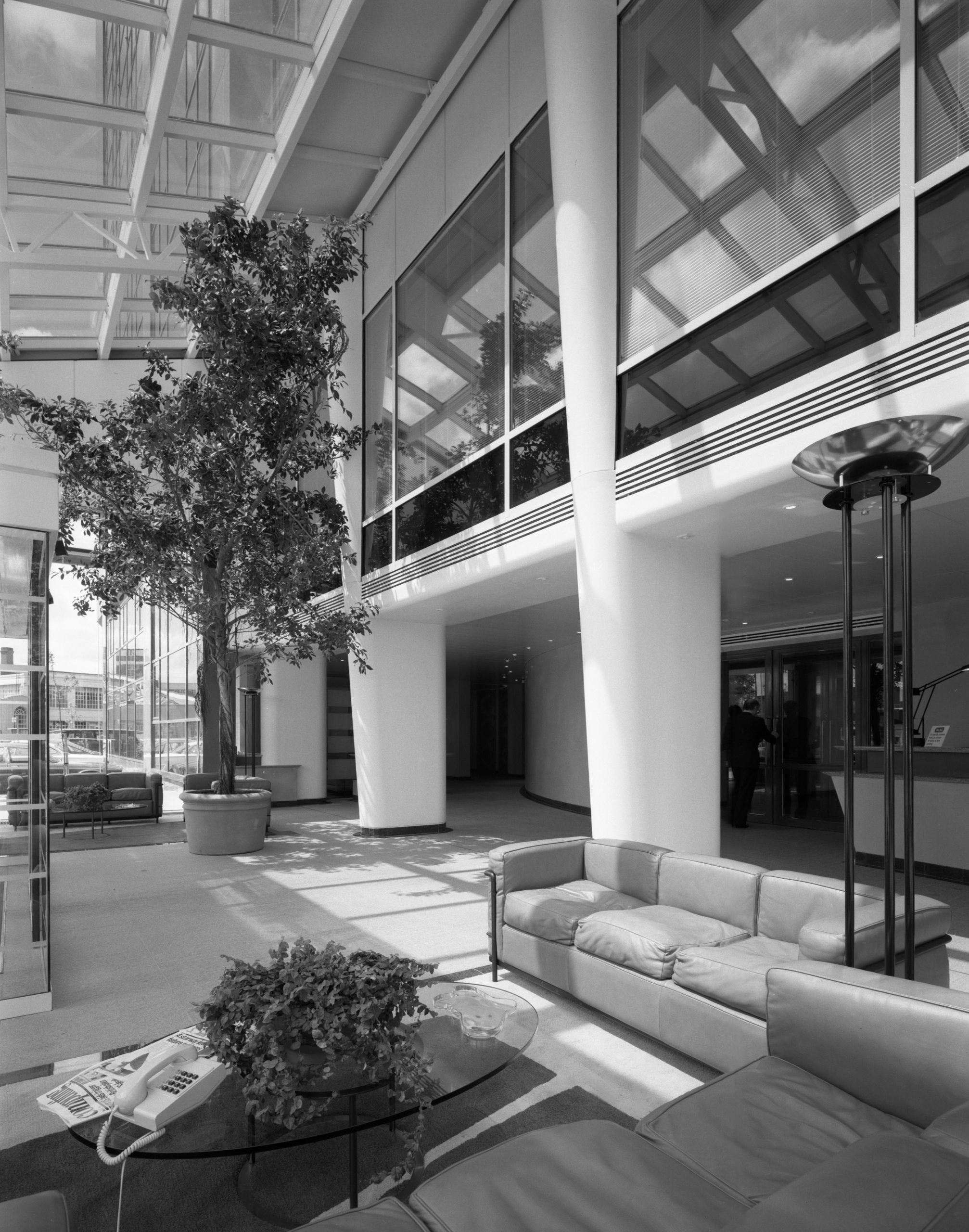
Wang, Brentford, London by DEGW (1986): the main foyer
Duffy was also instrumental in championing the concept of ‘facilities management’, a movement to optimise the management and design of workspaces. For this work he received the British Council of Offices (BCO) President’s Award for Lifetime Achievement in 2004, and in 2008 was named by Facilities Magazine as one of 25 Pioneers of Facilities Management in the UK.
Robert Sakula, co-founder of Ash Sakula Architects, who worked at DEGW in the late 1970s and early 1980s, remembered Duffy as ‘charming, witty, subtle and generous, and also one of the cleverest people I have ever met’.
Paul Hyett, co-founder of Vickery Hyett Architects, said: ‘As Denys Lasdun, Peter Hall and Gordan Cullen before him, Frank Duffy was a Harkness Scholar whose American experience would richly inform his contribution to British architecture and planning.
‘Rather than respond to demand, Duffy’s architecture was the agent for organisational change. His career formed the bridgehead between the tedious cellular offices typical of our post-WW2 era, their endless corridors and stale air a grim expression of hierarchy and inflexibility, to the vibrant, informal and dynamic environments of today’s workplace.’
Duffy died on 21 February after living with dementia for more than a decade.
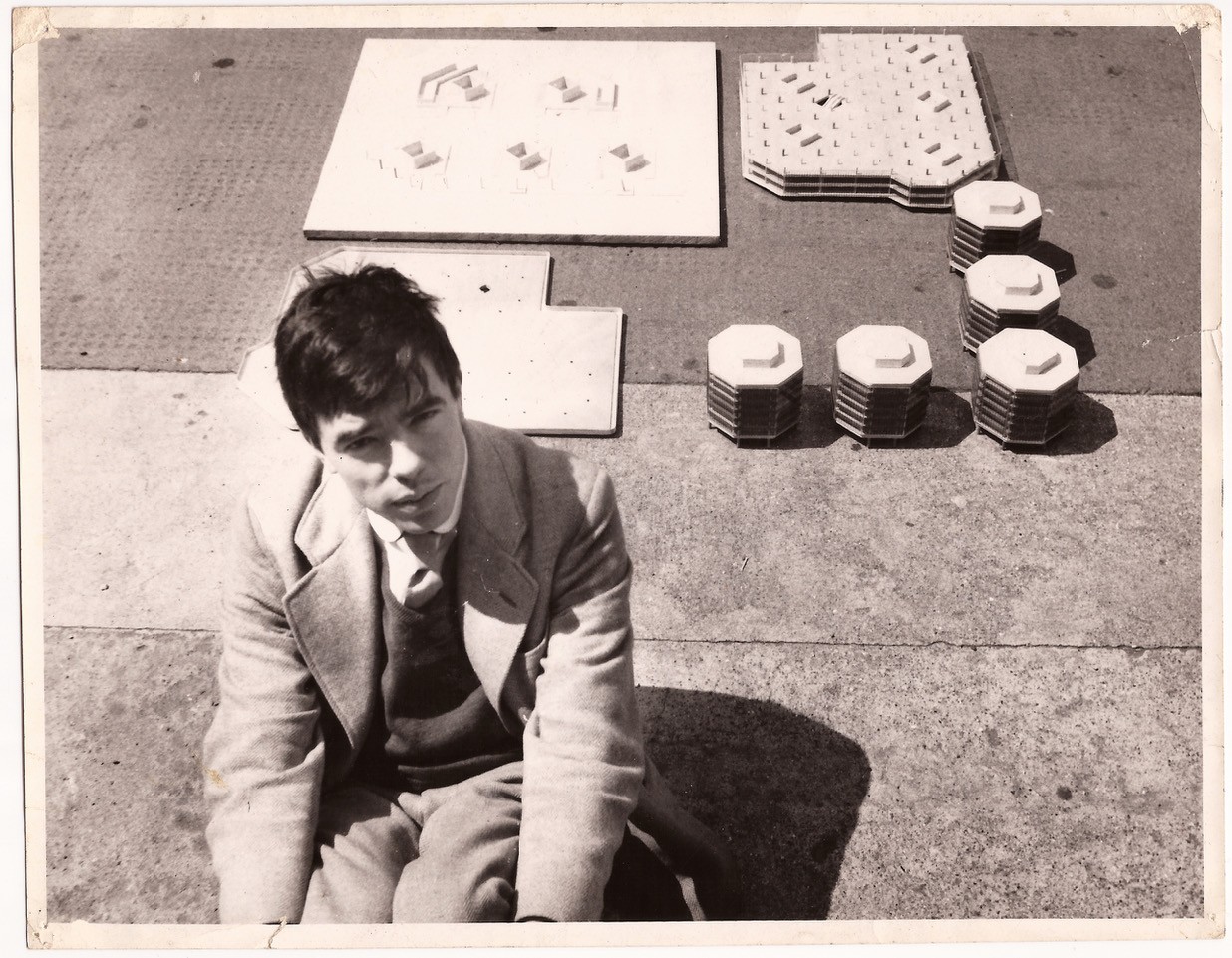
Frank Duffy at the AA. Photo courtesy of the Duffy family
Further tributes
Paul Finch, director, World Architecture Festival
Frank was a thinker about architecture, both as a response to wider contexts of clients and society as a whole, and as a contributor to the wider world. The work of DEGW in redefining the workplace and its creation, via its Orbit study of 1983, set the tone for holistic analysis, which can also be seen his the reports on the future of the profession as president of the RIBA.
On his watch the point was made that the relationship between profession, knowledge and citizens had been removed from the control of the crown as a result of the Glorious Revolution of 1688 and the creation of a constitutional monarchy. Scholarly and always with a touch of the monastic about him, Frank was also dryly witty and good fun.
I had the pleasure of serving on two design review panels he chaired in respect of the London 2012 Olympics: one reviewed Westfield’s Stratford City shopping centre; the other the adjacent Olympic village. He was an excellent chair: master of detail, critical in a constructive sense, and always able to see the big picture. On one occasion, after a long afternoon of presentations by village architects, each with a large, same-scale model, Frank suddenly declared: ‘Please put them all together’ on a huge site plan. This was the first time this had happened, and was revealing and in some ways alarming. It certainly informed thinking about the evolving design.
I last met Frank when he awarded me my honorary membership of the Architectural Association, by which time early signs of dementia were in evidence. Tragic, but it could not take away from a lifetime of achievements. Frank edited an AA publication on ‘complexity in architecture’ when he was a fifth-year student in the 1960s, absorbing a teaching programme which including subjects such as cybernetics. Like the AA, Frank was always ahead of the game.
Rab Bennetts, founder, Bennetts Associates
I first worked with Frank Duffy and his colleagues at DEGW in the early 1980s, a few years before I set up Bennetts Associates, but his ideas and analytical approach to office space were big influences on many of the practice’s subsequent projects.
By setting up a specialist consultancy for the workplace he also challenged the notions that office design was mostly about external appearance and that architects on their own had all the answers. At Frank’s invitation I chaired the RIBA’s competitions committee when he was president in the mid-‘90s and we spoke many times about professional issues, projects and possible collaborations.
A lovely man with an impressive legacy.