
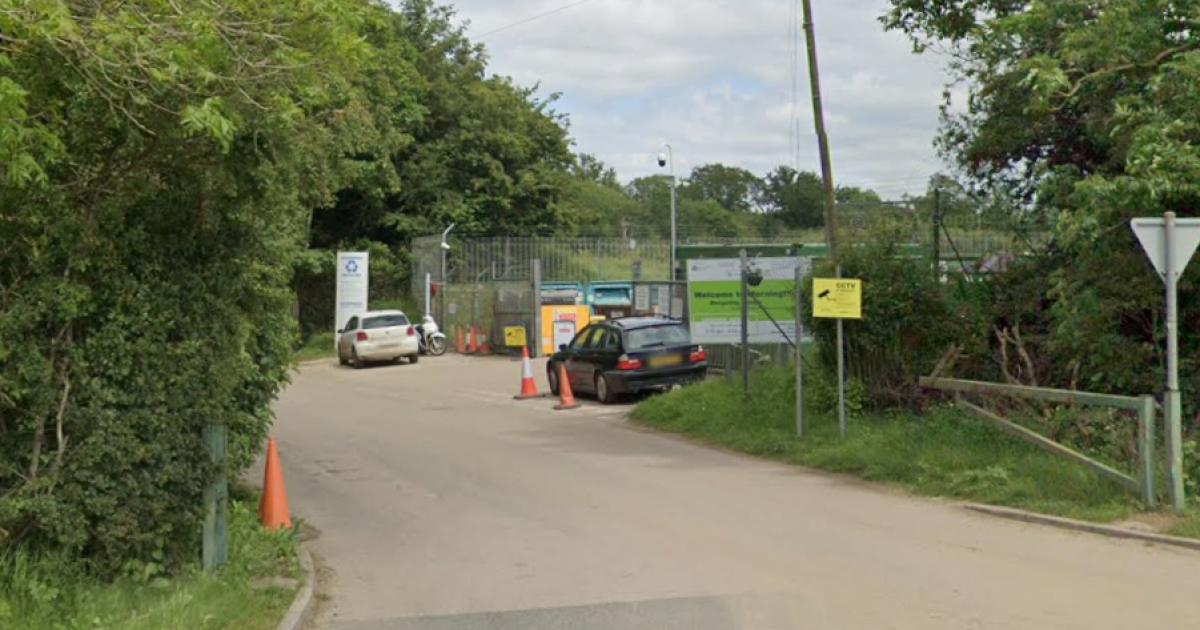
Norfolk County Council announced on Tuesday that Morningthorpe Recycling Centre, near Long Stratton, will close at the end of October this year.
The Conservative-run council had said that its 25 year lease for the land which its tip is on was coming to an end, so the centre would need to close.
But council officers have now confirmed that the lease – agreed with the Sargent family in 2001 – actually ended last month.
And the council confirmed that it knew nine months ago that the centre would need to shut, after the landowner informed the authority it did not wish to renew the lease in the long-term.
Negotiations meant the council was able to obtain a one-year extension – running to February next year – to allow for the tip’s planned October closure.
It needs to close then, rather than February, to allow the council to restore the site to the required condition.
The council will save about £90,000 a year in operating costs from the closure of Morningthorpe.
James Bensly, the council’s cabinet member for environment and waste, said: “It’s disappointing that we have to close this facility, but the decision has been taken out of our hands.”
James Bensly, Norfolk County Council cabinet member for environment and waste (Image: Norfolk Conservatives)
The impending closure means the nearest recycling centres for people in south Norfolk are Norwich South at Harford Bridge and the part-time centres at Wymondham and Bergh Apton.
Norwich South Recycling Centre (Image: Mike Page)
Critics have questioned why the council cannot provide a new recycling centre on another site close to Morningthorpe, given some people now face lengthy drives to get rid of rubbish and recycling.
A county council spokesman said: “We had a new site planned into the capital programme in Long Stratton, but it was pushed to the long term strategy as its currently unfunded.
“Any new waste and recycling infrastructure requires extensive planning processes, environmental assessments, and significant capital investment, all of which take considerable time to complete.”