
Building anything in the rural-urban fringe, where the town meets the country, has rarely been easy.
But experts are seeing a shift. The recently enshrined ‘grey belt’ designation, for instance, is proving a fertile ground for developers and architects seeking permission for new homes. The concept was introduced in the 2024 National Planning Policy Framework as an exception to the existing green-belt, no-build rules.
Under this label, lower-performing areas of green-belt land are allowed to be released for development if proposals can be shown not to be ‘inappropriate development’ and promise to provide affordable housing, infrastructure improvements and publicly accessible green space.
Although often controversial, grey-belt schemes that obey these golden rules, as set out in Paragraph 156 of the NPPF, are increasingly likely to be approved – especially if they land on a planning inspector’s desk.
New research by consultancy Marrons shows that 76 per cent of major grey-belt residential proposals – defined as schemes of 10 or more dwellings – won approval on appeal following the policy’s introduction in December 2024. In fact, every scheme with between 50 and 99 homes that went to appeal was allowed by the inspectorate, as were two thirds of those with between 20 and 49 dwellings. Marrons planning director Roland Brass describes the policy as ‘a game changer’, particularly for larger planning permissions.
Richard Henley, executive director at planning specialist HGH Consulting, has witnessed a hike in applications for housing schemes on green and grey-belt land. He believes the ‘bold and positive changes to the planning framework’ have created a ‘short-term window of opportunity [backed by] the present Labour government who strongly support housebuilding’.
Grey-belt schemes now make up more than three-quarters of his residential workload. Paragraph 156, he says, has led to a rise in developers and landowners targeting locations with ‘specific underlying factors’ – namely local authorities lacking a five-year housing land supply, those with an out-of-date adopted development plan, or that have delivered less than 75 per cent of their housing requirement over a three-year period.
Henley adds: ‘On paper [though] not in bricks and mortar, the NPPF changes appear to be delivering positive outcomes and housing numbers, which are contributing to meeting the government’s 1.5 million homes target.’
Getting such schemes approved in the planning committee room rather than by the planning inspectorate remains tricky, though councillors are now receiving training on the concepts and requirements of green-belt and grey-belt assessment.
These recent changes to the NPPF are not the only approval door-opener found in the edge-of-town policies available to architects and developers. Many practices are also getting creative with the ‘country house clause’ (Paragraph 84) and relying on other paragraphs that focus on effective use of land and that support well-designed infill and appropriate edge-of-settlement development.
So how have they done it and what lessons have they learnt from their success?
Adam Hiles, director and co-founder, Novak Hiles Architects

The Croft in Barking and Dagenham, east London, by Novak Hiles Architects
Describe the project.
The Croft in Barking and Dagenham, east London, which was approved at the end of 2025, will provide 15 new family homes, predominantly four-bed six-person houses, alongside three-bed and two-bed homes. The existing site included a bungalow and areas of concrete hard standing, used for the storage of cars for many years. As such it fell under the criteria for grey-belt land as stipulated by the most recent NPPF.
What were the challenges of the site?
We wanted to avoid the development feeling isolated, and the green-belt location was of course inherently sensitive. We had to carefully think about how to deliver large, practical family homes without significant visual impact. This was not an easy task, but it was a challenge we relished.
How did you overcome the challenges?
We designed the scheme with large open gaps between the buildings, which increase further on the upper storeys, to avoid a terracing effect and to maintain visual permeability – all with the ambition of minimising impact on the landscape. We rigorously tested the relationship between the wider views, the massing and the layouts, This meant thinking about the project on the macro and micro scale simultaneously. The roof volume had to work hard, reducing the visual profile of the development within its context while accommodating a lot of practical bedroom space.
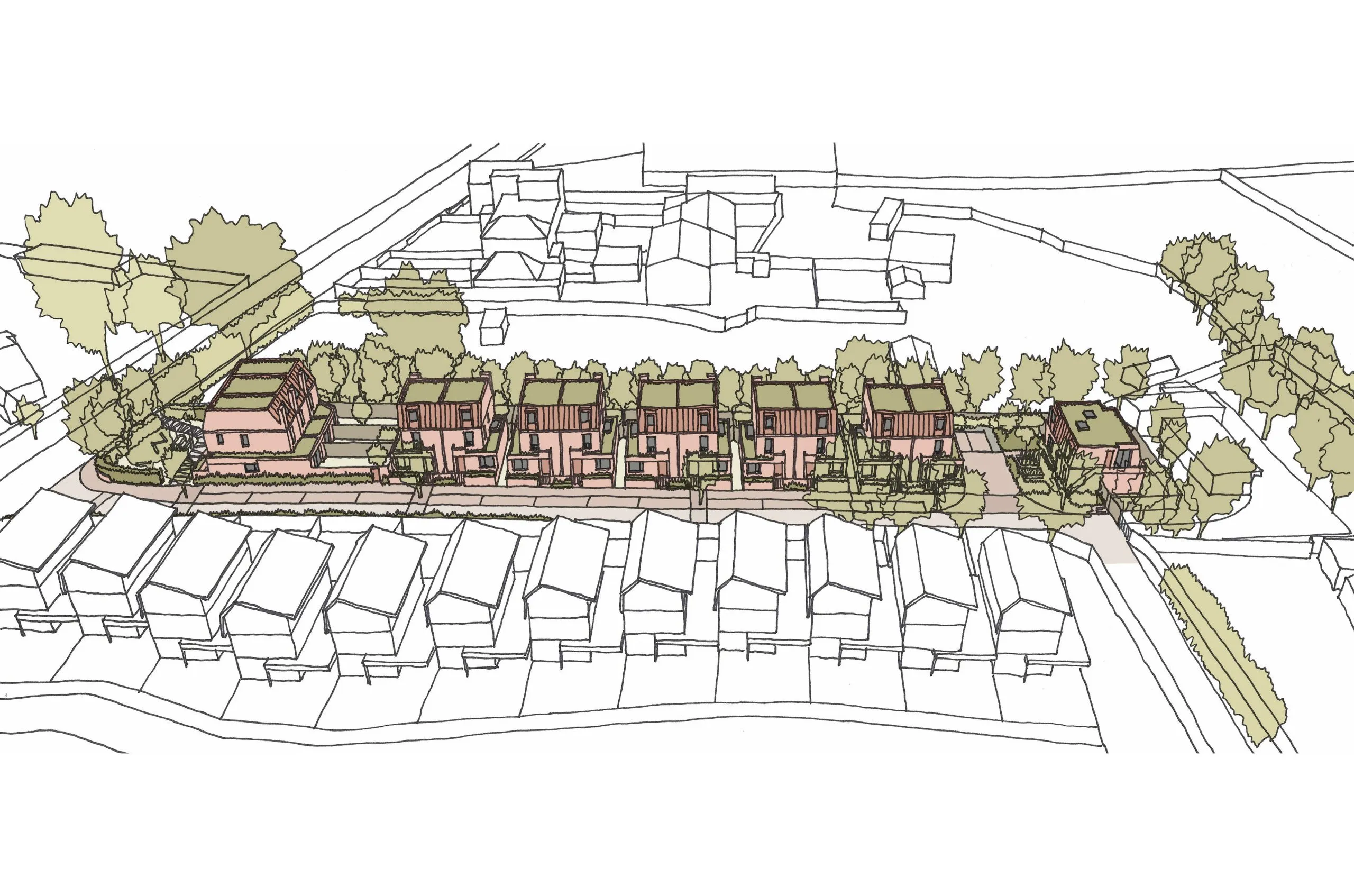
The Croft in Barking and Dagenham, east London, by Novak Hiles Architects – aerial sketch
We carefully sited the new homes on the footprint of the existing building and hardstanding areas, so the comparative impact was as minimal as possible. The buildings drop down with the topography of the site. We’ve kept all the large trees on the site perimeter and several more will be added to aid screening.
We wanted there to be social cohesion from the outset, so communal growing spaces and play spaces focusing on the natural world were made prominent and inviting.
Car parking is often inevitable on edgeland sites. To counter this, we put the parking parallel to the access road, taking up less space and having far less visual impact within the street scene.
What lessons have you learned?
While brownfield or urban infill sites should be prioritised, inevitably there will always be a degree of development pushed to the edges – increasingly so as we seek to deliver much-needed new homes across the country.
Developments in these sensitive locations need to work even harder to avoid new residents being socially isolated and to ensure that new homes feel cohesive to their surroundings. Good design has to remain a priority.
Planners look at the impacts of such development as a direct ‘before and after’ comparison, so you often must be quite literal with building placement and massing ensuring the narrative is clear. Where possible, it is helpful to use existing natural landscape features and topography to help screen.
Wendy Perring, founder, PAD Studio
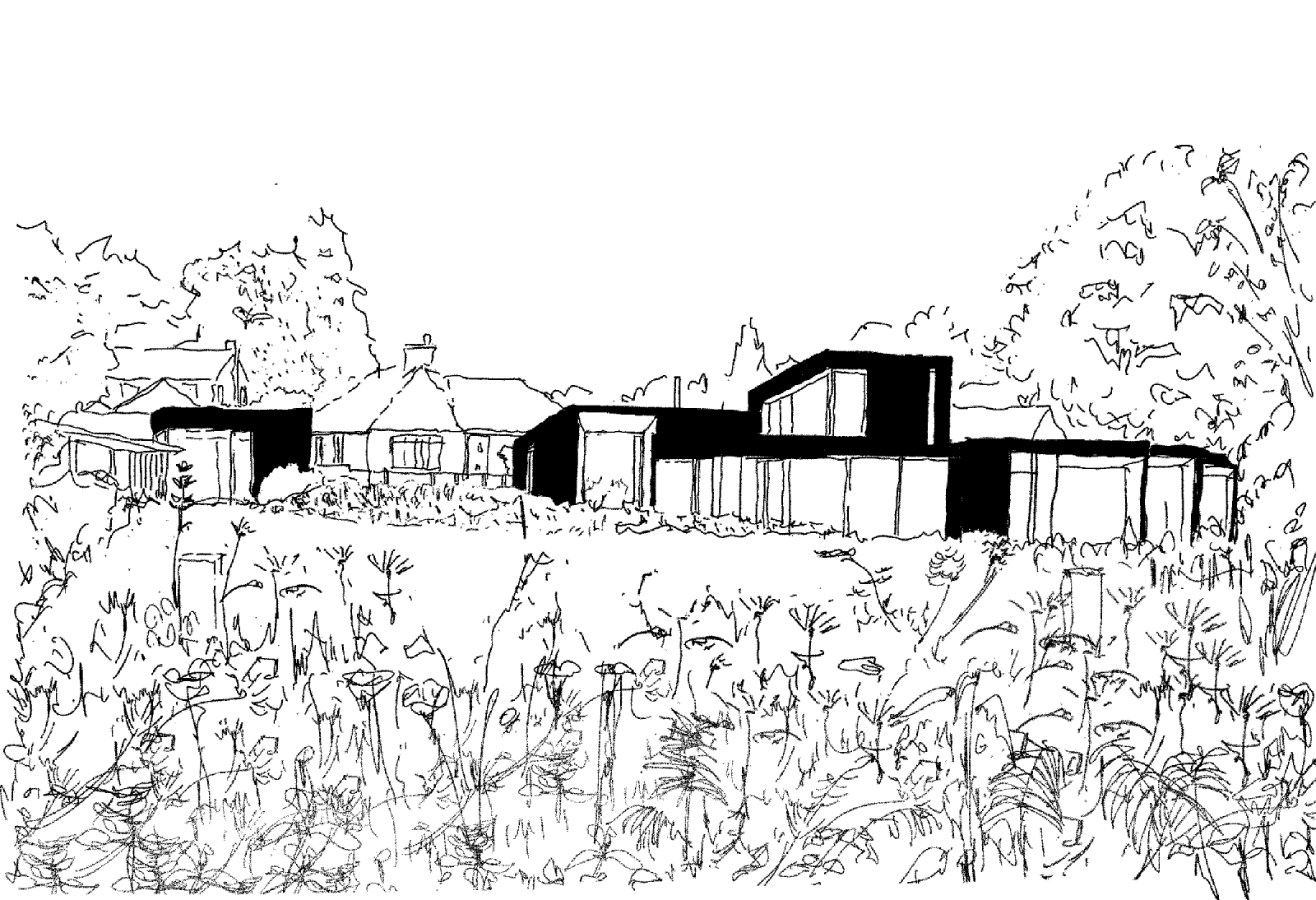
The Meadow, Selborne, Hampshire, by PAD Studio
Describe the project.
The Meadow was a rare opportunity for us to create a contemporary, low-energy home right on Gracious Street on the edge of Selborne and within the South Downs National Park.
The site was very unusual, beautiful, and extremely challenging: a 0.3ha plot partly within the official settlement policy boundary yet containing a cluster of low-grade agricultural structures, including a 1950s concrete and corrugated iron shed, a shepherd’s hut and a caravan that had shifted around the site for decades.
The clients were residents of the village who rented the field to graze sheep and wanted to build a modest, future-proof home they could live in long-term. The farmer sold them the field with a covenant restricting development to just one dwelling and one ancillary building.
The design evolved into a low-lying cluster of volumes, deliberately broken down to soften the transition between the looser grain of the rural edge and the more domestic character of Gracious Street. The form borrows from agricultural typologies, with dark stained timber cladding and brick bases, green roofs and a grounded presence in the landscape, making the building feel more like part of a meadow setting than a suburban insertion.
The massing kept as much of the southern part of the site open as possible, allowing the Hanger, a wooded escarpment, and wider landscape to remain the visual protagonists.
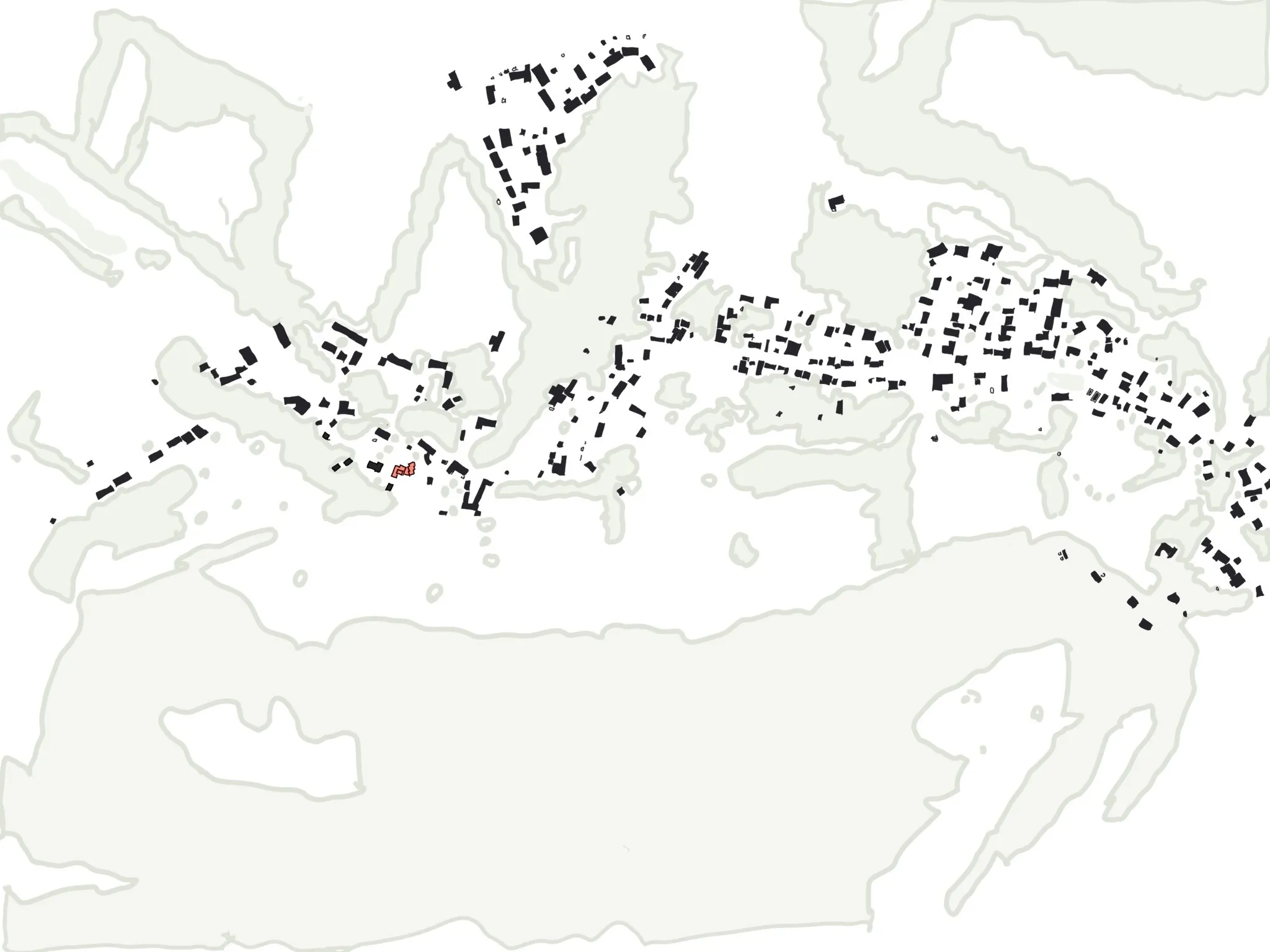
Location plan
What were the challenges of the site?
Despite being partly inside the settlement boundary, the site sat within three layers of designation: the national park, Selborne Conservation Area, and the setting of two Grade II-listed cottages immediately to the north. The authority approached it as if it were countryside development, raising concerns about impact on the conservation area, the wider landscape, and the setting of the listed buildings. Local sentiment was also mixed, with understandable anxiety about change on a site long perceived as open land, even though it had hosted agricultural structures since the 1950s. There were also practical issues: the proximity of neighbouring cottages, the need to protect a significant tree just outside the boundary, and the complexity of ensuring a modern design did not appear intrusive in a historic village.
How did you overcome these challenges?
We relied heavily on the local plan policies and the NPPF’s support for high-quality, context-responsive design, as well as the principle that development within a settlement boundary can be acceptable if it conserves heritage significance and landscape character.
The design strategy was crucial: a single-storey profile, broken into smaller interlocking volumes meant the home read as a cluster rather than a monolithic insertion. Material choices were drawn directly from Selborne’s agricultural and domestic palette, helping the new building feel embedded from day one. Consultants played a big part, from heritage to ecology and arboriculture, providing the detailed evidence needed to counter concerns. The appeal inspector agreed the design would conserve the natural beauty of this part of the national park, preserve the conservation area and even enhance certain aspects by replacing unsightly structures with a well-considered, contemporary home.
What lessons have you learned?
The scheme reinforced something core to our approach: landscape must lead, especially on the edges of settlements. The more sensitive the context, the more the design must work as an equal partner to its surroundings, not a statement above them. It also taught us that even when a site is policy compliant, you must be prepared for a long, detailed conversation about heritage, landscape character and local precedent. The key message is this: if you can demonstrate a genuine understanding of the landscape and local grain and translate that into a design that feels nestled into the land, rather than imposed, you stand a far better chance of success, even on sites that initially look impossible.
Magnus Ström, founder and creative director, Ström Architects
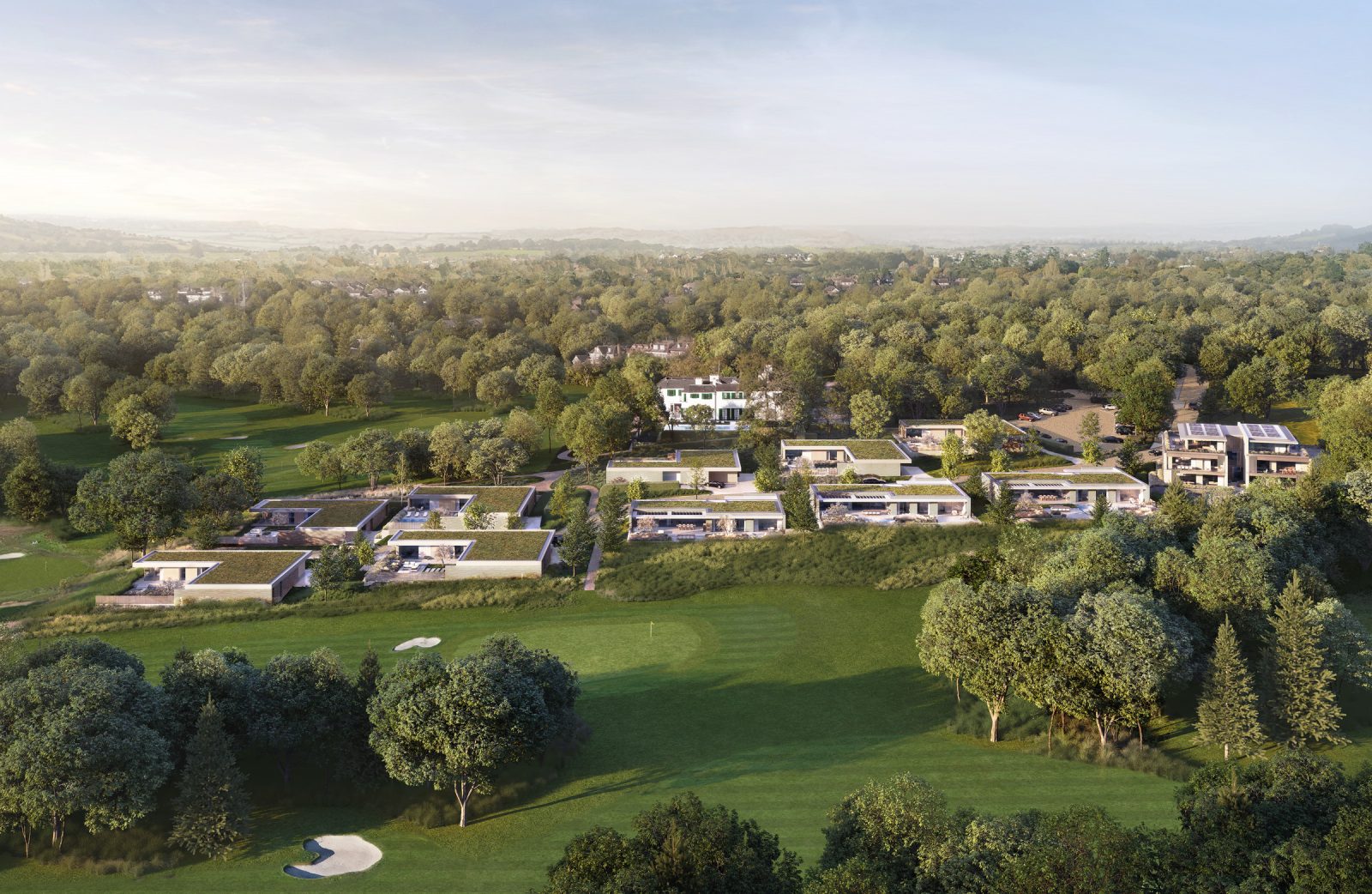
Housing at Hartsbourne Country Club, Hertfordshire, by Ström Architects
Describe the project.
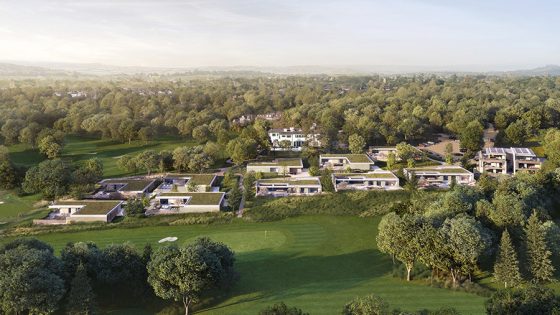
The scheme sits within the grounds of Hartsbourne Country Club in Bushey Heath, Hertfordshire. Developer ACRE bought the freehold from the private landowner, releasing around 2ha of previously developed land for housing and returning approximately 59ha to the golf club. That transaction allowed the club, previously a tenant, to secure ownership of its land for the first time and fund reinvestment in its facilities. Without that agreement, there was no project.
The residential element sits on approximately 2.3ha of degraded built land within a wider 4.9ha application site. We proposed 15 homes: 10 three-bedroom lateral bungalows and a three-storey apartment building containing five three-bedroom flats. The scheme also secured a replacement swimming pool, new greenkeeper’s building and reconfigured parking.
An earlier 26-unit proposal by another architect was withdrawn when the Section 106 agreement could not be secured. We reduced the number of homes, removed the clubhouse conversion and focused on a lower-impact, landscape-led approach. The result was a modest intervention that replaced redundant structures and hardstanding, safeguarded the green belt and secured the club’s long-term future.
What were the challenges of the site?
The site lies wholly within the Metropolitan Green Belt– the primary constraint. It also contains locally listed buildings and sits within a heavily treed landscape protected by a site-wide tree preservation order.
The land falls approximately 23m across the site. Existing buildings to the south were in poor condition, visually intrusive and functionally redundant, yet still counted as built form in green-belt terms.
There was also local sensitivity. A previous application had stalled at committee and the club’s long-term viability was uncertain. The question was not just about design quality, but whether we could demonstrate that this was the right quantum of development in the right place.
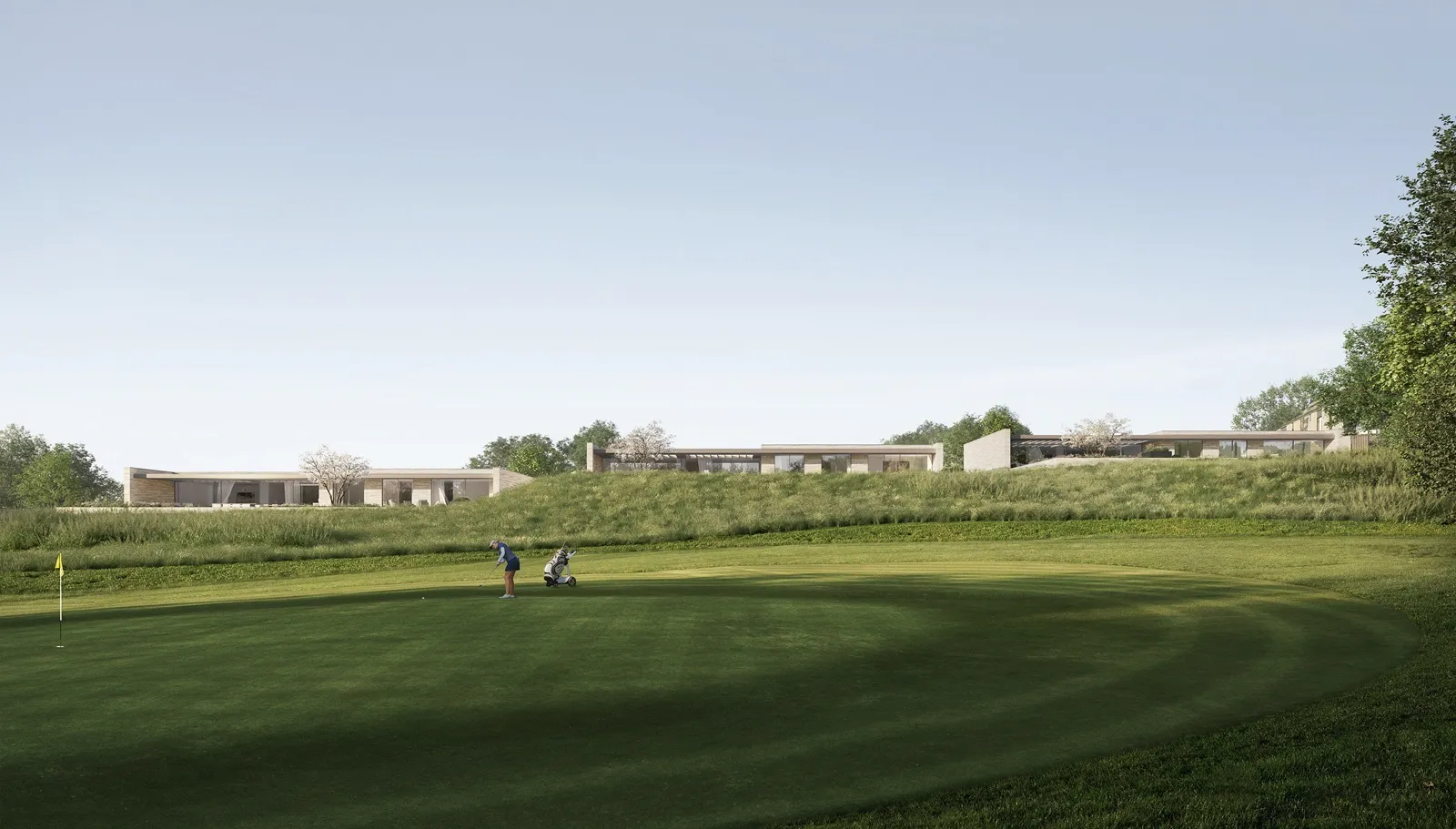
Housing at Hartsbourne Country Club, Hertfordshire, by Ström Architects for develoepr ACRE
How did you overcome these challenges?
We worked closely as a team, with HGH Consulting anchoring the proposal in paragraph 154(g) of the NPPF, demonstrating that the site was previously developed land and that redevelopment would not cause substantial harm to openness. We adopted a landscape-first strategy. Single-storey homes keep a low profile against the falling topography and the flats are positioned discreetly. Parking is rationalised and integrated rather than scattered.
We engaged early through pre-app, presented publicly at the club and were clear about what the scheme enabled. The enabling works for the club were secured up front. The result was 111 letters of support and only one objection.
What lessons have you learned?
Nothing moved until the land deal worked. Once the freehold structure was secured, the architecture could begin. We tested the numbers early and came back with something realistic. The homes were placed on previously developed grey-belt land, improving the landscape and visual impact while safeguarding the clubhouse’s future.
ACRE asked for good architecture, not just a permission, and that showed in the outcome of the scheme. The bigger lesson for me has been mindset. I’m thinking more like an entrepreneur, looking at how to unlock opportunities that don’t yet exist. That approach is shaping how we view projects now, in the UK and overseas. Some take time. But when they align, they’re worth it.
Jack Pannell, director, Common Ground Workshop
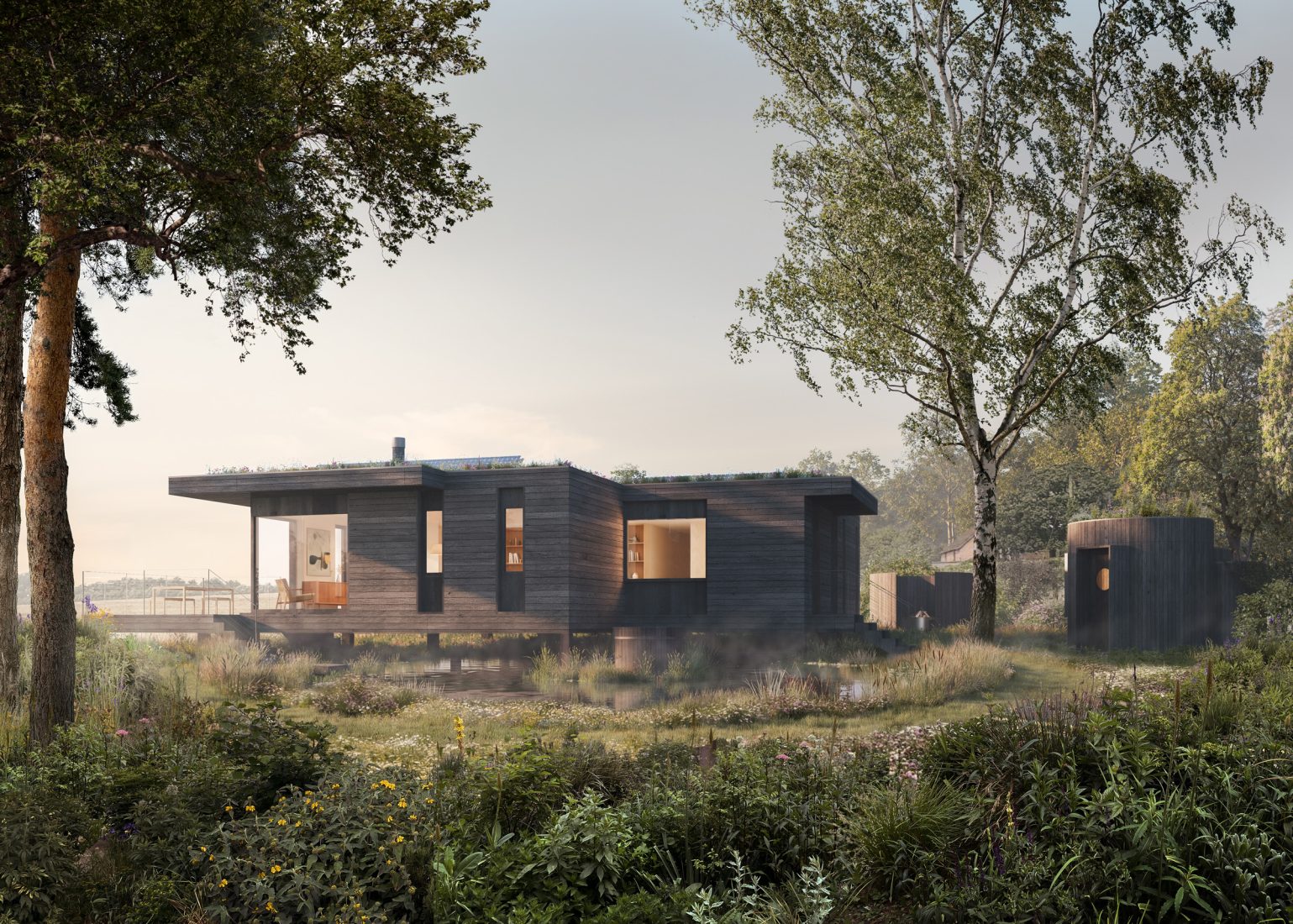
Whistler’s Forstal in Ash, east Kent, by Common Ground Workshop
What were the challenges of the site?
The Whistler’s Forstal project in Ash, east Kent, combined several layers of constraint: a modest plot outside the village envelope, limited precedent for new dwellings, transport and sustainability scrutiny, and the high design threshold required by Paragraph 84.
Unlike many Paragraph 84 projects, there was no opportunity here to rely on scale, visual spectacle or expansive landscape setting. The challenge was how to create a sense of journey, threshold and spatial richness within a very small footprint – a topic explored in depth through the design review panel process.
The site also required sensitivity to its Kent landscape context. Rather than approaching the project as an isolated architectural exercise, we wanted to respond to the lane’s character, the surrounding vegetation and the quieter patterns of rural development.
Importantly, there had been uncertainty around whether a modest Passivhaus dwelling could meet the ‘exceptional’ test typically associated with larger bespoke houses.
How did you overcome these challenges?
Our strategy focused on precision rather than gesture. Early collaboration between us and co-architect Forward Studio, client and planners allowed environmental performance, landscape integration and architectural form to be developed as a single narrative.
Passivhaus acted as a design framework rather than simply a performance target, guiding decisions about orientation, openings, material expression and spatial organisation. On a modest project, this clarity proved particularly valuable. Rigorous environmental design is not dependent on scale.
We relied on Paragraph 84’s emphasis on design quality, landscape integration and innovation, supported by site analysis, iterative testing and independent design review. The project was presented to planning as a coherent, landscape-led proposal where architecture, biodiversity and energy performance reinforced one another.
What lessons have you learned?
That Paragraph 84 is not dependent on scale or budget. Exceptional quality can emerge from constraint when design thinking is disciplined, collaborative and evidence-led.
Independent design review played an important role – not only in giving planners confidence but in clarifying how a modest project could meet the policy’s expectations.
The project suggests that the country house clause can be open to a wider range of clients and project types than is often assumed. It’s not limited to large houses, but can support carefully considered homes where quality is defined through clarity of thinking, environmental performance and sensitivity to place.
More broadly, the project reflects an evolution in how Paragraph 84 is interpreted, shifting from a focus on singular architectural statements towards an understanding of ‘exceptional’ that includes restraint, performance and long-term stewardship. We are applying this approach to other edge-of-settlement and constrained rural projects.
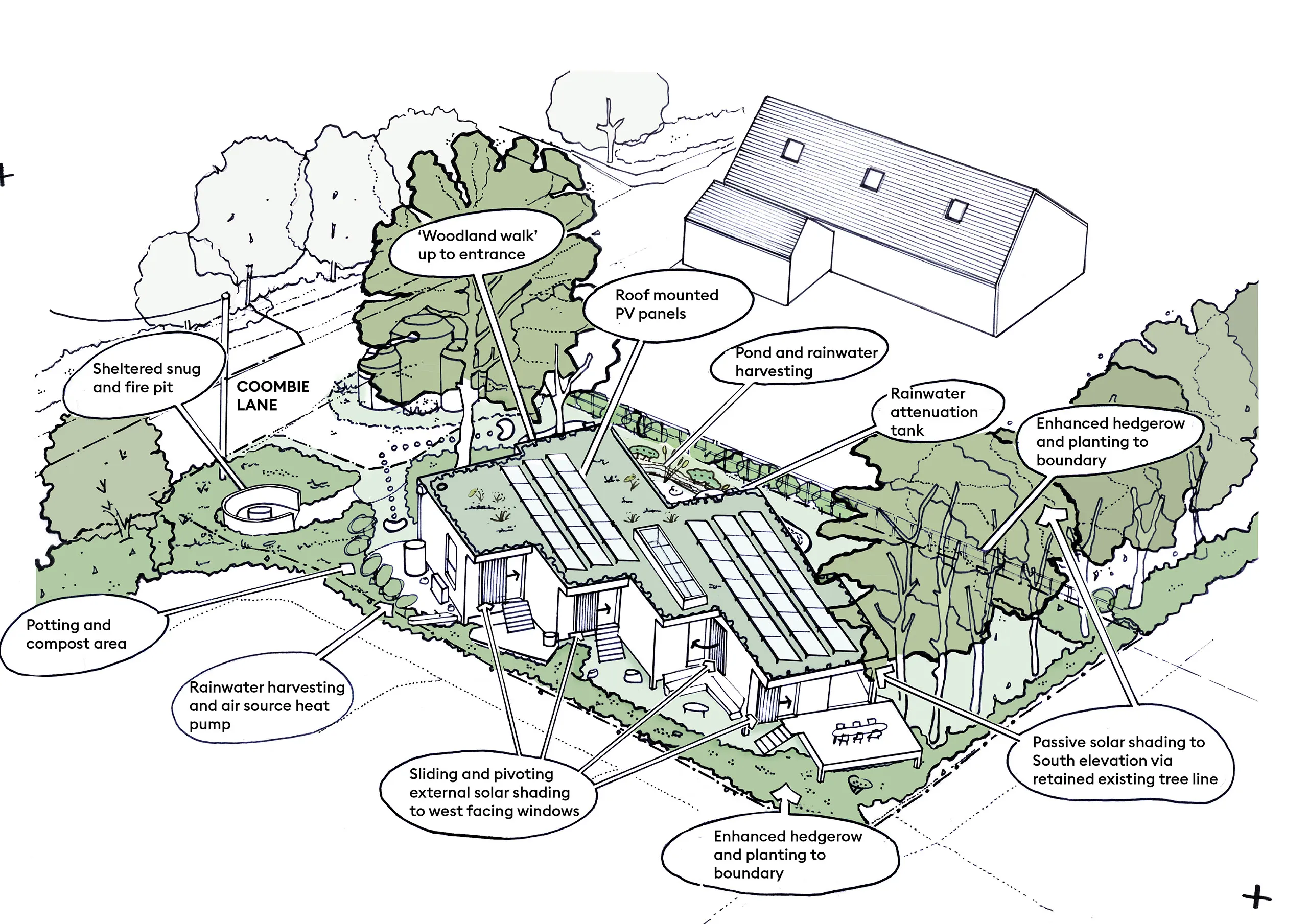
Common Ground Workshop’s east Kent scheme