
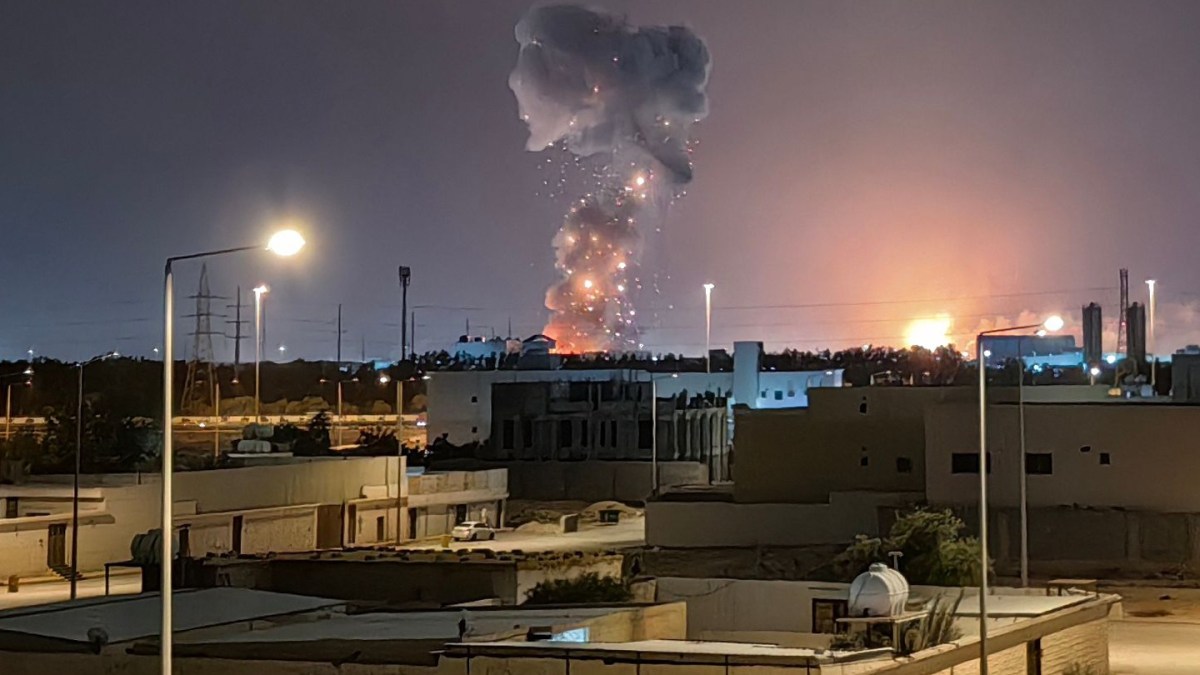
Netanyahu: Iran cannot enrich uranium
Binyamin Netanyahu, the Israeli prime minister, has said Iran has no ability to enrich uranium or make ballistic missiles after 20 days of war. Giving a press conference, he said that all Iranian senior officials had been “eliminated”.
Iran will deny Trump ‘even the semblance of tactical victory’
Aaron David Miller, the former US Middle East negotiator, has told Times Radio “there is simply no option to any diplomatic solution” to the war.
Since 1815, the average interstate conflict had lasted a few months, he said, but the Ukraine war had already dragged into its fifth year, with no clear exit or “off-ramp ”. In Iran, the regime, which “appears to be coherent and cohesive”, seemed “intent to continue to impose as many costs as they possibly can”.
President Trump, he argued, has “now manoeuvred himself into a situation where the survival of this regime and its capacity to continue to launch its drones and missiles is going to deny him even the semblance of the tactical victory”.
Trump jokes about Pearl Harbor to Japan’s PM
Trump gives a press conference with Sanae Takaichi
President Trump cracked a joke about Pearl Harbor to Japan’s prime minister, evoking the attack in 1941 to argue that the country understands the importance of “surprise” military operations.
Meeting Sanae Takaichi in the Oval office, Trump was asked why he had not warned allies such as Japan before launching strikes on Iran. “We didn’t tell anybody about it because we wanted surprise,” Trump said. “Who knows better about surprise than Japan? Why didn’t you tell me about Pearl Harbor?”
As Trump made his remarks, Takaichi had her hands clasped in her lap. She appeared to raise her eyebrows and shift in her seat.
• Read in full: Trump brings up Japan’s 1941 attack — during meeting with Japan’s PM
The US veteran who defected to Iran 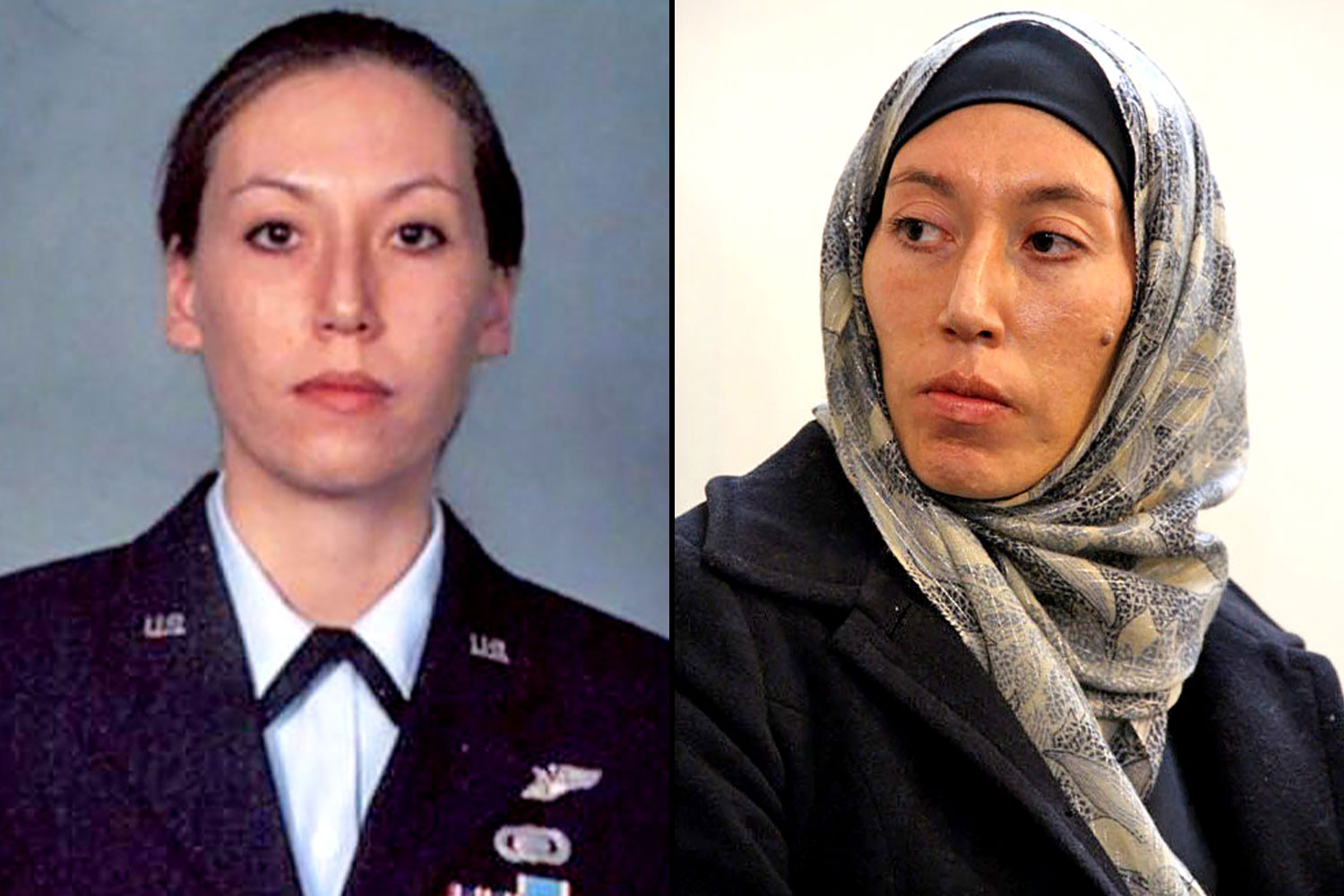
Monica Witt is believed to be living in Iran under state protection
Monica Witt was 34 and a former counterintelligence officer for the US air force when her Iranian visa finally came through. She celebrated the moment that had been months in the making. “I’m signing off and heading out! Coming home,” the Texan wrote in a message to her handler in Tehran.
Witt had been groomed, recruited and finally turned into a spy by agents linked to the Islamic Revolutionary Guard Corps (IRGC).
Her defection, as someone who had access to the identities of US government assets in Iran and knew how foreign communications were intercepted, was one of the biggest intelligence betrayals in recent American history.
More than a decade on, as America and Israel attack Iran, experts say she could prove to be a deadly secret weapon for the Islamic Republic.
• Read in full: How Monica Witt could be the regime’s secret weapon
Call to care for stranded seafarers
The International Maritime Organisation said it would work on a “safe maritime corridor” for the 3,000 vessels and 20,000 seafarers stranded in the Persian Gulf.
The agency urged countries to provide those crews with food, water and fuel. However, its resolutions are non-binding.
Arsenio Dominguez, the IMO secretary-general, said naval escorts for shipping would not be fully safe or sustainable, and stressed that only an end to fighting will solve the issue.
Watch: Pete Hegseth’s update on the war
“Please pray for our troops, every day, on bended knee, with your family”
US approves arms sales worth billions
The United States has announced the approval of $16 billion in military sales to the United Arab Emirates and Kuwait.
Marco Rubio, the US secretary of state, has “determined and provided detailed justification that an emergency exists that requires the immediate sale” of materiel, thereby waiving the requirement that Congress give its approval.
The biggest single sale is of lower-tier air and missile defence sensor radars, designed to track high-speed targets and give data to a missile defence network, to Kuwait for $8 billion, the State Department said.
The next largest was to the United Arab Emirates for a long-range discrimination radar, to track ballistic missile threats, and related equipment at a cost of $4.5 billion. The UAE also received approval to buy systems to defeat small, unmanned aircraft for $2.1 billion, advanced air-to-air missiles for $1.22 billion and F-16 warplane munitions and upgrades for $644 million.
Iran hits Israeli refineries
An Iranian missile attack has hit oil refineries in the northern Israeli port city of Haifa, Israeli media report. Rescue services say there have been no reports of injuries.
IRGC ‘damages F-35’ over Iran
The Islamic Revolutionary Guard Corps claims to have “damaged” a F-35 US stealth fighter which was flying a mission over Iran.
The incident was confirmed by Captain Tim Hawkins of US Central Command, who told CNN that a jet was “flying a combat mission over Iran” when it was forced to make an emergency landing. “The aircraft landed safely, and the pilot is in stable condition,” Hawkins said.
The plane was said to have landed at a US Middle East base.
Pete Hegseth, the US secretary of war, says America has control of the skies over Iran.
Sanae Takaichi is first in the line of fire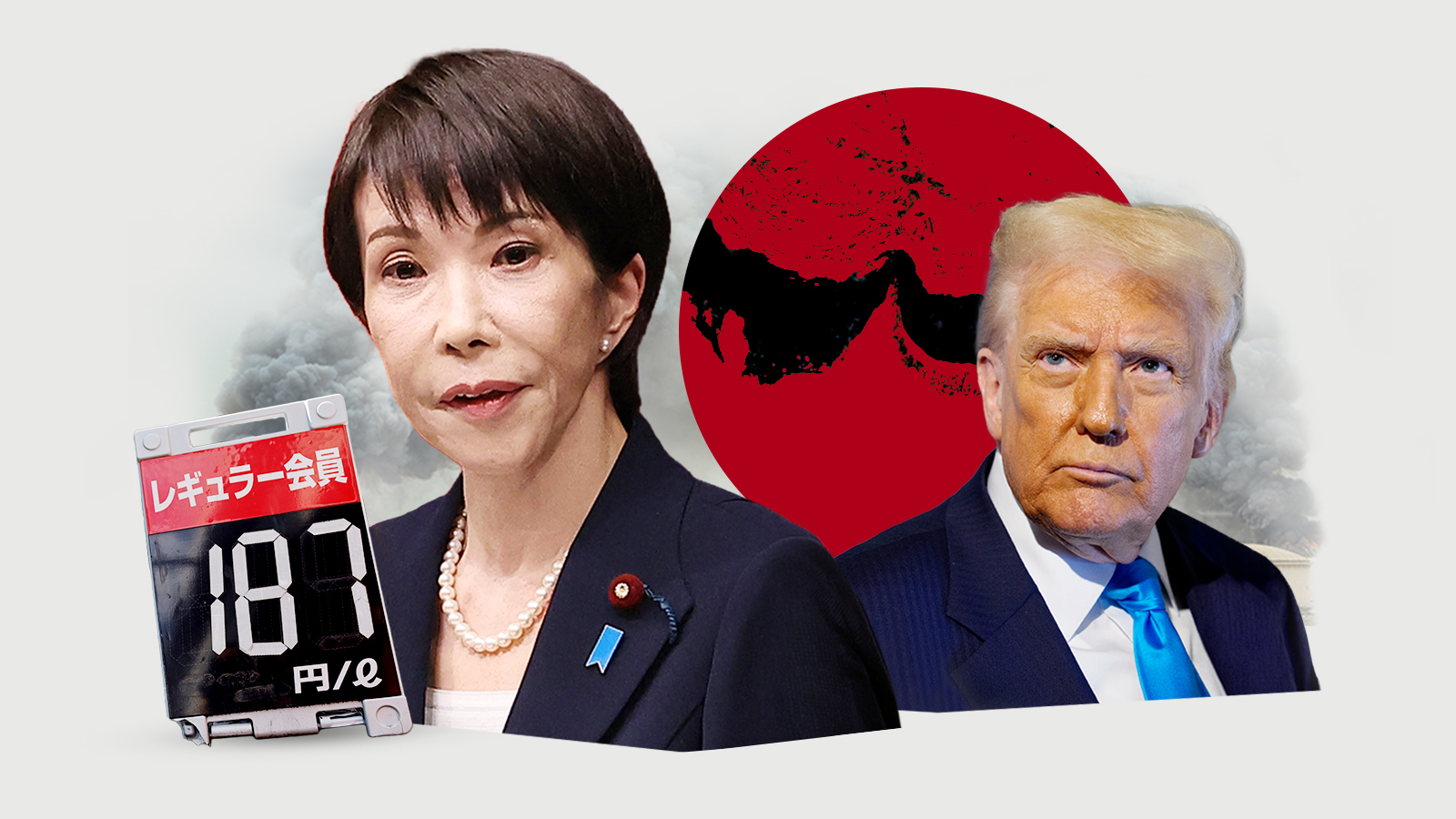
The Iran war is set to overshadow Sanae Takaichi’s three-day visit to Washington and make for an awkward meeting with President Trump
Summits with President Trump are fraught at the best of times, and none of the United States’s closest partners would choose to meet him this week of all weeks. Having been largely turned down in his appeal for military help in the Gulf, the president has done nothing to disguise his peevishness.
“Because of the fact that we have had such Military Success, we no longer ‘need,’ or desire, the NATO Countries’ assistance — WE NEVER DID!” he wrote on Truth Social. “Likewise, Japan, Australia, or South Korea.” Imagine then the discomfort of Sanae Takaichi, prime minister of Japan, who by sheer bad timing becomes the first leader of the Hormuz refuseniks to meet Trump face to face.
Trump brings up Pearl Harbor while sitting next to Japanese PM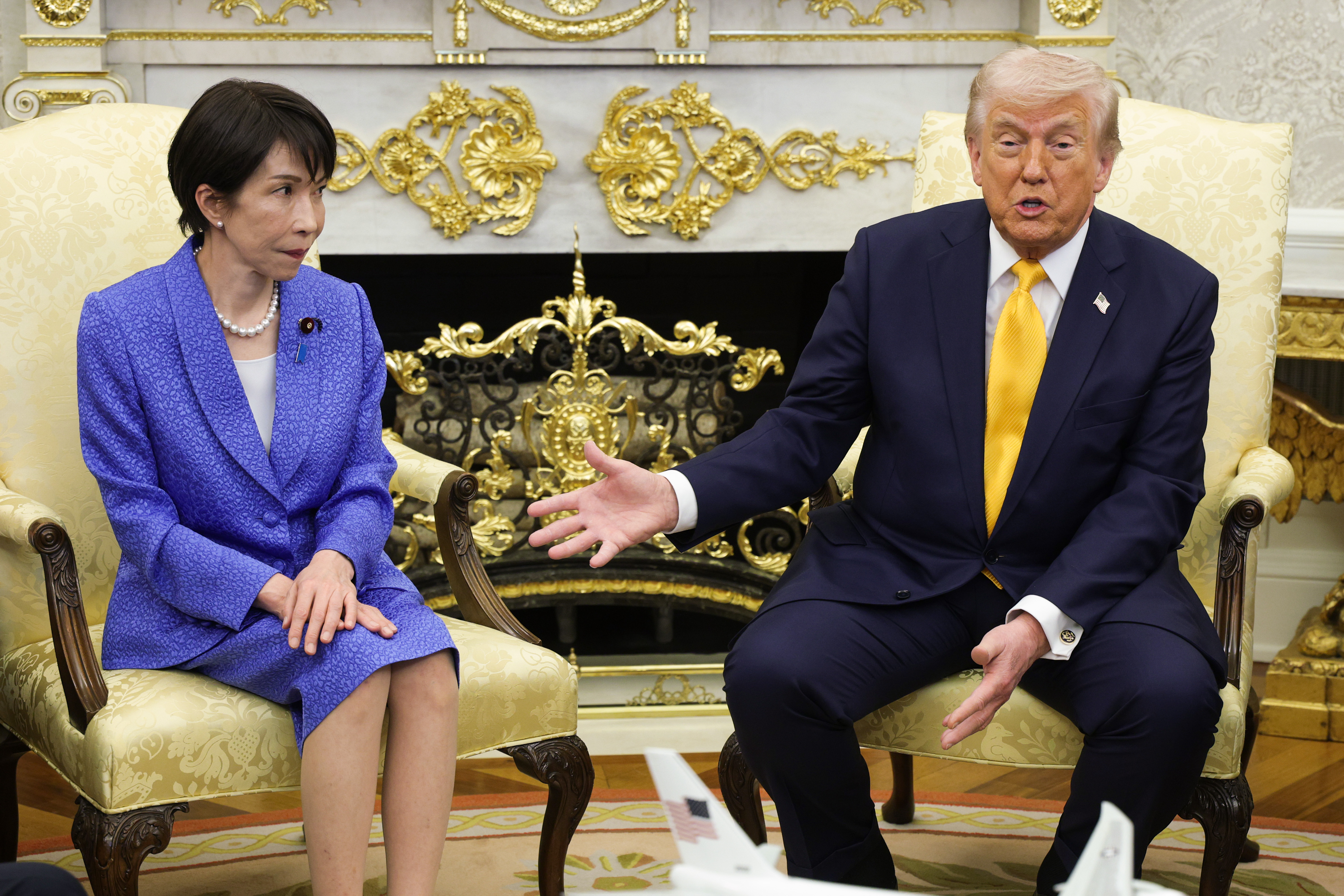
Sitting beside Sanae Takaichi, Trump drew comparison between his attack on Iran and Pearl Harbor in 1941
ALEX WONG/GETTY IMAGES
Trump made reference to the Japanese attack on Pearl Harbor when he was asked why he had not informed allies that he was about to launch the war in Iran. He said he had wanted an element of surprise.
“Who knows better about surprise than Japan? Why didn’t you tell me about Pearl Harbor?” he said. “You believe in surprise much more than us.”
The 1941 attack on Pearl Harbor, a US naval base in Hawaii, left more than 2,000 dead and led to the US joining the Second World War. It was the deadliest attack on US soil until 9/11.
Don’t attack energy fields, Trump told Netanyahu
Trump said he had told Binyamin Netanyahu, the Israeli prime minister, not to attack Iranian energy fields, adding that he had agreed not to.
“I told him, ‘Don’t do that’, and he won’t do that,” Trump told reporters in the Oval Office.
‘Too late’ for Nato to get back into good books
Trump has again attacked Nato countries — including the UK — for their lack of contribution towards the war effort in Iran and said it was “too late” for Nato countries to get back in his good books.
“Nato, they are getting much nicer, because they see my attitude, but as far as I am concerned, it’s too late.”
He attacked Britain again for an offer of aircraft carriers, which he had previously criticised as coming too late because they were needed at the start of the war, not after it was “won”.
Extra cash needed to keep US military ‘tippy-top’
Trump has confirmed that because of the war in Iran, he is going to ask for more money for the US military.
He blamed his predecessor, President Biden, for money he “gave away, so stupidly” to Kyiv.
Trump added that the extra money was needed so the US military could remain “tippy-top”.
Defections mean regime will ‘probably collapse’ 
The White House press conference
JIM WATSON/AFP/GETTY IMAGES
Scott Bessent, the US Treasury secretary, says leading figures in the Iranian government are defecting.
“We are seeing defections and the regime will probably collapse in itself,” he said. “We are going to give it back to the Iranian people.”
Bessent is in the White House press conference with Trump and Takaichi.
Trump ‘not putting troops anywhere’
President Trump said again that he was “not putting troops anywhere″ when a reporter in the White House asked if he was considering sending in ground forces. “If I did, I wouldn’t tell you.”
Trump wanted to ‘put out fire’ of Iranian threat
President Trump has said he launched the war on Iran because it posed a “serious threat” to the world and “I wanted to put out that fire”.
He defended the war’s impact on the global economy, claiming he thought it “would be worse”. The conflict would be over soon, he added.
Japanese PM puts faith in Trump 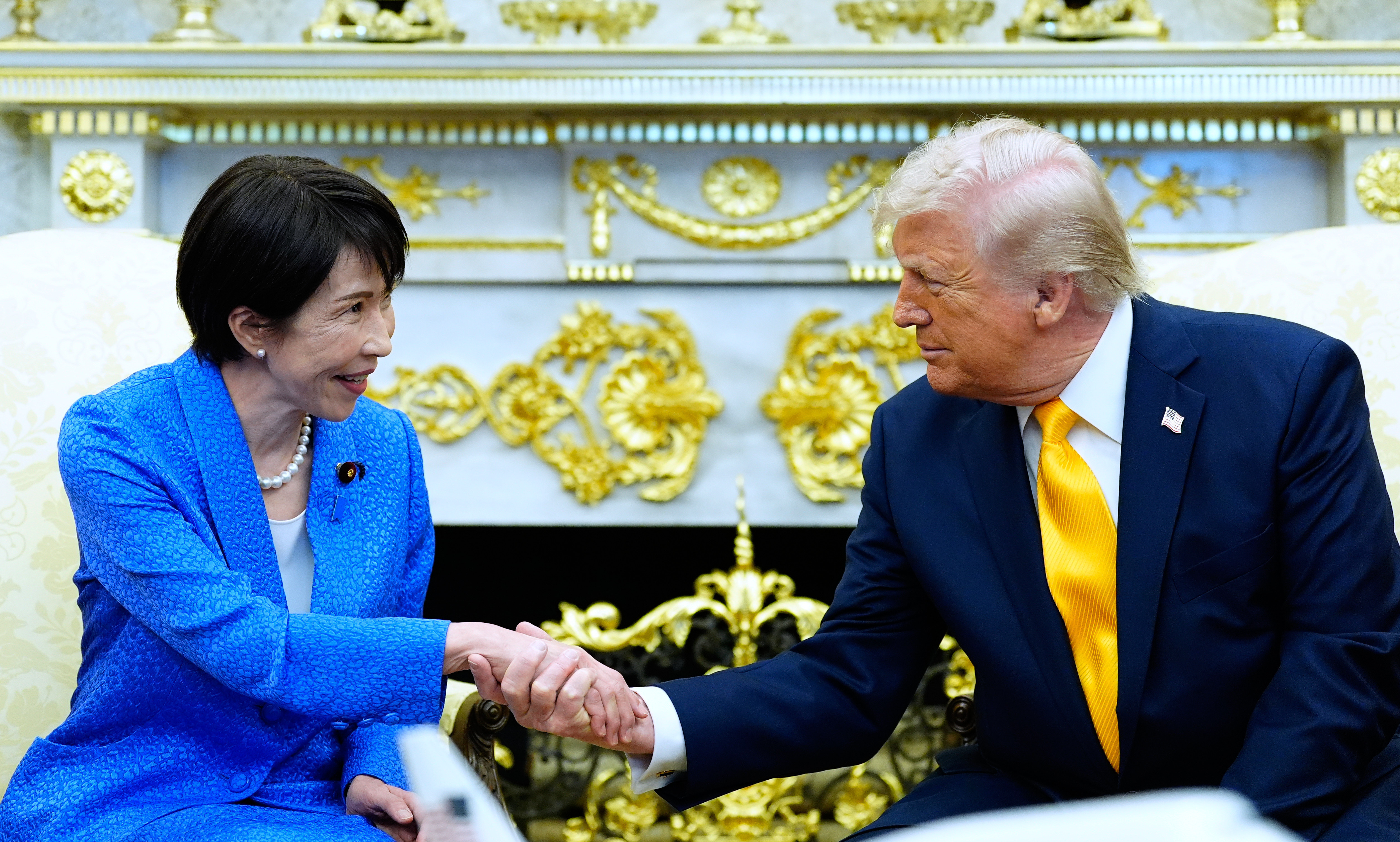
Sanae Takaichi gave a press conference in the Oval Office with President Trump
ALEX BRANDON/AP
Sanae Takaichi, the recently-elected prime minister of Japan, said she “strongly believes” that President Trump can bring about peace despite the turmoil in the Middle East.
Speaking in the White House, sitting next to the US president, Takaichi said: “Against this background, I firmly believe it’s Donald Trump who can achieve peace across the world.”
Trump said Japan was “stepping up to the plate” in the fight against Iran, “unlike Nato”.
Tehran ‘not just targeting US interests’
Sheikh Mohammed bin Abdulrahman Al Thani, Qatar’s prime minister, said Iran’s attack on the world’s largest gas facility in Qatar, Ras Laffan, was “clear proof” that Tehran was not, as it had claimed, targeting only US interests in the Gulf.
There were “persistent Iranian claims that these attacks are against American interests … and this claim is rejected and cannot be accepted,” he said. “The clear proof of this is the attack that took place yesterday that targeted a natural gas facility in the State of Qatar.”.
In pictures: prayers in Lebanon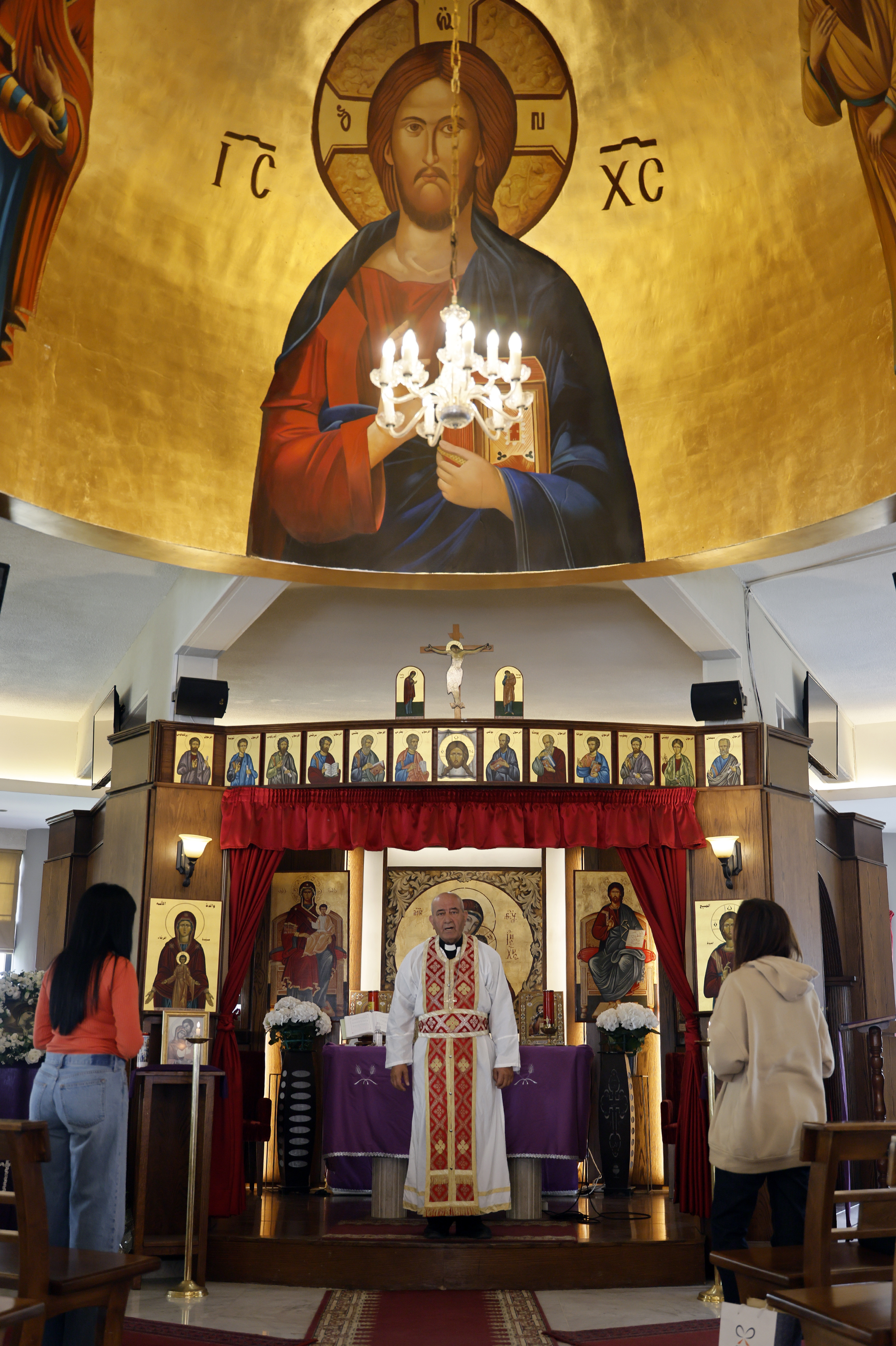
Father Pierre leads mass at a church in Fanar, northeast of Beirut
WAEL HAMZEH/EPA
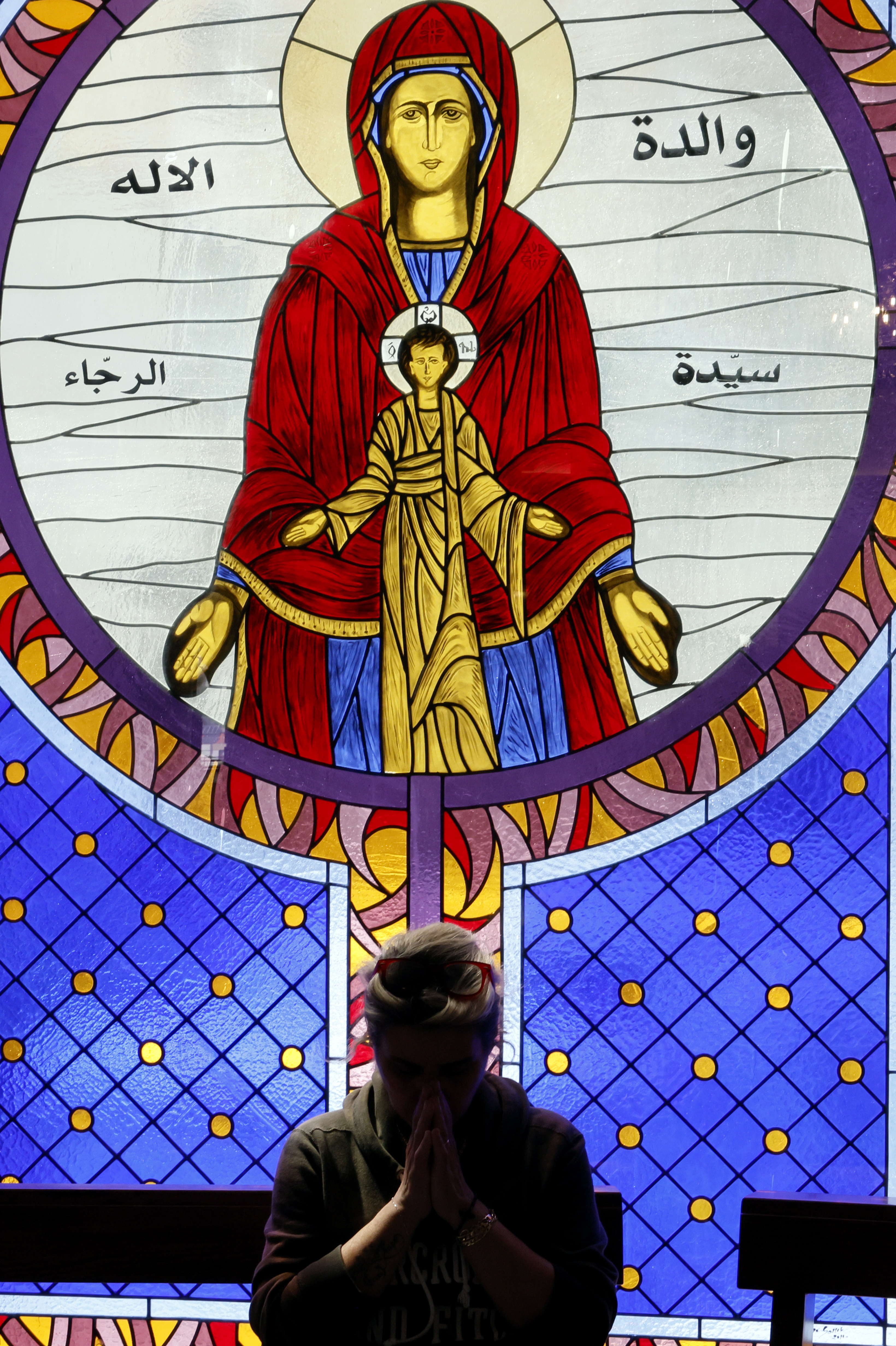
A woman prays during the mass
WAEL HAMZEH/EPA
Israeli jets hit Caspian Sea targets
The Israeli military says its fighter jets have struck several Iranian naval vessels in the Caspian Sea, including ships equipped with anti-submarine missiles and aerial surveillance systems, support vessels and patrol craft. A port command centre was also hit.
“It is one of the most significant strikes conducted by the IDF since the start of Operation Roaring Lion,” the military said.
Lieutenant Colonel Nadav Shoshani, a spokesman, said the strikes on Wednesday were the first to be carried out in the Caspian Sea.
Ras Laffan attack to affect global energy supply
Sheikh Mohammed bin Abdulrahman Al Thani, Qatar’s prime minister, said Iran’s attacks on Ras Laffan had “significant repercussions for global energy supplies”.
“Such attacks bring no direct benefit to any country, rather, they harm and directly impact populations,” he said.
US may drop sanctions on stranded Iranian oil
The US may soon remove sanctions from Iranian oil that is stranded on tankers to boost global supplies and reduce prices, Scott Bessent, the US Treasury secretary, has said.
“In the coming days, we may unsanction the Iranian oil that’s on the water. It’s about 140 million barrels,” he told Fox Business Network. “So, depending on how you count it, that’s 10 days to two weeks of supply.”
Adding sanctioned Iranian oil to global supplies would help keep oil prices down for the next 10 to 14 days, he said. Oil prices have been above $100 per barrel for much of the past fortnight.
The US Treasury has allowed the sale of sanctioned Russian oil stranded in tankers, saying it added 130 million barrels to global supplies.
Bessent said the US would take other actions to increase supply, including a unilateral release of stocks from the Strategic Petroleum Reserve on top of last week’s joint G7 release of 400 million barrels.
Israel co-ordinated South Pars attack with US
Israel’s attack on an Iran’s South Pars gasfield, which led to retaliatory attacks on energy facilities across the Gulf, was co-ordinated with the United States, Israeli officials have said.
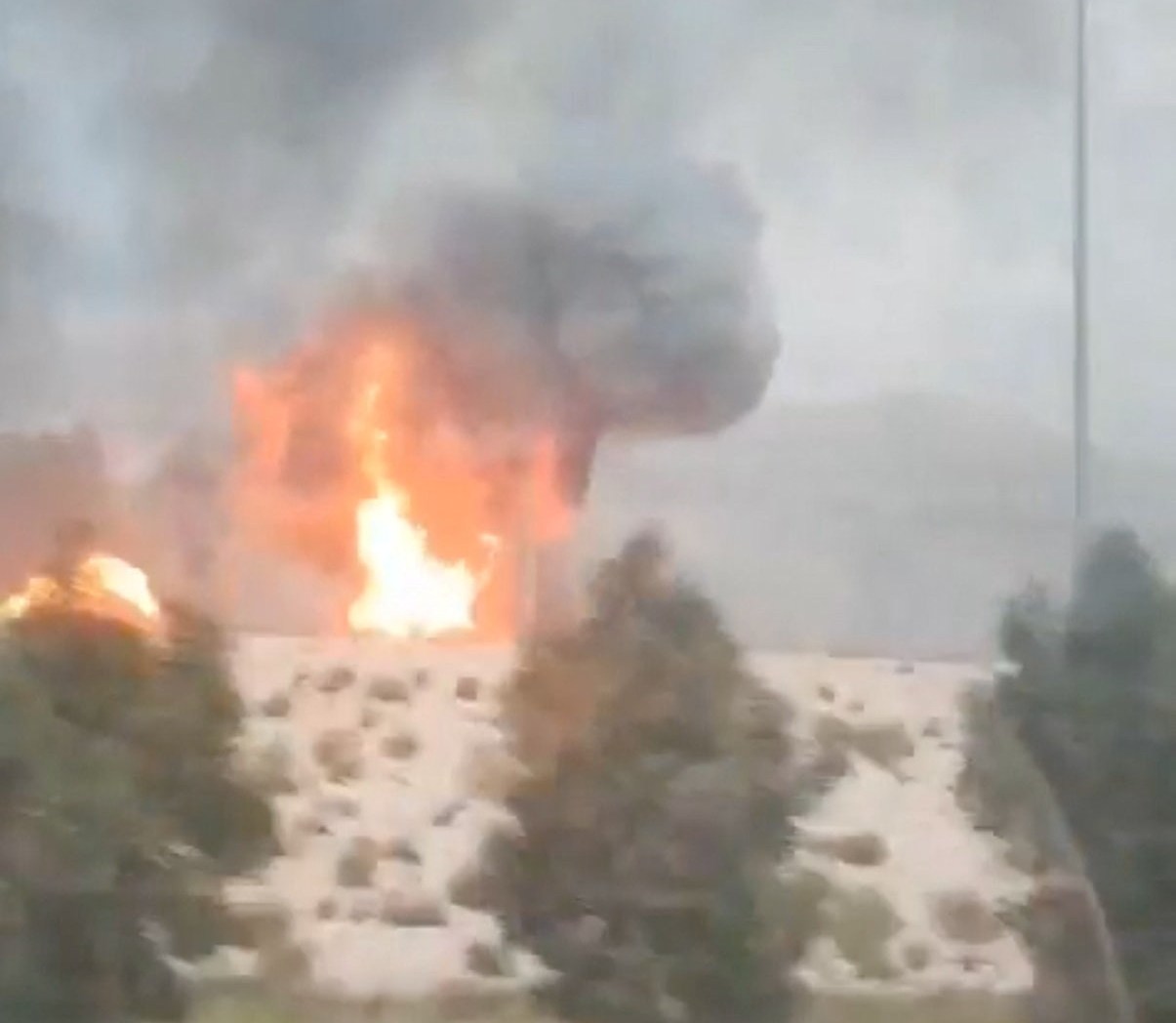
Smoke and flames rise from the South Pars gas field following an Israeli strike
REUTERS
President Trump said in a social media post on Wednesday night that Washington “knew nothing about this particular attack” and that Israel would not attack the gas field further unless Iran again attacked Qatar. Israel has not publicly acknowledged responsibility.
The three Israeli sources told Reuters that Israel was not surprised by Trump’s comments and described a situation similar to that following Israeli strikes on Iranian fuel depots several weeks ago. After those attacks, Pete Hegseth, the US secretary of war, said in “that particular case those weren’t our strikes”.
‘Lebanon death toll passes 1,000’
The death toll from Israeli attacks in Lebanon has passed 1,000, the health ministry in Beirut has said. A total of 1,001 people have been killed, official announced, since March 2.

Damage from an Israeli strike in Tyre, Lebanon, this week
CHIARA WETTMANN FOR THE TIMES
The new ministry statement said the toll included 79 women, 118 children and 40 health workers. More than 2,500 have been injured.
Attack on Qatar’s energy hub was Iran showing ‘restraint’
Please enable cookies and other technologies to view this content. You can update your cookies preferences any time using privacy manager.
Enable cookiesAllow cookies once
Abbas Araghchi, Iran’s foreign minister, has claimed the attack on Qatar’s Ras Laffan energy hub only employed a “FRACTION of our power” — and that Tehran was showing restraint.
“The ONLY reason for restraint was respect for requested de-escalation,” he wrote on X.
In an apparent threat to the US, Israel and Gulf nations, he added that there would be “ZERO restraint” if Iranian infrastructure is struck again.
He also says any end to the war “must address damage” to Iran’s civilian sites.
War threatens global food security, warns World Trade Organisation chief
The war in the Middle East poses a dire threat to global food security, the World Trade Organisation chief has warned, and appealed for global supply chains to remain open.
The Middle East conflict “threatens global food security, since shipping disruptions and higher energy costs reduce the supply and raise the cost of fertiliser”, Ngozi Okonjo-Iweala told reporters in Geneva.
“A prolonged interruption in supply could ripple through food systems, prompting farmers to reduce their use of fertilisers and plant less input-intensive crops,” she said, insisting it was “essential to keep global food trade channels open and predictable, allowing food supplies to flow to where they are most needed”.
US and Israeli military objectives not the same, says intelligence director
America’s national intelligence director Tulsi Gabbard has said during the second day of a hearing in front of the House intelligence committee that the American and Israeli objectives during the military campaign in Iran are not the same.
“The objectives that have been laid out by the president are different from the objectives that have been laid out by the Israeli government,” Gabbard said.
“We can see through the operations that the Israeli government has been focused on disabling the Iranian leadership. The president has stated that his objectives are to destroy Iran’s ballistic missiles launching capability, their ballistic missile production capability, and their navy,” she added.
Qatar gas facilities will take three to five years to repair
Iran’s attacks on Qatar have damaged facilities that produce 17 per cent of the company’s liquefied natural gas export capacity and it will take three to five years to repair them, QatarEnergy CEO Saad al-Kaabi told Reuters.
“I never in my wildest dreams would have thought that Qatar would be — Qatar and the region — in such an attack, especially from a brotherly Muslim country in the month of Ramadan, attacking us in this way,” he said.
Analysis: Trump is angry over Iran. Japan’s leader is first in firing line
Summits with President Trump are fraught at the best of times, and none of the United States’s closest partners would choose to meet him this week of all weeks. Having been largely turned down in his appeal for military help in the Gulf, the president has done nothing to disguise his peevishness.
“Because of the fact that we have had such Military Success, we no longer ‘need,’ or desire, the NATO Countries’ assistance — WE NEVER DID!” he wrote on Truth Social. “Likewise, Japan, Australia, or South Korea.” Imagine then the discomfort of Sanae Takaichi, prime minister of Japan, who by sheer bad timing becomes the first leader of the Hormuz refuseniks to meet Trump face to face.
The summit, arranged before the attack on Iran, should have been an opportunity to build on the high-spirited camaraderie established during Trump’s visit to Japan in October, when he called Takaichi “a winner” and Japan “an ally at the strongest level”.
• Read in full: Trump is angry over Iran. Japan’s leader is first in firing line
Starmer joins France and Germany to condemn Iran’s oil attacks
In a joint statement, the leaders of Britain, France, Germany, Italy, the Netherlands and Japan said: “We condemn in the strongest terms recent attacks by Iran on unarmed commercial vessels in the Gulf, attacks on civilian infrastructure including oil and gas installations, and the de facto closure of the Strait of Hormuz by Iranian forces.
“We express our deep concern about the escalating conflict. We call on Iran to cease immediately its threats, laying of mines, drone and missile attacks, and other attempts to block the strait to commercial shipping, and to comply with UN Security Council resolution 2817.”
The countries said the effects of Iranian actions will be felt in all parts of the world, especially by the most vulnerable people.
“We express our readiness to contribute to appropriate efforts to ensure safe passage through the strait. We welcome the commitment of nations who are engaging in preparatory planning,” they said.
Analysis: What Iran’s attack on source of Qatar’s wealth means for the war
Locals call Ras Laffan Industrial City, 55 miles north by a single road across flat desert from Doha, “the gas capital of the world”. They are not far wrong.
It is certainly at the heart of Qatar’s dramatic rise to riches, power and influence in the past two decades.
It also turned Qatar into a target for retaliation by Iran after its own biggest gas field, South Pars, was blasted by the Israelis on Wednesday. On Thursday morning Ras Laffan was ablaze, the latest and most visible sign yet of the effect on the Arab Gulf states of the war between Iran and Israel and the US.
• Read in full: What Iran’s attack on source of Qatar’s wealth means for the war
Hegseth says US holds the cards when questioned on Israel
Hegseth was asked if he felt that Israel was pursuing its own objectives because of the attack on Iran’s South Pars gasfield, which President Trump has claimed the US “knew nothing” about beforehand.
The war secretary Hegseth responded: “We hold the cards. We have objectives. Those objectives are clear. We have allies pursuing objectives as well.”
Specifically on South Pars, Hegseth added that Israel had “sent a warning” to Tehran. “Iran has weaponised energy for decades,” he said.
That question ended the press briefing.
‘FBI was investigating Kent before his resignation’
The FBI was reportedly investigating allegations former director of the National Counterterrorism Center Joe Kent leaked classified information before the top former intelligence official resigned on Tuesday in protest over the war in Iran.
The probe, which predates Kent’s departure, alleges he improperly shared classified information, reported Semafor, citing four people with direct knowledge of the investigation. One of source described it as being months-long.
In his resignation letter, Kent wrote Iran “posed no imminent threat to our nation” and accused President Trump of starting the war because of “pressure from Israel”.
In an interview with right-wing broadcaster Tucker Carlson posted late on Wednesday, Kent reiterated his view that Iran was not an imminent threat to the US.
“There was no intelligence that said, ‘Hey, on whatever day it was … the Iranians are going to launch this big sneak attack. They’re going to do some kind of a 9/11 Pearl Harbour,’” said Ken.
He claimed Israel “drove the decision” to go to war.
“I think that it’s fine that we offer defense to Israel. But when we’re providing the means for their defense, we get to dictate the terms of when they go on the offensive,” he added
Strikes on Qatari energy facilities egregious, says PM
The prime minister this morning spoke to the Nato secretary-general and the French president, Emmanuel Macron. No 10 called the strikes on Qatari energy facilities “egregious”, and warned they risked “pushing the region into further crisis”.
While discussions are ongoing with the US, Gulf countries and the EU on how to reopen the Strait of Hormuz, Starmer’s spokesperson said it was “still very early days”. A resolution is still likely to be weeks away, given the live nature of Iran’s attacks.
Starmer chairs Cobra meeting to discuss impact on oil
The prime minister chaired a ministerial Cobra meeting this morning to discuss the impact of Iran’s latest strikes on oil fields, The Times understands.
Discussions focused on military planning and the domestic impact of further escalation. Contingency planning by ministers over the impact of the developments overnight include working with airlines and airports to ensure tickets remain “fairly and appropriately priced”, said Sir Keir Starmer’s spokesperson.
Hegseth: It takes money to kill bad guys
Pete Hegseth has said the Pentagon requested an extra $200 billion from Congress because “it takes money to kill bad guys”.
Responding to reports about the budget request, the war secretary suggested the Pentagon could need even more, saying “that number could move”.
“An investment like this is meant to say, ‘Hey, we’ll replace anything that’s been spent’ … We’re going to be refilled faster than anyone imagined,” he said.
He also criticised US military aid to Ukraine under Joe Biden, saying the money was “better spent in our own interests at this point”.
Iran still retains some capability, says top US general
America’s top general has said Iran still “retains some capability” following the strikes on a Qatari natural gas exporting facility.
General Dan Caine, chairman of the joint chiefs of staff speaking alongside Pete Hegseth, said: “As we said and as we always said, they came into this fight with a lot of weapons. We’re continuing to hunt and find and kill them …They still retain some capability.”
‘It’s at the president’s choosing when the war ends’
Asked when the war could end, Hegseth declined to give a specific date, and said it would be “at the president’s choosing”.
“We wouldn’t want to set a definitive timeframe on that,” he said, adding: “We’re very much on plan.”
Hegseth: We have decided to share oceans with Iran
The war secretary said that US objectives in the war against Iran have not changed since strikes started on February 28.
Pete Hegseth told reporters that the objectives remained to destroy Iran’s missile launchers, its defence industrial base and navy as well as never allowing Iran to get a nuclear weapon.
Talking of attacking the Iranian navy, he said the US had “decided to share” the oceans with Iran. “We are giving them the bottom half”.
Pray for us, Hegseth urges Americans
Pete Hegseth called for Americans to support the military action and pray for the country’s troops involved in the war against Iran.
He asked Americans to pray “on bended knee” and in the “name of Jesus Christ”.
Today will be ‘largest day of airstrikes so far’
Hegseth has said today will be the largest day of airstrikes of the war so far.
“Iran has terrorised the US and our interests for 47 years,” he said. “Today will be the largest strike package yet.”
‘Ungrateful Europe should thank Trump’
Europe is “ungrateful” and should say thank you to President Trump, the US war secretary has said.
Pete Hegseth condemned America’s “ungrateful allies in Europe” for not doing more to help the war in Iran.
“The world, the Middle East, our ungrateful allies in Europe, even segments of our own press should be saying one thing to President Trump: thank you.”
Hegseth: This is not a forever war
Pete Hegseth has said the Iran war is “different” from previous Middle East conflicts in Afghanistan and Iraq.
“The media here — not all of it, but much of it — wants you think we are spinning towards an endless abyss, or a forever war or a quagmire,” the war secretary said in a briefing at the Pentagon.
“This is not those wars.”
Hegseth has said today will be the largest day of airstrikes of the war so far.
“Iran has terrorised the US and our interests for 47 years,” he said. “Today will be the largest strike package yet.
Hegseth: US hitting Iran ‘overwhelming force’
US secretary of war, Pete Hegseth, has said the US is continuing to bomb Iran with “overwhelming force” and enforcing “death and destruction from above”.
He was speaking at a press conference at the Pentagon.
Bank votes unanimously to hold rates
The Bank of England left interest rates unchanged today, but governor Andrew Bailey warned that the central bank “must respond” with rate rises if there is a lasting energy crisis sparked by the war in the Middle East.
The Bank’s nine-member monetary policy committee voted unanimously in favour of leaving the base rate at 3.75 per cent in a much more clear-cut vote than analysts anticipated ahead of the group’s meeting.
Andrew Bailey, governor of the Bank of England, signalled that households and homeowners could suffer further financial hardship if the US-Israeli war with Iran does not end soon, keeping oil and gas prices high.
Starmer: We are working on swift resolution to Middle East situation
Keir Starmer says the government is working on a “swift resolution to the situation in the Middle East”.
In a post on X, he said: “I condemn in the strongest terms the overnight Iranian strike on a Qatari gas facility.
“We are working towards a swift resolution to the situation in the Middle East, in the best interests of the British people — because there is no question that ending the war is the quickest way to reduce the cost of living.”
The prime minister was referring to Shell’s natural gas facility within Qatar’s Ras Laffan hub, which was damaged by fire following an Iranian attack.
Brent crude topped $118 after Iran struck the hub, which processes about a fifth of global gas supply.
Badenoch: Starmer has no clear position on Iran war
Keir Starmer “does not have a clear position” on the Iran war and has been led by his cabinet, Kemi Badenoch has said.
The leader of the opposition said she was not “gung-ho for war”, but that the UK should do more to protect British bases and troops in the Middle East.
Speaking at the launch of the Conservatives’ local election campaign, she said: “I have not changed my position. In fact, the prime minister is the one who changed his position because after saying ‘no’ to letting the US use our air bases, he later on said ‘yes’.
“Why is this man constantly changing? It’s because he doesn’t know what he thinks. I think it was the energy secretary who told him what to do the first time and then he [Starmer] thought he might get into trouble.”
India to deploy warships to escort vessels from Strait of Hormuz
India will deploy more than half a dozen warships to the Gulf of Oman and Arabian Sea as a precautionary measure to ensure the safe passage of its vessels from the Strait of Hormuz.
The ships will not enter and remain east of the strait. Their only objective is to escort the vessels until they reach safer waters in the northern Arabian Sea, according to reporting by Bloomberg.
India’s Ministry of Shipping has said 22 flagged vessels are stuck in the strait. Since the Strait of Hormuz has effectively been shut since the US and Israel began attacks on Iran in late February, India has managed to secure the safe transit of two state-owned tankers carrying liquefied petroleum gas.
About 90 per cent of its liquefied petroleum gas imports are from the Middle East.
UK ‘should avoid major energy bill bailout’
The government should avoid a major energy bill bailout, a Times columnist has said.
Matthew Syed told Times Radio that crushing interest payments were already an “Achilles heel” for democracies, including the UK.
“I worry a lot about public debt. Between about 1700 and 1970 the English and British governments didn’t run deficits outside of major wars because they were very conscious of a responsibility to the future.”
He previously wrote that Britons should “stick on an extra jumper during this crisis” in a Times column.
Are Israel and the US at odds over aims of Iran war?
President Trump continues to talk about a negotiated end to the war, even if neither he nor the Iranians are ready for one yet.
But Israel has indicated it has no intention of pausing its assault on the country, and its military is continuing to lay the ground for what it would regard as total victory: regime change.
On Wednesday, Israel Katz, the Israeli defence minister, said an airstrike had assassinated Iran’s intelligence minister, Esmail Khatib, in its latest attack on senior regime figures.
• Fact check: what is the truth behind Joe Kent’s claims on Iran war?
Bank tipped to hold rates
The Bank of England is likely to hold interest rates steady today, amid fears of an inflation crisis sparked by the Middle East conflict, economists have predicted.
Andrew Wishart, an economist at Berenberg, told The Times that the Bank of England “could cause a depreciation in the pound that makes the inflation problem far worse” if it surprised markets and delivered anything but a rate hold today.
Dan Coatsworth, head of markets at AJ Bell, told PA: “The Fed and Bank of England are in a state of limbo while they wait to see if the Middle East crisis will trigger a long-lasting inflation shock.”
He added: “There simply isn’t enough data to make an informed decision on whether to put up rates to deal with the likely aftershock of the Middle East crisis — namely, a new inflation spike.”
Men executed in Iran ‘gave confessions under torture’
Rights groups said three men, who included a teenager, who were hanged for killing police officers during protests in January were executed without a fair trial and had given confessions under torture.
Mehdi Ghasemi, Saleh Mohammadi, 19, and Saeed Davoudi were hanged in the city of Qom, south of Tehran, after being convicted of the capital crime of waging war against God, the Mizan news agency said.
They had been found guilty of involvement in the killing of two police officers and carrying out “operational actions” in favour of Israel and the United States.
There had been particular concern over the fate of Saleh Mohammadi, a teenage wrestling champion who had taken part in international competitions, who according to Amnesty International was denied “adequate defence and forced to make ‘confessions’… in fast-tracked proceedings that bore no resemblance to a meaningful trial”.
Gulf crisis leads to cricket ball shortage
An unexpected effect of conflict in the Middle East is growing concern that cricket in England could, quite literally, run out of balls (Elizabeth Ammon writes).
With key freight routes through the Gulf restricted and airline costs reportedly tripling, Dilip Jajodia, the owners of the manufacturer of the Dukes cricket ball manufacturer, has said the county game is facing a “major crisis”.
The 18 first-class counties set to begin the new season on April 3 with roughly half their usual stock.
Dukes has been producing balls since the 18th century and supplies every ball used in Tests in England, as well as the County Championship. The brand typically imports between 4,000 and 5,000 balls each summer for professional cricket in this country.
British cow hides are tanned in Chesterfield before being sent to south Asia, where each ball is stitched by hand. They are then flown back to the UK.
Help households cover energy ‘Trump tax’, campaigners say
Billpayers should receive immediate government support to cover the “Trump tax” on their energy costs, a fuel poverty campaign group has argued.
“These gas and oil prices haven’t been seen since the winter of 2022/23,” said Simon Francis from the End Fuel Poverty Coalition. “Households will face a ‘Trump Tax’ on their energy bills as a result of this war and the case for government action to support households is becoming impossible to ignore.”
However, wholesale gas prices are still less than half of their peak following the Russian invasion of Ukraine.
Energy secretary, Ed Miliband, wrote to energy firms this morning to demand “maximum flexibility” and “fair, transparent and fully justifiable” pricing.
Macron demands halt to strikes on energy plants
President Macron has called on both sides in the Middle East war to agree on a halt to strikes against oil, gas and other civilian facilities.
In a post on X, the French president said he had “just spoken” with Sheikh Tamim bin Hamad Al Thani, the emir of Qatar, and President Trump following the strikes on gas production sites in Iran and Qatar.
“It is in the common interest to implement without delay a moratorium on strikes targeting civilian infrastructure, particularly energy and water infrastructure,” Macron added.
Iran has threatened to intensify their strikes in neighbouring states after the US staged further attacks on Iranian gas installations, prompting a response from Tehran.
Macron angered Trump on Monday when he declared that France would “never” agree to the US president’s request to help American forces secure the passage of shipping through the Strait of Hormuz. France would only patrol the area with consent from Iran.
Ras Laffan: gas plants behind Qatar’s wealth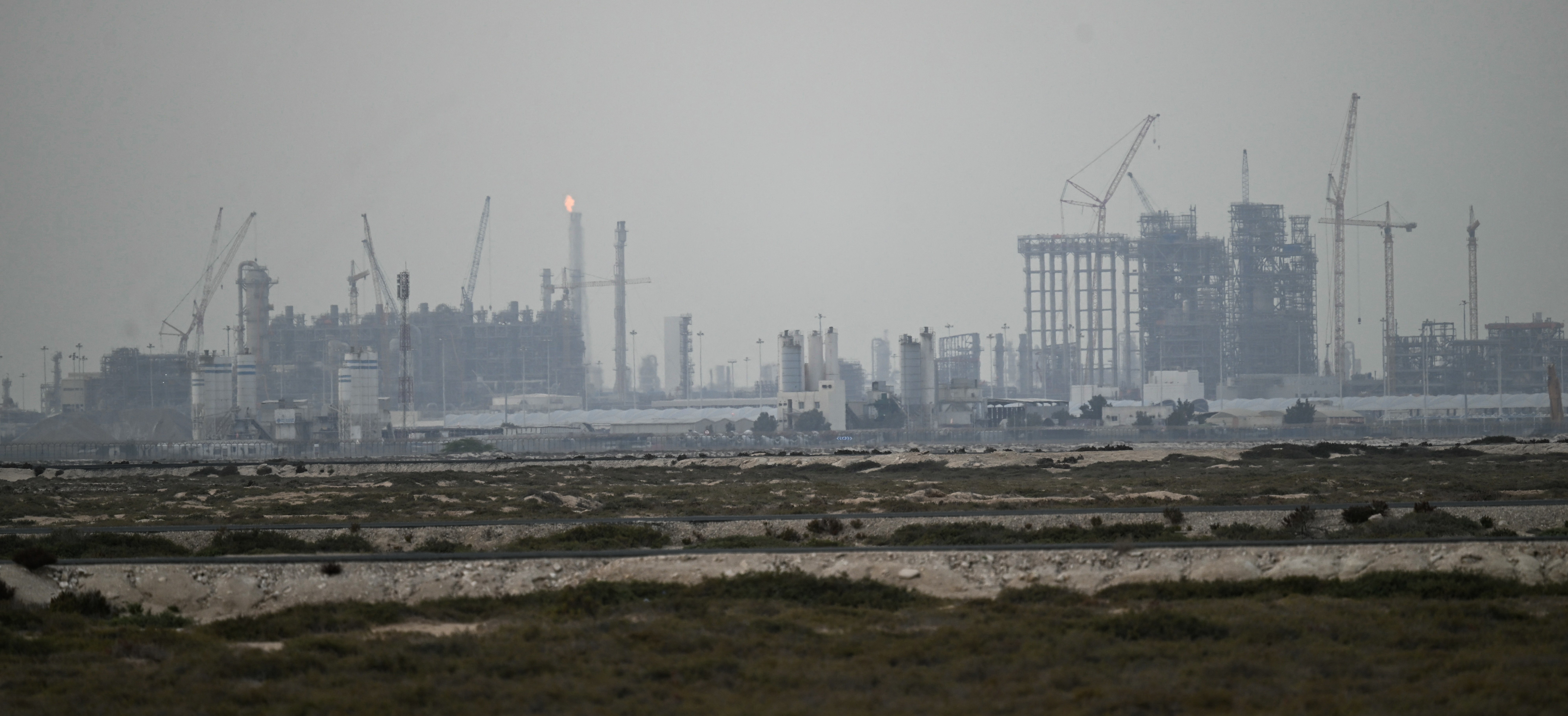
Ras Laffan Industrial City earlier this month
AFP/GETTY IMAGES
With its huge mass of industrial metal pipes, constantly burning flare stacks, docks and ships, Ras Laffan, resembles a vast James Bond film set.
It is located on a northerly tip of Qatar, some 85 km from the capital Doha, and accessible by one road, Route 77. Even in a country as strictly policed as Qatar, Ras Laffan is heavily guarded.
Inside are some 30,000 workers from a number of countries. Rules in Ras Laffan are strictly enforced. Workers who breach a speed limit on a road in the city can be sacked. It is also home to a turtle conservation project and, according to one Qatari, the best white truffles in the country.
Locals know it as “the gas capital of the world”. Ras Laffan is where gas goes through an industrial process where it is cooled to -162C and shipped around the world as liquified natural gas.
The success of Ras Laffan is behind the phenomenal wealth of Qatar. When Ras Laffan opened in 1997, Qatar’s exports totalled around $5 billion. In 2024, exports were estimated to be $88 billion.
Analysis: UK was ‘weirdly relaxed’ about energy crisis
The UK government was “weirdly relaxed” about the mounting energy crisis as recently as two weeks ago, The Times political editor, Steven Swinford, has told Times Radio.
“Two weeks ago I can tell you they were weirdly relaxed about [the crisis] and it would pass and move on and it wouldn’t get to this situation,” he said.
“They are not relaxed this morning, far from it, and they are extremely worried about the cost of living… particularly for energy bills in June now.”
UK natural gas prices rose by 25 per cent this morning, and Trump has threatened to “massively blow up” the South Pars field, the world’s biggest.
Swinford continued: “[The government] are drawing up plans for everything, ranging from a kind of big bazooka, full-style bailout of households, which is very unlikely, to a more targeted approach, which would only go to the kind of poorest households.”
Shell ‘assessing damage’ at Qatar gas hub
Shell’s natural gas facility within Qatar’s Ras Laffan hub was damaged by fire following an Iranian attack.
It said the Pearl GTL facility was attacked, sparking a fire that has since been extinguished.
The British energy giant said “all staff on site are safe” and that the facility is now in a “safe state”.
“We are currently assessing any potential damage to Pearl GTL and working with QatarEnergy and the relevant authorities to understand the damage to the wider Ras Laffan Industrial City facilities,” Shell said in a statement.
UK natural gas prices have soared to a three-year high, and oil prices spiked after news of the attack on the Shell plant and on energy sites in Iran.
Watch: Iran women footballers return homeMiddle East escalation ‘reckless’, says Macron
President Macron has condemned a “reckless escalation” as Iran struck a series of Gulf energy sites after an Israeli attack on its South Pars gasfield.
Speaking on arrival for EU talks in Brussels, Macron warned that if Middle Eastern energy “production capacities themselves are destroyed, this war will have a much more lasting impact”.
He called for “direct talks between the Americans and Iranians on this matter”.
Iran MPs suggest taxing ships
Iranian MPs have proposed imposing tolls on ships passing through the strategic Strait of Hormuz, local media has reported.
“We in parliament are pursuing a plan under which countries will pay tolls and taxes to the Islamic Republic if the Strait of Hormuz is used as a secure route for transit, energy and food security,” said Tehran politician Somayeh Rafiei, the ISNA news agency reported.
UK orders more missiles to protect Middle East allies
Britain will buy fresh supplies of Lightweight Multirole Missiles (LMMs) to support UK forces and allies in the Middle East.
The missiles, manufactured by Thales in Belfast and described as “highly capable” by the Ministry of Defence, can be used to fend off Iranian drones.
It comes after the defence minister, Luke Pollard, convened a meeting with UK defence companies and representatives from Saudi Arabia, Kuwait, Bahrain, Qatar, the UAE, Iraq and Jordan.
Oil tops $118 a barrel on supply jitters
Brent crude has topped $118 on increased concerns about supply after Iran attacked Qatar’s Ras Laffan hub, which processes about a fifth of global gas supply.
There are also reports of an attack on a Saudi Aramco refinery in the Red Sea port of Yanbu. Yanbu is currently the only export outlet for any crude oil out of Gulf Arab countries with the Strait of Hormuz effectively shut.
Iran threatened to retaliate on Gulf oil and gas infrastructure after Wednesday attack on its South Pars gasfield.
Malloch-Brown: Petulant Trump may escalate conflict
Lord Malloch-Brown, the former deputy secretary-general of the UN, called the US-Israeli offensive against Iran an “illegal war”.
“Doctrine has been thrown aside and there has been no effort to line up legality or international support,” he told Sky News. “Powerful neighbours are now eyeing up weaker ones and wondering if they too can move without the legitimate cover of a UN resolution or any pretence of international legality.”
Malloch-Brown, who was a minister in Gordon Brown’s government, also warned President Trump’s “petulance and anger” might drive him to strike Iranian energy infrastructure and further escalate the conflict.
A “war without limits” could also see desalination facilities targeted, which would have devastating consequences for the region, he said.
Cyprus calls for talks over ‘colonial’ UK bases
The Cypriot president has called for “frank” discussions over the future of British bases on the island, the FT has reported.
“When this unfortunate situation in the Middle East is over, we need to have an open and frank conversation about the status and future of the British bases in Cyprus,” Nikos Christodoulides told reporters before an EU summit in Brussels.
He said that the bases were a “colonial consequence”, noting that more than 10,000 Cypriots live within them.
Cyprus is home to two British sovereign bases – Akrotiri and Dhekelia – with both considered vital to the West’s regional security interests.
An Iranian drone hit RAF Akrotiri on March 1, with officials later saying it contained a Russian-made Kometa-B navigation system.
Long-haul Easter flights at risk from fuel rationing
Airlines have been warned that they will face jet fuel shortages as soon as next month, risking flight cancellations to long-haul destinations at the end of the busy Easter holiday period.
Oil traders expect to see shortages of jet fuel from the continued closure of the Strait of Hormuz within the coming weeks as reserve supplies are run down and not replaced.
Britain is vulnerable to potential disruption if the conflict continues as the majority of the country’s imported jet fuel comes from Kuwait, Saudi Arabia and the United Arab Emirates.
• Read in full: Long-haul Easter flights at risk due to fuel rationing
Gulf states seek urgent UN debate
Gulf states have requested an urgent debate at the United Nations over Iran’s strikes on civilians and energy infrastructure across the Middle East.
A diplomatic note sent by Gulf states, seen by Reuters, describes the ballistic missile and drone strikes on Bahrain, Jordan, Kuwait, Oman, Qatar, Saudi Arabia and the United Arab Emirates as a “situation of serious concern for international peace and security”.
The “unprovoked attacks” on Gulf countries demand immediate attention, the diplomatic note said.
The draft resolution proposed by the Gulf states calls for Iran to immediately stop strikes on civilian infrastructure and commercial vessels in the Strait of Hormuz, and also seeks reparations for civilian, infrastructure and environmental damage.
Aramco refinery is latest to be hit
A refinery owned by Saudi oil giant Aramco has been targeted in a drone strike.
The Samref facility, in the Red Sea port of Yanbu, was targeted in the attack. Yanbu has been one of two major export outlets for any crude oil out of Gulf countries since Iran effectively shut the Strait of Hormuz after the war erupted late last month.
Iran’s Islamic Revolutionary Guard Corps had issued an evacuation warning to several oil facilities across the Gulf following a strike on its South Pars gasfield, a major escalation in the war with the United States and Israel.
Interview: Israeli invasion of Lebanon ‘brutal and unnecessary’
Israel’s former prime minister who went to war against Lebanon 20 years ago has described the country’s latest invasion of its northern neighbour as “arrogant, brutal and unnecessary” (Tom Ball writes).
Ehud Olmert, who led the country from 2006 to 2009, said that moving ground forces into southern Lebanon was doomed to fail in its objective of disarming Hezbollah, while making Israeli soldiers “easy targets” for the Iranian-backed militia’s elite Radwan force.
A similar fate befell Israeli soldiers who took part in the war of 2006, during Olmert’s leadership, when Hezbollah inflicted heavy casualties through ambushes and rocket strikes, in effect fighting Israel to a standstill.
• Read in full: Lebanon invasion is arrogant and brutal, says former Israeli PM
Oil tops $114 a barrel after attack on Qatar plant
Oil has topped $114 barrel, gas prices have surged and stock markets have fallen after Qatar reported “extensive damage” around the Ras Laffan terminal, which processes about a fifth of global gas supply.
The attack has increased fears about higher energy prices stoking inflation and slowing economic growth.
The Ras Laffan energy hub is home to several international companies, including Shell. The complex is home to Shell’s $18 billion Pearl gas-to-liquids plant, which it built in partnership with QatarEnergy.
The plant processes about 1.6 billion cubic feet of natural gas per day, which it converts into 140,000 barrels per day of liquid products like diesel, kerosene, naphtha and base oils.
“We are currently assessing any potential impact on any asset operated or utilised by Shell… and will provide further information in due course,” a Shell spokesperson said.
Iran launches strikes on Saudi and Qatari oil fields
UK ‘worried’ about Middle East situation
The trade minister has admitted he is “worried” about developments in the Middle East, saying the government was “very sceptical” about the war
Chris Bryant said a call he held with counterparts in the Gulf yesterday was interrupted by an air raid warning.
He insisted the UK was “well supplied” with energy and that the prime minister and chancellor were personally monitoring the situation.
However, Bryant told Times Radio of developments overnight: “Of course we’re worried. That’s why we were always very sceptical about the whole of this war in Iran.
“Because I don’t think you should enter into a war unless you’ve actuallly got a plan and you know what you’re trying to achieve.”
Greeks flown home with their pets 
Danai Koukoulomati and her cat Muay Thai
LOUIZA VRADI/REUTERS
Dozens of dogs and cats arrived in Athens on Wednesday with their owners aboard a special evacuation flight for Greeks with pets who were trapped by the war in the Middle East.
The government-chartered Aegean flight from Abu Dhabi in the United Arab Emirates carried 45 pets and 101 people.
“Our pets are not luggage, they are part of our families,” said the Greek interior ministry official Nikos Chrysakis.
He added the interior and foreign ministries had worked for days “so we can have this good result, for the animals and people to return home safely.”
Many pet owners refused to leave them behind. “To me, my pet, my cat is my family,” Danai Koukoulomati said of her cat Muay Thai. “There is no chance I’m going to leave him behind,” she added.
Koukoulomati said Muay Thai had been more stoic in dealing with the war than her. “He would hide in the bathroom and that would be all. He was a calm cat,” Koukoulomati said. “I was not as calm as my cat. I need to take some lessons from him.”

Pets and their owners were swarmed by the media after landing in Athens
MILOS BICANSKI/GETTY IMAGES
Kuwaiti oil refinery damaged in drone strike
There has been a further attack on energy facilities in the Gulf. Kuwaiti state media said a drone attack was carried out on a refinery owned by Kuwait’s national oil company, sparking a fire at one of the units.
“Kuwait Petroleum Corporation announced that one of the operational units of the Mina al-Ahmadi refinery … was the target of a drone attack, triggering a limited fire,” the Kuwait News Agency said, adding that no one was injured.
UK gas prices surge by a quarter
UK natural gas prices have risen 25 per cent to 174.49p a therm this morning following fresh strikes against energy infrastructure in the Middle East.
Iranian strikes caused extensive damage at Qatar’s main gas hub, the country’s state-run energy firm said.
The attacks came after Iran’s South Pars field, the largest in the world, was targeted by Israel on Wednesday.
King will visit US despite tensions with Trump
The King will be met with a show of American military might when he arrives for a three-day visit to the US with the special relationship at a low ebb.
The trip, which has been six months in the planning and has involved a “recce” to the US by a team of Charles’s closest aides and other officials, will go ahead next month despite tensions between the president and prime minister over the war in Iran.
The King will spend just a day in Washington, The Times can reveal, where he will pack in engagements such as an address to Congress and an evening banquet.
• Read in full: King will visit US despite tensions with Trump over Iran
Iran did not pose nuclear threat, US intelligence director admits
Iran made no effort to rebuild its nuclear programme following the bombing of its enrichment facilities last year, according to a US intelligence assessment that contradicts President Trump’s central justification for the ongoing war.
Appearing before Congress, Tulsi Gabbard, the director of national intelligence, said that Tehran abandoned its pursuit of a nuclear weapon after American B-2s dropped 30,000-pound bombs on its enrichment sites at Fordow, Natanz and Isfahan in June.
“As a result of Operation Midnight Hammer, Iran’s nuclear enrichment program was obliterated. There has been no efforts since then to try to rebuild their enrichment capability,” she said.
• Read in full: Iran did not pose nuclear threat, intelligence director admits
How could the US safeguard Strait of Hormuz? Trump’s options explained
President Trump has said the United States can open the Strait of Hormuz on its own but such an operation would be complex and require many ships and aircraft already assigned to taking out targets in Iran.
Even then, the US president will need to be prepared to take casualties given the threats and difficulties they will face, experts warn. The cost to the military would be huge and long-lasting.
Iran’s rugged mountainous coastline to the east of the strait creates natural fortifications and enables over-the-horizon strikes that are difficult for surveillance assets to spot.
• Read in full: How could the US safeguard Strait of Hormuz? Trump’s options explained
China: Israeli killing of civilians and leaders unacceptable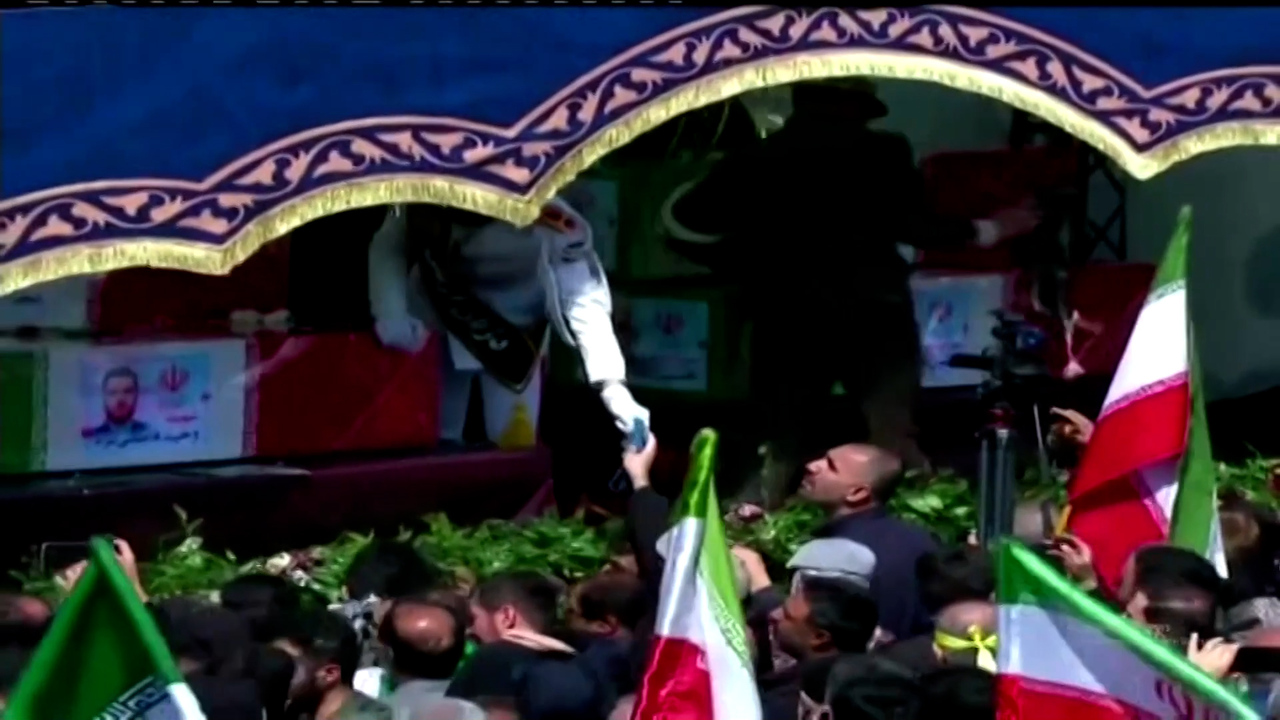
Ali Larijani’s funeral was held on Wednesday
China has condemned the killing of Iranian security chief Ali Larijani and Israeli attacks on civilians, calling them “unacceptable”.
“We have always opposed the use of force in international relations. The acts of killing Iranian state leaders and attacking civilian targets are even more unacceptable,” China’s foreign ministry spokesman Lin Jian said on Thursday.
US aircraft carrier to spend a week being repaired
The US navy’s most advanced aircraft carrier will leave the Red Sea for repairs after being damaged in a fire.
The USS Gerald R Ford will head to a US naval base on Crete for a week of pierside repairs after a fire in its laundry facility on March 12 injured sailors and caused significant damage.
Over 200 crew members were assessed for smoke inhalation, with one sailor medically evacuated and two others treated for minor injuries.
The world’s largest warship has been deployed for almost nine months and was sent to the region as part of US operations related to Iran. It has been beset with problems, including an earlier failure of its toilet system.
British military to help US plan reopening of Hormuz
British military officers have been dispatched to the US to help plan how to reopen the Strait of Hormuz, defence officials disclosed, after the price of oil soared as Iran warned it would strike energy infrastructure across the Gulf.
Iran’s huge Pars gasfield was hit on Wednesday, a major escalation in the US-Israeli war, prompting Tehran to announce it would respond with attacks on oil and gas targets throughout the region.
President Trump supported Israel’s attack on the South Pars field on Wednesday but is said to want no more strikes on Iranian energy sites, unnamed US officials told the Wall Street Journal.
• Read in full: British military to help US plan reopening of Strait of Hormuz
Iran demands UAE reparations over US attacks
Iran is seeking reparations from the United Arab Emirates for allowing its territory to be used for US attacks against Iranian territory.
In a letter, Amir-Saeid Iravani, Iran’s ambassador to the UN, told the secretary-general, António Guterres, that the UAE’s decision to allow its territory to be used for the strikes constituted “an internationally wrongful act that entailed state responsibility”.
Tehran said the UAE had an international responsibility to provide reparations, including compensation for all material and moral damages incurred.
The al-Dhafra airbase, situated south of the UAE capital, Abu Dhabi, and shared with the UAE Air Force, is a critical US airforce hub.
While not a formal military base, Dubai’s Jebel Ali Port is the US navy’s largest port of call in the Middle East and regularly hosts US aircraft carriers.
Energy prices rise after attack on South Pars field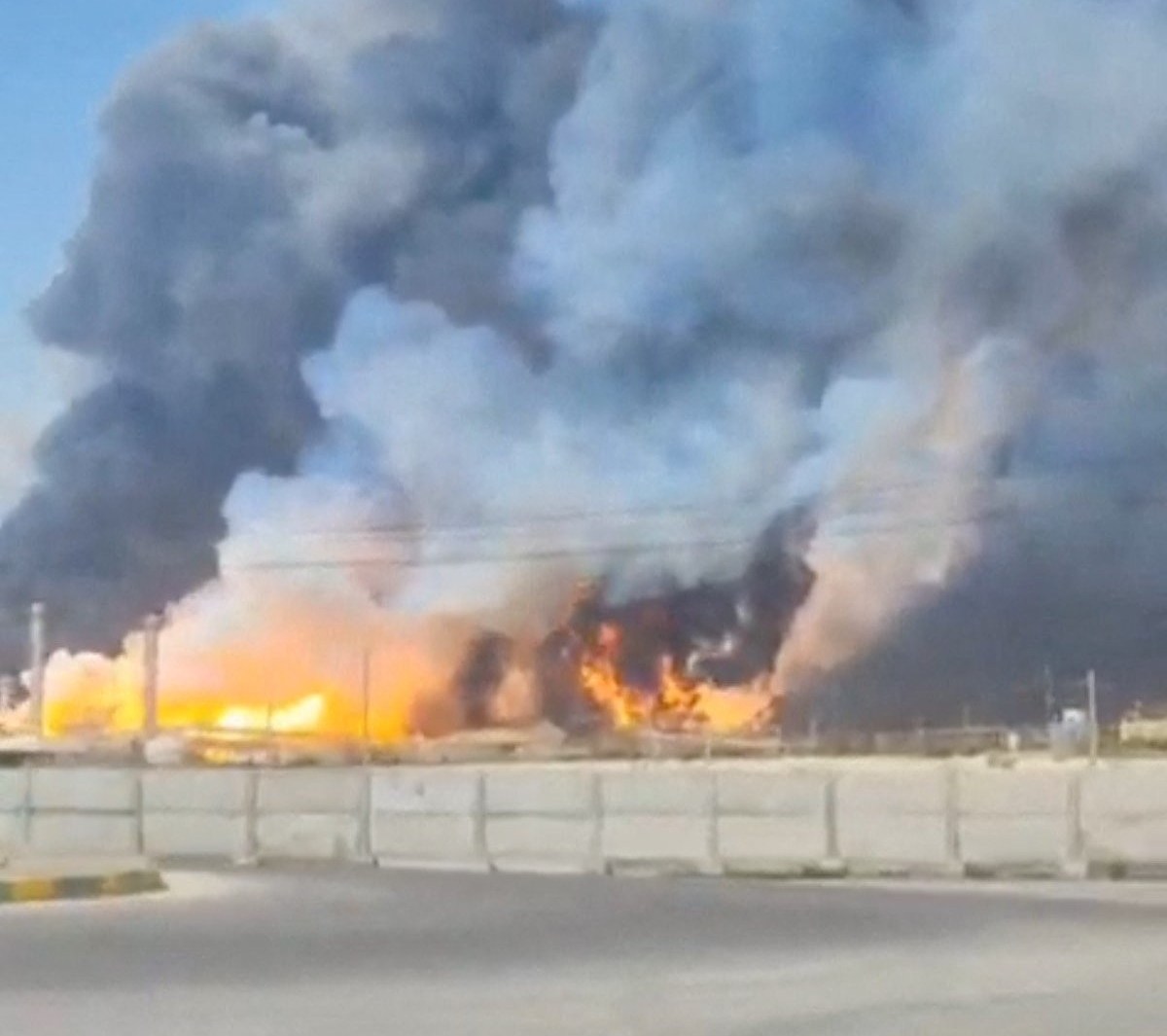
Energy markets were sent into fresh turmoil after missiles struck the world’s largest gasfield, escalating the conflict in the Middle East.
The attack on Iran’s South Pars field, as well as nearby refineries, was the first against Iranian energy production facilities since America and Israel launched a war on February 28.
Brent crude extended gains and by Wednesday night in New York, the global benchmark was trading 3.1 per cent higher at $110.70 a barrel, while UK natural gas prices rose 6 per cent to 139.4p per therm, as Iran’s Revolutionary Guard warned that it would retaliate by targeting energy infrastructure across the Gulf, state television reported.
• Read in full: Oil and gas prices jump after attack on world’s biggest gasfield
Ukraine peace talks ‘paused amid Iran war’
Peace talks between the US, Russia and Ukraine are on pause amid the Iran war, Izvestia reported on Thursday, citing Russian officials.
The Kremlin had confirmed the pause and that the war with Iran could push Kyiv towards compromise, the Russian daily newspaper reported.
The Kremlin spokesman, Dmitry Peskov, said the country’s presidential envoy Kirill Dmitriev would continue working on investment and economic co-operation, but the trilateral talks were on pause.
Four killed in Iranian missile fire
Iranian missile attacks have killed three Palestinian women in the occupied West Bank and a foreign worker in central Israel.
Falling shrapnel struck a hair salon in the West Bank town of Beit Awa near Hebron late on Wednesday, killing the three women and injuring at least eight others, according to the Palestine Red Crescent Society.
The deaths marked the first Palestinians killed from Iranian attacks in the ongoing war. The victims include 17-year-old Mays Ghazi Masalmeh, according to the official Palestinian news agency, Wafa.
A short while later, Israeli medics said Iranian missile fire had killed a man in central Israel, bringing the death toll in Israel from attacks during the ongoing war to 15.
Thailand’s foreign ministry confirmed on Thursday the death of a Thai agricultural worker, citing information from Israeli officials. He was killed in Moshav Adanim, a town about 12 miles northeast of Tel Aviv and less than eight kilometres from the West Bank, according to the Israeli medical service.
Iran executes three arrested over January protests
Iran has executed three men convicted of killing two police officers during unrest this year.
The judiciary said the men were found guilty of murder and “Moharebeh” (waging war against God), including carrying out acts it said were in favour of Israel and the US, state media reported.
The executions were carried out in the religious city of Qom on Thursday.
Authorities said the three had taken part in attacks using knives and other weapons during protests on January 8, killing two police officers.
Iranian officials have repeatedly accused Israel and the US of involvement in the nationwide unrest this year, which was repressed in the biggest crackdown in the Islamic Republic’s history.
Iranian strikes cause extensive damage at Qatar gas hub
Two waves of Iranian strikes caused “extensive damage” at Qatar’s main gas hub.
Iran had vowed to target energy infrastructure across the Gulf after a strike that Trump said was carried out by Israel on Iranian facilities at South Pars field, Iran’s part of the world’s largest known gas reserve.
Missile strikes on the Ras Laffan Industrial City on Qatar’s north coast on Wednesday caused damage to a gas-to-liquids facility, the country’s state-run energy firm said on Thursday.
Early on Thursday, “sizeable fires and extensive further damage” occurred at several liquefied natural gas facilities, QatarEnergy said in a statement.
Qatar’s interior ministry said crews brought all fires under control at the Ras Laffan site, without reporting any injuries.
Trump ‘slashed number of Iran experts in State Department’
In divisions of the State Department that typically would handle the Iran response, numerous veteran diplomats with decades of collective experience have been fired, retired or were reassigned — replaced by more junior officials or political appointees, the Associated Press reported.
The administration cut more than 80 staffers in near-eastern affairs, according to numbers compiled by a State Department employee who was terminated last year based on surveys of colleagues. (The department does not release official figures on staffing levels but did not dispute the number.)
The Trump administration has left the assistant-secretary position in charge of near-eastern affairs vacant, along with key ambassadorships in the Middle East. Four of the five supervisors in the bureau have temporary titles.
The current and former officials, some of whom asked for anonymity to discuss sensitive internal matters during an active conflict, paint a portrait of an understaffed government workforce struggling to execute the president’s agenda. Those who remain tell colleagues that their analysis, recommendations and advice go unheeded. The State Department vigorously disputed those assessments.
Drones spotted over DC army base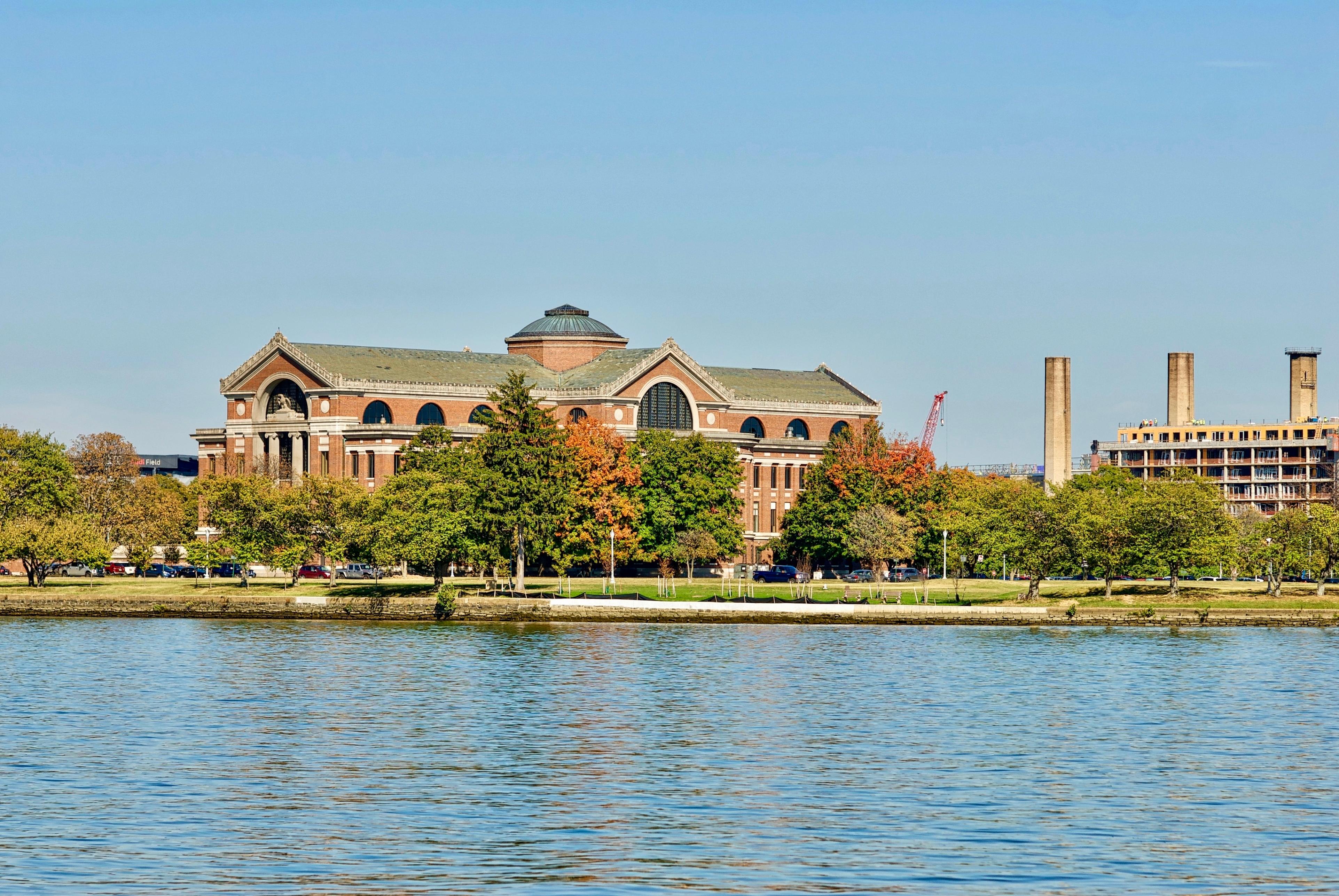
The National War College in Fort McNair near the Capitol
ALAMY
American officials have detected unidentified drones above an army base in Washington where the secretary of state Marco Rubio and the secretary of defence Pete Hegseth live, The Washington Post reported on Wednesday evening, citing three people briefed on the situation.
Multiple drones were spotted over Fort McNair on a single night in the past ten days, one official said, prompting increased security measures and a meeting at the White House to discuss how to respond. The drones prompted officials to consider relocating Rubio and Hegseth, two of the people briefed said. The senior administration official said the secretaries had not moved.
Several senior Trump appointees live in military housing in Washington — The Atlantic counted six in October. Hegseth moved into a property known as “Quarters 8” on the Fort McNair base in the autumn; Rubio also moved around the same time.
Iranian dissident receiving death threats in UK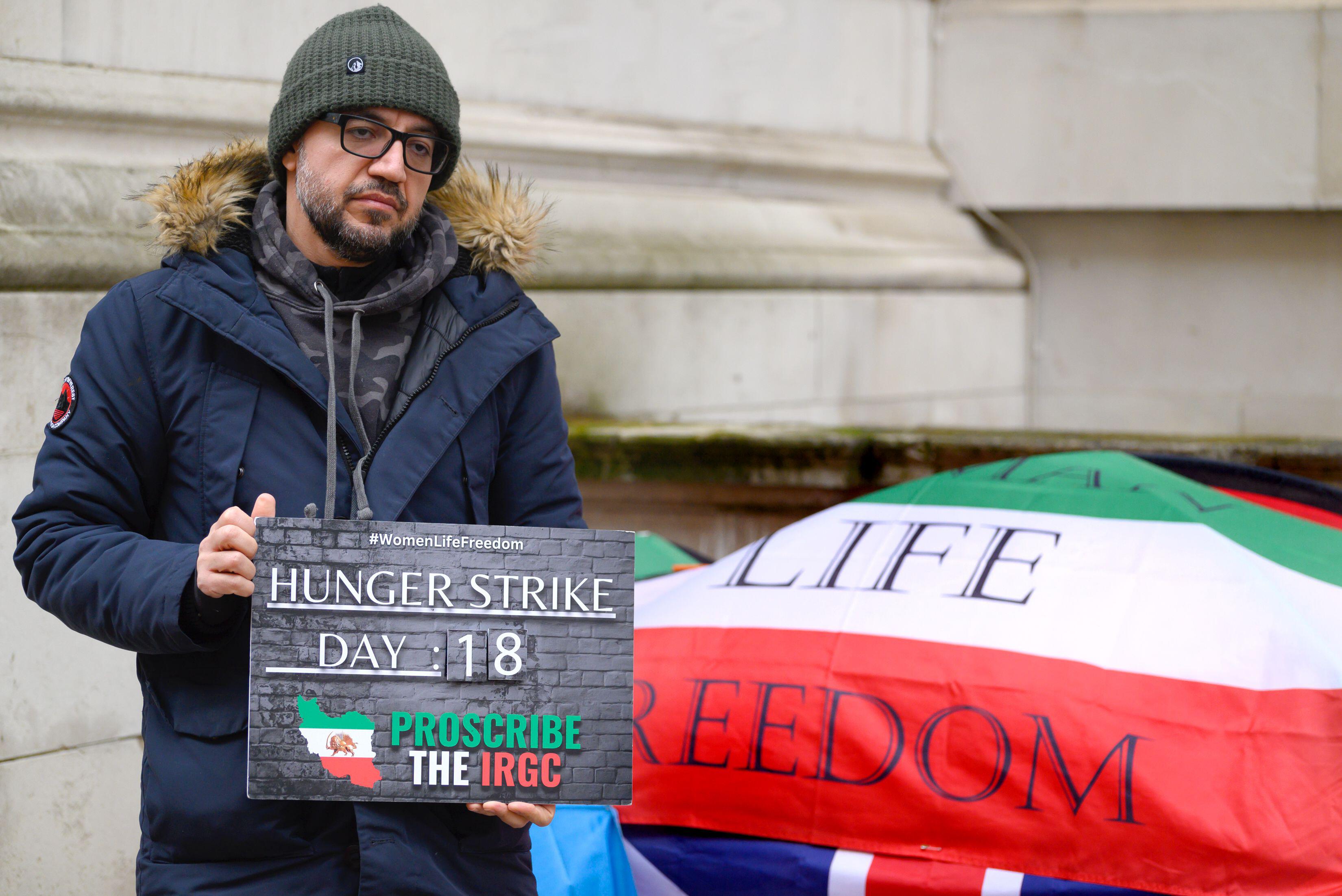
Beheshti has been protesting outside the Foreign Office for almost four years
ALAMY
A leading Iranian dissident in Britain has said that he fears for his life after receiving sinister threats from thugs acting on behalf of the Tehran regime since the assassination of Iran’s supreme leader.
Vahid Beheshti, a pro-democracy campaigner, has spoken of the “dramatically escalating” threats to his life from agents of the Iranian regime operating on UK soil. An image with his face in gun cross-hairs has been circulated on social media by pro-regime accounts.
Trump: ex-counterterror chief was ‘weak on security’
The president later told reporters that he always thought Kent was “weak on security” and if someone in his administration did not believe Iran was a threat, “we don’t want those people”.
Other Trump administration officials, including the CIA director John Ratcliffe, have since sought to distance themselves from Kent and his assessment.
Trump threatens to blow up South Pars gasfield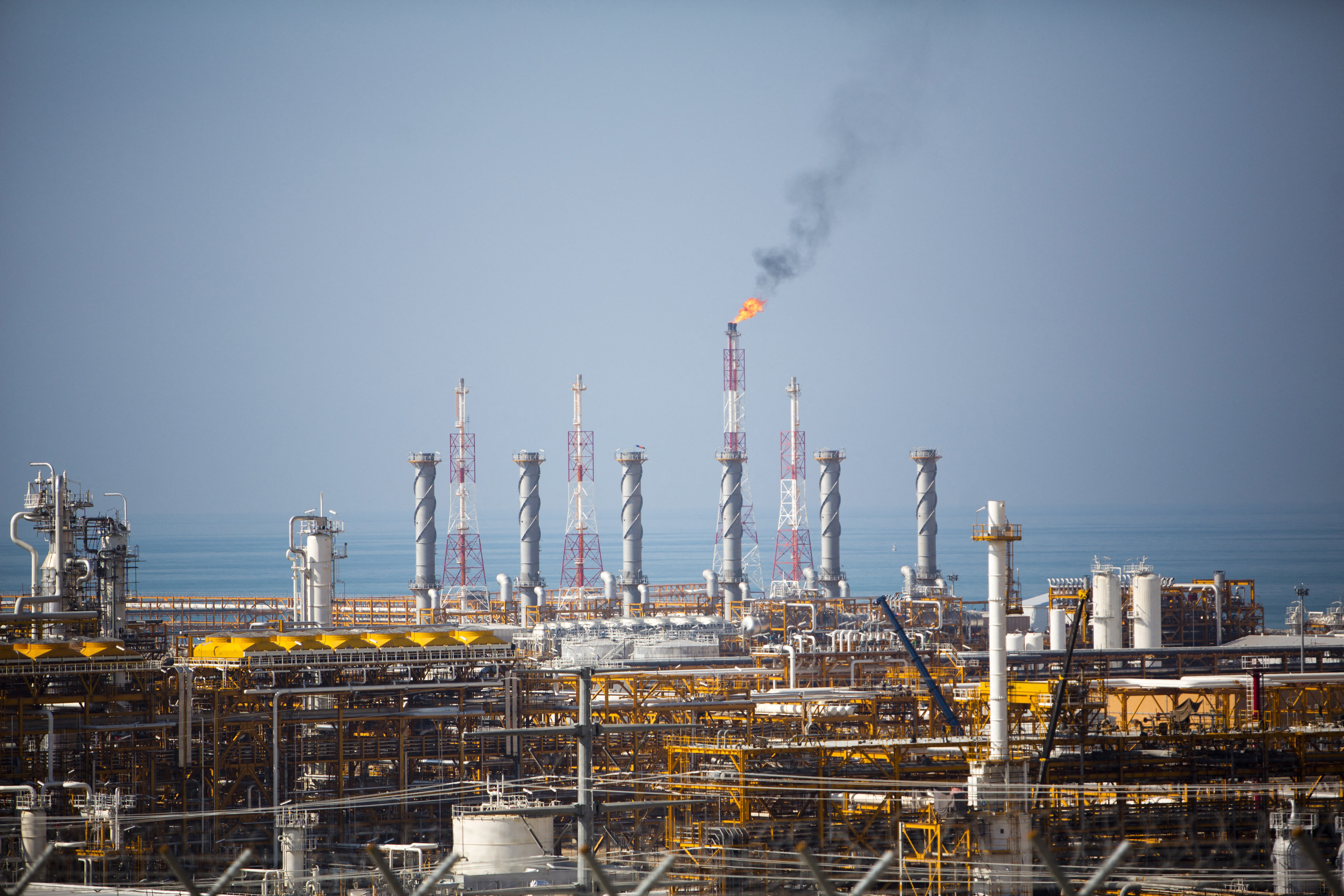
The South Pars gasfield, shared between Iran and Qatar, accounts for more than 70 per cent of Iran’s natural gas production
BEHROUZ MEHRI/AFP/GETTY IMAGES
President Trump has threatened to blow up the world’s largest gasfield if Iran continues to attack Qatar.
In a post on Truth Social, Trump said that Israel had “violently lashed out” by attacking the South Pars gasfield. “The United States knew nothing about this particular attack, and the country of Qatar was in no way, shape or form, involved with it, nor did it have any idea that it was going to happen,” he said.
As a result, he continued, Iran retaliated by attacking a Qatari liquefied natural gas (LNG) facility. Trump warned that if Iran did so again, the US and Israel would “massively blow up” the remainder of its South Pars field.
“I do not want to authorise this level of violence and destruction because of the long-term implications that it will have on the future of Iran, but if Qatar’s LNG is again attacked, I will not hesitate to do so.”
Australian PM condemns attacks on Qatar
The Australian prime minister, Anthony Albanese, has denounced Iran’s attacks as “reckless”.
“I’m deeply concerned by attacks on civilian and energy infrastructure, including the latest overnight in Qatar,” Albanese told reporters in Hobart on Thursday. “We do not want to see the conflicts escalate further.”
In Qatar, the nation’s state-owned oil and gas company said that missile attacks had damaged further liquified natural gas sites, “causing sizable fires and extensive further damage”. Firefighters had halted the blaze and there were so far no injuries.
Gulf countries condemn Iranian attacks
A collection of Gulf Arab countries has released a statement denouncing the Iranian attacks on the region.
A statement was released on Thursday morning after a summit in Riyadh between Azerbaijan, Bahrain, Egypt, Jordan, Kuwait, Lebanon, Pakistan, Qatar, Saudi Arabia, Syria, Turkey and the United Arab Emirates.
The group statement condemned “these deliberate Iranian attacks using ballistic missiles and drones, which targeted residential areas and civilian infrastructure, including oil facilities, desalination plants, airports, residential buildings and diplomatic missions”.
It emphasised that “these attacks cannot be justified under any pretext or in any way”.
Saudi minister: Iran close to losing trust forever
Saudi Arabia’s foreign minister Faisal bin Farhan al-Saud said the country still preferred the path of diplomacy, but “if Iran doesn’t stop immediately I think there will be almost nothing that can re-establish trust”.
Missile interceptors were seen being fired near the hotel in Riyadh where the conference was being held, as diplomats from a dozen countries met to discuss the Iran war including Turkey, the UAE, Jordan, Qatar and Syria.
Senate rejects vote on halting Iran operation
The US Senate rejected a second attempt to rein in President Trump’s military action in Iran on Wednesday night, voting 48-53 against a war-powers resolution.
Senate Democrats forced another vote on legislation that would have halted the president from continuing the war in the Middle East without congressional approval. Had it passed, it would have directed the president to withdraw US forces from the fighting.
The vote breakdown was largely unchanged from last week’s similar vote on war powers resolution — which also failed — and was split along party lines, although the Republican senator Rand Paul voted for the measure and the Democratic senator John Fetterman voted against.
The measure cited the administration’s “massive and ongoing” operations in Iran, with Democrats threatening to force more votes unless Republicans agree to hold cabinet-level hearings on the conflict.
Qatar condemns Iran strikes on Saudi sites
The Qatari Ministry of Foreign Affairs has issued a statement condemning the Iranian attacks on energy facilities in Saudi Arabia in the “strongest terms”.
The strikes were a “flagrant violation of the principles of international law” and a “serious threat” to global energy security, the statement said.
It continued that Iran had “crossed all red lines” in its continued attacks on neighbouring countries and emphasised the need to de-escalate the fighting and “restore regional and international security and stability”.
UAE calls gas-facility attacks ‘dangerous escalation’
The United Arab Emirates said that Iran’s attacks on its Habshan gas facility and Bab field were a “dangerous escalation”.
The gas operations have been shut down after missiles were intercepted over the sites.
Iran has also attacked Qatari infrastructure, its defense ministry saying early on Thursday morning that ballistic missile attacks have caused damage at Ras Laffan Industrial City.
Military officials ‘not allowed’ to share doubts on Iran
The former counterterrorism chief said that he and senior officials “were not allowed” to share their doubts about airstrikes on Iran.
Joe Kent, the director of the National Counterterrorism Center until he resigned on Tuesday, said in an interview: “A good deal of key decision makers were not allowed to come and express their opinion to the president.”
He continued: “There wasn’t a robust debate.”
Kent resigned after he said that there was no intelligence to support the notion that Iran was working to develop nuclear weapons. President Trump disputed Kent’s allegations, saying the regime was a “tremendous threat”.
FBI investigates Joe Kent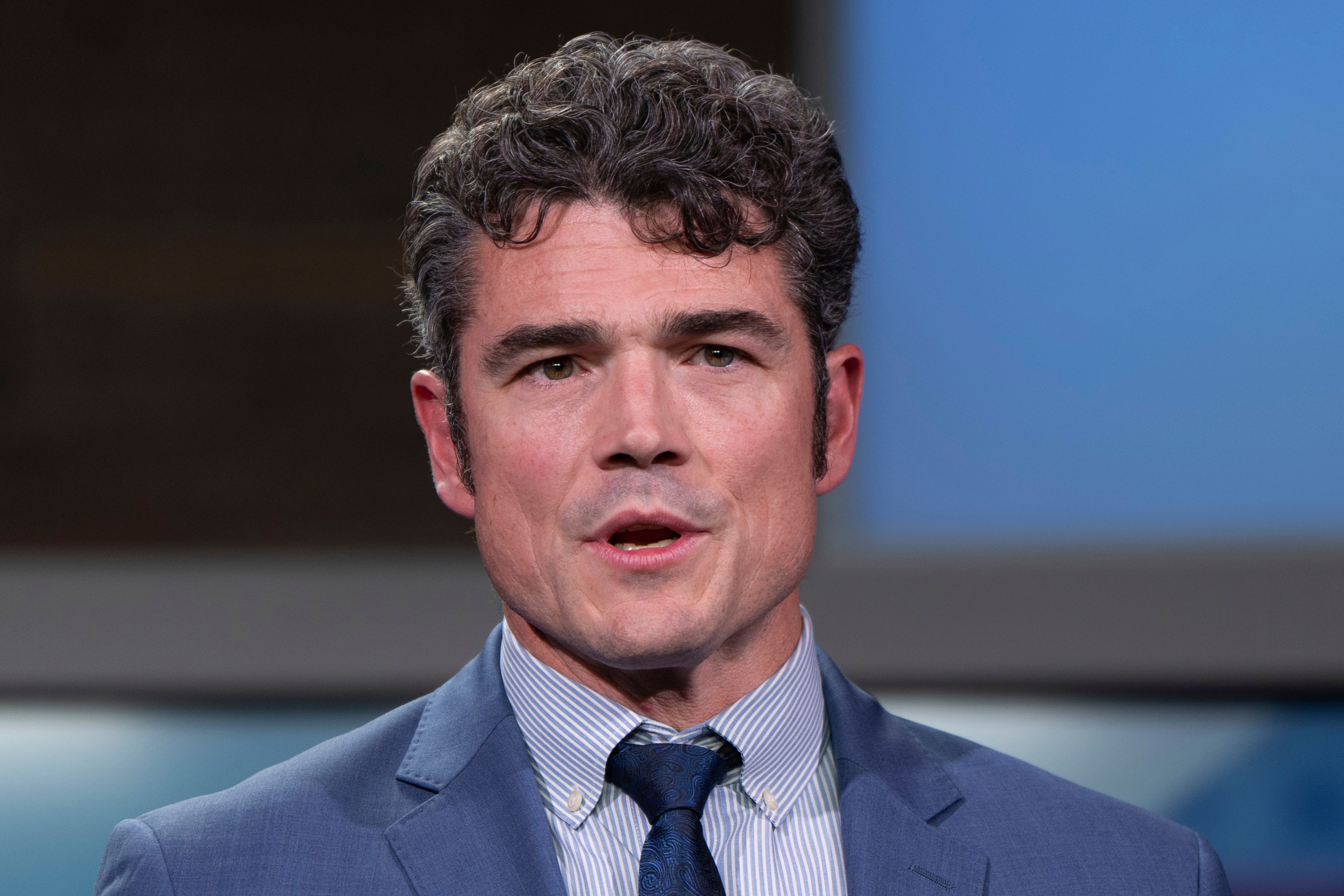
Joe Kent, the former counterterrorism chief
AP/JENNY KANE
The FBI has opened an investigation into the counterterrorism official who resigned on Tuesday, reports Semafor.
The news site said that Joe Kent, the former National Counterterrorism Center director, was being investigated for improperly sharing classified information.
The investigation predates Kent’s departure, an anonymous source told Semafor, and had been going on for months. White House aides denounced Kent as a leaker immediately after his resignation became public earlier in the week.
Ship in Strait of Hormuz hit by projectile
A vessel in the Strait of Hormuz has been “hit by an unknown projectile which has resulted in a fire onboard”, said the United Kingdom Maritime Trade Operations centre.
The UKTMO, a maritime organisation which receives distress calls from ships around the world, said it happened east of the city of Khawr Fakkan in the United Arab Emirates.
It warned other ships to “transit with caution” in the region.
US ‘considering sending troops’
The White House is considering deploying thousands of US troops to the Middle East in order to reinforce its operation, reports Reuters.
A number of sources spoke to the news agency on the condition of anonymity, saying that President Trump’s administration was weighing up options.
One option was to deploy US troops to Iran’s coastline in order to secure the Strait of Hormuz and ensure safe passage of oil tankers. Another was to send ground forces to Kharg Island, Iranian land in the Gulf which is the hub for 90 per cent of the country’s exports. The administration has also explored the possibility of sending forces to secure Iran’s highly enriched uranium.
A White House official, speaking on condition of anonymity, said: “There has been no decision to send ground troops at this time, but President Trump wisely keeps all options at his disposal.”
Saudi military could respond ‘if necessary’
Saudi Arabia reserves the right to take military actions “if deemed necessary” after Iranian attacks on Gulf countries, the kingdom’s foreign minister Prince Faisal bin Farhan al-Saud said early on Thursday.
However, he told reporters that his only concern was that the attacks on the Gulf ended now.
“What I care about now is that the attacks on my country and on my neighbouring countries, that are not involved in this conflict, end. That’s all I’m interested in,” he said. “We are going to use every lever we have, political, economic, diplomatic … to get these attacks to stop”.
‘No debate’ on US intervention, says former counterterror chief
The former counterterrorism chief Joe Kent has said that there was “no debate” around commencing the war in the Middle East.
Kent, who resigned on Tuesday, told Tucker Carlson that the planning for the conflict was so “compartmentalised that there was no debate, as in, it was a foregone conclusion”. He said he tried to “find off-ramps” for the war “from the inside”, while he was still in his role at the National Counterterrorism Center.
Kent, a former Trump loyalist, also said that assassinating the Iranian supreme leader Ali Khamenei “was the last thing that we ever should have done”.
“He was moderating their nuclear programme, he was preventing them from getting a nuclear weapon,” he said. “If you take him out, if you kill him aggressively, people are going to rally around that regime and the next ayatollah that you get, and I think this is the case by all data that we have with his son.”
Iraqi airbase struck by projectile
A projectile has struck an airbase in Kirkuk, said the Iraqi defence ministry late on Wednesday night.
The attack resulted in a fire, later contained, and was a direct blow to the “purely Iraqi” military operational capabilities which were housed there.
Kirkuk, in northern Iraq, is a key port for the export of crude oil to Europe, with a deal made early on Tuesday to resume the flow of trade to Turkey.