
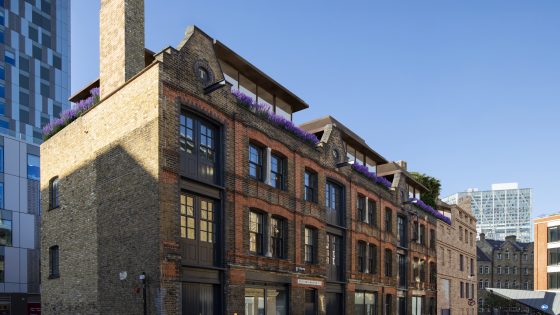
Under the plans, the locally listed 1-5 Tenter Ground and 66-68 Bell Lane will be linked and extended, with most of the existing structures retained.
Emin previously worked at 1-5 Tenter Ground and her 2015 David Chipperfield-designed proposal to demolish 66-68 Bell Lane and connect a new house to the studio met with local opposition and was later rejected by Tower Hamlets Council.
The Bell Lane building was constructed in 1927 and is the smallest housing scheme known to have been built by Stepney Borough Council during the interwar period.
In 2016, Emin announced she was leaving east London for Margate, telling The Guardian she did not wish to stay somewhere she was ‘not wanted’.
However, she was granted permission to extend and link the existing buildings in late 2019, under plans drawn up by Waugh Thistleton Architects, before putting them up for sale the following year.
A design and access statement from Chris Dyson Architects, which is based in nearby Fashion Street, reveals that the current owners are a couple with three children who want the practice to design a family home, plus two separate flats and commercial workspace.
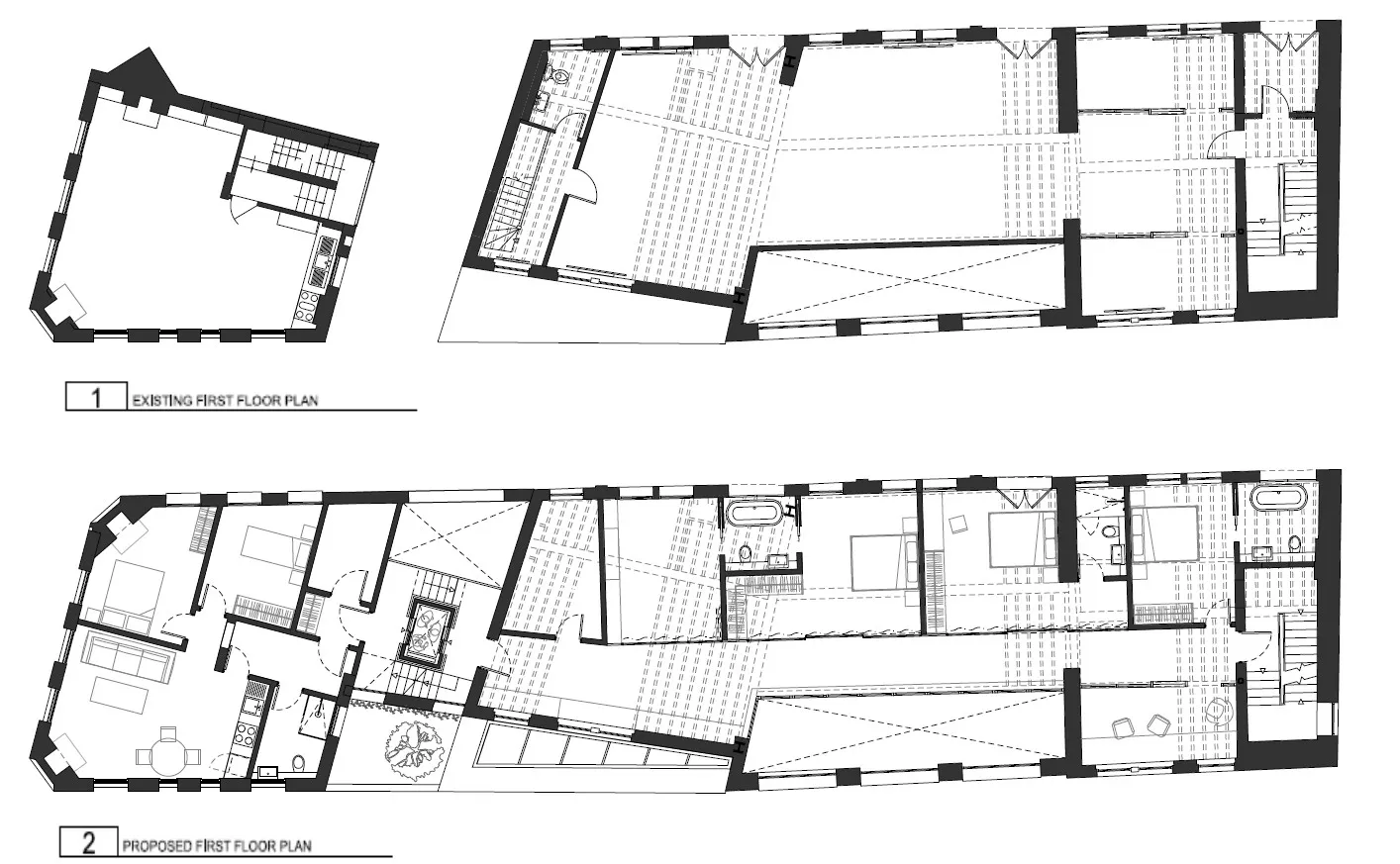
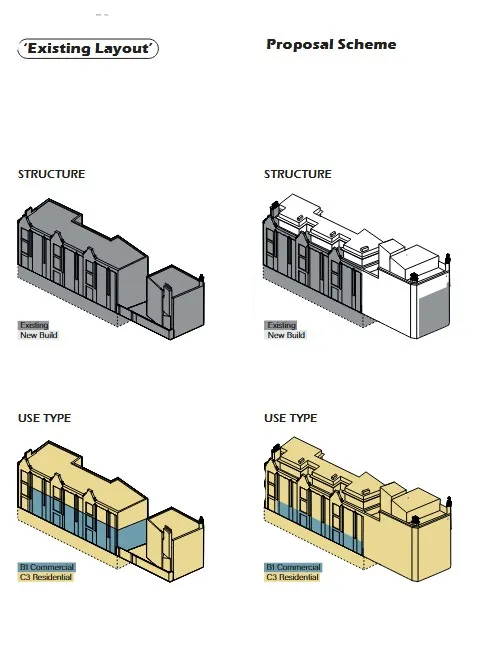
The new 1,162m² plans retain the ground floor commercial use at the Tenter Ground building and also include a new floor on the Bell Lane building for living spaces for the family. The buildings will be linked by a new circulation core containing stairs and a lift.
The practice told the AJ its design was inspired by the existing context – even the wild greenery which has taken root in the empty space at Bell Lane. The new volume will be enclosed in a lightweight metal mesh, which will act as a trellis for plant life, and there will be further greenery on a rooftop garden.
The current owners instructed Chris Dyson Architects after buying the building in 2020.
Chris Dyson said: ‘The project took a few design iterations to progress successfully through planning, but plans can now unite the two buildings on this island site as one, with the inclusion of a new lift and stair core that manages the level changes between them.
‘A large residence and two smaller one-bedroom residences will be created, sitting over a commercial arts space – a positive contribution to the neighbourhood that retains the artistic character of the building.’
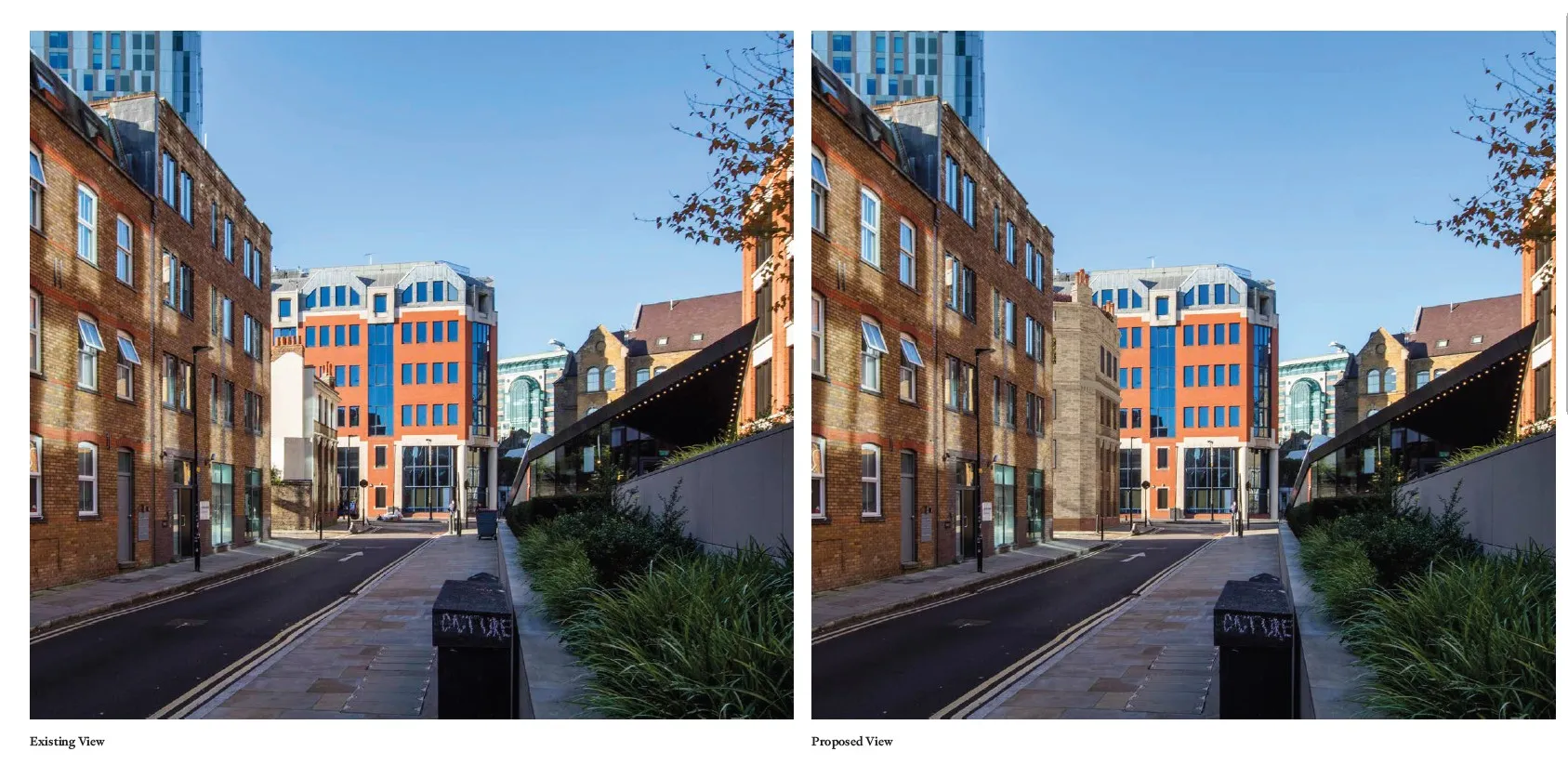
Architect’s view
This project has given us the excuse to delve deeper into the history of an area very close to our hearts and to find a new way of building on its unique character. While our approach has been appropriately respectful of the past, the contemporary elements are unashamedly modern, designed to meet the needs of the family and offer a high degree of future flexibility.
The approach celebrates the humble London brick. Existing facades are retained, cleaned and render stripped away to expose the original brick wall of the Bell Lane housing. This building is extended along Tenter Ground to fill the void between the two structures. Architecturally, the new volume follows the form and proportions of the existing facades, but is simple and contemporary in its brick detailing.
A new floor is added to the Bell Lane building to balance the overall composition and the change in brick is articulated, allowing old and new to be read together. At roof level, single-storey pavilions further extend the living space; these are set back on all sides to maintain views from street level, topped by a cantilevered timber frame for shade and wrapped in louvres for privacy.
Tenter Ground is so called after the wooden frames used by Huguenot weavers to stretch wet cloth and lies within the Artillery Passage Conservation Area’s irregular grid of streets. In its details, the design aims to bring this history to life. The arch that once stood on the site is reinterpreted in a gateway of handmade glass bricks.
The door has a motif of the ‘tenterhooks’ used to fix cloth to the frames and the story of Tenter Ground is told on a panel in the facade. The building also retains traces of its more recent past, incorporating works of art by Tracey Emin and her initials, TKE, in the gables.
Chris Dyson Architects
Project data:
Project name Tenter Ground
Location Spitalfields, East London
Local authority Tower Hamlets
Type of project mixed-use residential
Client private
Architect Chris Dyson Architects
Landscape architect Adolfo Harrison
Planning consultant CMA
Structural engineer Webb Yates
M&E consultant Webb Yates
Heritage consultant Richard Griffiths Architects
Archaeologist Pre Construct Archaeology
Quantity surveyor PTP
Gross internal floor area 1,162m²
Procurement Direct appointment
Total cost Undisclosed
Tenter Ground by Chris Dyson Architects