
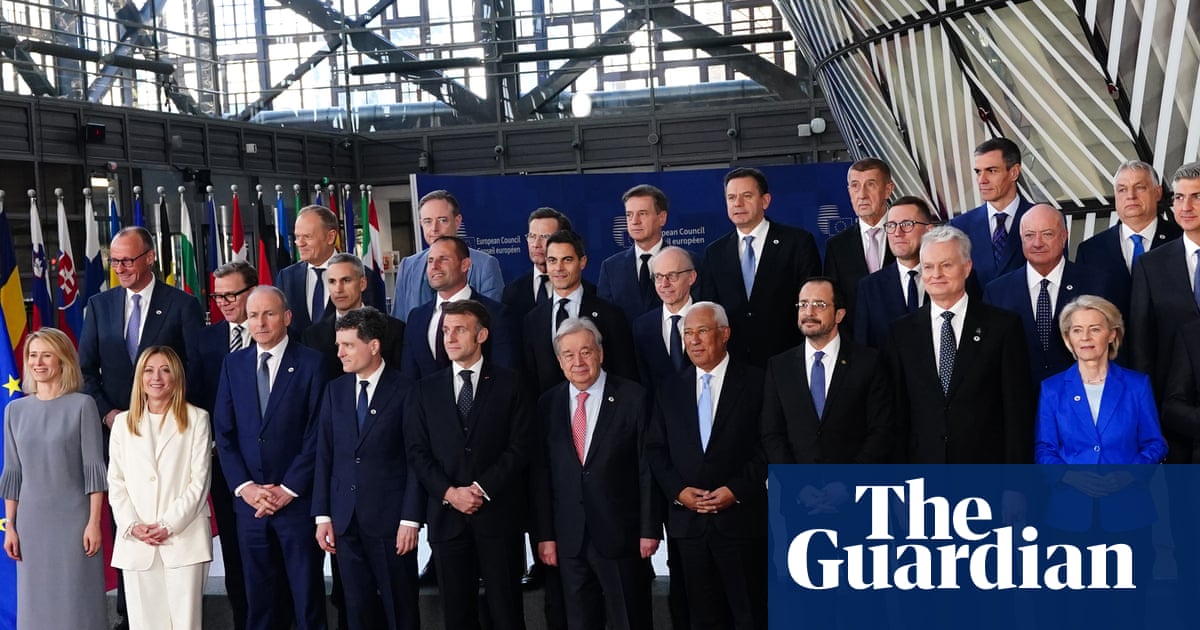
EU leaders have pledged to stand behind Cyprus as it seeks “an open and frank discussion” on the future of the British bases on the island, which have become a target after the outbreak of the latest Middle East crisis.
Ahead of an EU summit on Thursday, Cyprus’s president, Nikos Christodoulides, said he wanted “an open and frank discussion with the British government” regarding the status and future of the British bases on the island.
He described the bases as “a colonial consequence”, but declined to say whether he wished to see them gone, saying Cyprus had “a clear approach” and would not negotiate publicly.
“We have more than 10,000 Cypriot citizens within the British bases; we have responsibility for those people and when the situation is over in the Middle East, we are going to have an open and frank discussion with the British government.”
The Akrotiri and Dhekelia bases, comprising 256 sq km (99 sq miles), remained UK sovereign territory when Cyprus became independent in 1960. The British government uses them as training areas and staging posts for operations in the region.
As tensions in the Middle East have escalated, Cyprus has been increasingly concerned the presence of the British bases made them a de-facto target for Iran, which has long had fraught relations with the UK.
Those fears were realised earlier this month when an unmanned attack drone – said to have been launched by the Iranian proxy Hezbollah from Lebanon – crashed into RAF Akrotiri’s runway on 2 March. Two other drones were intercepted heading in the direction of the base the next day.
After Christodoulides’s intervention, EU leaders on Thursday endorsed a text stating firm and unequivocal support for member states closest to the Middle East. “The European Council acknowledges the intention of Cyprus to initiate a discussion with the UK on the UK bases in Cyprus and stands ready to provide assistance as needed.”
The language is a victory for Cyprus, which currently holds the EU’s rotating presidency, as this wording had not featured in earlier drafts.
The EU’s eastern-most member state, which is a 20-minute flight away from Lebanon, has not felt supported adequately by the UK.
The Royal Navy HMS Destroyer left Portsmouth for the eastern Mediterranean last week, but critics said the UK should have had a warship in the region once it became clear Donald Trump was building up to a potential attack on Iran from late January.
France was among the first nations to respond to a Cypriot request for military assistance, deploying air defence systems, a frigate and the nuclear-powered aircraft carrier Charles de Gaulle to the region.