

This week’s outbreak of meningitis, which at the time of writing totals 27 cases confirmed and under investigation, has led to a nationwide shortage of vaccines for MenB, the deadliest bacterial strain, which attacks the lining of the brain and spinal cord. For Lisa Snowdon, 54, a presenter on ITV’s This Morning, the news has been particularly horrifying. She has had a near fatal battle with the disease.
When she was struck down by viral meningitis in 2010 she was 38, and initially chalked up her symptoms — blinding headaches, stiff neck, fever, fatigue, freezing fingers and toes — to general exhaustion. It was weeks before she was hospitalised and a further two days before she had it diagnosed. Although viral meningitis is usually less serious than bacterial strains, by that point her condition was so critical, doctors called her parents to her bedside. “They told them, ‘You need to come and say goodbye,’” she says. “I had no fight left in me. I felt like I was dying.”
Although Snowdon eventually recovered after ten days in hospital, she has been left with memory loss, fatigue, headaches and first-hand knowledge of how dangerous complacency can be.
As the president of the charity Meningitis Now she has made it her mission to spread awareness that the disease can affect all ages and campaign for an urgent rollout of a MenB vaccination, at present available only to babies on the NHS. “We know it works. It needs to be available for teenagers and young adults,” she explains.
Snowdon had only just returned from the charity’s fundraising trek across the Sahara with 30 others affected by meningitis before the Kent outbreak. “The trip was incredibly emotional — walking with a purpose, crying and bonding,” she shares. She and her fellow trekkers have been supporting each other on WhatsApp this week. “It’s been very triggering for everybody. I was with families that had lost teenagers. It brought everything back.
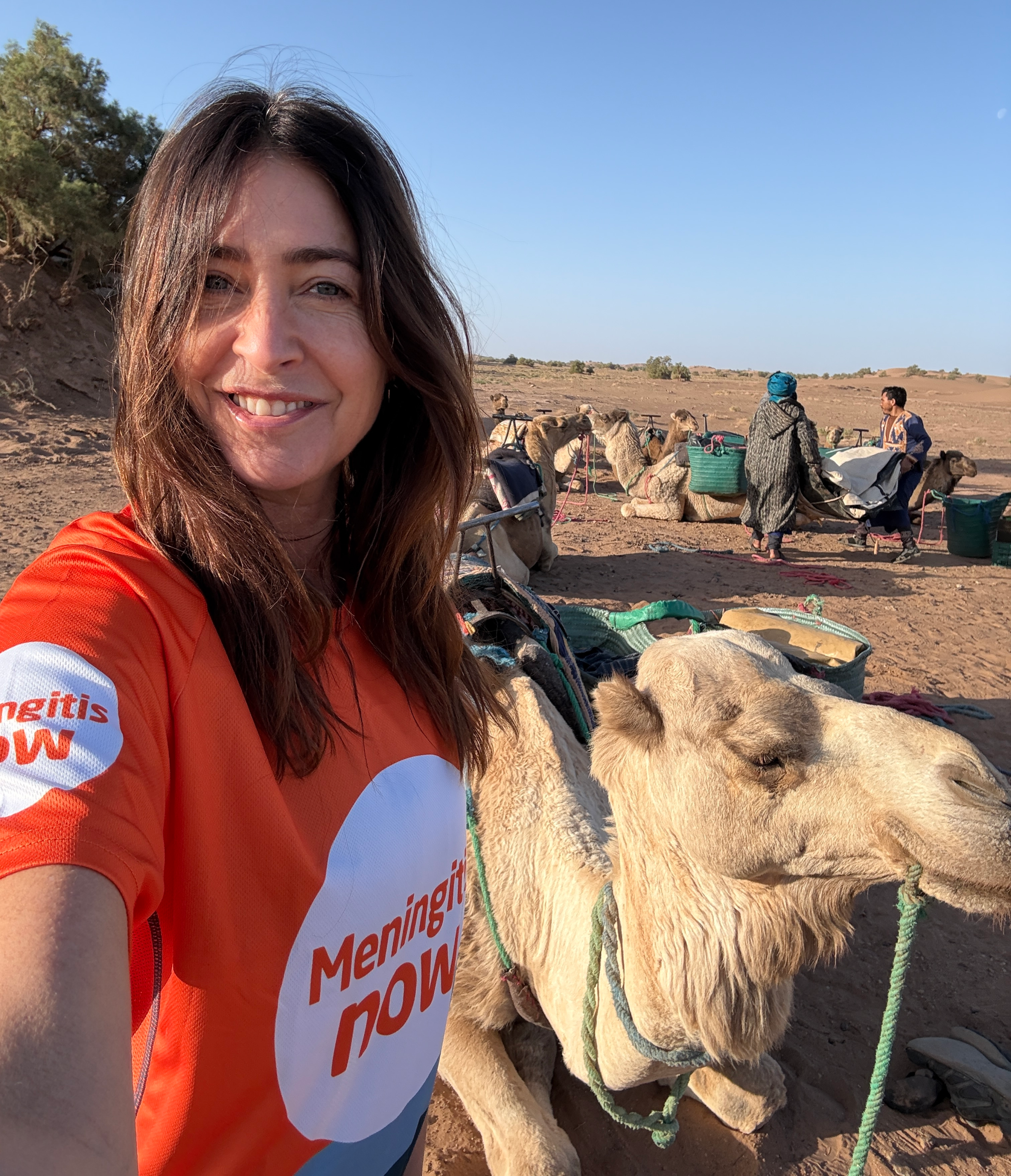 Snowdon had been on a fundraising trip with Meningitis Now when the outbreak in Kent was reported
“I still suffer with headaches. I still get very tired. But I am so lucky,” she says. “I have a bit of guilt, sometimes, speaking to the families — I survived, and their children didn’t.”
Speaking from her “spare room-slash-office” near Epping Forest, where she lives with her fiancé George Smart, Snowdon says meningitis has made her more mindful of her health. She has been to the gym today and fitted in a walk in the forest, “trying to have a sense of calm among the chaos happening with this outbreak, and feeling so tragically sad for everyone involved”.
She was presenting Capital Radio’s breakfast show with Johnny Vaughan when she started feeling lethargic in October 2010. She put it down to being generally run down, but “blinding headaches” causing “a vice-like grip” that no painkiller could alleviate persisted. “My neck was really stiff. I was waking up with a fever. I was freezing cold all the time. I’d lost my appetite completely. I was in agony.”
And yet, she says, “I stupidly didn’t listen to my body and get the help I needed. I didn’t know what it was, and so I kept going.” Even when she developed a sensitivity to light. “I remember being in the studio at work, the lights were blinding, I couldn’t see properly, but to my detriment I just got on with it.”
By mid-November she could barely stand. She left a charity event in central London on the back of a taxi bike, en route to another she was hosting. “I was very confused and weak. I felt I didn’t have the strength to hold on to the driver anymore. I thought, ‘Should I let go?’” By the time she got to the second event, she says, “I couldn’t walk. I’ve no idea how I did it.”
The next morning her sister took her to hospital, where she was placed on an IV antibiotic drip. Meningitis is most common in babies, young children, teenagers and young adults. “I think that’s why when I got into hospital meningitis wasn’t something they thought it could be,” she says, and she wasn’t given a lumbar puncture to assess her spinal fluid, the standard diagnostic test.
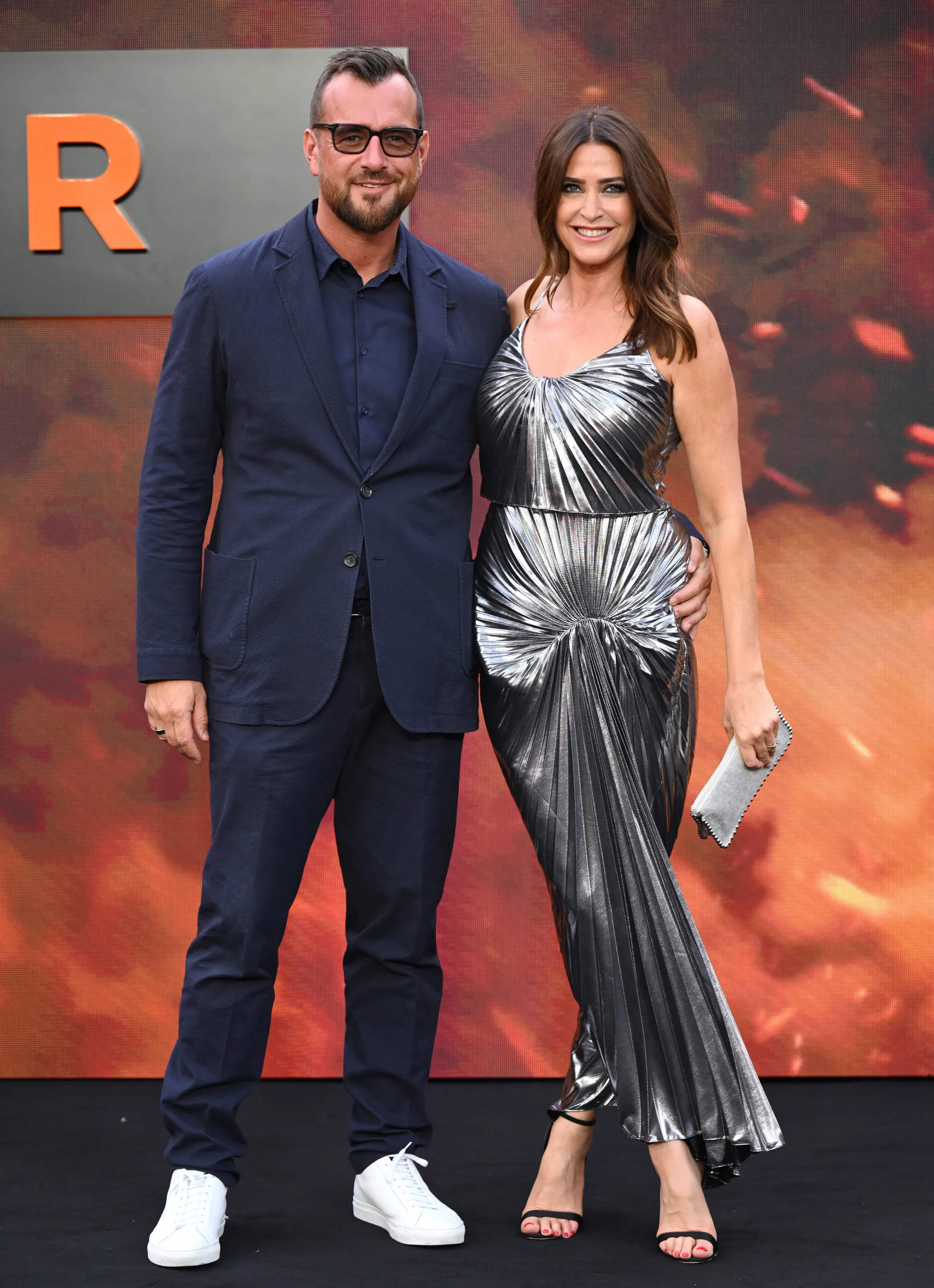 Snowdon and her fiancé, George Smart Karwai Tang/WireImage VIA GETTY IMAGES
Her time in hospital was “a blur”. “I remember being in a wheelchair, being wheeled to appointments. I couldn’t hold my body weight. I was too weak.”
A CAT scan finally confirmed her disease about two days after her arrival. “I knew of meningitis from seeing horrific cases of babies dying. I didn’t know it affected adults. I was scared, absolutely, but I was also out of it, sleeping a lot.”
No vaccines prevent viral meningitis and the cause is often not clear cut. “A lot of us have these viruses in our guts and we don’t know why it crosses the blood-brain barrier. We don’t know why certain people get it.”
Having her illness go untreated for several weeks undoubtedly worsened her health. A lot of people with untreated meningitis develop septicaemia.“I had glandular fever as well. The two things were obviously confusing the doctors.”
She didn’t recognise herself in the mirror. “I was puffy, my eyes were tiny, I was disfigured. I looked horrific. But that was the least of my concerns. I just wanted to feel better.”
When she was discharged from hospital after ten days she moved in with her dad to recuperate. “He nursed me back to health. I don’t have many memories of that Christmas. It was too much to read, to look at a screen was completely overwhelming.” Had she sought help quicker, she says, “maybe the rebuild when I came out of hospital wouldn’t have been so slow. I noticed my recall was a little slower, which is normal when your brain is swollen for that long.”
She joined Meningitis Now as an ambassador in 2012. This week, she says, the charity’s “brilliant” nurses “have not stopped, as you can imagine. The helpline is inundated.”
In 2015 a MenB vaccine was rolled out for babies, which reduced the number of cases in vaccinated children by about 75 per cent. However, most of the UK’s older teenagers and university students have not had the jab because it wasn’t available when they were born. Meningitis Now has been petitioning for a MenB vaccine to be available to all young people on the NHS and for cheaper availability of the vaccine on the high street, as part of a campaign called “No plan B for MenB”.
Although a targeted MenB vaccination campaign for Kent university students began on Wednesday, those under 25 are routinely offered only the MenACWY vaccine, which protects against four types of meningococcal bacteria. “It doesn’t protect you from MenB and MenB is the one [most likely to] kill you,” Snowdon says. “The MenB vaccine protects them against everything.”
Up to one in four teenagers may carry meningococcal bacteria in the back of their throat without symptoms, compared with about one in ten adults. “They’re at much higher risk. They’re mixing, kissing, sharing drinks.”
It can take weeks after vaccination for the immune response to kick in, so antibiotics are the first line of defence against disease.
Awareness of symptoms is critical, Snowdon says. “MenB is so rapid. Those minutes and seconds of making that decision to administer antibiotics can save lives.”
She didn’t develop the classic purplish rash that doesn’t fade when a glass is pressed against it — a sign of meningitis linked to septicaemia, which most of us are aware of. In fact, she stresses, a rash is “sometimes the last symptom, and at that stage it can be too late”. People should be alert to listlessness in babies and “fever, diarrhoea, sickness, crippling headaches, cold extremities like feet and hands”.
Privately the MenB vaccine costs upwards of £100, a cost Snowdon says must come down. Even before the outbreak she urged her sister to have her teenage niece and nephew privately vaccinated. Now, she says, “I try and put myself and my health first.” Walks to calm her nervous system are non-negotiable. “If I’m doing too much I write lists and prioritise what is necessary and what isn’t so I’m not overwhelmed. I listen to my body.” It was, she reflects, “so horrific to be that poorly for so long, frightening my family, frightening myself, and realising I have to look after myself. It was a huge wake-up call.”
meningitisnow.org